
Blog
 25/08/2026

Can lifestyle changes to improve fertility naturally? It’s one of the first questions couples ask when they start planning a pregnancy or when conception is taking longer than expected. The honest answer is: it depends. Reproductive health is shaped by many factors — age, ovulation, sperm health, body weight, nutrition, sleep, smoking, alcohol use, chronic stress and underlying medical conditions all play a role.
Healthy daily habits can genuinely support fertility for both partners, but they can’t override every medical cause of infertility. This guide walks through the lifestyle changes with the strongest evidence behind them, offers a practical daily routine, and explains when it’s time to move from self-care to a professional fertility evaluation.
Lifestyle factors such as nutrition, physical activity, weight, sleep and stress levels can influence hormone balance, ovulation, and sperm quality. But fertility looks different for every couple — what supports one person’s reproductive health may have little effect on someone with an underlying condition like blocked fallopian tubes or severe male-factor infertility.
That’s why it helps to separate two ideas that often get blurred together online:
Lifestyle changes fall firmly into the first category. Be wary of claims like “this food will increase fertility,” “yoga can cure infertility,” or “this diet guarantees pregnancy.” No single food, workout or supplement reverses infertility, and both partners benefit from making healthy changes together rather than placing the responsibility on one person alone.
For a closer look at how individual factors interact, Rainbow IVF’s guide on how lifestyle factors affect fertility breaks down the mechanisms in more depth. The sections below focus on turning that knowledge into a practical framework you can actually follow.
Being significantly underweight or overweight can affect ovulation, menstrual regularity, hormonal balance, insulin sensitivity, and sperm quality. Body fat plays a direct role in hormone production, so weight that’s far outside a healthy range in either direction can disrupt the signals needed for regular ovulation or healthy sperm development.
Practical steps that tend to work better than extreme measures:
There’s no single “fertility diet” backed by strong evidence — but an overall balanced eating pattern supports the hormonal and metabolic health that conception depends on.
The goal is overall dietary quality, not a restrictive or elimination-style diet. Very strict diets can be hard to sustain and may create nutrient gaps that don’t actually help.
Regular, moderate physical activity supports a healthy weight, cardiovascular health, metabolic function, stress management and overall wellbeing — all of which indirectly support reproductive health.
Good options include:
More isn’t always better here. Very high-intensity training combined with inadequate caloric intake can disrupt menstrual cycles in some women, sometimes leading to irregular or absent periods. Balance is the goal, not extremes in either direction.
Consistent, adequate sleep supports the hormonal rhythms involved in ovulation and sperm production. A few habits that help:
There isn’t good evidence for one “optimal” bedtime or an exact number of hours that guarantees improved fertility — consistency and adequacy matter more than chasing a specific number.
The relationship between stress and fertility is real but often overstated. Chronic stress can affect general wellbeing and hormonal balance, but it’s important not to imply that someone became infertile simply because they were “too stressed” — that framing isn’t accurate and can add unnecessary guilt to an already difficult experience.
Strategies that can help both partners cope:
It’s worth acknowledging the reverse relationship too: trying to conceive — especially over an extended period — is itself a source of stress. Couples navigating this deserve support, not added pressure to “just relax.”
Smoking is one of the more well-established lifestyle factors linked to reduced fertility. It has been associated with effects on egg health, ovarian function and sperm quality in men, and can also affect the success of fertility treatments if they’re eventually needed. Secondhand smoke exposure is worth minimizing as well. If quitting has been difficult, professional cessation support (counselling, nicotine-replacement programs, or a doctor’s guidance) tends to be more effective than trying to quit alone.
Couples trying to conceive should discuss alcohol and pregnancy consumption with their healthcare provider, since recommendations can vary based on individual health and how far along someone is in trying to conceive or in a confirmed pregnancy. Recreational drug use should be avoided altogether, as it can affect both female and male reproductive health. As with other lifestyle factors, this guidance supports overall reproductive health — it isn’t a substitute for personalized medical advice.
Caffeine doesn’t need to be treated as completely off-limits. Coffee, tea, energy drinks, cola and other caffeinated beverages can generally be consumed in moderation. What matters is avoiding excessive intake and discussing an appropriate amount with a healthcare professional, particularly once pregnancy becomes possible or is confirmed.
A few practical, non-alarmist considerations worth being aware of:
For men specifically, prolonged exposure to heat near the testicles — from hot tubs, saunas, laptops on the lap, or certain occupational settings — may be relevant to sperm health. This is a “be mindful” category rather than a reason for alarm; most people don’t need to overhaul their environment, just make sensible adjustments where exposure is avoidable.
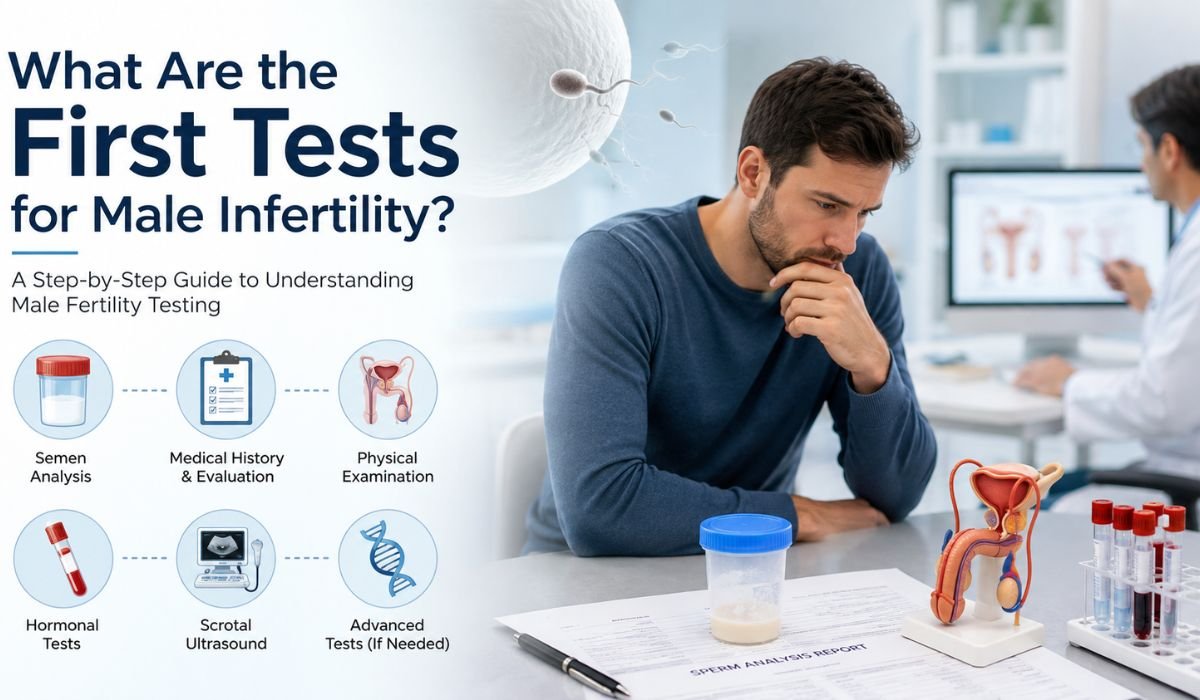
Fertility conversations often focus heavily on women, but roughly equal shares of infertility cases involve male factors, female factors, or a combination of both. Sperm count, motility (movement) and morphology (shape) are all influenced by many of the same lifestyle factors discussed above — smoking, alcohol, weight, exercise, sleep, heat exposure and nutrition.
Because sperm production is an ongoing process, men’s lifestyle habits are just as relevant to a couple’s fertility as women’s. When conception is taking longer than expected, both partners should be evaluated — not just the woman. Rainbow IVF’s dedicated resource on male infertility treatment covers evaluation and treatment options in more detail for couples who want to understand this side of the picture.
This is an example healthy routine, not a medically prescribed fertility program — use it as a starting template and adjust based on your own schedule and any guidance from your doctor.
Lifestyle improvements aren’t an overnight fix, and it helps to set realistic expectations. Sperm production, for example, takes roughly two to three months to fully renew, so changes a man makes today may not show up in semen parameters for several months. Menstrual and metabolic improvements from changes like weight management also vary from person to person and can take time to stabilize.
Age and any underlying fertility conditions remain important factors throughout this process — lifestyle changes work alongside these, not around them. Because of this, it’s best to think of healthy habits as long-term changes to maintain rather than a short program with a fixed pregnancy timeline attached.
Lifestyle improvements are a reasonable place to start, but they shouldn’t delay a medical evaluation when there are signs that something more is going on. Consider seeing a fertility specialist if:
Depending on your individual history, it may be appropriate to seek evaluation earlier than these general timelines suggest — for example, if you already know about a condition that affects fertility. If lifestyle changes haven’t resulted in pregnancy or you have concerns about your reproductive health, speaking with an experienced fertility specialist can help identify the underlying cause and determine the next appropriate step. You can learn more through Rainbow IVF Agra.
No. Lifestyle improvements can support general reproductive health and may make some treatments more likely to succeed, but they can’t resolve conditions that require medical intervention — a blocked fallopian tube, severe male-factor infertility, or ovulatory disorders that don’t respond to lifestyle changes, for instance.
When lifestyle changes alone aren’t sufficient, fertility treatment options may include ovulation-related medication, intrauterine insemination (IUI), in vitro fertilization (IVF treatment), ICSI, or other approaches recommended based on an individual evaluation. The right option depends entirely on what’s identified during testing — there’s no one-size-fits-all treatment path.
Healthy lifestyle habits may support reproductive health for both partners, but they can’t guarantee pregnancy or treat every cause of infertility. Nutrition, physical activity, healthy weight, adequate sleep, avoiding tobacco, and managing stress can all contribute to overall reproductive wellbeing, working alongside — not instead of — medical care when it’s needed.
There’s no single fertility-boosting food, but a generally balanced diet helps. This includes vegetables, fruits, whole grains, legumes, nuts and seeds, quality protein, healthy fats, and omega-3-rich foods, while limiting highly processed foods, added sugar and excessive fried or refined foods.
Moderate, regular exercise supports a healthy weight and hormonal balance, both of which are relevant to fertility. However, very intense exercise combined with insufficient nutrition can disrupt menstrual cycles in some women, so balance matters more than intensity.
For people who are significantly overweight, gradual and sustainable weight loss may help restore more regular ovulation. Crash diets are not recommended, as rapid weight loss can itself disrupt hormonal balance. A doctor can help set a realistic, healthy target.
Chronic stress can affect general wellbeing and hormonal health, but it is not established as a direct cause of infertility, and couples should not blame themselves for stress they experience while trying to conceive. Managing stress through activity, relaxation techniques, or counselling can support overall wellbeing during the process.
Smoking has been associated with reduced egg quality, disrupted ovarian function in women, and lower sperm quality in men. It may also reduce the effectiveness of fertility treatments if they become necessary, which is why quitting is one of the most impactful lifestyle changes either partner can make.
Yes, to an extent. Factors such as smoking, alcohol, weight, exercise, sleep, heat exposure and nutrition can all influence sperm count, motility and morphology. Because sperm regenerates roughly every two to three months, it can take several months of consistent habits before changes are reflected in semen parameters.
Generally, after 12 months of trying if the woman is under 35, or after 6 months if she’s 35 or older. Earlier evaluation is reasonable if either partner has known risk factors, such as irregular periods, PCOS, endometriosis, prior pelvic surgery, recurrent pregnancy loss, or known sperm abnormalities.
Healthy daily habits — balanced nutrition, regular movement, adequate sleep, stress management, and avoiding tobacco and excess alcohol — can support reproductive health for both partners. Fertility isn’t just a women’s health issue, and both partners benefit from making these changes together rather than placing the responsibility on one person.
At the same time, lifestyle changes shouldn’t delay an appropriate fertility evaluation when there are signs of an underlying problem. Making healthier choices is a positive step toward better overall reproductive health, but every fertility journey is different. If you’ve been trying to conceive without success or have concerns about your fertility, a professional evaluation can help you understand the underlying factors and available options. Rainbow IVF provides personalised fertility care in Agra to help couples make informed decisions about their next step — you can schedule a consultation with Rainbow IVF to discuss your individual situation.
Ph: +91-562-260-0537, +91-7060301888
Address: Rainbow IVF 4th Floor, Ujala Cygnus Rainbow Hospital, NH-19, Near Guru ka Taal, Gurudwara, Sikandra, Agra, Uttar Pradesh 282007


