
Blog
 13/10/2026
Starting IVF can feel overwhelming. Most patients hear about injections, egg retrieval, fertilization, embryo transfer and pregnancy testing without knowing how these steps fit together, or what the days in between actually look like.
The IVF treatment process is a series of carefully monitored stages. The exact protocol varies with age, ovarian reserve, diagnosis, previous treatment and how your body responds to medication. In broad terms, IVF involves retrieving eggs, fertilizing them in the laboratory and transferring a suitable embryo into the uterus.
IVF is used for several infertility factors, including blocked or damaged fallopian tubes, male-factor infertility, PCOS, endometriosis and some unexplained or age-related fertility problems. This guide walks through the complete IVF cycle in order, so you know what to expect at each stage.
IVF stands for in vitro fertilization. “In vitro” means “in glass”: fertilization takes place in an embryology laboratory instead of inside the body.
Here is how it works in simple terms:
IVF is a fertility treatment in which eggs are collected from the ovaries and fertilized with sperm in a laboratory. The resulting embryos are cultured for several days before a suitable embryo is transferred into the uterus. The cycle then continues with hormonal support and pregnancy testing.
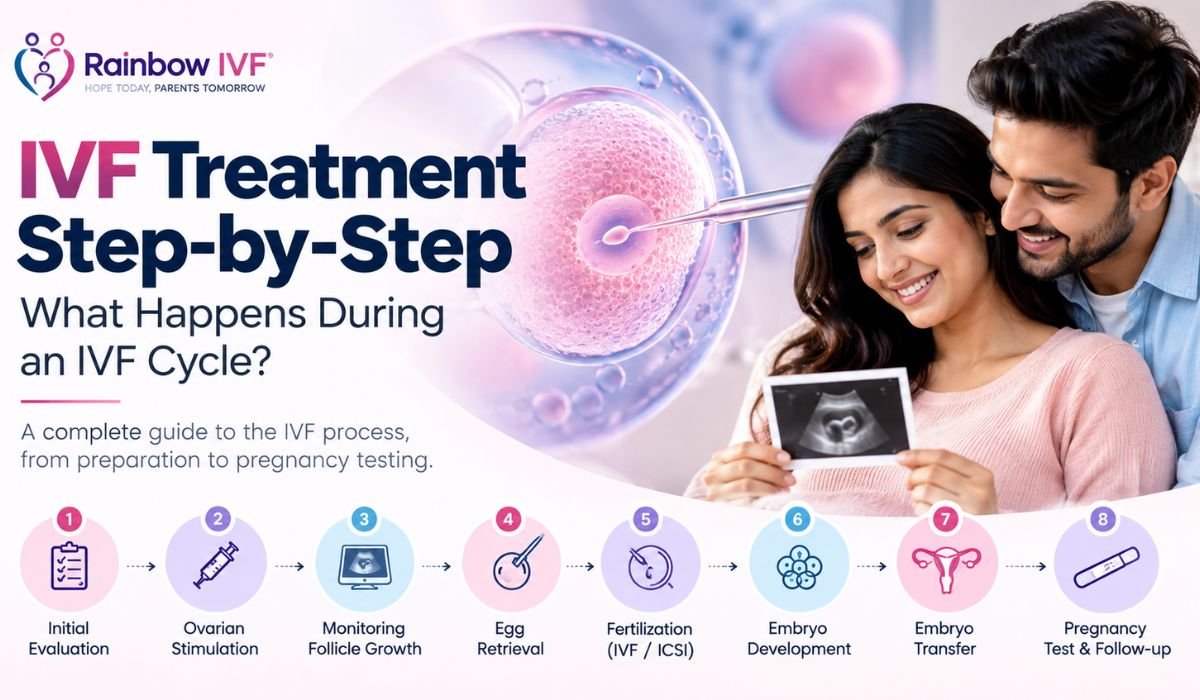
Here is the IVF process in the order it usually happens:
These are the same major stages most fertility clinics describe: ovarian stimulation, egg retrieval, fertilization, embryo culture and embryo transfer. The sections below explain each one.
IVF does not normally begin with injections. It begins with understanding why pregnancy hasn’t happened yet.
Before starting an IVF cycle, a fertility specialist evaluates both partners to understand the possible cause of infertility and determine whether IVF is appropriate. fertility consultation is usually where this process starts.
The evaluation commonly includes:
No two IVF cycles are identical. Once your results are in, your fertility specialist designs a plan around your situation. Factors that shape the plan include:
The medication type, dosage and protocol are decided by your fertility specialist, and they may be adjusted during the cycle. Please don’t copy a protocol that worked for someone else.
Naturally, the body usually matures one egg per month. In IVF, medication is used to help several follicles (the fluid-filled sacs that contain eggs) grow together. More mature eggs give the laboratory more to work with, since not every egg will fertilize or develop into a healthy embryo.
What is ovarian stimulation? It is the phase of IVF in which fertility injections are used to stimulate the ovaries to develop multiple follicles in a single cycle.
What to expect:
The medication protocol is adjusted according to how the ovaries respond, which is why monitoring is an important part of ovarian stimulation for IVF.
Some people experience bloating, mild pelvic discomfort, mood changes or injection-site bruising. Contact your clinic promptly if you develop severe abdominal pain, rapid weight gain, vomiting or difficulty breathing, as these can be signs of ovarian hyperstimulation syndrome (OHSS), a known risk of stimulation.
For a clinical reference, see the ESHRE guideline on ovarian stimulation for IVF/ICSI.
During stimulation you will visit the clinic every few days for monitoring. A typical visit may include:
The goal is not to produce “as many eggs as possible.” It is to achieve an appropriate response safely. Too weak a response may mean fewer eggs, while too strong a response raises the risk of OHSS. Careful monitoring helps your team find the balance.
When follicles reach the appropriate size, you receive a trigger injection. This is a medication that completes the final maturation of the eggs so they are ready to be collected.
Timing matters. Egg retrieval is scheduled for a set time after the trigger, usually a little over a day later, because eggs collected too early may be immature, and too late they may already have been released from the follicles.
For this reason, the trigger must be taken exactly when your team instructs. The medication, dose and timing are individualized by your fertility team, so follow your own clinic’s instructions rather than general guidance.
What is egg retrieval? Egg retrieval, also called ovum pickup (OPU), is a short procedure in which mature eggs are collected from the ovaries after the trigger.
How it works:
Afterward, you rest in the recovery area for a short time. Mild cramping, spotting or a feeling of fullness is common for a day or two. Most people return to light activity the next day, though you should follow your doctor’s advice.
Egg retrieval is generally safe, but it isn’t risk-free. Rare complications include bleeding, infection and, uncommonly, injury to nearby organs, along with the anesthesia-related risks. Your team will explain these before the procedure.
On the day of retrieval, a semen sample is usually provided and prepared in the laboratory, where healthy, active sperm are separated out. If a sample cannot be produced naturally, or no sperm are found in the ejaculate, a doctor may advise a surgical sperm retrieval procedure. Frozen or donor sperm may also be used.
There are two broad approaches to fertilization:
Conventional IVF. Eggs and prepared sperm are placed together in a laboratory dish, and fertilization happens naturally.
ICSI (intracytoplasmic sperm injection). A single sperm is injected directly into a mature egg, when clinically appropriate.
In some cases, particularly when there are significant male-factor fertility concerns, the embryology team may recommend ICSI rather than conventional fertilization. ICSI isn’t needed in every cycle; your specialist will tell you which approach suits you.
The next morning, embryologists check the eggs for signs that fertilization has occurred.
Once an egg is fertilized, it is called a zygote. Over the following days it divides into more and more cells, and the embryology team monitors it closely in an incubator that mimics conditions in the body.
It’s worth setting realistic expectations here: not every retrieved egg becomes an embryo suitable for transfer. Some eggs may be immature, some may not fertilize and some embryos stop developing along the way. This is a normal part of the process, and it is why doctors aim to retrieve several eggs.
Embryologists look at several factors to decide which embryo is best to transfer, including:
Some clinics also use additional technologies, such as time-lapse embryo monitoring or preimplantation genetic testing (PGT), which screens embryos for chromosomal or specific genetic conditions. Rainbow IVF offers genetic screening and diagnostic services, and PGT may help inform embryo selection in appropriate cases. These tools are not necessary for everyone, and your doctor will advise whether they are relevant to you.
What is embryo transfer? It is the procedure in which a selected embryo is placed into the uterus using a thin, flexible catheter.
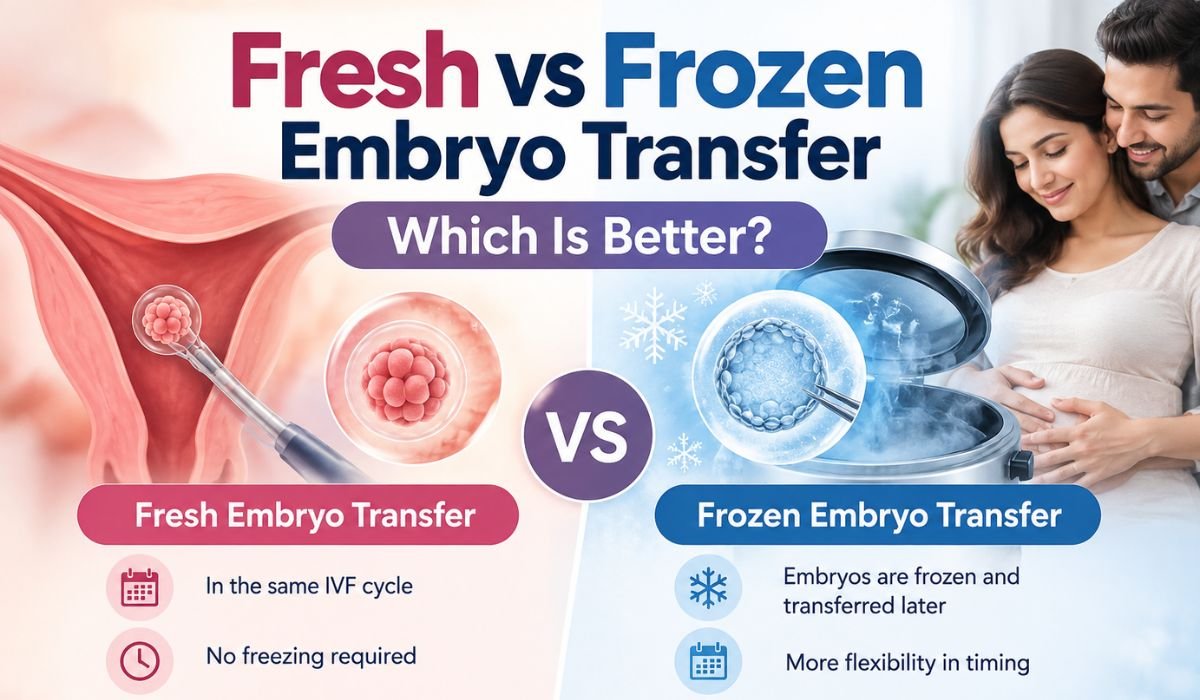
Fresh versus frozen transfer. In a fresh transfer, the embryo is transferred a few days after egg retrieval, usually on day 3 or day 5. In a frozen embryo transfer (FET), embryos are frozen and transferred in a later cycle. Which is appropriate depends entirely on your individual treatment plan. For example, FET may be advised if your hormone levels are very high after stimulation, if PGT results are awaited or if the uterine lining needs more preparation.
Embryos that aren’t transferred right away may be cryopreserved (frozen) when they are of suitable quality. Reasons include:
In an FET cycle, a frozen embryo is thawed and transferred after the uterus has been prepared, usually with hormone medication or sometimes in a natural cycle. FET requires no new egg retrieval.
When embryos or reproductive material need to be preserved for future use, fertility preservation and cryopreservation can provide an option depending on the patient’s treatment plan. Embryo, oocyte (egg) and sperm preservation may all be offered.
The time between transfer and pregnancy testing is often called the “two-week wait.” What usually happens:
Symptoms alone cannot confirm pregnancy or its absence. Some people with early pregnancy feel nothing, and others feel many symptoms without being pregnant. Try not to read too much into how your body feels.
Contact your fertility team if you have heavy bleeding, severe abdominal pain, fever, or marked bloating, or if you are worried about anything.
A blood beta-hCG test measures the pregnancy hormone hCG, and is more reliable than a home urine test at this stage. Your fertility team will tell you when to test, commonly around 10 to 14 days after embryo transfer.
Testing too early can mislead. A home test may give a false negative if hCG is still low, or a false positive if hCG from a trigger injection is still in your system.
After a positive result, your clinic will usually repeat the test, continue medication support and arrange an early ultrasound to confirm the pregnancy is developing in the uterus.
After a negative result, your doctor will review the cycle with you, discuss possible reasons and options such as a frozen transfer or a modified protocol, and offer emotional support. A negative result doesn’t necessarily mean future cycles won’t work.
No clinic can promise a specific outcome, and results vary between patients and cycles.
How long does IVF take? From the start of stimulation to embryo transfer, an IVF cycle often takes around 3–4 weeks, with the pregnancy test about two weeks after transfer. The exact timeline depends on your protocol and whether a fresh or frozen transfer is planned. Initial tests and planning add time before the cycle begins.
| IVF Stage | What Happens |
| Initial evaluation | Tests and treatment planning |
| Ovarian stimulation | Follicles are developed and monitored |
| Trigger | Final egg maturation |
| Egg retrieval | Eggs are collected |
| Fertilization | Eggs and sperm are combined |
| Embryo culture | Embryos develop in the laboratory |
| Transfer | Suitable embryo is placed in the uterus |
| Pregnancy testing | Blood test confirms pregnancy |
The schedule isn’t fixed. It may change because of:
No. The broad stages are similar across patients, but the plan can differ. For example:
IVF is not a one-size-fits-all process, so treat any step-by-step guide, including this one, as a general map and not as your personal plan.
Many factors affect how an IVF cycle turns out, and no single number applies to everyone:
Success rates quoted in general are averages and can’t predict an individual outcome. Ask your fertility specialist what to expect based on your own situation.
Most guides divide IVF into about 6 to 12 steps, depending on how they count. The core stages are evaluation, ovarian stimulation, monitoring, trigger, egg retrieval, fertilization, embryo culture, embryo transfer and pregnancy testing. Your clinic may add steps such as embryo freezing or genetic testing.
From the start of stimulation to embryo transfer, a cycle often takes around 3–4 weeks, with a pregnancy test roughly two weeks after transfer. Timelines vary with your protocol and whether you have a fresh or frozen transfer. Initial tests and planning add time before treatment starts.
Injections can cause mild discomfort or bruising, and bloating is common during stimulation. Egg retrieval is done under sedation or anesthesia, so it shouldn’t be painful, though cramping can follow. Embryo transfer is usually quick and well tolerated. Tell your team if pain feels severe.
You rest in recovery for a short time, then usually go home the same day. Mild cramping, spotting and bloating are common for a day or two. Meanwhile, the embryology team checks fertilization the next day. Contact your clinic if you have severe pain, heavy bleeding or fever.
In a fresh cycle, transfer is usually on day 3 or day 5 after egg retrieval, depending on embryo development and your doctor’s plan. In a frozen embryo transfer, the embryo is transferred in a later cycle after the uterus is prepared, so the timing differs.
A blood beta-hCG test is usually advised around 10 to 14 days after embryo transfer, but your clinic will give you a specific date. Testing earlier can give misleading results, including a false positive from trigger medication or a false negative if hCG is still low.
No. Not every egg is mature, fertilizes or develops into a healthy embryo. Occasionally, a cycle ends without a suitable embryo, or transfer is postponed. This is more likely with fewer eggs or with older age. Your doctor can discuss options if this happens.
No. ICSI is typically recommended when there are significant male-factor concerns, previous fertilization problems or when very few sperm are available. Many couples have successful fertilization with conventional IVF. Your embryologist and fertility specialist will recommend the method that suits your case.
The IVF treatment process moves through a clear sequence: evaluation, stimulation, monitoring, trigger, egg retrieval, fertilization, embryo development, transfer and pregnancy testing. Each stage is closely monitored, and your own protocol may differ from the standard outline in important ways.
Understanding the steps won’t remove all the uncertainty, but it can make the journey feel more manageable. If you’re exploring IVF treatment in Agra or elsewhere, choose a team that explains each stage clearly, answers your questions honestly and tailors the plan to you.
Considering IVF treatment?
Every fertility journey is different. A consultation with a fertility specialist can help you understand your diagnosis, treatment options and whether IVF is appropriate for you. Learn more about IVF treatment
This article is for general information only and is not a substitute for personal medical advice. Protocols, medications, dosages and timelines vary by patient and must be decided by your fertility specialist.



Ph: +91-562-260-0537, +91-7060301888
Address: Rainbow IVF 4th Floor, Ujala Cygnus Rainbow Hospital, NH-19, Near Guru ka Taal, Gurudwara, Sikandra, Agra, Uttar Pradesh 282007


