
Blog
 09/05/2026
Medically Reviewed by Dr. Jaideep Malhotra | Director ART, Rainbow IVF, Agra | Last Reviewed: May 2026
Introduction
When a couple struggles to conceive, the focus almost always falls on the woman. Tests are booked for her. Appointments are made for her. The emotional weight lands on her.
But medical data tells a different story.
Male infertility is responsible for approximately 40 to 50 percent of all infertility cases in India. In another 20 percent of cases, both male and female factors are present together. This means in nearly 7 out of 10 couples facing fertility challenges, the male partner plays a role.
In this guide, we explain the causes of male infertility, the tests used to identify the problem, and the treatment options available — including how advanced IVF and ICSI at Rainbow IVF Agra help men with even severe sperm problems become fathers.
Male infertility means a man’s sperm cannot fertilize a woman’s egg under normal circumstances. This can happen due to problems with sperm production, sperm movement, sperm shape, or sperm delivery.
The condition is more common than most people realize. In India, it is significantly underdiagnosed because many men avoid getting tested due to social stigma and the incorrect belief that infertility is always a woman’s problem.
Male infertility is a medical condition — not a reflection of masculinity. It is treatable in most cases with the right diagnosis and approach.
A normal sperm count is 15 million sperm per milliliter of semen or more. When the count falls below this, it is called oligospermia. Low sperm count reduces the chance that even one sperm will reach and fertilize the egg.
Common causes include hormonal imbalances, varicocele (enlarged veins in the scrotum), infections, and lifestyle factors such as heat exposure, alcohol use, and smoking.
Azoospermia means no sperm are found in the semen at all. It affects approximately 1 percent of all men and up to 10 to 15 percent of infertile men. There are two types:
Motility refers to how well sperm can swim. Even if the sperm count is normal, if sperm cannot swim effectively, they cannot reach the egg. This condition is called asthenospermia.
Progressive motility — meaning sperm moving in a forward direction — needs to be at least 32 percent for normal fertility.
Sperm shape (morphology) affects the sperm’s ability to penetrate and fertilize an egg. When more than 96 percent of sperm have abnormal shape, the condition is called teratospermia.
Even when sperm look normal under a microscope, they can carry damaged DNA. High sperm DNA fragmentation is linked to recurrent IVF failure, poor embryo quality, and early pregnancy loss. This test is not done routinely at all clinics but is essential for couples with unexplained infertility or repeated IVF failures.
At Rainbow IVF, Agra, we include sperm DNA fragmentation testing as part of our advanced male fertility evaluation.
Varicocele is the enlargement of veins inside the scrotum. It is the most common correctable cause of male infertility, found in approximately 40 percent of infertile men. Varicocele raises scrotal temperature and impairs sperm production. Surgical repair (varicocelectomy) can significantly improve sperm parameters in many men.
Low testosterone, high prolactin, or problems with FSH and LH can all disrupt sperm production. These are identified through a simple hormone blood test.
Getting tested is the first and most important step. Here are the key tests your doctor will recommend:
Semen Analysis is always the first test. It measures sperm count, motility, morphology, volume, and pH. It should be done at a certified laboratory after 2 to 5 days of abstinence.
Hormone Profile includes FSH, LH, testosterone, prolactin, and thyroid hormones. These help identify whether the problem is in the testicles or in the hormone signaling from the brain.
Scrotal Ultrasound helps detect varicocele, blockages, or abnormalities in the testicles and epididymis that may not be felt during physical examination.
Sperm DNA Fragmentation Test measures the percentage of sperm with damaged DNA. This is recommended for couples with unexplained infertility, poor embryo quality, or recurrent pregnancy loss.
Genetic Testing including karyotype analysis and Y-chromosome microdeletion testing is recommended for men with very low sperm counts or azoospermia. Some genetic causes of infertility can be passed on to children, making this test important before treatment.
For mild cases, improving lifestyle factors can meaningfully improve sperm quality within 3 months (the time it takes for new sperm to develop). Key changes include:
Hormonal treatments can help men with low testosterone or elevated prolactin. Infections such as epididymitis or prostatitis that affect sperm quality are treated with appropriate antibiotics.
Varicocelectomy is the surgical repair of varicocele. It is a day procedure and can significantly improve sperm count and motility in eligible men.
TESA (Testicular Sperm Aspiration) and PESA (Percutaneous Epididymal Sperm Aspiration) are minimally invasive procedures to retrieve sperm directly from the testicle or epididymis. These are used for men with obstructive azoospermia and are performed on the same day as the IVF egg retrieval procedure.
Micro-TESE (Microsurgical Testicular Sperm Extraction) is a more advanced surgical procedure for men with non-obstructive azoospermia. Using a high-powered operating microscope, the surgeon identifies and retrieves rare pockets of sperm production within the testicle.
For men with very low sperm count, poor motility, abnormal morphology, or sperm retrieved surgically, ICSI (Intracytoplasmic Sperm Injection) is the treatment of choice.
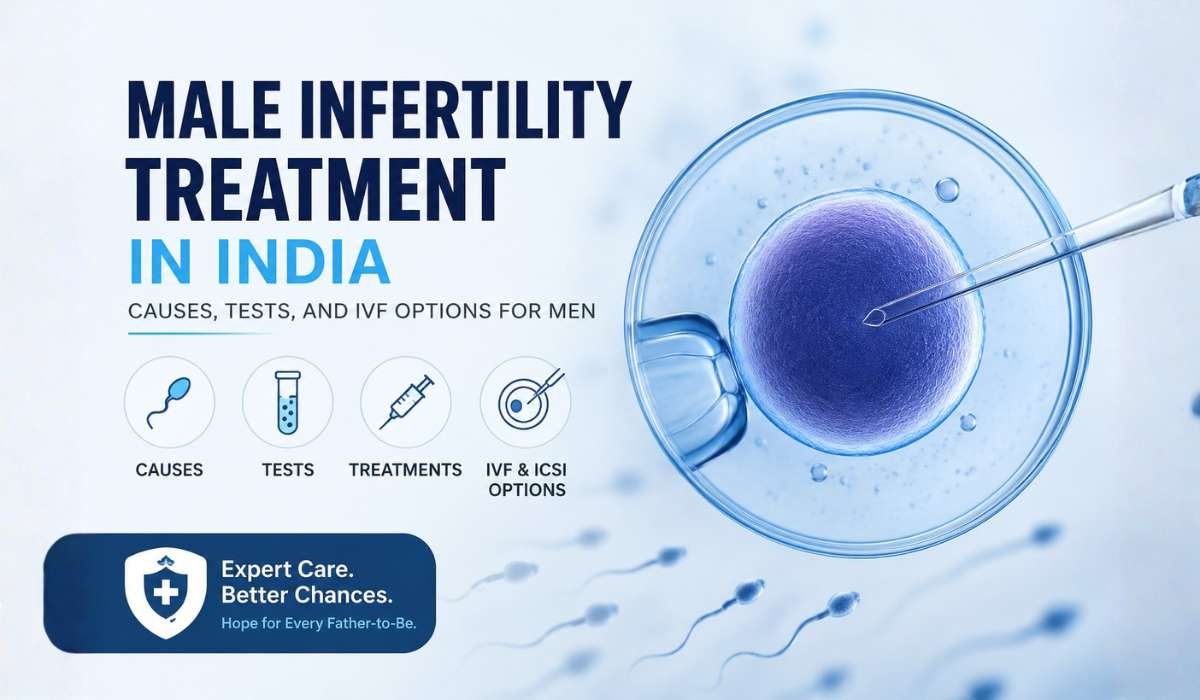
In ICSI, a single healthy sperm is selected under a powerful microscope and injected directly into the egg. This bypasses all the natural barriers that sperm would otherwise need to overcome.
ICSI is performed as part of the IVF process. The woman undergoes ovarian stimulation and egg retrieval as in standard IVF. The key difference is in how fertilization happens — one sperm, one egg, direct injection.
At Rainbow IVF Agra, we use AI-assisted sperm selection technology to identify the best quality sperm for ICSI. This advanced approach helps improve fertilization rates and embryo quality, particularly for men with DNA fragmentation or severe morphology issues.
Related reading: ICSI treatment at Rainbow IVF | Complete Guide to IVF Treatment in India
Do not wait a year if any of the following apply:
At Rainbow IVF, we recommend that both partners are evaluated together from the first consultation. This saves time, reduces cost, and ensures the treatment plan addresses the real cause rather than treating only one partner.
We see many couples who have spent months — sometimes years — treating the woman without anyone properly evaluating the male partner. A simple semen analysis at the start could have changed their entire treatment journey.
Our male infertility evaluation includes semen analysis, hormone profile, scrotal ultrasound, and sperm DNA fragmentation testing as a standard package. For men with azoospermia, we coordinate TESA or micro-TESE with our IVF cycle so that sperm retrieval and egg retrieval happen on the same day, maximizing efficiency and reducing the emotional burden on the couple.
Our embryology team has extensive experience with ICSI using surgically retrieved sperm, and our success rates with this approach are consistently strong.
Yes, in many cases. Men with obstructive azoospermia have a high chance of successful sperm retrieval through TESA or PESA. Men with non-obstructive azoospermia may still have small pockets of sperm production that can be found through micro-TESE. Even a single sperm retrieved surgically can be used in ICSI to fertilize an egg.
Not always. Many men with normal testosterone levels have low sperm count or poor sperm quality. Testosterone and sperm production are related but not the same thing. A semen analysis and hormone panel together give a complete picture.
Yes. Sperm take approximately 74 days to develop. This means lifestyle changes, supplements, and medical treatment need at least 3 months to show improvement in semen analysis results.
No. Sperm parameters fluctuate. Illness, fever, stress, and lifestyle factors all affect results. If an initial result is abnormal, a repeat test after 4 to 6 weeks is recommended before making treatment decisions.
The TESA or PESA procedure for sperm retrieval takes 15 to 20 minutes under local anesthesia. It is a day procedure with minimal discomfort. Most men return to normal activity the next day.
Most health insurance policies in India do not cover IVF or fertility treatment. However, some newer corporate group policies are beginning to include fertility benefits. We recommend checking with your insurance provider. At Rainbow IVF, we offer flexible payment options to make treatment accessible.
Male infertility is common, underdiagnosed, and in most cases treatable. The first step is simply getting tested — a semen analysis that takes 30 minutes and provides answers that can change the entire direction of your fertility treatment.
If you or your partner has been trying to conceive without success, do not assume the problem lies with only one of you. A complete evaluation of both partners at the same time is the most effective and efficient approach.
Book a consultation at Rainbow IVF Agra today. Our specialists will evaluate both partners together, identify the exact cause, and recommend the most appropriate treatment — whether that is lifestyle changes, medical management, surgery, IUI, ICSI, or IVF.
📞 +91-562-260-0537 | +91-7060301888 📍 Rainbow IVF, 4th Floor, Ujala Cygnus Rainbow Hospital, NH-19, Sikandra, Agra
Related articles on our website:





Ph: +91-562-260-0537, +91-7060301888
Address: Rainbow IVF 4th Floor, Ujala Cygnus Rainbow Hospital, NH-19, Near Guru ka Taal, Gurudwara, Sikandra, Agra, Uttar Pradesh 282007


