
Blog
 29/04/2026
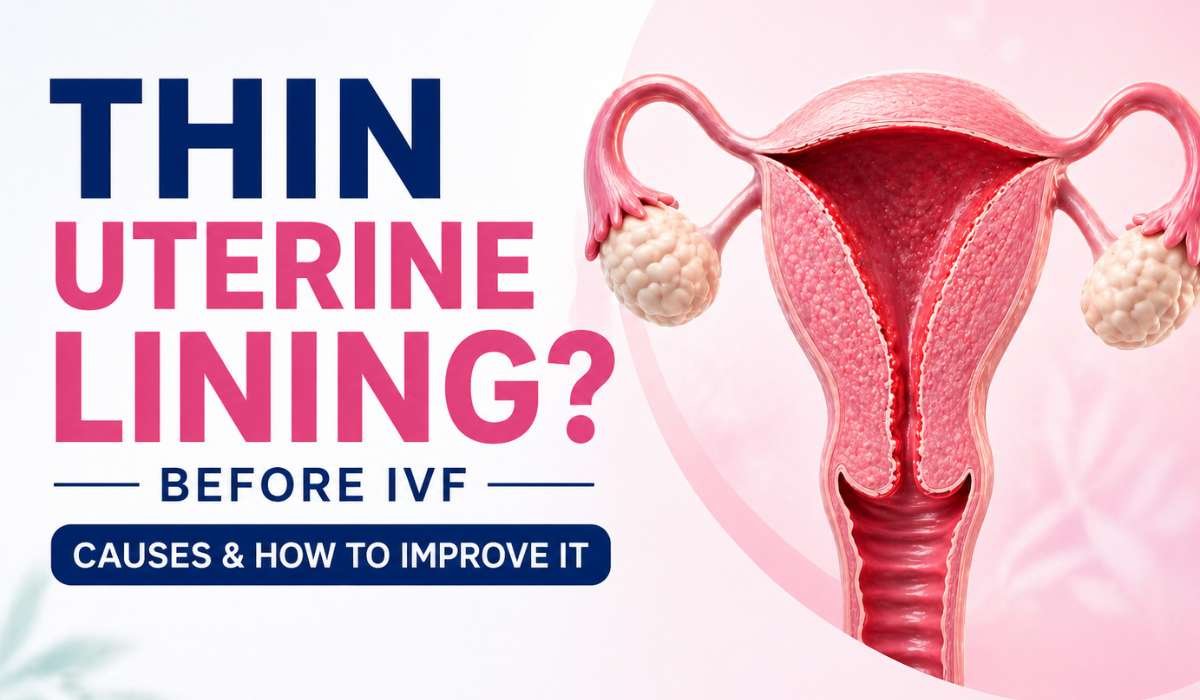
Your IVF cycle is ready. Embryos are growing in the lab. But the doctor says: “Your uterine lining is too thin. We cannot transfer yet.”
This is one of the most frustrating delays in fertility treatment. Thousands of Indian women face this problem every year. And most are confused: Why is my lining thin? Can it be fixed? Will IVF fail because of this?
This blog answers all those questions. You will learn what causes thin uterine lining, how it affects IVF success, and most importantly – how to improve uterine lining before your embryo transfer.
What is Thin Uterine Lining in IVF?
Thin uterine lining means the endometrium is less than 7 mm thick, which can reduce implantation chances during IVF. This condition is also called thin endometrium IVF, and measuring endometrial thickness IVF is a standard step before every embryo transfer.
The uterine lining (endometrium) is the tissue inside the uterus where an embryo implants. For a successful IVF transfer, doctors look for a thickness of 7 to 10 mm.
Anything below 7 mm is considered a thin uterine lining. This can reduce the chance of implantation. But thin lining does not mean IVF will definitely fail. Many women with lining between 4–6 mm have had healthy pregnancies after proper treatment.
Keep reading to understand why this happens and what you can do.
The endometrium grows and thickens each month under the influence of the hormone estrogen. In a natural cycle, it reaches its maximum thickness just before ovulation.
In IVF, doctors prepare the lining using estrogen medicines before transferring an embryo. If the lining does not reach 7 mm, it is called thin endometrium or thin uterine lining. Measuring endometrial thickness IVF is a routine part of cycle monitoring. This condition makes it harder for the embryo to attach and grow.
Implantation is the moment when the embryo burrows into the uterine lining. Without a thick, receptive lining, even a healthy embryo may fail to implant.
Think of the endometrium as soil and the embryo as a seed. If the soil is too thin, the seed cannot take root. A thin lining also has poor blood flow and fewer glands, which are essential for nourishing the early pregnancy.
Studies show that when endometrial thickness is less than 7 mm, IVF success rates drop significantly. However, thickness is not the only factor. Lining pattern and blood flow also matter.
This is the most important section. Understanding the root cause is the first step toward fixing it. Thin endometrium IVF cases often stem from one or more of these reasons.
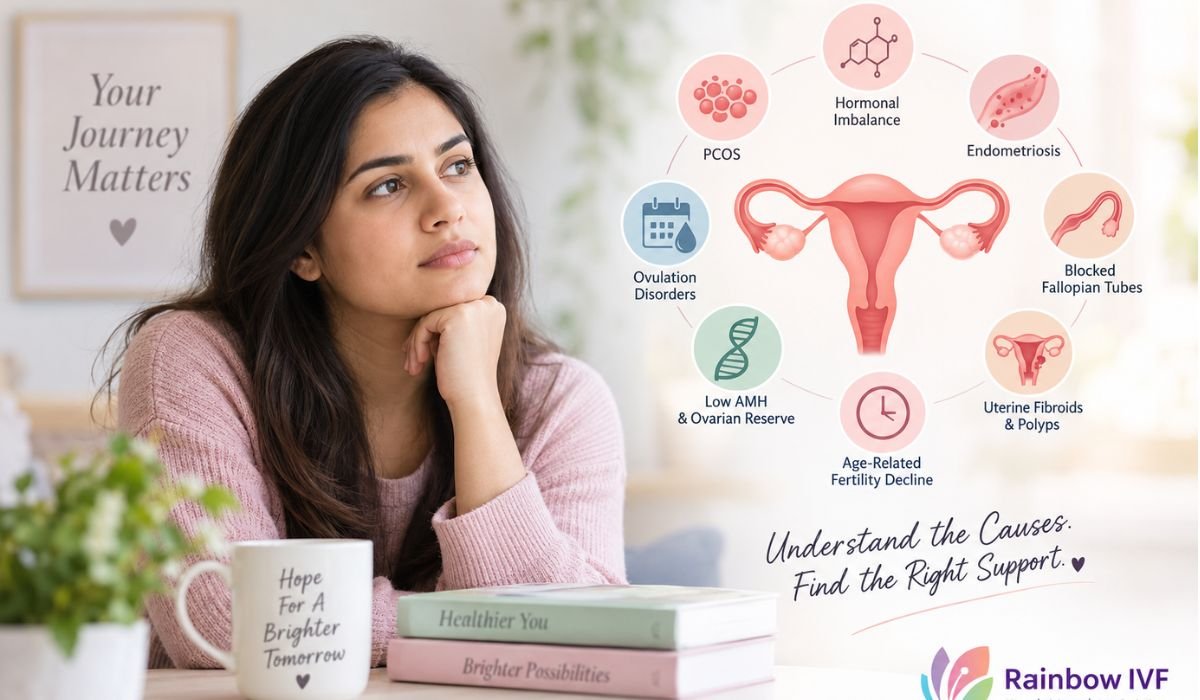
Estrogen is the hormone responsible for growing the uterine lining. If estrogen levels are low – due to age, poor ovarian reserve, or certain medications – the lining will not thicken properly. Women with polycystic ovary syndrome (PCOS) or thyroid disorders may also have hormonal imbalances that affect the endometrium.
The uterus needs good blood supply to build a healthy lining. Conditions like uterine fibroids, endometriosis, or pelvic infections can reduce blood flow. Sedentary lifestyle, stress, and smoking also impair circulation to the pelvic region.
Any surgery that scrapes or cuts the inside of the uterus can damage the endometrial lining. Repeated dilation and curettage (D&C) – often done after miscarriage or abortion – is a common cause in India. C-sections and myomectomy (fibroid removal) can also leave scar tissue that prevents normal growth.
Genital tuberculosis is a major cause of thin uterine lining in India. TB bacteria can infect the endometrium, causing inflammation, scarring, and permanent damage. Many women with unexplained thin lining are later diagnosed with endometrial TB. Other infections like chronic endometritis (bacterial infection of the uterine lining) also impair thickening.
Asherman’s syndrome is a condition where scar tissue (adhesions) forms inside the uterus. This usually follows multiple D&C procedures or severe pelvic infections. The scar tissue replaces healthy endometrium, making it impossible for the lining to grow normally. Hysteroscopy is needed to diagnose and treat this condition.
Many women with thin uterine lining have no obvious symptoms. But some signs may indicate a problem:
Light periods – Very scanty bleeding lasting 1–2 days instead of 4–5 days.
Failed IVF cycles – Repeated implantation failure despite good-quality embryos.
Difficulty conceiving naturally – Without any other obvious cause.
History of uterine surgery or infection – Previous D&C, C-section, or TB treatment.
If you have any of these symptoms, ask your doctor to measure your endometrial thickness before starting an IVF cycle.
Yes, thin uterine lining can lower IVF success rates. But it does not make pregnancy impossible.
Research shows that when endometrial thickness IVF is 7 mm or more, live birth rates are significantly higher. Below 7 mm, the chance decreases. However, many women with lining of 4–6 mm have delivered healthy babies after appropriate treatment.
The key factors are:
The reason for thin lining (scarring is harder to fix than low estrogen)
Your age and egg quality
The treatments used to improve thickness
Do not lose hope. Thin lining is a challenge, but it is often treatable. Learning how to improve uterine lining before transfer is essential.
This is your action section. Here are the most effective, evidence-based methods to thicken the endometrium. To improve uterine lining in cases of thin endometrium IVF, doctors use a combination of these approaches.
This is the first line of treatment. Doctors prescribe estrogen pills, patches, or vaginal tablets to stimulate lining growth. In IVF, estrogen is given from day 2 or 3 of the cycle. If the lining remains thin, the dose may be increased or the route changed (e.g., from oral to vaginal). This works best for hormonal causes. It is less effective for scarred or damaged lining.
Better blood flow means a thicker lining. Simple steps include:
Moderate exercise – Walking, yoga, and light cardio improve pelvic circulation.
Low-dose aspirin – Sometimes prescribed to improve blood flow to the uterus.
Pentoxifylline – A medication that improves blood viscosity and oxygen delivery.
Acupuncture – Some studies suggest it increases uterine blood flow.
Always take medicines only under doctor supervision.
PRP is a newer and promising treatment. A small amount of your own blood is drawn and spun in a machine to separate the platelet-rich plasma. This PRP is then injected into the uterine lining. It contains growth factors that stimulate tissue regeneration and thickening.
PRP has helped many women with thin lining who did not respond to estrogen. It is safe because it is derived from your own blood. However, it is not a guarantee and may need multiple sessions.
Certain supplements have shown benefit in improving endometrial thickness:
Vitamin E – 400–600 IU daily improves blood flow and lining growth.
L-arginine – An amino acid that increases nitric oxide and uterine blood flow. Typical dose is 6 grams per day.
Pentoxifylline + Vitamin E – A combination used for chronic endometritis and thin lining.
Vitamin D – Low vitamin D levels are linked to thinner endometrium.
L-carnitine – May improve endometrial receptivity.
Do not self-medicate. Always ask your doctor before starting any supplement.
Small daily habits make a big difference:
Stop smoking – Nicotine constricts blood vessels and reduces uterine blood flow.
Reduce stress – High cortisol levels can lower estrogen and impair lining growth.
Maintain healthy weight – Very low body fat can reduce estrogen production.
Stay hydrated – Dehydration affects blood volume and circulation.
If the above methods fail, doctors may try:
Hysteroscopic adhesiolysis – Surgical removal of scar tissue (Asherman’s syndrome).
Granulocyte colony stimulating factor (G-CSF) – An injection into the uterus to promote lining growth.
Endometrial scratch – Minor injury to the lining to trigger growth factors.
Donor egg cycle – If the uterus is severely damaged, donor embryos with a surrogate may be considered.
There is no strict legal minimum, but most IVF clinics follow these guidelines:
Below 5 mm – Very low success rate. Transfer is usually postponed.
5 to 6 mm – Acceptable in some clinics if other factors are good. Success rates are lower.
7 mm – Minimum acceptable for most doctors. Success rates are reasonable.
8 to 10 mm – Ideal. Best chance of implantation.
Above 10 mm – No additional benefit. Very thick lining can sometimes indicate problems.
Measuring endometrial thickness IVF before transfer is non-negotiable. Your doctor may still proceed with a transfer at 6 mm if you have failed to improve after multiple cycles and have no other options.
Postponing a cycle is frustrating, but sometimes it is the smartest decision. Your IVF transfer should be delayed if:
Your endometrial thickness is below 6 mm after maximum treatment.
You have a uterine infection (chronic endometritis or TB) that needs treatment first.
You have large polyps or fibroids distorting the cavity.
You have Asherman’s syndrome requiring hysteroscopic surgery.
Delaying by one or two months to improve uterine lining can save you the cost and heartbreak of a failed transfer.
Many women focus only on egg quality and embryo grading. They forget that a good embryo needs a good home. Always ask for your endometrial thickness IVF report before transfer.
“I have waited so long. Let’s just transfer.” This is a common mistake. Transferring into a thin lining lowers success rates. One extra month of preparation is worth it.
Taking high doses of vitamin E, L-arginine, or aspirin without doctor guidance can be dangerous. Aspirin can cause bleeding. L-arginine may interact with blood pressure medicines. Always consult your fertility specialist.
If you have thin lining despite good estrogen levels, do not ignore it. Ask for a hysteroscopy to check for scar tissue or chronic infection. In India, always rule out genital tuberculosis with a test like TB PCR on endometrial sample.
Many women try one or two treatments and assume nothing will work. But the uterus responds slowly. A combination of estrogen, PRP, and supplements over 3–4 months can show significant improvement. Be patient.
Can thin uterine lining be reversed?
Yes, in most cases. If the cause is hormonal or poor blood flow, treatment often succeeds. If there is severe scarring (Asherman’s syndrome), surgery can help. Only extensive, irreversible damage may not improve fully.
What is the minimum thickness for IVF transfer?
Most clinics accept 7 mm. Some proceed at 6 mm if the lining has a good triple-layer pattern and the patient has failed to improve further. Below 5 mm, success is very rare.
Does thin lining always cause IVF failure?
No. Many women with thin lining have successfully conceived after IVF. The success rate is lower, but not zero. It also depends on embryo quality and other uterine factors.
How long does it take to improve uterine lining?
With estrogen alone, 1–2 weeks. With PRP, supplements, and lifestyle changes, expect 1–3 months. Scar tissue removal may require a separate cycle. Be prepared for 2–4 months of preparation.
Is PRP treatment for thin lining safe?
Yes. PRP uses your own blood, so there is no risk of allergy or rejection. It is a relatively new procedure, but early research shows it is safe and effective for many women with thin endometrium.
Can thin lining be caused by tuberculosis in India?
Yes. Genital TB is a common cause of thin, scarred endometrium in Indian women. Always get tested for TB if you have unexplained thin lining, especially if you have a history of TB in the family or unexplained infertility.
Thin uterine lining is a real challenge in IVF, but it is not the end of the road. The right diagnosis – whether hormonal, vascular, infective, or structural – leads to the right treatment. Estrogen therapy, blood flow improvement, PRP, supplements, and sometimes surgery can transform a thin lining into a receptive one.
Do not rush. Do not guess. Work with a fertility specialist who will measure your endometrial thickness IVF properly, investigate the cause, and give you a realistic timeline. Learning how to improve uterine lining before transfer is one of the wisest investments you can make in your IVF journey. If you are dealing with thin endometrium IVF, know that many women have succeeded with patience and the right medical support.
For more information on preparing for IVF and understanding the full procedure, visit our IVF treatment.
If you are also dealing with male factor infertility, learn about ICSI treatment options.
Take the next step with knowledge, not fear. Your uterus can heal. Your chances can improve. Just give it the right support and time.

Ph: +91-562-260-0537, +91-7060301888
Address: Rainbow IVF 4th Floor, Ujala Cygnus Rainbow Hospital, NH-19, Near Guru ka Taal, Gurudwara, Sikandra, Agra, Uttar Pradesh 282007


