
Blog
 30/06/2026
By Dr. Keshav Malhotra | Consultant, Reproductive Medicine, Rainbow IVF Agra
Reviewed by: Prof. Dr. Jaideep Malhotra | Director ART, Rainbow IVF | Published: June 2026 | Reading Time: 11 min
⚡ Quick Answer — What is Egg Freezing?
Egg freezing, medically known as oocyte cryopreservation, is a procedure where a woman’s eggs are retrieved, frozen, and stored for future use. It allows women to preserve their fertility at a younger, healthier age and use the eggs later — through IVF — when they are ready to conceive. The ideal age for egg freezing is between 25 and 35, when egg quality and quantity are at their best.
More women across India are choosing to freeze their eggs — not because something is wrong, but because they want options. Whether you are focused on your career, haven’t found the right partner yet, are about to undergo medical treatment that could affect fertility, or simply want an insurance policy for your future family, egg freezing is a medically established, increasingly common choice.
At Rainbow IVF Agra, our fertility preservation programme combines advanced vitrification technology with the clinical expertise that has helped build 12,500+ families. This guide answers every question you may have about egg freezing in India — from the right age, to the process, cost, and success rates.
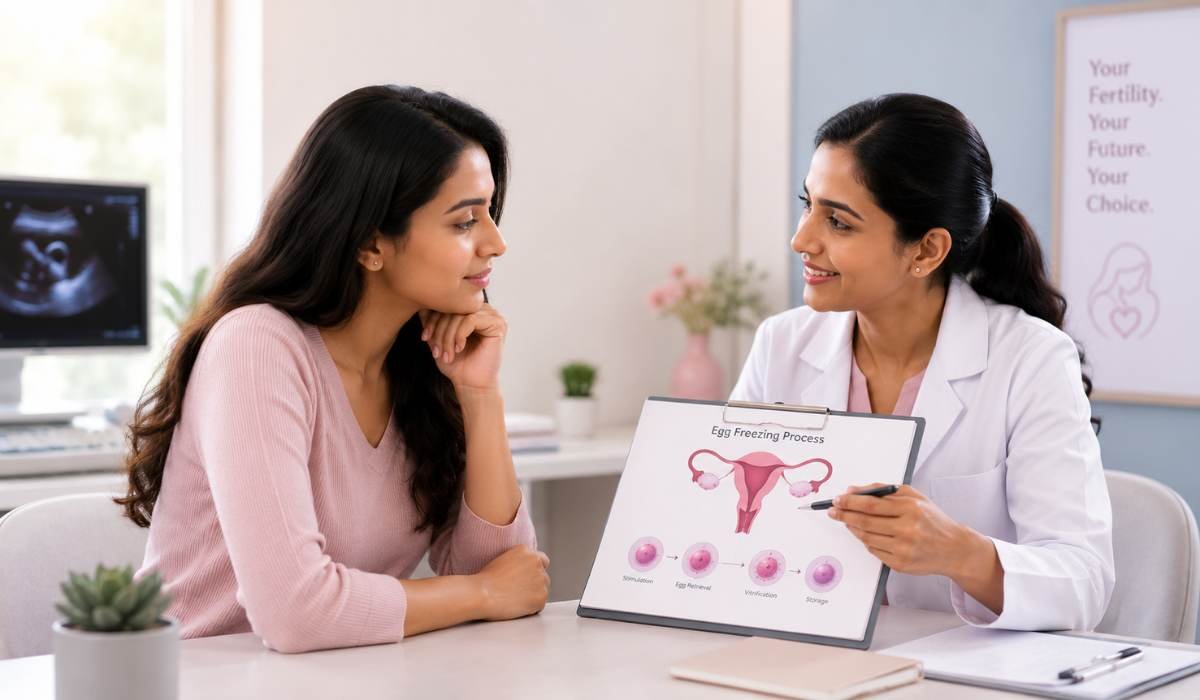
Egg freezing is a fertility preservation technique where unfertilized eggs are retrieved from a woman’s ovaries, frozen using a rapid-freezing method called vitrification, and stored at -196°C in liquid nitrogen for future use.
Here is how it works at a glance:
This is different from embryo freezing, where eggs are fertilized before freezing. Egg freezing preserves unfertilized eggs, giving women the flexibility to decide on a partner or sperm donor later. Learn more about our Cryopreservation technology and Oocyte and Embryo Storage facility at Rainbow IVF.
Egg freezing is broadly divided into two categories: elective (social) egg freezing and medical egg freezing.
The best age for egg freezing is between 25 and 35 years, with 30-34 considered the optimal window. Egg quality and quantity decline significantly after age 35, and more sharply after 38. Freezing eggs before age 35 generally results in better egg quality, higher numbers of eggs retrieved, and improved chances of a successful pregnancy when the eggs are eventually used.
| Age Group | Egg Quality | Eggs Needed for 1 Live Birth (approx.) | Recommendation |
| Below 30 | Excellent | 8-10 eggs | Ideal window |
| 30-34 | Very Good | 10-15 eggs | Ideal window |
| 35-37 | Good, declining | 15-20 eggs | Still recommended |
| 38-40 | Declining | 20-30 eggs | Consult promptly |
| Above 40 | Significantly reduced | 30+ eggs (multiple cycles often needed) | Limited benefit; consult urgently |
Most fertility societies, including ICMR guidelines in India, recommend egg freezing be considered before age 35 for the best outcomes. That said, women of any reproductive age can be evaluated — an AMH and antral follicle count test will clarify your individual ovarian reserve.
| Step | Phase | What Happens |
| 1 | Initial Consultation & Testing | AMH blood test, antral follicle count (ultrasound), and general health screening to assess ovarian reserve and predict response to stimulation. |
| 2 | Ovarian Stimulation (10-12 days) | Daily hormone injections stimulate the ovaries to develop multiple eggs instead of the single egg released naturally each month. Monitored via ultrasound and blood tests every 2-3 days. |
| 3 | Trigger Injection | Once follicles reach optimal size, a trigger injection is given to mature the eggs, timed precisely 34-36 hours before retrieval. |
| 4 | Egg Retrieval (Day Procedure) | A minor procedure under light sedation, lasting 15-20 minutes. Eggs are collected via a thin needle guided by ultrasound through the vaginal wall. No incisions or stitches needed. |
| 5 | Vitrification (Same Day) | Mature eggs are immediately frozen using vitrification — an ultra-rapid freezing method that prevents ice crystal formation, preserving egg structure with over 90% survival rate upon thawing. |
| 6 | Long-Term Storage | Eggs are stored in secure cryo-tanks with electronic tracking. Storage can be extended yearly, and eggs remain viable for many years. |
| 7 | Future Use | When ready, eggs are thawed, fertilized with sperm via ICSI, cultured into embryos, and transferred to the uterus through a standard FET cycle. |
When you are ready to use your frozen eggs, the embryo transfer process follows the same protocol explained in our detailed guide on Frozen Embryo Transfer (FET). Our RI Witness electronic tracking system ensures your eggs and embryos are never mismatched at any stage.
💡 Did You Know?
The entire egg freezing cycle — from the first injection to retrieval — takes about 2 weeks. The retrieval procedure itself takes only 15-20 minutes, and most women return to normal activity within 1-2 days. There is no need to find a partner or sperm donor at the time of freezing — that decision can wait until you’re ready to use the eggs.
Egg freezing success rates depend primarily on the woman’s age at the time of freezing and the number of eggs frozen. Women who freeze 15-20 eggs before age 35 have approximately a 70-80% chance of at least one live birth from those eggs. Egg survival rate after thawing (vitrification) is typically above 90%, and fertilization rates after thawing are comparable to fresh eggs.
| Age at Freezing | Eggs Frozen | Estimated Chance of 1 Live Birth |
| Below 35 | 15-20 eggs | 70-80% |
| 35-37 | 15-20 eggs | 55-65% |
| 38-40 | 20-25 eggs | 35-50% |
| Above 40 | 25-30+ eggs | 15-25% |
These are estimated ranges based on published fertility data and may vary based on individual ovarian reserve, lab quality, and the technique used. A consultation with AMH testing gives a far more personalized estimate of how many eggs you are likely to retrieve.
Egg freezing in India typically costs between ₹1,00,000 and ₹2,00,000 for one cycle, which includes ovarian stimulation, monitoring, egg retrieval, and the first year of storage. Annual storage fees thereafter range from ₹10,000 to ₹25,000 per year. The total cost depends on the clinic, the medication protocol required, and how many cycles are needed to freeze an adequate number of eggs.
| Cost Component | Approximate Cost (India) |
| Initial consultation & fertility testing (AMH, ultrasound) | ₹3,000 – ₹8,000 |
| Ovarian stimulation medications | ₹40,000 – ₹80,000 |
| Monitoring (ultrasounds + blood tests) | ₹10,000 – ₹20,000 |
| Egg retrieval procedure | ₹40,000 – ₹70,000 |
| Vitrification (freezing) lab fee | ₹15,000 – ₹25,000 |
| Storage (first year, often included) | ₹10,000 – ₹25,000 |
| Total — one full cycle | ₹1,00,000 – ₹2,00,000 |
| Annual storage (from year 2 onward) | ₹10,000 – ₹25,000 / year |
Some women may need more than one stimulation cycle to freeze an optimal number of eggs, particularly if ovarian reserve is lower. For a full breakdown of related fertility treatment costs, see our guide on IVF Cost in Agra.
Frozen eggs can be stored safely for many years without significant quality loss, thanks to vitrification technology. Studies have shown successful pregnancies from eggs frozen for over 10 years.
Rainbow IVF’s Oocyte and Embryo Storage facility maintains strict temperature monitoring, backup systems, and electronic tracking via our RI Witness system for complete peace of mind.
When you are ready to use your frozen eggs, the process involves a few clear steps:
This means egg freezing is essentially the first half of an IVF cycle — completed in advance, at a time when your eggs are at their best quality.
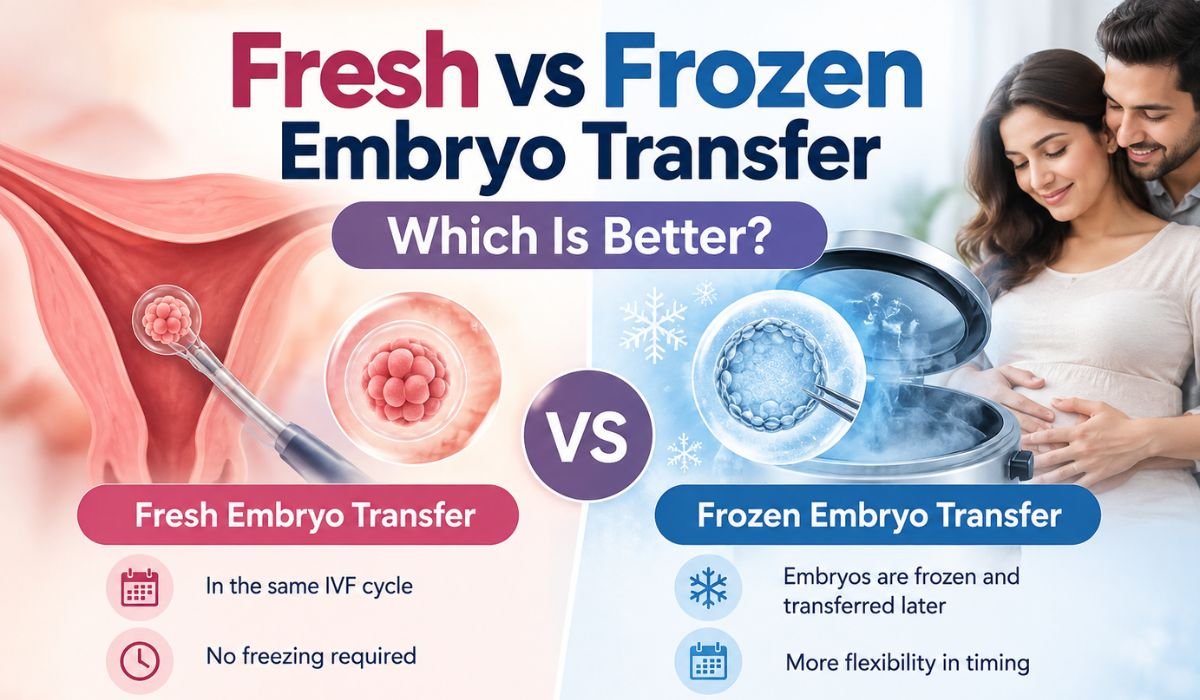
| Factor | Egg Freezing | Embryo Freezing |
| Requires partner/donor sperm? | No — decided later | Yes — needed at time of freezing |
| Best for | Single women, those without a partner yet | Couples in IVF treatment with embryos to spare |
| Survival rate after thaw | >90% with vitrification | >95% with vitrification |
| Flexibility | High — decide on partner later | Lower — partner already decided |
| Success per unit frozen | Slightly lower per egg (since fertilization isn’t guaranteed) | Slightly higher per embryo (already fertilized, viability confirmed) |
Couples already undergoing IVF treatment typically opt for embryo freezing since fertilization happens immediately. Single women preserving fertility for the future typically choose egg freezing for maximum flexibility.
Rainbow IVF, located at Ujala Cygnus Rainbow Hospital, Sikandra, Agra, brings advanced fertility preservation technology combined with decades of clinical expertise.
| Rainbow IVF Advantage | Why It Matters |
| Advanced Vitrification Technology | >90% egg survival rate after thawing |
| RI Witness Electronic Tracking | Zero risk of sample mix-up at any stage |
| Embryoscope Time-Lapse System | Optimal embryo monitoring when eggs are later used |
| AI-Based Embryo Selection | Maximizes success when frozen eggs are eventually used |
| 52.4% Overall IVF Success Rate | Well above the national average |
| 12,500+ Families | 4.9★ Google Rating | Trusted clinical experience across North India |
To discuss your fertility preservation options, book a confidential consultation at Rainbow IVF Agra. Our team will guide you through AMH testing, personalized planning, and the entire egg freezing process.
The ideal age to freeze your eggs is between 25 and 35, with 30-34 considered the optimal window for the best balance of egg quality and quantity. While egg freezing is possible after 35, success rates decline with age, so earlier freezing generally provides better outcomes. An AMH test can help determine your individual ovarian reserve regardless of age.
Egg freezing is generally not very painful. The stimulation injections may cause mild bloating or discomfort, similar to PMS symptoms. The egg retrieval procedure is done under light sedation, so you won’t feel pain during the process, though some cramping is common for a day or two afterward. Most women resume normal activities within 1-2 days.
Most fertility specialists recommend freezing 15-20 eggs for women under 35 to achieve a reasonable (70-80%) chance of one live birth in the future. Women over 35 may need to freeze more eggs (20-30+) to achieve similar odds, since egg quality declines with age. This may require more than one stimulation cycle.
No, egg freezing does not cause early menopause or harm future fertility. The eggs retrieved during the procedure are ones that would have been lost naturally during that month’s cycle. The stimulation process does not deplete your remaining egg reserve beyond what would occur naturally.
Frozen eggs have an average survival rate of over 90% after thawing using modern vitrification technology, and fertilization rates are comparable to fresh eggs. Overall chances of a live birth depend heavily on the woman’s age at the time of freezing — women who froze eggs before 35 have significantly higher success rates than those who froze after 38.
Egg freezing in India typically costs between ₹1,00,000 and ₹2,00,000 for one complete cycle, including stimulation medications, monitoring, retrieval, and the first year of storage. Annual storage fees thereafter range from ₹10,000 to ₹25,000 per year.
Yes, single women can legally freeze their eggs in India for personal fertility preservation. Egg freezing does not require a partner or sperm donor at the time of freezing — that decision can be made later, whenever the woman chooses to use her frozen eggs.
The complete egg freezing cycle takes approximately 2 weeks from the first stimulation injection to egg retrieval. The retrieval procedure itself takes only 15-20 minutes under light sedation, and most women return to normal daily activities within 1-2 days.
If you decide not to use your frozen eggs, you can choose to continue storage, discontinue storage, or in some cases donate the eggs for research or to other couples, depending on clinic policy and applicable regulations in India. This decision is entirely yours and can be revisited at any time during the storage period.
Most standard health insurance policies in India do not cover elective (social) egg freezing, as it is generally considered an elective procedure. However, medical egg freezing done before cancer treatment or other medically necessary reasons may sometimes be covered, depending on the specific insurance policy. It is best to check directly with your insurer.
No. Current medical evidence shows that babies born from frozen eggs are not at a higher risk of birth defects compared to babies conceived through fresh eggs or natural conception. Modern vitrification technology preserves egg quality effectively, and the health of the baby depends on multiple factors such as the mother’s age at the time of egg freezing, embryo quality, and overall pregnancy health.
Yes. Egg freezing is legal in India and is performed under applicable fertility and assisted reproductive technology regulations. Single women and married women can choose egg freezing for fertility preservation after a medical evaluation and informed consent. It is important to consult a qualified fertility specialist to understand the legal and medical aspects before starting treatment.
Frozen eggs can remain safely stored for many years without significant loss of quality because they are preserved at -196°C using vitrification technology. From a biological perspective, there is no known expiry period for properly stored frozen eggs. However, the duration of storage is subject to clinic policies, consent requirements, and applicable regulations in India.
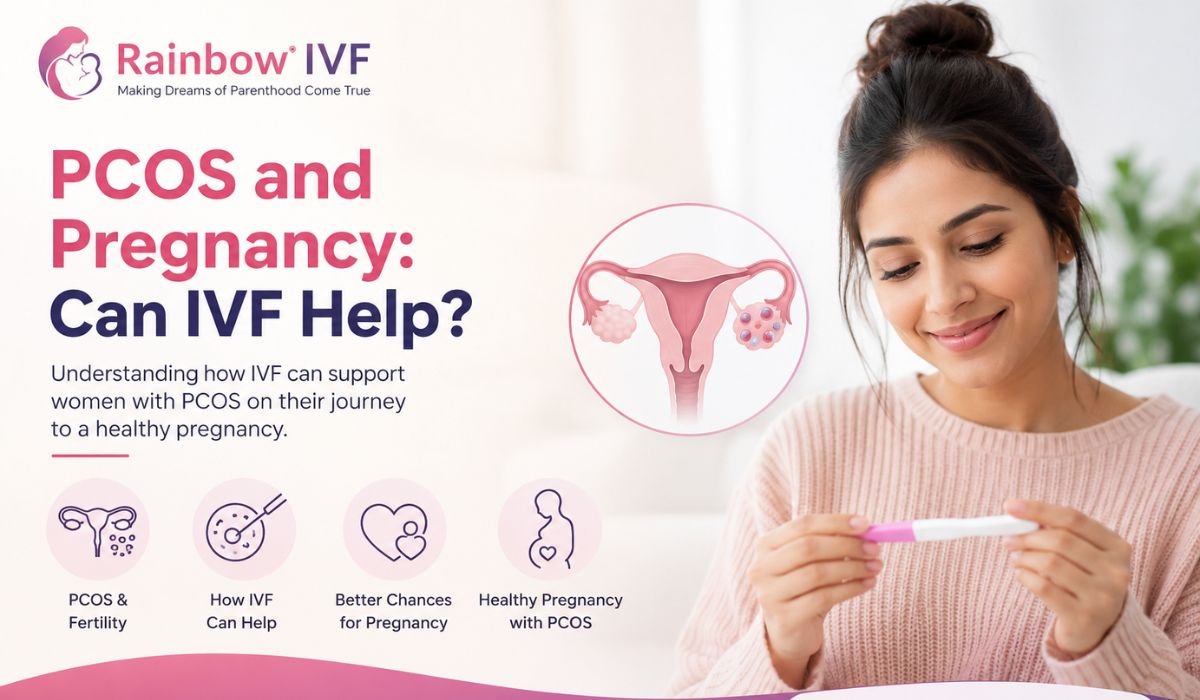
Yes. Women with Polycystic Ovary Syndrome (PCOS) can freeze their eggs and are often good candidates for fertility preservation because they usually have a higher ovarian reserve. However, women with PCOS may have a higher risk of ovarian hyperstimulation syndrome (OHSS), so the treatment plan and medication protocol should be carefully customized by a fertility specialist to ensure a safe and successful egg retrieval process.
Egg freezing offers a proactive way to preserve your fertility on your own terms. Whether you are planning ahead for your career, waiting for the right partner, or need to protect your fertility before medical treatment, Rainbow IVF’s team is here to guide you with expert, confidential care.

Ph: +91-562-260-0537, +91-7060301888
Address: Rainbow IVF 4th Floor, Ujala Cygnus Rainbow Hospital, NH-19, Near Guru ka Taal, Gurudwara, Sikandra, Agra, Uttar Pradesh 282007


