
Blog
 10/07/2026
By Dr. Neharika Malhotra | Senior Infertility & Endoscopy Consultant, Rainbow IVF Agra
Reviewed by: Prof. Dr. Jaideep Malhotra | Director ART, Rainbow IVF | Published: July 2026 | Reading Time: 13 min
⚡ Quick Answer — Can You Get Pregnant with Endometriosis?
Yes, many women with endometriosis do get pregnant — either naturally or with fertility treatment. However, endometriosis can reduce fertility depending on its stage and location. Mild endometriosis (Stage I-II) often allows natural conception, while moderate to severe endometriosis (Stage III-IV) may require IUI, IVF, or laparoscopic surgery to improve pregnancy chances. With proper treatment at a skilled fertility centre, IVF success rates for endometriosis patients are comparable to those without the condition.
If you have been diagnosed with endometriosis and are worried about your ability to conceive, you are not alone. Endometriosis affects approximately 1 in 10 women of reproductive age worldwide — and it is one of the most common reasons women visit a fertility clinic.
At Rainbow IVF Agra, we treat endometriosis-related infertility as a complex, individual challenge — not a single-size problem. Our team combines advanced laparoscopic surgery with IVF, fertility preservation, and personalised protocols to give each patient the best possible path to parenthood. This guide covers everything you need to know.
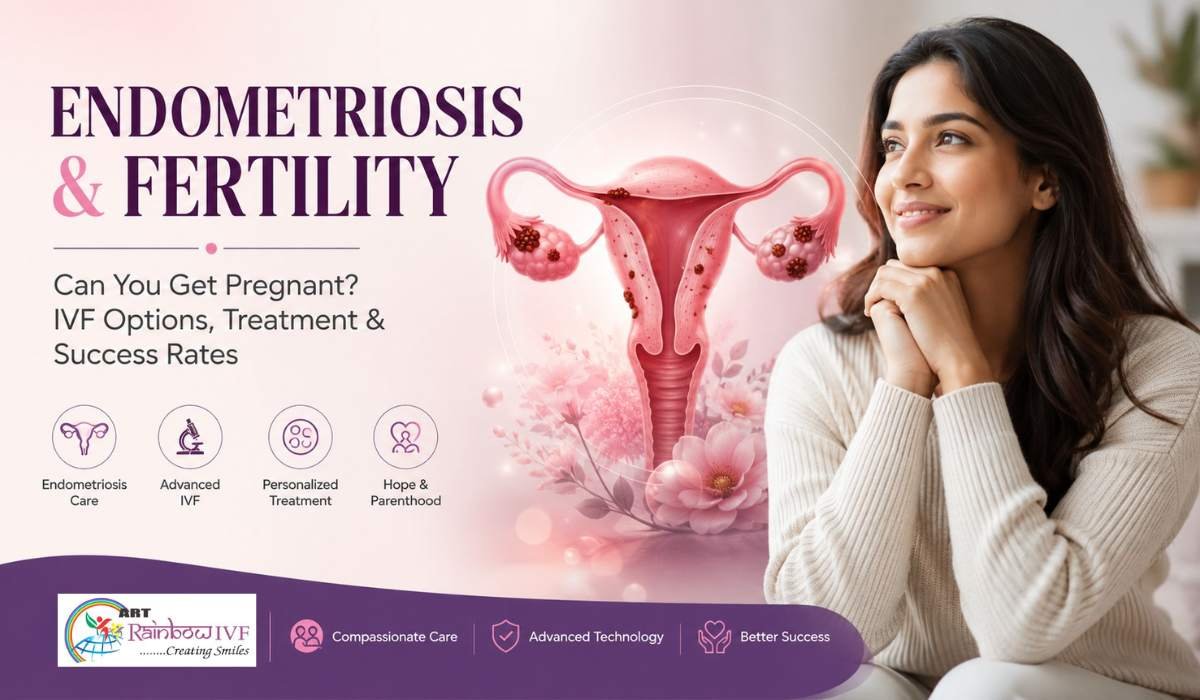
Endometriosis is a condition where tissue similar to the lining of the uterus (endometrium) grows outside the uterus — on the ovaries, fallopian tubes, pelvic lining, or other organs. Unlike normal uterine lining, this tissue has no way to exit the body during menstruation, causing inflammation, scarring, and cysts (endometriomas).
💡 Important
Endometriosis is often underdiagnosed in India. Many women are told their painful periods are ‘normal’ for years before receiving a correct diagnosis. If you have severe menstrual pain combined with difficulty conceiving, please consult a gynaecologist or fertility specialist promptly — early diagnosis significantly improves treatment outcomes.
Endometriosis affects fertility through several mechanisms: it can block or damage the fallopian tubes, impair egg quality, reduce ovarian reserve, create a hostile environment for sperm or embryo implantation, and cause inflammation that interferes with fertilization. Approximately 30-50% of women with endometriosis experience some degree of fertility difficulty.
Here are the specific ways endometriosis can affect your ability to conceive:
Scar tissue and adhesions from endometriosis can block or distort the fallopian tubes, preventing eggs from traveling from the ovary to the uterus. In these cases, natural conception becomes very difficult or impossible, and IVF treatment — which bypasses the fallopian tubes entirely — is the most effective route to pregnancy.
Ovarian endometriomas (“chocolate cysts”) form when endometriosis tissue grows on or inside the ovaries. These cysts can damage the surrounding healthy ovarian tissue and reduce the number of eggs available — lowering AMH levels. Surgical removal of endometriomas must be done carefully to avoid further reducing ovarian reserve.
The inflammatory environment created by endometriosis can impair egg quality and embryo development. Research shows that women with endometriosis may have higher rates of chromosomal abnormalities in their eggs, which is why Genetic Screening before embryo transfer is sometimes recommended.
Endometriosis can alter the uterine lining environment, making it harder for embryos to implant successfully. This may contribute to Recurrent Implantation Failure and Recurrent Miscarriages in women with endometriosis.
Endometriosis causes chronic pelvic inflammation that can affect sperm motility, fertilization, and early embryo development — even before any structural damage becomes visible on imaging.
Endometriosis is classified into four stages by the American Society for Reproductive Medicine (ASRM), based on the extent and location of the disease. Stage does not always correlate with pain severity, but it does influence fertility and treatment choices.
| Stage | Severity | What It Means | Impact on Fertility |
| Stage I | Minimal | Small, superficial implants on pelvic lining | Mild — natural conception often possible; fertility may be slightly reduced |
| Stage II | Mild | Deeper implants, small adhesions | Moderate reduction; IUI or timed intercourse with monitoring recommended |
| Stage III | Moderate | Multiple deep implants, endometriomas on ovaries, more adhesions | Significant reduction; IVF or laparoscopy before IVF strongly recommended |
| Stage IV | Severe | Extensive adhesions, large ovarian cysts, distorted anatomy | Most severe impact; IVF after expert surgical evaluation is the typical approach |
Stage alone does not predict your personal fertility outcome. A woman with Stage IV endometriosis may conceive naturally, while someone with Stage I may need IVF. Individual assessment by a fertility specialist is always necessary.
Endometriosis can be suspected based on symptoms and imaging, but the only definitive diagnosis is through laparoscopy — a minimally invasive surgical procedure.
The right treatment depends on your stage of endometriosis, age, duration of infertility, ovarian reserve, and whether you also have other fertility factors at play. Here are the main options:
IUI may be considered for mild endometriosis with open tubes and reasonable ovarian reserve. However, success rates for IUI in endometriosis are generally lower than in unexplained infertility. If IUI is not successful after 2-3 cycles, most specialists recommend moving to IVF.
Our Laparoscopy and Hysteroscopy service is a core part of endometriosis management at Rainbow IVF. Laparoscopy serves two purposes: it confirms the diagnosis and simultaneously removes or ablates the endometriotic lesions.
When laparoscopy is recommended before IVF:
When to proceed directly to IVF without surgery first:
💡 Rainbow IVF Approach
At Rainbow IVF, the decision of surgery-first vs IVF-first is made after a thorough review of your ultrasound, AMH, age, and previous treatment history. There is no one-size-fits-all answer. Our team of expert laparoscopic surgeons and IVF specialists work together to plan the most efficient path to pregnancy for each individual patient.
IVF is the most effective fertility treatment for moderate to severe endometriosis (Stage III-IV). It bypasses the fallopian tubes, overcomes the hostile pelvic environment, and allows the best-quality embryo to be selected and transferred directly into the uterus. IVF success rates for endometriosis patients at experienced centres are comparable to other infertility causes, particularly when combined with careful ovarian stimulation and genetic screening.
Why IVF is highly effective for endometriosis patients:
IVF success rates for endometriosis patients in India typically range from 35% to 50% per cycle for women under 38, which is comparable to or only slightly lower than IVF success rates for other causes of infertility. Success is significantly influenced by the woman’s age, ovarian reserve, endometriosis stage, and the quality of the IVF laboratory. Centres with advanced embryo selection technology and experienced surgeons generally achieve better outcomes.
| Age | Endo Stage | Estimated IVF Success (India) | Key Factor |
| Below 35 | Stage I-II | 45-55% | Excellent prognosis |
| Below 35 | Stage III-IV | 35-48% | Good with expert care |
| 35-38 | Stage I-II | 35-45% | Age is key factor |
| 35-38 | Stage III-IV | 28-40% | PGT-A strongly advised |
| Above 38 | Any Stage | 15-30% | PGT-A + careful stimulation |
Note: These are general estimates. Rainbow IVF’s overall IVF success rate is 52.4% — across all causes of infertility. Your personal chances depend on a full clinical assessment.
One of the most important concerns with endometriosis is its impact on ovarian reserve — how many eggs you have remaining. This is measured through:
How endometriosis reduces ovarian reserve:
⚠️ Important Warning for Women with Endometriomas
If you have endometriomas and are planning surgery to remove them, please ensure this is done by a specialist experienced in fertility-sparing techniques. Repeated ovarian surgery significantly reduces egg reserve and can leave very little ovarian tissue. At Rainbow IVF, we always weigh surgery benefits against potential impact on ovarian reserve before recommending a procedure.
If your AMH is already low due to endometriosis, our specialists may recommend egg or embryo freezing as early as possible — to bank a good number of eggs before the condition progresses further. Read more about Fertility Preservation at Rainbow IVF.
Women with endometriosis have a higher risk of recurrent miscarriages, though the exact mechanism is still being studied. Possible reasons include:
If you have had recurrent miscarriages and also have endometriosis, our Recurrent Miscarriage workup and Recurrent Implantation Failure evaluation protocols address this. Adding PGT-A genetic testing to your IVF cycle can significantly reduce the risk of miscarriage by ensuring only chromosomally normal embryos are transferred.
| Step | What Happens | Details |
| 1 | Full Diagnostic Workup | AMH, AFC, transvaginal ultrasound, and review of surgical history. Detailed mapping of endometriosis extent and ovarian reserve assessment. |
| 2 | Multidisciplinary Review | Fertility specialist, laparoscopic surgeon, and embryologist together review your case. Decision on surgery-first vs IVF-first based on your specific profile. |
| 3 | Surgery if Indicated | Fertility-sparing laparoscopy to remove endometriomas or adhesions if needed. Hysteroscopy if uterine cavity involvement is suspected. |
| 4 | IVF with Tailored Stimulation | Customised ovarian stimulation protocol — typically a GnRH agonist long protocol, which also suppresses endometriosis activity during stimulation. Close monitoring to maximise egg retrieval. |
| 5 | Embryo Development & Selection | Embryos cultured to blastocyst stage under Embryoscope time-lapse monitoring. AI-assisted embryo ranking. PGT-A if advised. |
| 6 | Freeze-All + FET Strategy | All suitable embryos are frozen. The uterus is given time to recover from stimulation and endometriosis-related inflammation. FET is performed in a later, controlled cycle for the best implantation environment. |
| 7 | Endometrial Preparation + PRP if Needed | For cases with thin lining or previous implantation failure, Endometrial PRP is used to improve uterine receptivity before transfer. |
While lifestyle changes cannot cure endometriosis, they can meaningfully reduce inflammation and support your fertility treatment outcomes. Here are evidence-backed recommendations — for more detail, see our guide on lifestyle changes to improve IVF success:
If you have been recently diagnosed with endometriosis but are not ready to try for a baby yet, consider egg freezing proactively. Endometriosis is a progressive condition — ovarian reserve can decline over time even without any surgical intervention. Freezing eggs now, while your AMH is still reasonable, preserves your future options.
This is particularly important if you have:
Read our complete guide: Egg Freezing in India — Cost, Process, Age & Success Rate | Fertility Preservation at Rainbow IVF
| Rainbow IVF Advantage | How It Helps Endometriosis Patients |
| Expert Laparoscopic Surgery Team | Fertility-sparing surgery to treat endometriosis without compromising ovarian reserve |
| Advanced IVF Laboratory | Embryoscope + AI embryo selection maximises success from fewer, higher-quality embryos |
| Freeze-All + FET Protocol | Preferred strategy for endometriosis — allows uterine recovery before transfer |
| PRP Endometrial Rejuvenation | Improves lining receptivity in cases of recurrent implantation failure |
| PGT-A Genetic Screening | Reduces miscarriage risk by ensuring only chromosomally normal embryos are transferred |
| 52.4% IVF Success Rate | 12,500+ Families | Among the highest success rates in North India across all infertility causes |
Yes, many women with mild to moderate endometriosis (Stage I-II) do conceive naturally. However, if you have been trying for 6-12 months without success, or if you have Stage III-IV endometriosis, you should consult a fertility specialist promptly. The chances of natural conception decrease as the disease progresses and with increasing age.
Laparoscopy can improve natural conception chances in Stage I-II endometriosis by removing lesions and restoring normal anatomy. For Stage III-IV disease, surgery can reduce endometrioma size and adhesions, which may improve IVF access to eggs. However, surgery does not always improve IVF success rates, and repeat surgeries can harm ovarian reserve. The decision should be made on an individual basis with an experienced fertility specialist.
IVF is generally the most effective fertility treatment for moderate to severe endometriosis (Stage III-IV), blocked tubes, or when other treatments like IUI have failed. For Stage I-II endometriosis with good ovarian reserve and open tubes, IUI or natural conception may be tried first. IVF success rates for endometriosis patients are comparable to other causes of infertility when managed at an experienced centre.
Endometriosis can slightly reduce IVF success rates compared to women without the condition, primarily due to potential impacts on egg quality and uterine receptivity. However, with tailored stimulation protocols, a freeze-all and FET strategy, and advanced embryo selection, many endometriosis patients achieve IVF success rates comparable to other patient groups. The impact on success depends on stage, age, and ovarian reserve.
Endometriosis can impair egg quality through the chronic inflammatory environment it creates in the pelvis and potentially within the ovarian follicle environment itself. This may lead to higher rates of chromosomal abnormalities in eggs. PGT-A (preimplantation genetic testing) on embryos before transfer is increasingly used to mitigate this effect by selecting only chromosomally normal embryos for transfer.
Yes, proactive egg freezing is strongly recommended for women diagnosed with endometriosis who are not yet ready to conceive — especially if endometriomas are present or ovarian reserve is already reduced. Endometriosis is a progressive condition, and ovarian reserve can decline over time. Freezing eggs early preserves future fertility options before the disease or further surgery reduces the egg supply.
Yes, women with endometriosis have a somewhat higher risk of recurrent miscarriage, possibly due to impaired uterine receptivity, higher rates of chromosomally abnormal eggs, immunological factors, and progesterone resistance. If you have experienced recurrent miscarriages and also have endometriosis, a comprehensive recurrent miscarriage workup including immunological and genetic assessment is recommended before planning the next pregnancy.
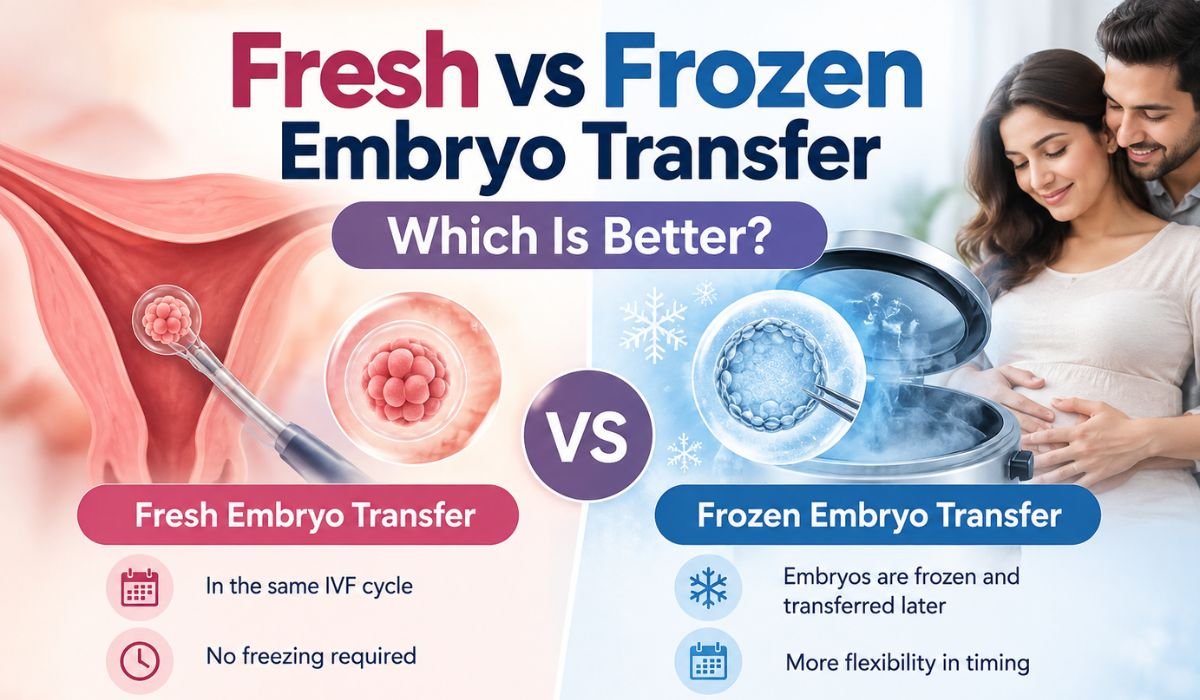
A GnRH agonist long protocol (also called the long down-regulation protocol) is most commonly used for endometriosis patients during IVF. This protocol suppresses endometriosis activity during ovarian stimulation and has shown better outcomes compared to shorter protocols for endometriosis patients. A freeze-all strategy followed by Frozen Embryo Transfer (FET) in a subsequent cycle is also preferred, as it allows the uterine environment to recover fully before embryo transfer.
In most cases, IVF can be started 1-3 months after laparoscopy, once the body has recovered from surgery and ovarian reserve has been re-evaluated. Your fertility specialist will recommend the ideal timing based on your surgical findings, ovarian reserve, and age. In some cases — particularly if age or ovarian reserve is a concern — IVF may be started as early as 4-6 weeks post-surgery.
The cost of IVF treatment for endometriosis in Agra depends on whether laparoscopy is required before IVF, the number of IVF cycles needed, and any additional procedures such as PGT-A or PRP. Laparoscopy costs are separate from the IVF cycle cost. For a personalised cost estimate specific to your situation, we recommend booking a consultation at Rainbow IVF — our team provides a transparent, detailed treatment and cost plan before any procedure begins.
Living with endometriosis does not mean giving up on your dream of parenthood. With accurate diagnosis, the right treatment strategy, and expert care, thousands of women with endometriosis go on to have healthy pregnancies every year. Rainbow IVF is here to guide you — from your first ultrasound to your baby’s heartbeat.

Ph: +91-562-260-0537, +91-7060301888
Address: Rainbow IVF 4th Floor, Ujala Cygnus Rainbow Hospital, NH-19, Near Guru ka Taal, Gurudwara, Sikandra, Agra, Uttar Pradesh 282007


