What Is an IVF Witnessing System? Role of RI Witness in IVF

Embryologist using an electronic IVF witnessing system to track laboratory samples

What Is an IVF Witnessing System? How RI Witness Improves IVF Safety

IVF treatment depends on precision. From egg collection to embryo transfer, every step involves sensitive biological samples. Even a small identification error inside the IVF lab can have serious consequences. To reduce this risk, modern IVF clinics use an IVF witnessing system.

An IVF witnessing system is designed to electronically verify and track patient samples, ensuring that eggs, sperm, and embryos are always matched correctly. One of the most widely used technologies for this purpose is the RI Witness system in IVF laboratories.

This blog explains what an IVF witnessing system is, why electronic witnessing matters, and how RI Witness supports safety during IVF treatment.

What Is a Witnessing System in IVF?

A witnessing system in IVF is a safety process used in IVF laboratories to confirm patient identity during every critical lab step. Traditionally, this was done manually by embryologists through visual checks and paperwork.

Manual witnessing works, but it relies completely on human attention. Fatigue, workload, and pressure can increase the chance of error.

An electronic witnessing system in IVF adds a digital layer of verification. It continuously checks that the correct samples are being handled at the right time for the right patient.

In simple words, an IVF witnessing system helps make sure that your treatment remains error-free inside the lab.

Why Is an IVF Witnessing System Important?

IVF treatment involves multiple stages where sample identification is critical, such as:

  • Egg retrieval
  • Sperm processing
  • Fertilization
  • Embryo culture
  • Embryo transfer

Without an electronic system, labs depend only on manual double-checking. While embryologists are highly trained, human error can never be completely eliminated.

An IVF witness system improves safety by:

  • Reducing the risk of sample mix-ups
  • Providing real-time verification inside the lab
  • Creating a clear digital record of each step

This is why many advanced clinics now use electronic witnessing systems as part of standard IVF lab practice.

What Is the RI Witness System in IVF?

The RI Witness System is an advanced electronic witnessing system used in IVF laboratories to track and monitor patient samples automatically.

Each patient is digitally identified, and the system ensures that only the correct samples are handled together. If a mismatch occurs, the system immediately alerts the lab staff.

Because of this continuous monitoring, the RI Witnessing System in IVF acts as a strong safety layer throughout the treatment cycle.

How the RI Witnessing System Works

The RI Witness system works quietly in the background without interfering with IVF procedures.

The general process includes:

  • Assigning a unique digital identity to the patient
  • Linking lab workstations and equipment to the system
  • Verifying samples at each critical stage
  • Triggering alerts if an incorrect sample is detected

This reduces dependence on manual checks and supports embryologists during complex lab work.

Electronic Witnessing System vs Manual Witnessing

Feature Manual Witnessing Electronic Witnessing System
Human dependency Very high Reduced
Risk of error Higher Lower
Real-time alerts No Yes
Traceability Paper-based Digital
Consistency Variable High

An electronic witnessing system in IVF does not replace embryologists. It supports them by minimizing avoidable risks.

Who Benefits From an IVF Witnessing System?

An IVF witnessing system benefits everyone involved in treatment:

  • Patients gain confidence knowing their samples are securely tracked
  • Embryologists experience reduced stress during lab procedures
  • IVF clinics maintain higher safety and quality standards

This is why the RI Witness IVF system is commonly used in IVF labs that prioritize accuracy and patient safety.

Frequently Asked Questions About IVF Witnessing Systems

What is an IVF witnessing system?
An IVF witnessing system is a technology used in IVF labs to electronically track and verify patient samples to prevent mix-ups.

Why is electronic witnessing important in IVF?
Electronic witnessing reduces human error and improves accuracy during IVF lab procedures.

What does RI Witness mean in IVF?
RI Witness refers to an electronic witnessing system that monitors and verifies IVF lab processes in real time.

Is the RI Witness system safe for patients?
Yes. The system does not affect treatment or embryos. It only improves identification and tracking.

Does an IVF witnessing system increase IVF success rates?
It improves safety and accuracy. While it does not directly change biology, it supports better treatment integrity.

Is electronic witnessing mandatory in IVF clinics?
It is not legally mandatory everywhere, but many advanced clinics use it as a best practice.

Conclusion

IVF treatment demands zero compromise on accuracy. An IVF witnessing system exists for one reason only — to protect patients from avoidable lab errors and to maintain absolute integrity at every stage of treatment. Electronic witnessing systems have become a global best practice because they reduce human dependency, improve traceability, and add an extra layer of safety inside the IVF lab.

For patients who value transparency and advanced lab standards, choosing a clinic that follows such safety-first protocols matters. Clinics like Rainbow IVF integrate modern electronic witnessing systems as part of their IVF lab processes, reflecting a clear focus on patient safety, accuracy, and responsible fertility care.

In IVF, technology does not replace expertise — it strengthens it. And when both work together, patients can move forward with greater confidence and peace of mind.

IVF Success Rate in India: Honest Data, Age-Wise Results

IVF success rate in India shown with age-wise percentage data, an IVF lab setup, and an Indian couple reviewing ultrasound results.

IVF Success Rate Guide in India: How to Understand the Numbers

IVF success rate figures can be confusing, especially for patients comparing clinics or treatment options.
Different centres use different terms, calculation methods, and presentation styles, which often leads to misunderstanding.

This guide explains how IVF success rates in India are calculated, interpreted, and commonly misread, so patients can make informed decisions without relying on misleading claims.

What Is IVF Success Rate?

IVF success rate refers to the probability of achieving pregnancy or live birth from an IVF treatment cycle.

However, the term “success” can mean different things, such as:

  • Positive pregnancy test
  • Clinical pregnancy confirmed on ultrasound
  • Live birth

Unless clearly specified, the term “IVF success rate” can be ambiguous.

How IVF Success Rate Is Calculated

IVF success rates are usually calculated in one of the following ways:

Per-Cycle Success Rate

  • Measures success from one IVF cycle
  • Most accurate and transparent method
  • Best for setting realistic expectations

Cumulative Success Rate

  • Combines results from multiple IVF cycles
  • Often appears higher
  • Can be misleading if presented without explanation

Patients should always ask:

“Is this success rate per cycle or cumulative?”

Pregnancy Rate vs Live Birth Rate

These two terms are often confused.

Pregnancy Rate

  • Indicates a confirmed pregnancy
  • Does not guarantee a live birth

Live Birth Rate

  • Measures actual delivery of a baby
  • More meaningful but harder to achieve

Clinics may highlight pregnancy rates because they are usually higher than live birth rates.

Why IVF Success Rates Vary Between Patients

IVF outcomes differ widely because fertility is highly individual.

Success rates vary due to:

  • Age differences
  • Cause of infertility
  • Egg and sperm quality
  • Previous treatment history
  • Response to medications

This is why comparing two patients based only on success percentages is unreliable.

Common Terms Used by IVF Clinics (Explained)

Understanding common terminology helps avoid confusion.

  • Cycle: One complete IVF treatment attempt
  • Embryo Transfer: Placement of embryo into the uterus
  • Implantation Rate: Percentage of embryos that attach to the uterine lining
  • Clinical Pregnancy: Pregnancy confirmed by ultrasound

Without context, these terms can be used selectively to make outcomes look better than they are.

How Patients Should Read IVF Success Rate Claims

When reviewing IVF success rate data, patients should check:

  • Age group included in the data
  • Whether results are per cycle or cumulative
  • Whether failed cycles are included
  • Time period of the data

Transparent success data always includes limitations and context.

Mistakes Patients Make While Comparing IVF Success Rates

Common errors include:

  • Choosing clinics based only on high percentages
  • Ignoring age-specific data
  • Assuming higher cost equals higher success
  • Overlooking diagnosis-specific outcomes

IVF success depends more on case suitability and treatment planning than on advertised numbers.

When IVF Success Rate Numbers Matter — and When They Don’t

Success rates matter when:

  • Comparing treatment approaches
  • Understanding age-related fertility decline
  • Setting realistic expectations

They matter less when:

  • Individual diagnosis is complex
  • Personal medical history is unique
  • Emotional readiness and support are key factors

Numbers should guide decisions, not replace medical judgement.

Important Reality Check for Patients

IVF success rates are population averages, not personal guarantees.
A clinic’s published data cannot predict the outcome of an individual patient with certainty.

Understanding how these numbers work helps patients:

  • Ask better questions
  • Avoid false hope
  • Prepare mentally and emotionally for treatment

Where to Find Real IVF Success Percentages

For realistic IVF success percentages by age and medical context, refer to a detailed, data-focused resource that explains outcomes clearly and transparently.

Final Takeaway

IVF success rate numbers are useful only when understood correctly.
Blindly trusting high percentages can lead to disappointment and poor decision-making.

An informed patient is better equipped to choose the right treatment approach, not just the highest advertised number.

IUI Full Form: What It Means, How the Treatment Works, and Pregnancy Chances

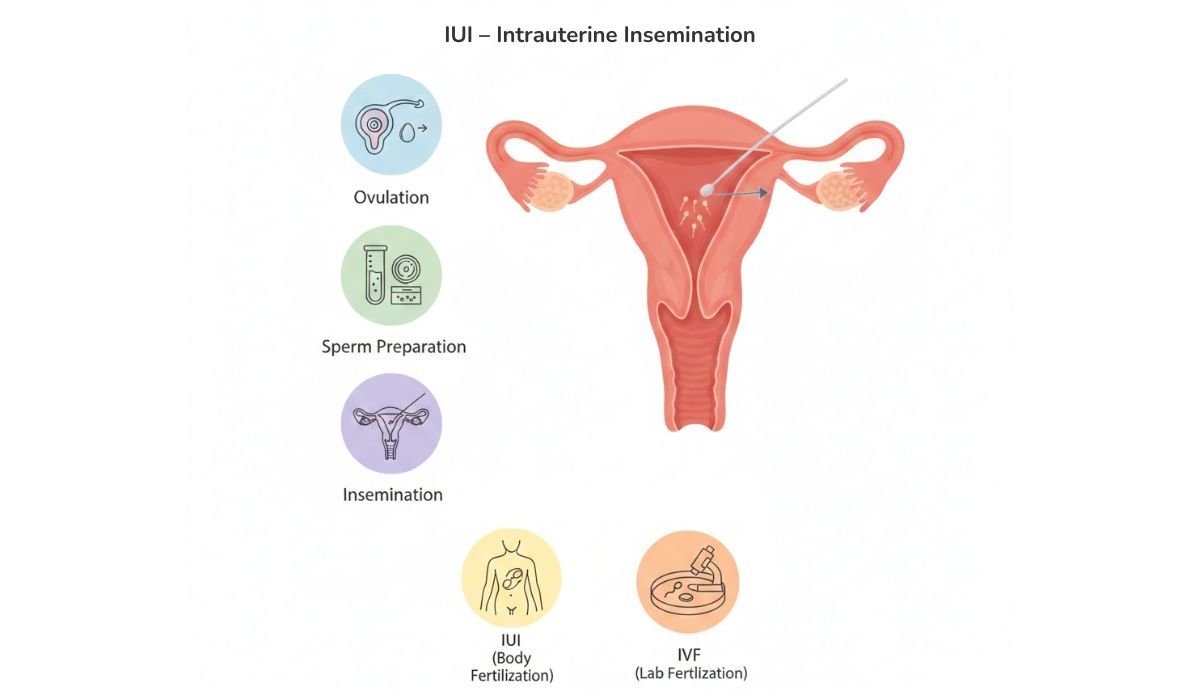
Infographic explaining IUI full form intrauterine insemination procedure, ovulation, sperm preparation, insemination process, and difference between IUI and IVF

IUI Full Form in Medical

IUI full form in medical is Intrauterine Insemination.
It is a fertility treatment in which specially prepared sperm is placed directly inside a woman’s uterus to increase the chances of pregnancy.

IUI is one of the most commonly used and simplest fertility treatments. It is often recommended before moving to advanced procedures like IVF.

What is IUI in Simple Words?

In simple words, IUI means helping sperm reach the egg more easily.

Normally, sperm must travel a long distance to fertilize an egg. In IUI treatment, doctors place healthy sperm directly into the uterus at the right time of ovulation. This improves the chance of natural fertilization.

Why is IUI Done?

IUI is done to improve the chances of pregnancy when natural conception is difficult but still possible.

Doctors may recommend IUI in cases such as:

  • Unexplained infertility
  • Mild male infertility (low sperm count or movement)
  • Ovulation-related problems
  • Cervical mucus issues
  • Use of donor sperm

IUI is considered a first-level fertility treatment.

Who is Suitable for IUI Treatment?

IUI is usually advised when:

  • At least one fallopian tube is open
  • Ovulation is regular or can be controlled with medicines
  • Sperm quality is mildly affected, not severely

It is not suitable in cases of blocked fallopian tubes or severe male infertility.

How Does IUI Treatment Work?

The IUI process generally involves:

  1. Monitoring ovulation
  2. Collecting and preparing sperm
  3. Placing sperm into the uterus using a thin catheter

The procedure is quick and usually completed within a few minutes.

Is IUI Painful?

IUI is mostly painless.

Some women may feel mild discomfort similar to a routine gynecological check-up. Anesthesia is not required, and normal activities can be resumed the same day.

What is the Success Rate of IUI?

The success rate of IUI depends on several factors such as:

  • Age of the woman
  • Cause of infertility
  • Number of IUI cycles attempted

Success rates are generally lower than IVF, but IUI can work well for selected cases, especially in younger women.

How Many IUI Cycles Are Needed?

Doctors usually suggest 3 to 6 IUI cycles before considering other fertility treatments.

If pregnancy does not occur after multiple IUI attempts, further evaluation or advanced treatments may be recommended.

Difference Between IUI and IVF

IUI IVF
Fertilization happens inside the body Fertilization happens in a laboratory
Simple and less invasive More complex procedure
Lower cost Higher cost
First-line treatment Used after IUI fails

Both treatments are chosen based on medical condition and fertility history.

Is IUI Better Than IVF?

IUI is not better or worse than IVF.
It is simply less advanced.

  • IUI is tried first in mild fertility issues
  • IVF is used when IUI is unlikely to work

The right treatment depends on medical evaluation, not preference.

Can Pregnancy Happen in the First IUI Cycle?

Yes, pregnancy can happen in the first IUI cycle.
However, many couples may require more than one attempt.

Patience and proper medical guidance are important.

FAQs About IUI

What does IUI stand for in medical terms?

IUI stands for Intrauterine Insemination.

Is IUI a surgery?

No, IUI is a non-surgical procedure.

Does IUI require bed rest?

No bed rest is required after IUI.

Is IUI safe?

Yes, IUI is considered a safe fertility treatment when done under medical supervision.

Final Words

IUI full form in medical is Intrauterine Insemination, a simple and commonly used fertility treatment. It is often the first step for couples trying assisted conception before moving to advanced options.

Understanding IUI helps patients make informed decisions about fertility treatment.

Luteal Phase: Symptoms, Early Pregnancy Signs & Its Role in IVF Success

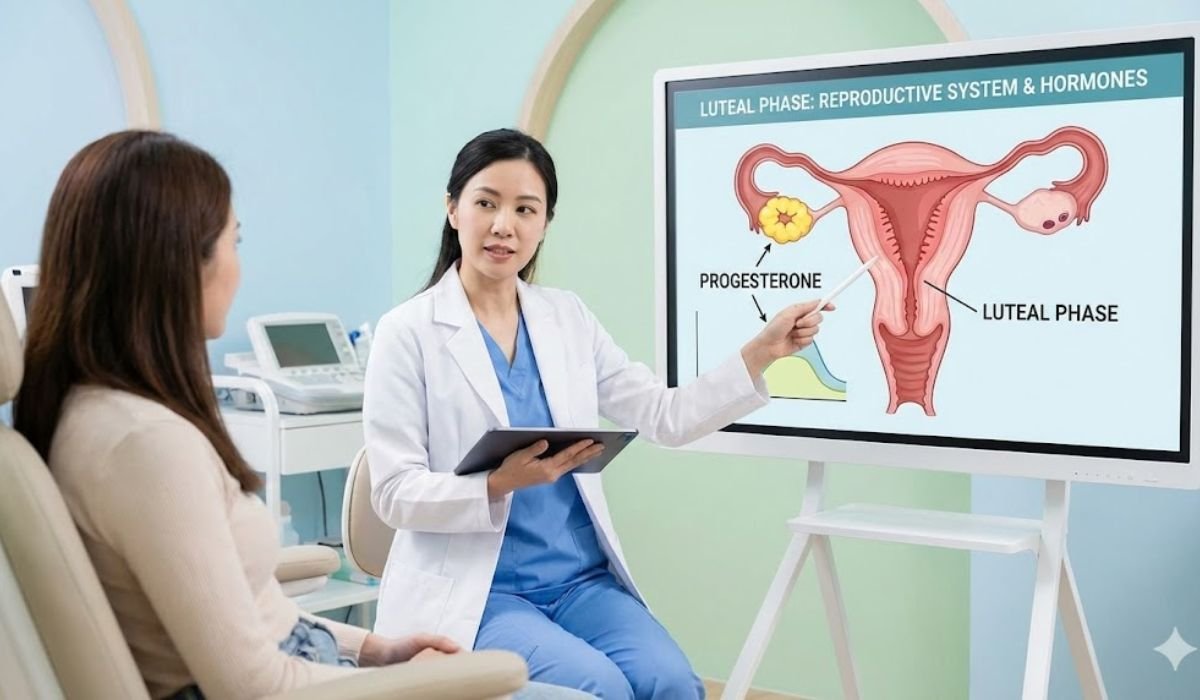
Doctor explaining the luteal phase and progesterone hormones using a reproductive system diagram during a fertility consultation.

Luteal Phase Symptoms & Early Pregnancy Signs (IVF Expert Guide)

By Prof. Dr. Jaideep Malhotra
Director ART, Rainbow IVF & Head of Department of Reproductive Medicine

Quick Medical Summary

The luteal phase begins after ovulation and lasts until the next menstrual period. It is controlled by the hormone progesterone and plays a crucial role in embryo implantation, early pregnancy stability, and IVF success.

What Is the Luteal Phase?

The menstrual cycle has two main phases: the follicular phase (before ovulation) and the luteal phase (after ovulation).

The luteal phase starts immediately after ovulation and continues until menstruation begins. In a healthy cycle, it typically lasts 10 to 14 days.

During this phase, the body produces progesterone, a hormone that prepares the uterine lining (endometrium) to support an implanted embryo. If progesterone levels are low or unstable, the uterine lining cannot sustain implantation, and pregnancy may fail.

The luteal phase is critical because it determines whether implantation and pregnancy can occur naturally or through IVF.

Why the Luteal Phase Matters for Conception & IVF

Whether conception occurs naturally or through Assisted Reproductive Technology (ART), the luteal phase directly influences implantation success.

A healthy luteal phase affects:

  • Embryo implantation
  • Stability of early pregnancy
  • Risk of miscarriage
  • IVF and FET (Frozen Embryo Transfer) outcomes

When the luteal phase is weak, short, or poorly supported, it can result in luteal phase defect (LPD)—a condition where the uterine lining cannot sustain an embryo.

Clinical research shows that 6.6% to 51% of IVF patients experience luteal dysfunction, depending on diagnostic criteria. This makes luteal support one of the most critical components of IVF treatment.

What Causes Luteal Phase Defect (LPD)?

Luteal phase defect occurs when progesterone levels are insufficient or when the luteal phase lasts fewer than 10 days.

Common causes include:

  • Hormonal imbalance
  • PCOS (Polycystic Ovary Syndrome)
  • Thyroid disorders
  • Chronic stress and cortisol imbalance
  • Poor ovulation quality
  • Repeated IVF or IUI failures

Women with untreated LPD may experience failed implantation, early pregnancy loss, or repeated negative IVF cycles.

Luteal Phase Symptoms (Normal Indicators)

Most women experience noticeable physical and emotional changes during the luteal phase due to rising progesterone levels.

Common luteal phase symptoms include:

  • Breast heaviness or tenderness
  • Bloating and water retention
  • Mild abdominal or back cramps
  • Increased appetite or food cravings
  • Mood swings or irritability
  • Fatigue or sleepiness
  • Slight increase in basal body temperature
  • Mild white vaginal discharge

Symptoms vary between individuals and may differ from cycle to cycle.

Luteal Phase Symptoms When Not Pregnant

If pregnancy does not occur, progesterone levels drop sharply and menstruation begins.

Symptoms when not pregnant include:

  • PMS symptoms becoming stronger before bleeding
  • Cramping increasing just before the period
  • Bloating and mood changes
  • Breast tenderness reducing after a few days
  • Fatigue that improves once bleeding starts

These symptoms typically occur for a shorter duration and feel more unstable compared to early pregnancy indicators.

Luteal Phase Pregnancy Symptoms (Early Signs Before a Test)

If conception occurs, progesterone remains high and supports the pregnancy.

Possible early pregnancy signs during the luteal phase include:

  • Implantation bleeding (light brown or pink spotting lasting 24–48 hours)
  • Strong breast tenderness
  • Increased fatigue and sleepiness
  • Increased frequency of urination
  • Reduced or different type of cramping
  • Sustained rise in basal body temperature
  • Creamy white vaginal discharge, without odor or irritation

These symptoms often resemble PMS. Symptoms alone cannot confirm pregnancy. A beta-hCG blood test is the only reliable method.

Luteal Phase Discharge: What Is Normal and What Is Not

Vaginal discharge patterns reflect hormonal changes during the luteal phase.

Normal discharge during luteal phase

  • Thick or creamy texture
  • White or off-white in color
  • No noticeable smell
  • No itching or irritation

Discharge associated with early pregnancy

  • Increased quantity
  • Creamy and persistent
  • No foul odor

Abnormal discharge (requires medical evaluation):

  • Yellow, green, or grey color
  • Foul smell
  • Itching, burning, or pain
  • Cottage-cheese like texture

Such symptoms may indicate infection or hormonal imbalance and should not be ignored.

Luteal Support in IVF Cycles

During IVF cycles, controlled ovarian stimulation suppresses the body’s natural progesterone production. As a result, external progesterone support becomes essential for implantation and early pregnancy stability.

Progesterone supplementation helps:

  • Improve endometrial thickness
  • Enhance implantation probability
  • Reduce early pregnancy loss
  • Maintain hormonal balance until placenta takeover

Progesterone Support Protocol at Rainbow IVF

When progesterone injections are recommended:

  • Very low progesterone levels
  • Severe luteal phase defect
  • Recurrent IVF or FET failures
  • Poor absorption of oral or vaginal progesterone

When progesterone tablets / oral / vaginal gel are used:

  • Routine IVF or FET cycles
  • Mild to moderate progesterone deficiency
  • PCOS or ovulation induction cycles
  • Patients intolerant to injections

If pregnancy is confirmed, progesterone support is continued until 8–10 weeks, when the placenta begins producing sufficient hormones naturally.

How long luteal support is continued at Rainbow IVF

If pregnancy is confirmed, progesterone support is continued up to 8–10 weeks, until the placenta begins producing sufficient hormones naturally.

This ensures embryo stability and reduces the risk of early loss.

When Should You Consult a Fertility Specialist?

Seek evaluation if you experience:

  • Repeated IVF or IUI implantation failures
  • Frequent early miscarriages
  • A luteal phase shorter than 10 days
  • Severe abnormal discharge or irregular cycles
  • Persistent spotting between periods

Ignoring luteal health can result in repeated emotional and financial loss.

Frequently Asked Questions

How long does the luteal phase normally last?

Usually between 10 and 14 days.

Can a weak luteal phase prevent pregnancy?

Yes. It can cause implantation failure or early miscarriage.

Can luteal phase defect be treated?

Yes. Progesterone supplementation and hormonal correction are effective.

How does implantation bleeding look?

Light pink or brown spotting, lasting no more than 1–2 days.

Why is progesterone support mandatory in IVF?

Because natural progesterone production decreases during IVF stimulation, and supplementation protects implantation.

Conclusion

The luteal phase forms the foundation of conception.
When progesterone support is inadequate or the luteal phase is weak, implantation becomes unstable and pregnancy may fail—naturally or during IVF.

Timely diagnosis, proper hormonal support, and scientific progesterone therapy can significantly improve fertility outcomes and reduce emotional stress.

Awareness combined with expert medical support leads to higher chances of pregnancy success.