
Female Fertility Myths That Can Delay Pregnancy Treatment

Indian woman consulting fertility specialist about female fertility myths in clinic

Female Fertility Myths That Are Delaying Pregnancy Treatment in India

When a couple starts planning for pregnancy, they expect things to happen naturally and smoothly. But when conception takes longer than expected, confusion begins. Advice comes from family members, friends, social media, and online forums. Unfortunately, much of this advice is based on myths rather than medical facts.

In India, female fertility is surrounded by many misconceptions. These myths often delay proper medical evaluation and treatment. Many women continue waiting because they believe “everything is normal” or “there is still time.”

But fertility is time-sensitive.

In this article, we will discuss the most common female fertility myths that delay pregnancy treatment and explain the scientific truth behind them.

Why Fertility Myths Can Be Harmful

Fertility myths are not harmless beliefs. They can have serious consequences.

  • They delay diagnosis

  • They reduce treatment options over time

  • They increase emotional stress

  • They create unnecessary guilt

  • They waste valuable reproductive years

Female fertility declines naturally with age. Delaying medical evaluation based on myths can reduce the chances of successful treatment.

Awareness is the first step toward making informed decisions.

Myth 1: “Stress Alone Causes Infertility”

Many people say, “Just relax. Once you stop stressing, you will conceive.”

While stress can affect hormonal balance, it is rarely the sole cause of infertility. Medical conditions such as PCOS, endometriosis, blocked fallopian tubes, thyroid disorders, low ovarian reserve, or male factor infertility are far more common causes.

Blaming stress alone may delay proper medical evaluation.

If pregnancy has not occurred after a reasonable period of trying, it is important to consult a fertility specialist rather than assuming stress is the only issue.

Myth 2: “Regular Periods Mean Perfect Fertility”

This is one of the most common female fertility myths.

Having regular menstrual cycles does not guarantee:

  • Healthy ovulation

  • Good egg quality

  • Open fallopian tubes

  • A healthy uterine lining

Some women with PCOS or mild hormonal imbalances may still have relatively regular cycles. Similarly, conditions like endometriosis may not always disturb cycle regularity.

Regular periods are a positive sign, but they are not a confirmation of fertility health.

Myth 3: “Fertility Is Safe Until 35”

Many women believe that fertility problems start only after 35. While 35 is often considered a milestone, fertility decline begins earlier.

Women are born with a fixed number of eggs. After the age of 30, both egg quantity and quality gradually decline. The decline becomes more noticeable after 35, but it does not suddenly begin at that age.

Waiting too long because of this misconception can reduce available treatment options.

Fertility planning should be proactive, not reactive.

Myth 4: “IVF Is Risky and Unnatural”

There is still fear and misunderstanding around IVF (In Vitro Fertilization).

Some common concerns include:

  • The baby will not be healthy

  • The procedure is dangerous

  • It has severe side effects

Modern IVF is a scientifically advanced and carefully monitored procedure. It follows strict medical protocols. The process is individualized and supervised by trained fertility experts.

IVF is not “unnatural.” It is a medical assistance technique designed to help couples conceive when natural conception is difficult.

Importantly, IVF is not the first step for every couple. Treatment plans are personalized based on diagnosis.

Myth 5: “You Should Try for 4–5 Years Before Seeing a Doctor”

This myth causes significant delays in fertility treatment.

Medical guidelines recommend:

  • If under 35 years old: Seek evaluation after 1 year of regular, unprotected intercourse without conception.

  • If over 35 years old: Seek evaluation after 6 months.

If there are irregular cycles, thyroid disorders, PCOS, previous miscarriages, pelvic infections, or surgery history, medical consultation should happen even earlier.

Waiting several years can reduce success rates due to age-related decline.

Myth 6: “Infertility Is Mainly a Woman’s Problem”

In many societies, infertility is unfairly blamed on women.

However, medical data shows that male factors contribute to approximately 40–50% of infertility cases. Low sperm count, poor motility, abnormal morphology, or lifestyle factors can significantly affect conception.

Fertility evaluation is always a couple-based assessment.

Blaming only women not only causes emotional harm but also delays proper diagnosis.

Myth 7: “If You Conceived Once Easily, You Will Again”

This is known as secondary infertility.

A couple who previously conceived without difficulty may face challenges later due to:

  • Increased maternal age

  • Hormonal changes

  • Uterine conditions

  • New male factor issues

  • Lifestyle changes

Past fertility does not guarantee future fertility.

Each pregnancy journey is unique.

Myth 8: “Home Remedies Can Cure Infertility”

Healthy lifestyle habits are important. Balanced nutrition, regular exercise, and stress management can support reproductive health.

However, certain medical conditions cannot be corrected by home remedies alone, including:

  • Blocked fallopian tubes

  • Severe endometriosis

  • Very low AMH (ovarian reserve)

  • Severe male factor infertility

Relying solely on unverified remedies may delay necessary medical treatment.

Lifestyle improvement should complement medical care, not replace it.

Myth 9: “Infertility Means You Will Never Get Pregnant”

Infertility does not mean permanent inability to conceive.

It simply means difficulty in achieving pregnancy within a certain time frame.

Modern reproductive medicine offers several treatment options, including:

  • Ovulation induction

  • Intrauterine insemination (IUI)

  • In Vitro Fertilization (IVF)

  • Intracytoplasmic Sperm Injection (ICSI)

With proper diagnosis and individualized care, many couples successfully achieve pregnancy.

Myth 10: “Fertility Tests Are Painful and Complicated”

Basic fertility evaluation is usually simple and minimally invasive.

Common tests include:

  • Hormone blood tests

  • Ultrasound scans

  • Semen analysis

Advanced tests are recommended only when necessary.

Fear of testing often delays consultation. In reality, early testing provides clarity and direction.

When Should You See a Fertility Specialist?

You should consider consulting a fertility specialist if:

  • You are under 35 and have been trying for 1 year without success

  • You are over 35 and have been trying for 6 months

  • You have irregular or absent periods

  • You have been diagnosed with PCOS or thyroid disorders

  • You have experienced repeated miscarriages

  • You have a history of pelvic infection or surgery

Early consultation does not mean immediate IVF. It means proper evaluation and personalized guidance.

Many couples conceive with simpler treatments once the correct diagnosis is made.

The Importance of Early Diagnosis

Fertility is closely linked to time.

Delaying evaluation may lead to:

  • Further decline in egg quality

  • Reduced ovarian reserve

  • Increased emotional stress

  • More complex treatment needs

Early diagnosis offers:

  • Better treatment planning

  • Improved success rates

  • Emotional reassurance

  • Informed decision-making

Timely medical advice can make a significant difference.

The Emotional Impact of Fertility Myths

In India, infertility is not just a medical issue—it is often a social and emotional challenge.

Women may experience:

  • Family pressure

  • Feelings of guilt

  • Social comparison

  • Anxiety and depression

When myths are added to this situation, confusion increases.

Accurate medical information empowers couples to make confident decisions.

Conclusion: Correct Information Prevents Delays

Female fertility myths can quietly delay pregnancy treatment. Waiting based on assumptions can reduce reproductive opportunities.

Every woman’s body is different. Every fertility journey is unique.

Seeking timely medical advice is not a sign of weakness. It is a responsible and informed step.

If you are planning pregnancy and facing difficulties, consulting an experienced fertility specialist can provide clarity and direction. Proper evaluation and individualized treatment from a trusted expert—such as the best IVF doctor in Agra—can help you understand your options and make informed decisions.

Knowledge reduces fear. Awareness protects your time.

Frequently Asked Questions (FAQs)

1. Can stress alone cause infertility?

Stress may affect hormones, but it is rarely the only cause. Medical evaluation is necessary if conception is delayed.

2. Do regular periods guarantee fertility?

No. Regular cycles do not confirm healthy ovulation, egg quality, or open fallopian tubes.

3. Is IVF a safe procedure?

Modern IVF is scientifically monitored and considered safe when performed by trained specialists.

4. How long should we try before seeing a fertility doctor?

Under 35: After 1 year of trying.
Over 35: After 6 months.

5. Is infertility always permanent?

No. Many infertility cases are treatable with appropriate medical intervention.

6. Is male infertility common?

Yes. Male factors contribute to nearly half of infertility cases.
Should You Switch IVF Clinics After One Failed Cycle?

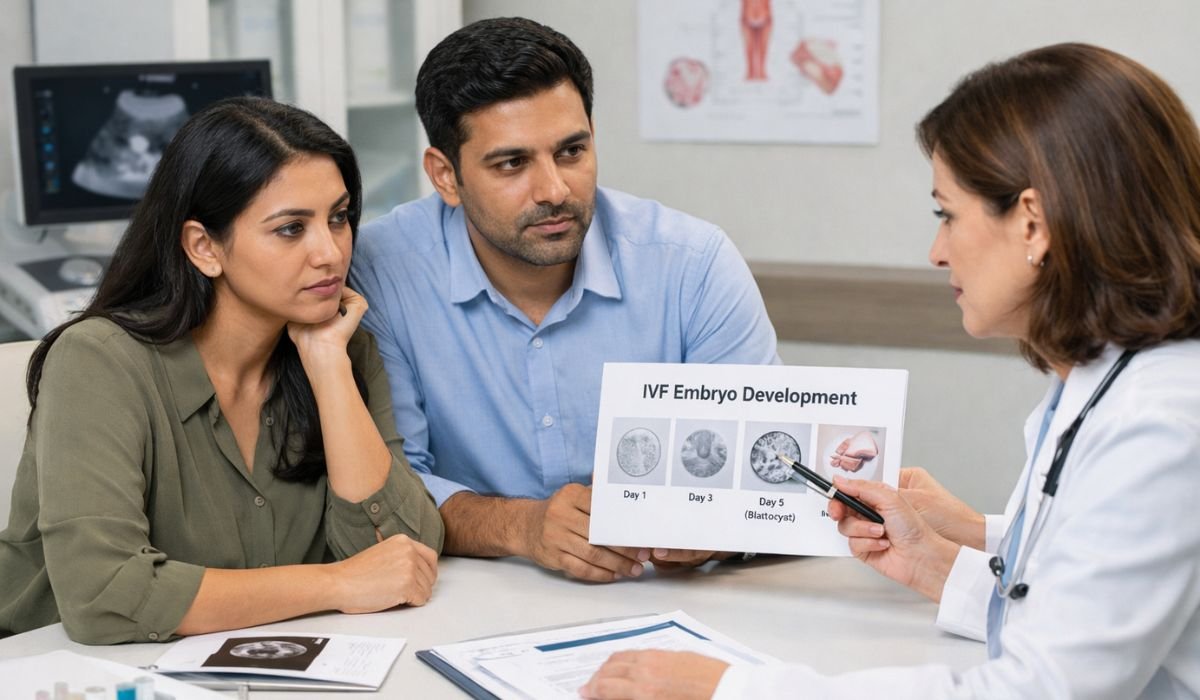
Couple discussing embryo development with fertility specialist after failed IVF cycle

A Medical Decision Framework for Indian Couples – Switch IVF Clinics After One Failed Cycle

A failed IVF cycle is emotionally exhausting. Weeks of injections, monitoring visits, procedures, and financial commitment end with a negative result. In India, where fertility treatment is largely self-funded, the emotional reaction is immediate:

“Did we choose the wrong clinic?”

From a medical standpoint, one failed IVF cycle is not proof of incompetence. It is a data point. The real question is not whether the cycle failed — it is why it failed, and how your clinic responds to that failure.

This decision must be evidence-based, not emotional.

Step 1: Accept the Statistical Reality

IVF works on probability, not certainty.

Per-cycle success rates in India generally range between 30–40%.

  • Under 35: often 40–50%

  • 35–40: gradual decline

  • Over 40: often below 20%

This means failure in a single cycle is statistically more common than success.

If you expected one cycle to guarantee pregnancy, the expectation — not the clinic — may be the problem.

Before considering switching, you must understand whether the failure was biological or procedural.

Step 2: Identify the Category of Failure

Was It the “Seed” or the “Soil”?

Most IVF failures fall into one of two categories:

  • Embryo-related (Seed problem)

  • Uterine/environment-related (Soil problem)

Understanding this distinction changes everything.

A. Embryo-Related Causes (The Seed)

The most common reason IVF fails is chromosomal abnormality (aneuploidy).

An embryo can look “top grade” under the microscope yet still carry genetic errors that prevent implantation. Embryo grading evaluates appearance, not genetic health.

Important factors:

  • Age over 35 increases chromosomal abnormalities

  • Low ovarian reserve reduces egg quantity and quality

  • Sperm DNA fragmentation can affect development

  • Embryo arrest before Day 5 often signals biological limitation

If:

  • You produced very few embryos

  • Embryos stopped developing early

  • You are in an advanced age group

Then the failure is likely biological. Switching clinics will not change egg genetics.

B. Uterine or Implantation Factors (The Soil)

If embryos were created and appeared healthy, but implantation failed, the focus shifts to the uterine environment.

Possible issues include:

  • Thin endometrial lining

  • Chronic endometritis

  • Polyps or small fibroids

  • Scar tissue

  • Hydrosalpinx

  • Timing mismatch between embryo and endometrium

If your clinic does not investigate uterine factors after unexplained failure, that is a concern.

When It Is Premature to Switch Clinics

Switching immediately after one failure is often medically unnecessary if:

  • A detailed post-cycle review is conducted

  • Fertilization rate and embryo grading are explained

  • A modified stimulation protocol is proposed

  • Additional diagnostics (hysteroscopy, thyroid testing, sperm DNA testing) are suggested

  • The doctor discusses what will change next cycle

Failure followed by structured analysis is good medicine.

Failure followed by repetition without evaluation is not.

When Switching Clinics Is Justified

Switching becomes reasonable when structural issues are present.

1. Lack of Transparency

If you are denied:

  • Embryology reports

  • Fertilization rates

  • Embryo grading details

  • Clear explanation of failure

That is a red flag. You are entitled to your medical data.

2. No Change in Protocol

If the next cycle plan is identical to the previous one despite poor response, that suggests stagnation. IVF requires adjustment based on ovarian response and embryo development.

3. Dismissive Communication

If concerns are minimized, questions are avoided, or you are pressured into repeating treatment without explanation, trust is compromised.

4. No Diagnostic Escalation After Repeated Failure

While one failed cycle does not define recurrent implantation failure, repeated failure without investigation into uterine or genetic causes signals poor clinical rigor.

The Financial and Time Cost of Switching in India

Before switching, consider the reset effect.

Typical IVF cycle cost in India:
₹90,000 – ₹1,60,000
Medications: ₹20,000 – ₹40,000

Switching may involve:

  • New baseline blood tests

  • Repeat hormonal evaluations

  • Fresh consultation fees

  • Restarting stimulation

  • Possible embryo transport charges if frozen elsewhere

There is also a time cost of 1–3 months for reassessment.

If age is a factor, that delay matters.

Switch only if the benefit outweighs the reset.

Critical Questions to Ask Before Deciding

Schedule a formal debrief with your current doctor and ask:

  1. What was my fertilization rate?

  2. How many embryos reached Day 5 (blastocyst stage)?

  3. Did embryos arrest at a specific stage?

  4. Was the embryo transfer technically smooth?

  5. What exact change will you make in the next cycle?

  6. Should we evaluate the uterine cavity via hysteroscopy?

  7. Is genetic testing appropriate in my case?

If answers are clear, structured, and data-driven — you may not need to switch.

If answers are vague or defensive — seek a second opinion.

The One-Failure Decision Framework

Use this logic:

Scenario A: No embryos formed

Likely biological limitation. A new clinic may try a different protocol, but ovarian reserve cannot be replaced.

Scenario B: Embryos formed but no pregnancy

Investigate implantation factors and genetic causes before repeating.

Scenario C: No transparency or no protocol change

Switch clinics.

Final Conclusion

One failed IVF cycle is common. It is not a verdict.

Switching clinics should be based on:

  • Lack of transparency

  • Lack of protocol evolution

  • Lack of diagnostic rigor

  • Loss of trust in the medical process

Not on disappointment alone.

Continuity of care often improves outcomes — but only when the system is competent, adaptive, and transparent.

Switch when the process fails you.
Stay when biology fails you.

There is a difference.

FAQs (India-Focused, Search Intent Driven)

1. Is it normal for IVF to fail on the first attempt in India?

Yes. IVF success rates per cycle in India typically range between 30–40%. This means failure is statistically more common than success in a single attempt. One failed cycle does not automatically indicate a poor clinic.

2. Does one failed IVF cycle mean the clinic made a mistake?

Not necessarily. IVF failure is often due to biological factors such as embryo chromosomal abnormalities or implantation issues. A clinic should conduct a detailed review before concluding anything.

3. How many IVF cycles are usually needed for success?

Many couples require more than one cycle. Women under 35 may succeed within 1–2 cycles, while those over 35 often need multiple attempts due to age-related egg quality decline.

4. What should a doctor review after a failed IVF cycle?

A proper review should include fertilization rate, embryo development stage, embryo grading, endometrial thickness, and any procedural challenges during transfer.

5. When should I consider switching IVF clinics?

Consider switching if there is lack of transparency, no explanation for failure, no change in treatment protocol, or poor communication from the medical team.

6. Can I transfer my frozen embryos to another IVF clinic?

Yes. Frozen embryos are your property. They can be transported using specialized cryo-shipping containers, though additional costs and coordination are involved.

7. Are IVF success rates higher in metro cities in India?

Not automatically. While some metro clinics may have advanced technology, success depends more on individual medical factors and clinical decision-making than city location.

8. How long should I wait before starting another IVF cycle?

Medically, many patients can begin the next cycle after their following menstrual period (around 4–6 weeks). Emotional and financial readiness should also be considered.

What Does Egg Retrieval Really Feel Like? An Honest Guide

IVF egg retrieval procedure performed under sedation

Is Egg Retrieval Painful? An Honest, Doctor-Explained Guide for IVF Patients

It is completely normal to feel nervous or fearful about the egg retrieval procedure. As you prepare for this pivotal step in your IVF journey, you deserve a clear, honest explanation of what to expect. The short, direct answer to your question is this: during the procedure itself, you will be under sedation and should not feel pain. Afterward, it is common and expected to experience a period of discomfort, typically described as mild to moderate cramping and bloating. This guide will walk you through every aspect—from the procedure room to recovery at home—with medical accuracy and a calm perspective, so you can replace fear with understanding.

What Is Egg Retrieval in IVF?

Egg retrieval, medically known as oocyte retrieval, is a minor surgical procedure. It is the process of collecting the mature eggs that have developed in your ovaries after a cycle of fertility medication (ovarian stimulation). It’s a cornerstone of the IVF process, as these eggs are then fertilized with sperm in the laboratory to create embryos.

Why Egg Retrieval Is Needed in IVF

In a natural cycle, typically only one egg matures and is released. For IVF, we aim to retrieve multiple eggs to increase the chances of creating viable embryos. The retrieval is the only way to collect these eggs for the crucial next steps of fertilization and embryo development in the lab.

How the Egg Retrieval Procedure Is Performed

The procedure is performed transvaginally. Under ultrasound guidance, a thin needle is passed through the vaginal wall to reach each ovary. The follicular fluid containing the egg is gently aspirated from each mature follicle. The entire process is done with precision and care, usually taking between 15 to 30 minutes. You will be in a procedure room, not a major operating theatre, and will go home the same day.

Is Egg Retrieval Painful?

This is the core of your concern. Let’s break it down into two distinct phases: during the procedure and after the procedure. The experience of each phase is different, largely due to the medications used.

Does Egg Retrieval Hurt During the Procedure?

Role of Sedation or Anesthesia

You will not be awake or aware during the egg retrieval. In most IVF clinics across India, the procedure is performed under conscious sedation or short-duration general anesthesia. This is administered by an experienced anesthetist. You will be in a deep, comfortable sleep, unaware of the procedure, and will not feel any pain. It is not the same as local anesthesia; you are fully sedated.

What Most Patients Actually Feel During Retrieval

Patients often wake up surprised that the procedure is already over. The most common recollection is the feeling of falling asleep and then waking up in the recovery area. Any sensation of pain during the retrieval itself is virtually eliminated by the anesthesia.

What Does Egg Retrieval Feel Like After the Procedure?

This is where realistic expectations are most important. As the sedation wears off, you will become aware of sensations in your pelvic region. This is a normal part of the healing process.

Common Symptoms After Egg Retrieval

  • Cramping: Similar to menstrual cramps, often a dull, persistent ache.

  • Bloating and Fullness: A sense of abdominal pressure or tightness.

  • Vaginal Discharge: A small amount of spotting or discharge is common for a day or two.

  • Fatigue: Feeling tired from the medication and the procedure itself.

Why Cramping and Bloating Occur

The cramping occurs because your ovaries have been stimulated and are temporarily larger than usual. The needle passes through the vaginal wall to reach them, which can cause mild irritation. The bloating is due to the residual fluid in the follicles and a temporary response of the ovaries. Your body is processing the effects of the stimulation cycle.

How Long Does Discomfort Last?

For most women, the most noticeable discomfort peaks within the first 24 hours and subsides significantly over the next 2-3 days. It is common to feel well enough for light, routine activities the next day, though we recommend taking it easy.

What Level of Pain Is Normal After Egg Retrieval?

Normal Discomfort You Can Expect

Normal discomfort is manageable. It is typically around 3 to 5 on a scale of 1 to 10 for pain, though individual experiences and pain thresholds may vary. It is usually relieved by:

  • Over-the-counter pain relief (as prescribed by your doctor).

  • Rest.

  • A heating pad on low setting on your abdomen.

  • Drinking electrolyte-rich fluids and eating light, easy-to-digest meals.

When Pain Is NOT Normal

You should contact your clinic immediately if you experience:

  • Severe or worsening pain not relieved by prescribed medication.

  • Heavy vaginal bleeding (soaking more than one pad per hour).

  • Fever or chills (signs of infection).

  • Severe dizziness, fainting, or shortness of breath.

  • Severe nausea/vomiting or an inability to keep fluids down.

  • Sudden, severe abdominal swelling or bloating.

Can Egg Retrieval Cause Severe Pain or Complications?

While serious complications are uncommon, it is responsible to be informed. The most significant risk related to discomfort is Ovarian Hyperstimulation Syndrome (OHSS).

Understanding Ovarian Hyperstimulation Syndrome (OHSS)

OHSS is an exaggerated response to fertility medications. It causes fluid to leak into the abdomen, leading to increased ovarian size, significant bloating, and discomfort. Modern IVF protocols, careful monitoring, and medication adjustments have made severe OHSS rare. Your medical team monitors you closely during stimulation to minimize this risk.

Warning Signs That Need Medical Attention

The symptoms listed in the “When Pain Is NOT Normal” section are your key warning signs. Do not hesitate to call your clinic if you experience any of them. It is always better to be cautious.

How Painful Is Egg Retrieval Compared to Period Pain or Other Procedures?

Many patients find it helpful to frame the experience in context. The table below provides a simple comparison.

Experience Typical Pain/Discomfort Level Key Differences
Egg Retrieval (after effects) Mild to Moderate Cramping More focused on bloating and abdominal fullness due to enlarged ovaries. Shorter duration of peak pain (1-3 days).
Moderate Period Pain Mild to Moderate Cramping Pain is uterine in origin, often with bleeding. Can last 2-5 days.
IUD Insertion Brief, Sharp Pain Very short, intense cramp during insertion, often followed by hours of milder cramps.
Dental Filling (with local anesthesia) Pressure, No Pain Discomfort is during the injection, not the procedure itself, similar to sedation for retrieval.
Transvaginal Ultrasound Scan Pressure, Minimal Discomfort The physical sensation of pressure is similar, but retrieval is done under sedation so you don’t feel it.

Recovery Timeline After Egg Retrieval

Same-Day Recovery

You will spend 1-2 hours in recovery where nurses monitor you as the sedation wears off. You may feel groggy. You must have someone drive you home. Rest for the remainder of the day.

First 24 Hours

This is when discomfort is often most noticeable. Plan for complete rest. Use prescribed pain relief as needed. Continue drinking plenty of fluids (water, electrolytes) and eat light, bland foods. Avoid any strenuous activity.

48–72 Hours After Egg Retrieval

Most women see a dramatic improvement. Cramping should significantly lessen. You can gradually resume most normal, non-strenuous activities. Avoid heavy exercise, swimming, or sexual intercourse until your doctor gives the all-clear, typically after your next period.

Does Egg Retrieval Pain Affect IVF Success?

This is a critical myth to bust: No, the discomfort you feel after egg retrieval does not impact the success of your IVF cycle.

The mild inflammation and cramping are superficial bodily responses to the procedure. They do not affect the quality of the eggs that were retrieved, the fertilization process happening in the lab, or the potential of the embryos created. Your embryo transfer success depends on factors like embryo quality and uterine receptivity, not on your post-retrieval recovery symptoms.

Fear, Anxiety, and the Psychological Side of Egg Retrieval

Feeling anxious before egg retrieval is common and understandable. The fear of the unknown and the high stakes of IVF can be significant sources of stress. Clear information about the process and open communication with your medical team can significantly reduce this anxiety. Remember, your clinical team is there to answer your questions and support you through this medical step.

Frequently Asked Questions About Egg Retrieval Pain

1. Will I be completely unconscious during egg retrieval?
You will be under sedation, which is a very deep sleep. You will not be conscious, aware, or feel the procedure. It is not always full general anesthesia, but it ensures you feel no pain.

2. How many days should I take off work after retrieval?
Plan for at least 1-2 full days off. Most women feel ready for desk work or light duties within 2-3 days, but listen to your body and rest if needed.

3. Can I take regular painkillers for the cramping?
Only take pain medication prescribed or approved by your IVF clinic. They will recommend options safe for your post-procedure status and any potential next steps.

4. Is severe pain a sign of more eggs retrieved?
No. Discomfort levels are not reliably linked to the number of eggs. Some women with many eggs have mild symptoms, and others with fewer may feel more discomfort due to individual pain thresholds.

5. Should I be on complete bed rest after retrieval?
No. Light movement like short walks is encouraged to aid circulation and prevent complications like blood clots. However, strenuous activity and heavy lifting must be avoided.

6. Why am I so bloated, and when will it go down?
Initial bloating is common in the first 24 hours. In some women, especially those who produced many follicles, abdominal fullness may increase and peak 3-5 days after retrieval before gradually subsiding over the next week.

7. What can I do at home to relieve the discomfort?
Use a heating pad on low, drink electrolyte-rich fluids, eat small protein-rich meals, rest, and wear loose, comfortable clothing.

8. If I have a high pain tolerance, can I skip the sedation?
This is strongly discouraged. Sedation is for pain management and, crucially, to prevent any sudden movement during the precise procedure, ensuring your safety and the success of the retrieval.

9. Is egg retrieval more painful the first time?
The physical sensation is generally similar. However, the significant reduction in fear and anxiety for subsequent procedures often makes the overall experience feel easier for many women.

Final Thoughts: What You Should Really Expect From Egg Retrieval

Entering the egg retrieval procedure with clear, realistic expectations is your strongest asset. Expect to feel no pain during the procedure itself, thanks to modern sedation. Expect to manage a period of recovery afterward with cramping and bloating that, for the vast majority, is a manageable discomfort, not suffering. Expect your medical team to prioritize your comfort and safety at every step.

The journey of IVF asks for resilience, but it should not be a test of enduring unnecessary pain. By understanding what is normal and what is not, you empower yourself to move forward with confidence, trusting in the science of the process and the care designed to support you through it.