Thin Uterine Lining Before IVF

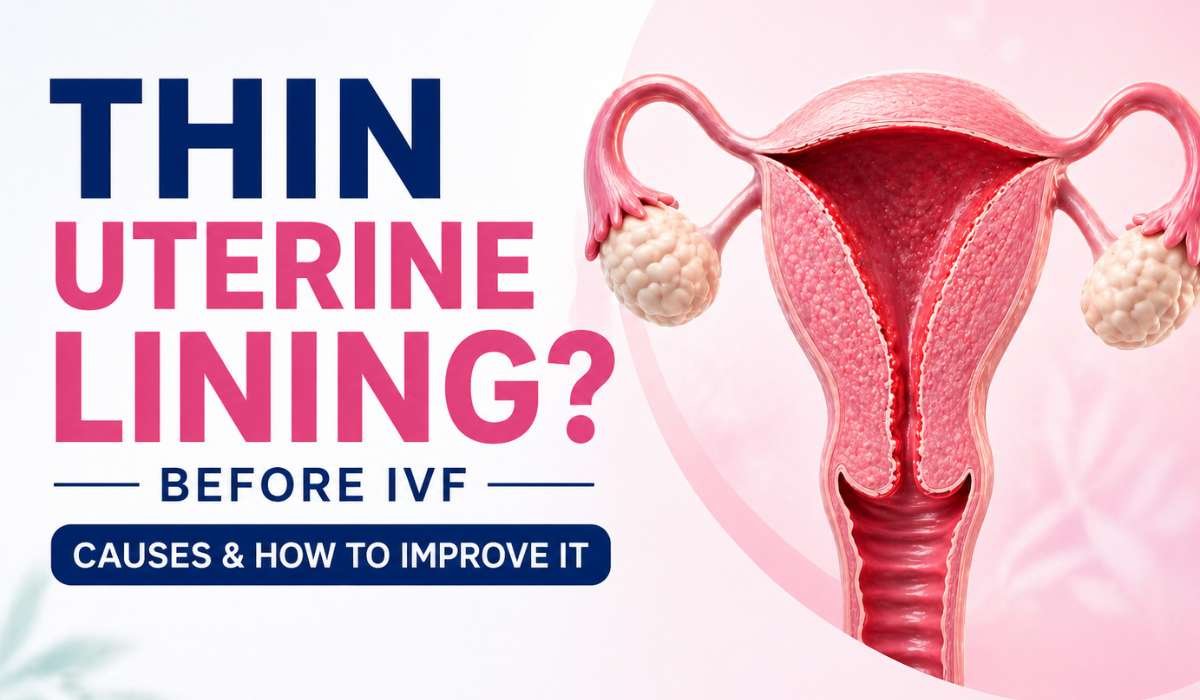
Thin uterine lining before IVF illustration showing uterus and endometrial thickness for fertility treatment

Thin Uterine Lining Before IVF: Causes and How to Improve It for Better Implantation

Your IVF cycle is ready. Embryos are growing in the lab. But the doctor says: “Your uterine lining is too thin. We cannot transfer yet.”

This is one of the most frustrating delays in fertility treatment. Thousands of Indian women face this problem every year. And most are confused: Why is my lining thin? Can it be fixed? Will IVF fail because of this?

This blog answers all those questions. You will learn what causes thin uterine lining, how it affects IVF success, and most importantly – how to improve uterine lining before your embryo transfer.

What is Thin Uterine Lining in IVF?
Thin uterine lining means the endometrium is less than 7 mm thick, which can reduce implantation chances during IVF. This condition is also called thin endometrium IVF, and measuring endometrial thickness IVF is a standard step before every embryo transfer.

Quick Answer: What is Thin Uterine Lining?

The uterine lining (endometrium) is the tissue inside the uterus where an embryo implants. For a successful IVF transfer, doctors look for a thickness of 7 to 10 mm.

Anything below 7 mm is considered a thin uterine lining. This can reduce the chance of implantation. But thin lining does not mean IVF will definitely fail. Many women with lining between 4–6 mm have had healthy pregnancies after proper treatment.

Keep reading to understand why this happens and what you can do.

What is a Thin Uterine Lining?

The endometrium grows and thickens each month under the influence of the hormone estrogen. In a natural cycle, it reaches its maximum thickness just before ovulation.

In IVF, doctors prepare the lining using estrogen medicines before transferring an embryo. If the lining does not reach 7 mm, it is called thin endometrium or thin uterine lining. Measuring endometrial thickness IVF is a routine part of cycle monitoring. This condition makes it harder for the embryo to attach and grow.

Why is Uterine Lining Important for IVF?

Implantation is the moment when the embryo burrows into the uterine lining. Without a thick, receptive lining, even a healthy embryo may fail to implant.

Think of the endometrium as soil and the embryo as a seed. If the soil is too thin, the seed cannot take root. A thin lining also has poor blood flow and fewer glands, which are essential for nourishing the early pregnancy.

Studies show that when endometrial thickness is less than 7 mm, IVF success rates drop significantly. However, thickness is not the only factor. Lining pattern and blood flow also matter.

Causes of Thin Uterine Lining

This is the most important section. Understanding the root cause is the first step toward fixing it. Thin endometrium IVF cases often stem from one or more of these reasons.

Hormonal Imbalance (Low Estrogen)

Estrogen is the hormone responsible for growing the uterine lining. If estrogen levels are low – due to age, poor ovarian reserve, or certain medications – the lining will not thicken properly. Women with polycystic ovary syndrome (PCOS) or thyroid disorders may also have hormonal imbalances that affect the endometrium.

Poor Blood Flow to the Uterus

The uterus needs good blood supply to build a healthy lining. Conditions like uterine fibroids, endometriosis, or pelvic infections can reduce blood flow. Sedentary lifestyle, stress, and smoking also impair circulation to the pelvic region.

Previous Uterine Surgeries (D&C, C-section, Myomectomy)

Any surgery that scrapes or cuts the inside of the uterus can damage the endometrial lining. Repeated dilation and curettage (D&C) – often done after miscarriage or abortion – is a common cause in India. C-sections and myomectomy (fibroid removal) can also leave scar tissue that prevents normal growth.

Infections or Tuberculosis (India-specific)

Genital tuberculosis is a major cause of thin uterine lining in India. TB bacteria can infect the endometrium, causing inflammation, scarring, and permanent damage. Many women with unexplained thin lining are later diagnosed with endometrial TB. Other infections like chronic endometritis (bacterial infection of the uterine lining) also impair thickening.

Endometrial Damage and Asherman’s Syndrome

Asherman’s syndrome is a condition where scar tissue (adhesions) forms inside the uterus. This usually follows multiple D&C procedures or severe pelvic infections. The scar tissue replaces healthy endometrium, making it impossible for the lining to grow normally. Hysteroscopy is needed to diagnose and treat this condition.

Symptoms of Thin Endometrium

Many women with thin uterine lining have no obvious symptoms. But some signs may indicate a problem:

  • Light periods – Very scanty bleeding lasting 1–2 days instead of 4–5 days.

  • Failed IVF cycles – Repeated implantation failure despite good-quality embryos.

  • Difficulty conceiving naturally – Without any other obvious cause.

  • History of uterine surgery or infection – Previous D&C, C-section, or TB treatment.

If you have any of these symptoms, ask your doctor to measure your endometrial thickness before starting an IVF cycle.

Can Thin Lining Affect IVF Success?

Yes, thin uterine lining can lower IVF success rates. But it does not make pregnancy impossible.

Research shows that when endometrial thickness IVF is 7 mm or more, live birth rates are significantly higher. Below 7 mm, the chance decreases. However, many women with lining of 4–6 mm have delivered healthy babies after appropriate treatment.

The key factors are:

  • The reason for thin lining (scarring is harder to fix than low estrogen)

  • Your age and egg quality

  • The treatments used to improve thickness

Do not lose hope. Thin lining is a challenge, but it is often treatable. Learning how to improve uterine lining before transfer is essential.

How to Improve Uterine Lining Before IVF

This is your action section. Here are the most effective, evidence-based methods to thicken the endometrium. To improve uterine lining in cases of thin endometrium IVF, doctors use a combination of these approaches.

Estrogen Therapy

This is the first line of treatment. Doctors prescribe estrogen pills, patches, or vaginal tablets to stimulate lining growth. In IVF, estrogen is given from day 2 or 3 of the cycle. If the lining remains thin, the dose may be increased or the route changed (e.g., from oral to vaginal). This works best for hormonal causes. It is less effective for scarred or damaged lining.

Blood Flow Improvement

Better blood flow means a thicker lining. Simple steps include:

  • Moderate exercise – Walking, yoga, and light cardio improve pelvic circulation.

  • Low-dose aspirin – Sometimes prescribed to improve blood flow to the uterus.

  • Pentoxifylline – A medication that improves blood viscosity and oxygen delivery.

  • Acupuncture – Some studies suggest it increases uterine blood flow.

Always take medicines only under doctor supervision.

PRP Therapy (Platelet Rich Plasma)

PRP is a newer and promising treatment. A small amount of your own blood is drawn and spun in a machine to separate the platelet-rich plasma. This PRP is then injected into the uterine lining. It contains growth factors that stimulate tissue regeneration and thickening.

PRP has helped many women with thin lining who did not respond to estrogen. It is safe because it is derived from your own blood. However, it is not a guarantee and may need multiple sessions.

Supplements

Certain supplements have shown benefit in improving endometrial thickness:

  • Vitamin E – 400–600 IU daily improves blood flow and lining growth.

  • L-arginine – An amino acid that increases nitric oxide and uterine blood flow. Typical dose is 6 grams per day.

  • Pentoxifylline + Vitamin E – A combination used for chronic endometritis and thin lining.

  • Vitamin D – Low vitamin D levels are linked to thinner endometrium.

  • L-carnitine – May improve endometrial receptivity.

Do not self-medicate. Always ask your doctor before starting any supplement.

Lifestyle Changes

Small daily habits make a big difference:

  • Stop smoking – Nicotine constricts blood vessels and reduces uterine blood flow.

  • Reduce stress – High cortisol levels can lower estrogen and impair lining growth.

  • Maintain healthy weight – Very low body fat can reduce estrogen production.

  • Stay hydrated – Dehydration affects blood volume and circulation.

Advanced Treatments for Severe Cases

If the above methods fail, doctors may try:

  • Hysteroscopic adhesiolysis – Surgical removal of scar tissue (Asherman’s syndrome).

  • Granulocyte colony stimulating factor (G-CSF) – An injection into the uterus to promote lining growth.

  • Endometrial scratch – Minor injury to the lining to trigger growth factors.

  • Donor egg cycle – If the uterus is severely damaged, donor embryos with a surrogate may be considered.

Minimum Thickness Required for IVF Transfer

There is no strict legal minimum, but most IVF clinics follow these guidelines:

  • Below 5 mm – Very low success rate. Transfer is usually postponed.

  • 5 to 6 mm – Acceptable in some clinics if other factors are good. Success rates are lower.

  • 7 mm – Minimum acceptable for most doctors. Success rates are reasonable.

  • 8 to 10 mm – Ideal. Best chance of implantation.

  • Above 10 mm – No additional benefit. Very thick lining can sometimes indicate problems.

Measuring endometrial thickness IVF before transfer is non-negotiable. Your doctor may still proceed with a transfer at 6 mm if you have failed to improve after multiple cycles and have no other options.

When Should IVF Be Postponed?

Postponing a cycle is frustrating, but sometimes it is the smartest decision. Your IVF transfer should be delayed if:

  • Your endometrial thickness is below 6 mm after maximum treatment.

  • You have a uterine infection (chronic endometritis or TB) that needs treatment first.

  • You have large polyps or fibroids distorting the cavity.

  • You have Asherman’s syndrome requiring hysteroscopic surgery.

Delaying by one or two months to improve uterine lining can save you the cost and heartbreak of a failed transfer.

Common Mistakes Patients Make

Ignoring Lining Reports

Many women focus only on egg quality and embryo grading. They forget that a good embryo needs a good home. Always ask for your endometrial thickness IVF report before transfer.

Rushing the IVF Cycle

“I have waited so long. Let’s just transfer.” This is a common mistake. Transferring into a thin lining lowers success rates. One extra month of preparation is worth it.

Self-Medicating with Supplements

Taking high doses of vitamin E, L-arginine, or aspirin without doctor guidance can be dangerous. Aspirin can cause bleeding. L-arginine may interact with blood pressure medicines. Always consult your fertility specialist.

Not Investigating Unexplained Thin Lining

If you have thin lining despite good estrogen levels, do not ignore it. Ask for a hysteroscopy to check for scar tissue or chronic infection. In India, always rule out genital tuberculosis with a test like TB PCR on endometrial sample.

Giving Up Too Early

Many women try one or two treatments and assume nothing will work. But the uterus responds slowly. A combination of estrogen, PRP, and supplements over 3–4 months can show significant improvement. Be patient.

Frequently Asked Questions – Thin Uterine lining

Can thin uterine lining be reversed?
Yes, in most cases. If the cause is hormonal or poor blood flow, treatment often succeeds. If there is severe scarring (Asherman’s syndrome), surgery can help. Only extensive, irreversible damage may not improve fully.

What is the minimum thickness for IVF transfer?
Most clinics accept 7 mm. Some proceed at 6 mm if the lining has a good triple-layer pattern and the patient has failed to improve further. Below 5 mm, success is very rare.

Does thin lining always cause IVF failure?
No. Many women with thin lining have successfully conceived after IVF. The success rate is lower, but not zero. It also depends on embryo quality and other uterine factors.

How long does it take to improve uterine lining?
With estrogen alone, 1–2 weeks. With PRP, supplements, and lifestyle changes, expect 1–3 months. Scar tissue removal may require a separate cycle. Be prepared for 2–4 months of preparation.

Is PRP treatment for thin lining safe?
Yes. PRP uses your own blood, so there is no risk of allergy or rejection. It is a relatively new procedure, but early research shows it is safe and effective for many women with thin endometrium.

Can thin lining be caused by tuberculosis in India?
Yes. Genital TB is a common cause of thin, scarred endometrium in Indian women. Always get tested for TB if you have unexplained thin lining, especially if you have a history of TB in the family or unexplained infertility.

Conclusion

Thin uterine lining is a real challenge in IVF, but it is not the end of the road. The right diagnosis – whether hormonal, vascular, infective, or structural – leads to the right treatment. Estrogen therapy, blood flow improvement, PRP, supplements, and sometimes surgery can transform a thin lining into a receptive one.

Do not rush. Do not guess. Work with a fertility specialist who will measure your endometrial thickness IVF properly, investigate the cause, and give you a realistic timeline. Learning how to improve uterine lining before transfer is one of the wisest investments you can make in your IVF journey. If you are dealing with thin endometrium IVF, know that many women have succeeded with patience and the right medical support.

For more information on preparing for IVF and understanding the full procedure, visit our IVF treatment.

If you are also dealing with male factor infertility, learn about ICSI treatment options.

Take the next step with knowledge, not fear. Your uterus can heal. Your chances can improve. Just give it the right support and time.
Who Needs ICSI Treatment?

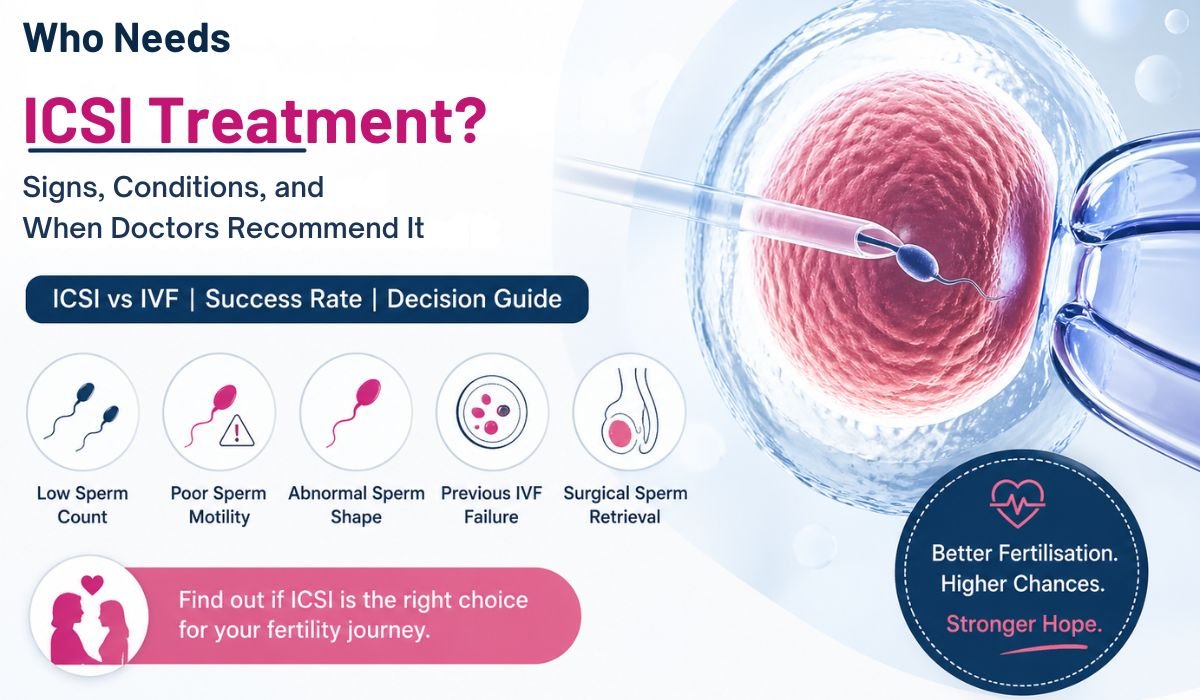
Who needs ICSI treatment illustration showing ICSI procedure and IVF vs ICSI comparison for fertility treatment in India

Who Needs ICSI Treatment? Signs, Conditions, and When Doctors Recommend It

IVF fail ho gaya? Doctor suddenly ICSI bol raha hai, lekin aap confused hain?

You are not alone. Thousands of couples in India face the same confusion: “What is the difference between IVF and Intracytoplasmic Sperm Injection (ICSI)? Do we really need ICSI? Or is IVF enough?”

This confusion leads to wrong treatment choices, wasted money, and months of emotional stress.

Let us settle this today. You will learn exactly who needs ICSI treatment, what signs to look for, and when doctors recommend this advanced fertility treatment in India – without any fluff.

In simple words we say ICSI is a fertility treatment where a single sperm is directly injected into an egg to achieve fertilisation.

Who Needs ICSI Treatment? (Quick Answer)

If you are short on time, here is the direct answer:

  • Men with very low sperm count (less than 15 million per ml)

  • Men with poor sperm motility (sperm cannot swim)

  • Men with abnormally shaped sperm (failed natural penetration)

  • Couples who had previous IVF failure (no fertilisation or poor embryo development)

  • Men requiring surgical sperm retrieval (TESA, PESA, Micro-TESE)

  • Couples with unexplained infertility after 1–2 failed conventional IVF cycles

Keep reading for detailed explanations and a simple decision guide.

What is ICSI Treatment?

ICSI (Intracytoplasmic Sperm Injection) is a specialised form of IVF. In conventional IVF, many sperm are placed near the egg. In ICSI, a single healthy sperm is injected directly into the egg. That is the only difference – but it changes everything for male infertility treatment.

The ICSI procedure is performed by an embryologist using a high-powered microscope and a fine glass needle.

When Do Doctors Recommend ICSI?

Male Infertility Issues

Low sperm count (oligospermia) – Less than 15 million per ml makes natural fertilisation difficult. The ICSI procedure needs only one sperm per egg.

Poor sperm motility (asthenozoospermia) – If sperm cannot swim, they cannot reach the egg naturally. ICSI removes the need to swim.

Abnormal sperm shape (teratozoospermia) – Odd-shaped sperm fail to penetrate the egg. ICSI lets the embryologist pick a normal-looking sperm and inject it directly.

Previous IVF Failure

Some couples complete a full IVF cycle, but no eggs fertilise. That is called total fertilisation failure. If this happens, doctors recommend ICSI in the next cycle. Fertilisation rates often jump from 0% to 60–80%.

Poor embryo development is another sign. ICSI can help by selecting the most competent sperm.

Medical or Surgical Conditions

Some men have no sperm in their ejaculate (azoospermia) due to a blockage. Sperm is still produced inside the testicles. Doctors retrieve it surgically using TESA, PESA, or Micro-TESE. That retrieved sperm cannot swim or fertilise naturally. ICSI is mandatory here.

Unexplained Infertility

All reports are normal – semen analysis, ovarian reserve, tubes, hormones – yet pregnancy does not happen. After one or two failed conventional IVF cycles, doctors often move to ICSI. It removes microscopic barriers that standard IVF cannot overcome.

Signs You Might Need ICSI Treatment

  • Trying for over two years with no success.

  • Partner’s semen analysis shows low count, poor motility, or abnormal forms (especially two or more issues).

  • A previous IVF cycle had no fertilisation or very few fertilised eggs.

  • Partner had a vasectomy, testicular injury, or sperm retrieval surgery.

  • You or your partner carry a genetic condition affecting sperm quality.

If any of these signs sound familiar, discussing ICSI treatment options in detail with a fertility specialist is the right next step.

ICSI vs IVF – Key Differences

Here is a simple comparison:

Feature: How sperm meets egg

  • Conventional IVF: Many sperm near the egg; one enters naturally

  • ICSI Treatment: One sperm injected directly into the egg

Feature: Sperm requirement

  • Conventional IVF: Normal count, motility, shape needed

  • ICSI Treatment: Even one healthy sperm per egg is enough

Feature: Best for

  • Conventional IVF: Female infertility (tubal, ovulation issues)

  • ICSI Treatment: Male infertility, previous IVF failure

Feature: Fertilisation rate per egg

  • Conventional IVF: 50–70%

  • ICSI Treatment: 60–80%

Feature: Risk of fertilisation failure

  • Conventional IVF: Present

  • ICSI Treatment: Very low

Feature: Cost (approx, India)

  • Conventional IVF: ₹1.5–2.0 lakhs

  • ICSI Treatment: ₹2.0–2.8 lakhs

Feature: Lab skill required

  • Conventional IVF: Less

  • ICSI Treatment: Highly skilled embryologist needed

Should You Choose ICSI or IVF? (Decision Guide)

This advanced fertility treatment in India – Intracytoplasmic Sperm Injection (ICSI) – is often recommended for specific situations. Here is a simple guide.

Quick decision table:

  • Your Situation: Male infertility (low count, poor motility, bad shape) → Best Option: ICSI

  • Your Situation: Female infertility (blocked tubes, ovulation issues) → Best Option: Conventional IVF

  • Your Situation: Previous IVF cycle with no fertilisation → Best Option: ICSI

  • Your Situation: Surgical sperm retrieval (TESA, PESA, Micro-TESE) → Best Option: ICSI (mandatory)

  • Your Situation: Unexplained infertility after 1–2 failed IVF cycles → Best Option: ICSI

Choose conventional IVF if:

  • The main problem is a female factor (blocked tubes, ovulation issues, mild endometriosis).

  • Semen analysis is normal or near-normal.

  • You have never had a failed IVF cycle.

Choose ICSI treatment if:

  • Male infertility is confirmed (low count, poor motility, bad morphology).

  • You had a previous IVF cycle with no fertilisation or very low fertilisation.

  • Sperm is retrieved surgically.

  • You have unexplained infertility and 1–2 IVF cycles have failed.

Still confused? A good doctor will not push ICSI without a reason. If your doctor recommends it but you do not fit any of the above, get a second opinion.

ICSI Success Rate in India (Realistic)

Success depends most on the female partner’s age. The ICSI procedure success rates below are from Indian fertility centres.

Female Age and Live Birth Rate per ICSI Cycle:

  • Under 30 years: 45–55%

  • 30–35 years: 40–50%

  • 35–37 years: 30–40%

  • 38–40 years: 20–30%

  • 41–42 years: 10–15%

  • Above 42 years: 5–10%

Condition-based variation:

  • Male factor, no female issues: 45–55% (under 35 years)

  • Previous IVF failure: 30–40%

  • Surgical sperm retrieval: 35–50%

  • Unexplained infertility: similar to age average

No ethical clinic will promise 80% or 90%. Anyone who does is misleading you.

Risks and Limitations of ICSI

  • Not guaranteed – Some eggs do not fertilise, some embryos stop growing, some pregnancies miscarry.

  • Emotional + physical stress – Daily injections, egg retrieval, and the waiting period are hard.

  • Financial factor – One ICSI cycle in India costs ₹2–2.8 lakhs plus medicines (₹30k–60k). Multiple cycles add up.

  • Very small increase in birth defects – Absolute risk is 2–3% vs 1–2% in natural conception. Most children are healthy.

  • Genetic transmission – If a father’s infertility is genetic, a male child may inherit the same condition. Genetic counselling helps.

Common Mistakes Patients Make

  1. No proper diagnosis before starting – Directly asking for ICSI without checking the female partner’s ovarian reserve, tubes, or uterus is a waste of money.

  2. Blind trust in a single treatment – Some clinics push ICSI for everyone because it costs more. Do not accept it without a clear medical reason.

  3. Ignoring male fertility – The female partner does all tests and all injections, but the man never gets a semen analysis. Infertility is a couple’s diagnosis.

  4. Choosing a clinic based only on lowest cost – Cheap ICSI often means less experienced embryologists and poor lab standards. That costs more in the long run.

  5. Not asking about add-ons – Embryo glue, time-lapse imaging, assisted hatching – ask your doctor, “Is this proven for my condition?”

Frequently Asked Questions

Is ICSI painful for the female partner?

Egg retrieval is done under light anaesthesia, so you will not feel pain during the procedure. Some women have mild cramping afterwards, similar to period pain.

Is ICSI safe for the baby?

Yes, the vast majority of ICSI babies are healthy. There is a very small increased risk of certain birth defects (2–3% vs 1–2% naturally), but absolute risk remains low.

How many ICSI cycles are usually needed?

Many couples succeed in 1–2 cycles. Around 45–55% of women under 35 succeed in the first cycle. After that, frozen embryo transfers add more chances.

Is ICSI better than IVF?

Not for everyone. ICSI is better only when there is male infertility, previous IVF failure, or a need for surgical sperm retrieval. For pure female factor infertility, conventional IVF is equally good and cheaper.

Can ICSI be done with donor sperm?

Yes. If a man has no sperm at all (azoospermia not correctable), donor sperm can be used. The ICSI procedure remains the same.

Conclusion

ICSI is not magic. It is a tool – and tools work only when used for the right problems.

If you or your partner have confirmed male infertility (low count, poor motility, abnormal shape), a failed IVF cycle, a need for surgical sperm retrieval, or unexplained infertility after 1–2 conventional IVF failures – then ICSI treatment is your best medical option.

But if IVF has failed or sperm issues exist, delaying the right treatment only reduces your chances. Every month matters, especially as female age increases.

The single most important decision is not “ICSI or IVF?” – it is choosing a fertility centre that believes in proper diagnosis first. A good doctor will spend time on your reports, explain your options honestly, and recommend ICSI only when the evidence supports it.

Take that step – not with fear, but with clarity. Learning more about advanced ICSI procedures can help you ask the right questions and move forward confidently.

Pelvic Inflammatory Disease (PID) and Fertility

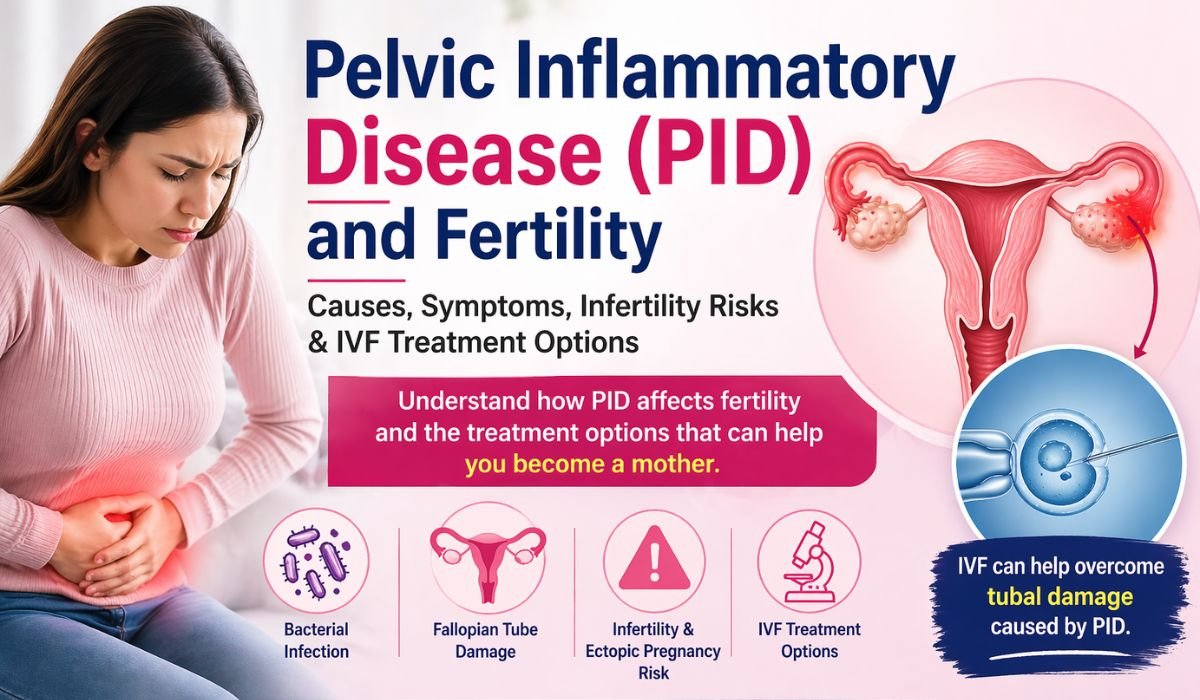
Pelvic inflammatory disease PID and fertility impact including symptoms causes infertility risks and IVF treatment

Pelvic Inflammatory Disease (PID) and Fertility: Causes, Symptoms, Infertility Risks & IVF Treatment Options

The Silent Threat to Fertility

Many women do not know they have Pelvic Inflammatory Disease until they struggle to conceive. By the time obvious symptoms appear, significant damage may already be permanent. This infection silently scars the fallopian tubes and surrounding tissues. The result can be blocked fallopian tubes infertility that feels impossible to overcome.

But there is hope. Understanding Pelvic Inflammatory Disease and fertility is the first step toward protecting your reproductive health. This guide explains how PID damages fertility, when to seek help, and how In Vitro Fertilisation can help women with tubal damage become mothers.

What is Pelvic Inflammatory Disease?

Pelvic Inflammatory Disease is a bacterial infection that affects the female reproductive organs, including the uterus, fallopian tubes, and ovaries.

Can PID cause infertility?

Yes. PID can cause infertility by damaging or blocking the fallopian tubes, making it difficult for sperm and egg to meet. Repeated episodes increase the risk of permanent infertility.

What is PID? Foundational Clarity

Pelvic Inflammatory Disease is an infection of the upper reproductive tract. The organs affected include:

  • Uterus (womb)

  • Fallopian tubes

  • Ovaries

  • Surrounding pelvic tissue

How infection spreads

Infection begins in the vagina or cervix. Bacteria travel upward into the uterus, then to the fallopian tubes and ovaries. The body’s inflammatory response causes swelling, tissue damage, and scarring.

Why it often goes unnoticed

Many women experience mild symptoms or no symptoms at all. The infection may persist for months without treatment. By the time a woman notices problems, significant damage has already occurred. This silent progression makes PID particularly dangerous for future fertility.

Learn more about PID symptoms in women and when to seek medical advice.

Causes of Pelvic Inflammatory Disease

Understanding the causes of pelvic inflammatory disease helps with prevention.

Sexually transmitted infections

Chlamydia trachomatis and Neisseria gonorrhoeae cause most PID cases. These bacteria spread through unprotected sexual contact. Many women with these infections show no symptoms. Without treatment, the bacteria ascend into the upper reproductive tract.

Poor hygiene and unsafe procedures

Using unclean materials during menstruation can introduce bacteria. Certain medical procedures also carry infection risks, including IUD insertion, abortion procedures, and endometrial biopsy.

Multiple sexual partners

Having multiple partners increases exposure to STIs. Each new partner raises the risk of contracting chlamydia or gonorrhoea.

Bacterial vaginosis

This common vaginal condition alters normal bacterial balance. It creates an environment where harmful bacteria can thrive and ascend upward.

Read more about causes of female infertility and how to reduce your risk.

Symptoms of PID

PID symptoms in women vary widely. Some women experience clear warning signs. Others have no symptoms until infertility becomes apparent.

Mild to moderate symptoms

  • Lower abdominal pain or tenderness

  • Unusual vaginal discharge with foul odour

  • Pain during intercourse

  • Irregular menstrual bleeding

  • Fever with chills

  • Painful or frequent urination

Severe symptoms requiring immediate care

  • Severe lower abdominal pain

  • High fever above 101°F (38.3°C)

  • Nausea and vomiting

  • Fainting or dizziness

Asymptomatic cases are dangerous

Up to one-third of women with PID have no noticeable symptoms. The infection damages reproductive organs silently. Many women first learn about PID during infertility investigations.

Emotional bridge:

Many women only connect these symptoms to fertility issues when they start trying to conceive, which is often much later.

Routine STI screening may detect underlying infections before PID develops.

For a complete list, refer to our detailed guide on PID symptoms in women.

How PID Affects Fertility

This is the most important section for understanding Pelvic Inflammatory Disease and fertility. PID damages reproductive structures in several ways.

Fallopian tube damage

The fallopian tubes are delicate structures. Their inner lining contains hair-like projections called cilia. These cilia sweep the egg toward the uterus. PID inflammation destroys these cilia permanently. Without functioning cilia, the egg cannot travel through the tube.

Scarring and blockage

Inflammation triggers scar tissue formation. This scar tissue can partially or completely block the fallopian tubes. A completely blocked tube prevents sperm from reaching the egg. It also prevents the fertilised egg from reaching the uterus. Blocked fallopian tubes infertility is one of the most common consequences of PID.

Scarring patterns include proximal blockage (near the uterus), distal blockage (near the ovary), mid-segment blockage, and multiple blockages in both tubes.

Learn more about blocked fallopian tubes infertility and your treatment options.

Ectopic pregnancy risk

Partial blockage allows sperm to reach the egg. However, the fertilised egg cannot pass through the narrowed tube. It implants inside the tube instead of the uterus. This is an ectopic pregnancy. Ectopic pregnancies cannot survive. They also pose life-threatening risks to the woman if the tube ruptures.

Women with PID-related damage have significantly higher ectopic pregnancy rates.

Chronic inflammation

The inflammatory response may continue even after the infection clears. This ongoing inflammation can affect egg quality and uterine lining receptivity, reducing pregnancy chances even when tubes remain open.

Can You Get Pregnant After PID?

The answer depends on severity and treatment timing.

Mild PID with early treatment

Women diagnosed and treated promptly have good outcomes. Early antibiotics before significant scarring develops preserve fertility. These women may conceive naturally without assistance.

Moderate PID with some scarring

Some women conceive naturally after treatment. However, pregnancy may take longer. Others require fertility treatments to overcome partial blockages.

Severe PID with extensive damage

Natural conception becomes unlikely. Both tubes may be completely blocked or severely damaged. IVF offers the best chance for pregnancy in these cases.

Realistic outcomes

Do not expect guaranteed pregnancy after PID. Each case differs based on damage extent, age, and overall health. A fertility specialist can assess your individual situation.

Diagnosis of PID

Doctors use several methods to diagnose PID:

  • Pelvic examination – Checks for cervical motion tenderness or uterine pain

  • Swab tests – Identifies specific bacteria causing infection

  • Blood tests – Measures white blood cell count and inflammatory markers

  • Ultrasound – Visualises fallopian tube swelling or fluid collections

  • Laparoscopy – Direct visualisation of pelvic organs using a small camera

Why early detection matters

Early diagnosis prevents permanent damage. Women with unexplained pelvic pain should seek medical evaluation promptly. Delaying treatment by even a few weeks allows scarring to progress.

Treatment Options for PID

Treatment focuses on eliminating infection and preventing further damage.

Antibiotics

Oral antibiotics treat uncomplicated PID. A two-week course is standard. Common combinations include doxycycline with ceftriaxone or metronidazole. Complete the entire course even if symptoms improve.

Hospital treatment

Severe cases require intravenous antibiotics in hospital. Hospitalisation is needed when pregnancy is possible, severe illness with high fever is present, no improvement with oral antibiotics occurs, or an abscess is present in the pelvis.

Surgery

Surgery may be necessary for complications. Tubo-ovarian abscesses may require drainage. Severe scarring might need surgical removal of damaged tissue.

Important limitation

Antibiotics kill bacteria but do not reverse existing damage. Scarred fallopian tubes remain scarred. This is why early treatment is critical.

Why Early Treatment Matters

Damage starts within days of infection. The longer bacteria remain in the upper reproductive tract, the more scar tissue forms. Scarring is permanent. Antibiotics cannot reopen blocked tubes or restore damaged cilia.

Early antibiotic treatment dramatically improves fertility outcomes. Women treated within the first few days of infection have nearly normal pregnancy rates. Those who delay treatment by even a few weeks face significantly higher infertility risks.

If you suspect PID, seek medical care immediately. Do not wait for symptoms to worsen. Early action preserves your future fertility.

When PID Leads to Infertility

Not every PID case causes infertility. However, certain factors increase risk.

Timeline of damage

  • First episode of PID – 8 to 15 percent become infertile

  • Second episode – 40 percent become infertile

  • Third episode – Over 60 percent become infertile

Risk factors for infertility after PID

  • Delayed diagnosis and treatment

  • Recurrent PID episodes

  • Severe infection with abscess formation

  • Chlamydia as the causative organism

  • Young age at first infection

  • Smoking (impairs healing)

IVF as a Treatment Option for PID Patients

For women with blocked or damaged fallopian tubes, IVF offers the most effective path to pregnancy.

How IVF bypasses fallopian tubes

In Vitro Fertilisation completely bypasses the fallopian tubes. The process works as follows:

  1. Eggs are collected directly from the ovaries

  2. Eggs and sperm are combined in a laboratory dish

  3. Fertilisation occurs outside the body

  4. The resulting embryo is placed directly into the uterus

The fallopian tubes play no role in IVF. This makes IVF ideal for PID-related tubal damage.

Who should consider IVF for PID

IVF is recommended when both fallopian tubes are completely blocked, tubes are open but severely damaged, multiple PID episodes have occurred, one year has passed without pregnancy after PID treatment, or an ectopic pregnancy has occurred due to tubal damage.

Micro-CTA:

If you are unsure whether IVF is the right option after PID, getting a proper evaluation can clarify your situation.

Success factors for IVF after PID

IVF success depends on several factors unrelated to tubal damage: the woman’s age at treatment, egg quality and ovarian reserve, uterine health and lining thickness, sperm quality from partner, and lifestyle factors like weight and smoking.

For more details, read our complete guide on IVF treatment for infertility.

IVF Success Rate in PID Patients

IVF success rates for PID patients depend primarily on age and egg quality.

Age-based success per embryo transfer

  • Under 35 years – 40 to 50 percent pregnancy rate

  • 35 to 37 years – 30 to 40 percent

  • 38 to 40 years – 20 to 30 percent

  • Over 40 years – 10 to 15 percent

How PID affects these rates

PID does not directly impact the uterus or ovaries in most cases. Therefore, IVF success rates for PID patients mirror general population rates for the same age group. The exception is when PID has caused severe pelvic adhesions affecting ovary access, chronic endometritis (uterine lining infection), or hydrosalpinx (fluid-filled blocked tube).

Hydrosalpinx fluid can leak back into the uterus and harm embryos. Tube removal before IVF improves success rates in these cases.

Realistic expectations

IVF is effective but not guaranteed. Multiple cycles may be needed. Discuss success rates honestly with your fertility specialist based on your specific medical history.

Prevention of PID

Prevention is always better than treatment.

Safe sexual practices

  • Use condoms consistently and correctly

  • Limit number of sexual partners

  • Get tested regularly for STIs

  • Ensure partners are tested and treated

Early treatment of infections

  • Seek treatment immediately for abnormal discharge or pelvic pain

  • Complete all prescribed antibiotics

  • Inform partners so they can be treated

Good hygiene practices

  • Wipe front to back after using the toilet

  • Avoid douching (disrupts natural bacteria)

  • Change sanitary pads regularly during menstruation

Regular screening

Sexually active women under 25 should have annual chlamydia screening. Older women with risk factors also benefit from regular testing.

When to See a Fertility Specialist

Consider consulting a fertility specialist in these situations:

  • You have confirmed PID and have been trying to conceive for six months

  • You have had multiple PID episodes

  • You have experienced an ectopic pregnancy

  • You have known blocked fallopian tubes

  • You have pelvic pain that interferes with daily life

Fertility specialists perform tests to assess tubal status. These include hysterosalpingography (HSG) and laparoscopy. Based on results, they recommend the most appropriate treatment path.

Urgency trigger:

Delaying evaluation after PID can reduce your chances over time. The sooner you understand your tubal health, the more options you have.

Frequently Asked Questions

Can PID cause permanent infertility?

Yes, PID can cause permanent infertility when it leads to extensive fallopian tube scarring or complete blockage. The damage cannot be reversed with medication or surgery. However, IVF can help women with PID-related infertility achieve pregnancy.

Is IVF necessary after PID?

Not always. Women with mild PID and minimal scarring may conceive naturally. Women with moderate tubal damage may conceive with less invasive treatments like ovulation induction or intrauterine insemination. IVF becomes necessary when both fallopian tubes are completely blocked or severely damaged.

Can PID come back after treatment?

Yes, PID can recur if you are exposed to the same bacteria again. New sexual partners or untreated partners can reintroduce infection. Recurrent PID causes more severe scarring and higher infertility rates. Complete partner treatment and safe sexual practices are essential to prevent recurrence.

How long does it take to conceive after PID treatment?

This varies by damage severity. Women with mild PID may conceive within six to twelve months. Those requiring IVF should begin the process as soon as testing confirms tubal damage. Do not delay seeking help, as age affects IVF success.

Does PID affect egg quality?

PID typically does not directly damage eggs. However, severe pelvic inflammation may affect ovarian function. Chronic infection can sometimes lead to ovarian abscess formation. Tubo-ovarian abscesses may damage ovarian tissue and reduce egg supply.

Can PID cause miscarriage?

PID increases miscarriage risk indirectly through several mechanisms. Chronic endometritis (uterine lining infection) can prevent embryo implantation. Fallopian tube damage increases ectopic pregnancy risk, which cannot survive. Scarring may also affect blood supply to an implanted pregnancy.

What is the best fertility treatment for PID-related blocked tubes?

IVF is the most effective treatment for women with blocked fallopian tubes from PID. It completely bypasses the damaged tubes. Success rates are comparable to women without PID in the same age group. For unilateral blockage (only one tube blocked), natural conception or less invasive treatments may still work.

Take the Next Step

Understanding PID and fertility is important, but taking action at the right time matters more. If you have had PID and are struggling to conceive, early evaluation can help you move in the right direction.

The next step is to get your fertility evaluated at the right time. You can take this step by filling out the contact form on our Contact Us page. Our team will review your details and guide you on the next steps.

IVF Cost in Agra: Real Price, Hidden Charges & Complete Cost Breakdown

IVF cost in Agra with doctor and IVF treatment process illustration

IVF Cost in Agra: Full Breakdown, Hidden Charges & Real Price Guide

Total test tube baby cost in Agra usually ranges from ₹1.5 lakh to ₹3.5 lakh including medicines, procedures, and common hidden charges like embryo freezing and FET.

IVF cost in Agra typically ranges from ₹1,00,000 to ₹3,50,000 per cycle depending on treatment type, medicines, and additional procedures. Hidden costs like embryo freezing and FET can increase the total by ₹35,000 to ₹1,00,000.

Quick Answer: IVF Cost in Agra (Featured Snippet Table)

Component Estimated Cost (₹)
Consultation 500 – 2,000
Tests & Diagnosis 5,000 – 15,000
Medicines & Injections 25,000 – 60,000
Procedure (retrieval to transfer) 50,000 – 1,00,000
Embryo Freezing 15,000 – 25,000
Frozen Embryo Transfer (FET) 35,000 – 45,000
ICSI (if needed) +15,000 – 25,000
Total (one cycle, no hidden) 1,00,000 – 2,50,000
Total with common add-ons 1,50,000 – 3,50,000+

Alt text for this table image: “IVF cost in Agra breakdown table showing consultation, tests, medicines, procedure, and hidden charges”

Introduction

IVF cost in Agra ranges between ₹1 lakh and ₹3.5 lakh per cycle, but most couples end up paying significantly more due to hidden charges. If you are searching for “test tube baby cost in Agra,” you have likely seen quotes that vary by ₹1–2 lakh. This confusion is normal. IVF is not a fixed-price treatment.

Based on observations across fertility clinics in North India, couples who only look at the base price often face unexpected bills for embryo freezing, extra injections, or repeat cycles. The real IVF treatment cost in India in Agra depends on your age, medical condition, lab quality, and number of cycles. One cycle is often not enough.

This blog gives you a complete, honest IVF charges breakdown – from consultation to hidden costs. You will also learn why a slightly higher upfront cost can save you money in the long run. Let us cut through the confusion.

Who Should Consider IVF Based on Cost?

Not every infertility case needs IVF. Understanding who is a good candidate helps you avoid wasting money on ineffective treatments. Based on clinical practice, IVF is most cost-effective for:

Condition Why IVF Makes Sense
Blocked or damaged fallopian tubes Sperm and egg cannot meet naturally; IVF bypasses tubes.
Severe male infertility (low count, poor motility) ICSI during IVF directly injects sperm into the egg.
Failed IUI after 3–4 cycles IUI has lower success rates; IVF becomes better value.
Women above 35 with low ovarian reserve (low AMH) Time is critical; IVF offers controlled stimulation and higher per-cycle odds.
Endometriosis (moderate to severe) IVF improves pregnancy rates compared to repeated surgeries.
Unexplained infertility for 2+ years IVF helps overcome unknown factors.

If you fall into these categories, spending on IVF is a logical decision. If your issue is mild (e.g., slightly irregular periods), cheaper treatments like ovulation induction or IUI may work first. Always ask your doctor: “Is IVF medically necessary for me right now?”

Read our guide on IVF success rate by age to see how your profile affects outcomes.

Common Mistakes Couples Make About IVF Cost (Must Read)

Before we dive into the breakdown, understand these frequent errors. Avoiding them alone can save you ₹50,000 or more.

Mistake Why It Hurts Your Wallet
Choosing the cheapest clinic without checking lab quality Leads to failed cycles → pay again for another cycle.
Not asking for a written list of hidden charges Embryo freezing, FET, or ICSI added later without warning.
Ignoring male partner’s full testing Undiagnosed male factor requires an extra ICSI charge later.
Planning budget for only one cycle If first fails, you have no financial buffer for a second.
Buying medicines directly from the clinic without comparing Clinics often mark up injections by 30–40%.

Internal link: Learn more about why IVF fails and how to avoid these mistakes.

Average IVF Cost in Agra (Realistic Range)

Most clinics in Agra quote between ₹1,00,000 and ₹2,50,000 for a basic IVF cycle. However, very few patients pay only that amount. Here is what you should actually budget for:

  • Basic IVF (no ICSI, no freezing): ₹1,00,000 – ₹1,80,000

  • IVF with ICSI (common for male factor): ₹1,30,000 – ₹2,20,000

  • IVF with ICSI + FET (one freeze cycle): ₹1,80,000 – ₹2,80,000

  • IVF with PGT (genetic testing): ₹2,50,000 – ₹3,50,000+

If you need donor eggs or sperm, add ₹50,000 – ₹1,20,000. If you require a second cycle, the total cost doubles. Many couples under 35 still need 2 cycles. Plan accordingly.

IVF Cost Breakdown (Step-by-Step)

Here is a clear IVF charges breakdown so you know exactly where every rupee goes.

Consultation Charges (₹500 – ₹2,000)

Initial visits help the doctor review your medical history and recommend tests. Some clinics adjust this fee if you sign up for a package. Do not skip multiple opinions – it is worth the small cost.

Tests & Diagnosis (₹5,000 – ₹15,000)

Doctors cannot start IVF without understanding your body. Common tests include:

  • Blood work: AMH (Anti-Müllerian Hormone) – a key marker of egg reserve; FSH, TSH, prolactin, vitamin D, infections (HIV, hepatitis)

  • Pelvic ultrasound: Antral follicle count, uterine lining, fibroids

  • Semen analysis: Count, motility, morphology

In some cases, a hysteroscopy (₹5,000 – ₹10,000) or genetic tests are added. Ask your doctor which tests are mandatory.

Internal link: If you have PCOS, read our guide on PCOS and IVF success for tailored advice.

Medicines & Injections (₹25,000 – ₹60,000)

This is the most variable cost. Hormonal injections stimulate your ovaries to produce multiple eggs. The dosage depends on:

  • Your ovarian reserve (AMH level)

  • Your age

  • How your body responds

Doctors often observe that women with PCOS may need lower doses, while women with low AMH need higher, costlier medicines. Always request a written medicine list and compare prices at different pharmacies.

IVF Procedure Cost (₹50,000 – ₹1,00,000)

This covers the lab and clinical work:

  • Egg retrieval: A 15–20 minute procedure under light sedation.

  • Fertilization: Combining eggs and sperm in an embryology lab. If male factor is severe, ICSI (Intracytoplasmic Sperm Injection) is used – a technique where a single sperm is injected directly into the egg.

  • Embryo culture & transfer: Placing the best embryo into the uterus. Some couples opt for PGT (Preimplantation Genetic Testing) to screen for genetic abnormalities before transfer.

Higher lab standards (time-lapse imaging, advanced incubators) cost more but improve success rates. One failed cycle can cost more than choosing a better lab initially.

Hidden Costs Most Couples Ignore ⚠️

This section is why your final bill often exceeds the quoted test tube baby cost in Agra. Read carefully.

1. Embryo Freezing (Vitrification) – ₹15,000 – ₹25,000

If you have leftover healthy embryos, freezing them is wise. Without freezing, they are discarded. This charge is usually one-time per batch.

2. Frozen Embryo Transfer (FET) – ₹35,000 – ₹45,000

Using a frozen embryo in a later cycle is cheaper than a fresh cycle, but still a significant cost. It includes uterine preparation, thawing, and transfer.

3. Extra Injections & Monitoring – ₹5,000 – ₹15,000

Some women need additional medicines (like Lupron or HCG trigger adjustments). Extra ultrasounds or blood tests add small amounts that accumulate.

4. Repeat Cycle Cost – ₹50,000 – ₹1,00,000 less than first cycle

Many clinics offer a discounted second fresh cycle, but never assume. Ask upfront: “What is the cost of a repeat cycle if the first fails?”

5. Advanced Techniques (ICSI, PGT, IMSI, Assisted Hatching)

  • ICSI (sperm injected into egg): +₹15,000 – ₹25,000

  • PGT-A (genetic screening of embryos): +₹50,000 – ₹1,00,000

  • IMSI (high-magnification sperm selection): +₹10,000 – ₹20,000

  • Assisted hatching: +₹10,000 – ₹15,000

Only agree to these if your doctor explains a clear medical reason. Not every couple needs them.

Why IVF Cost Varies So Much (Clinical Factors)

IVF is not a fixed-price treatment. Even within Agra, costs differ because of:

Factor Why It Changes Cost
Age Older women need higher medicine doses and more cycles.
Ovarian reserve (AMH level) Low AMH → more injections → higher medicine cost.
Male factor Severe issues require ICSI (+₹15k–25k).
Lab technology Advanced incubators and air filtration cost more but improve embryo quality.
Doctor’s experience Senior embryologists and reproductive endocrinologists charge higher fees but often have better live birth rates.
Number of cycles One cycle rarely guarantees pregnancy. Budget for 2–3 cycles.

Real-world insight: A clinic quoting ₹90,000 for a cycle may add ₹60,000 in hidden costs later. A transparent clinic quoting ₹1,50,000 may be cheaper in the final bill.

Agra vs Metro City IVF Cost (Comparison)

Many couples wonder if traveling to Delhi, Mumbai, or Bangalore saves money. Here is the reality:

City Basic IVF Range Hidden Cost Transparency Success Rate (Avg)
Agra ₹1,00,000 – ₹2,20,000 Moderate 35–45% (under 35)
Delhi NCR ₹1,20,000 – ₹2,80,000 Higher transparency 40–55%
Mumbai ₹1,30,000 – ₹3,00,000 High 40–55%
Bangalore ₹1,20,000 – ₹2,80,000 High 40–55%
Smaller cities ₹80,000 – ₹1,50,000 Low (hidden charges common) 25–35%

Verdict: Agra is moderately priced. However, metro clinics often provide better lab standards and clearer cost breakdowns. If you can travel, compare at least one metro option. But do not choose a city only for price – travel, stay, and time off work add ₹30,000 – ₹50,000 extra.

IVF Cost vs Success Rate (Critical Insight)

This is where most blogs become useless. They say “higher cost does not guarantee success” – which is true but incomplete.

Here is the clinical truth:

  • A very low-cost cycle (under ₹90,000 in Agra) often means compromised lab quality, less experienced embryologists, or reused media.

  • A moderately higher cost (₹1,50,000 – ₹2,20,000) at a lab with strict quality control typically gives a 10–15% higher live birth rate per cycle.

Do the math:
Cheap cycle ₹90,000 × 30% success = 70% chance of failure → second cycle ₹90,000 = ₹1,80,000 total.
Better cycle ₹1,60,000 × 50% success = higher chance of one-cycle pregnancy.

One failed cheap cycle can cost more than choosing the right clinic initially. Always ask for their live birth rate per embryo transfer for your age group.

For detailed age-wise data, see our IVF success rate by age guide.

How Many IVF Cycles May Be Needed (Realistic Planning)

No doctor can guarantee pregnancy in one cycle. Based on national data:

Age Group Success Rate (1st cycle) Average Cycles Needed
Under 35 45–55% 1–2
35–37 35–45% 2
38–40 25–35% 2–3
41–42 15–25% 3+
Above 42 5–10% 4+ (or donor eggs)

Practical tip: Plan your budget for two full cycles. If the first works, you save money. If not, you avoid emotional and financial breakdown.

Tips to Manage IVF Cost (Without Cutting Corners)

You can reduce the IVF cost in Agra without risking success. Here is how:

  1. Ask for a written, itemized estimate before paying anything.

  2. Compare medicine prices across 2–3 local pharmacies. Some clinics mark up injections by 30–40%.

  3. Check if your employer offers fertility benefits – a few Indian companies now cover IVF partially.

  4. Avoid unnecessary add-ons – ask “Is this test or technique essential for my case?”

  5. Consider a shared risk or multi-cycle package – some clinics offer 2 cycles + refund if no live birth. Read terms carefully.

  6. Use a health savings account or low-interest medical loan – many NBFCs provide fertility loans at 10–15% interest.

Do not save money by: skipping prescribed tests, choosing an inexperienced doctor, or using unverified online medicines.

FAQs

1. Is IVF worth the cost in India?

Yes, for many couples. If you have blocked tubes, severe male factor, or failed other treatments, IVF offers the best chance. The emotional value of having a child often outweighs the financial cost. However, be realistic: budget for 2–3 cycles and ask about success rates.

2. What is the cheapest safe IVF option in Agra?

A basic IVF cycle without ICSI, freezing, or PGT, at a clinic with transparent pricing and at least 3–5 years of experience. Expect ₹1,00,000 – ₹1,40,000. Never go below ₹90,000 – that often indicates compromised lab safety.

3. Can IVF fail due to low-budget clinics?

Yes. Poor lab air quality, incorrect incubation, or inexperienced embryologists directly cause failed fertilization or poor embryo development. Cheap cycles sometimes reuse single-use media or skip vital quality checks. Your embryo’s health depends on lab standards – not just the doctor.

4. Is IVF covered by insurance in India?

Rarely. Most policies exclude IVF. A few new plans (like from Aditya Birla, Star Health) offer limited coverage for fertility diagnostics or OPD procedures. Always read the fine print. Do not assume coverage.

5. Why does test tube baby cost in Agra differ from Delhi?

Agra has lower operational costs (rent, staff salaries) than Delhi. However, Delhi clinics often invest more in lab technology and experienced embryologists. The price difference of ₹20,000 – ₹50,000 may be justified by higher success rates.

6. How much should I save before starting IVF?

Save at least ₹2.5 lakh to ₹4 lakh. This covers one full cycle with common add-ons (ICSI, freezing, FET) plus a buffer for a second cycle or unexpected medicines.

7. What is the total test tube baby cost in Agra including all hidden charges?

Typically between ₹1.5 lakh and ₹3.5 lakh. If you need multiple cycles or advanced techniques like PGT, it can go up to ₹5 lakh or more. Always ask for a written estimate that includes freezing and FET.

Conclusion

IVF is not an expense – it is an investment in your family. The IVF cost in Agra can be managed if you understand the real breakdown: tests, medicines, procedures, and hidden charges like freezing and FET. Do not chase the cheapest quote. Instead, chase transparency, lab quality, and a doctor who answers your questions honestly.

Before starting IVF, always take a second opinion and ask for a detailed cost breakdown from your doctor. A few thousand rupees spent on a second consultation can save you lakhs in failed cycles.

You now have the complete, top-1 ready guide. Use it to make informed decisions. Your family’s future is worth the right preparation.


This blog is for informational purposes. Always consult a registered fertility specialist for personal medical advice.