Irregular Periods and Fertility: When Should You See a Doctor?

Woman marking period dates on a calendar while thinking about irregular periods and fertility

If your period arrives late one month and early the next, it is natural to wonder what that means for getting pregnant. The reassuring answer comes first: irregular periods do not automatically mean infertility. They can, however, suggest that ovulation (the release of an egg) is happening less predictably, or that an underlying condition deserves attention. This guide explains how irregular periods and fertility are connected, what may cause the irregularity, when to see a doctor and what an evaluation usually involves. Looking into it early helps you understand your options. It does not mean something is seriously wrong.

What Are Irregular Periods?

A menstrual cycle is counted from the first day of one period to the first day of the next. Typical cycles run between 21 and 35 days, and the NHS gives an average of around 28 days. Your periods may be called irregular when they:

  • Arrive unpredictably.
  • Are consistently shorter than 21 days or longer than 35 days.
  • Come infrequently.
  • Are missed altogether or stop.
  • Change in flow, length or pattern.

An occasional early or late period is common and rarely a concern. A pattern that continues over several months is worth discussing with a doctor.

Can Irregular Periods Affect Fertility?

Pregnancy needs an egg to be released. This is called ovulation, and in a regular cycle it happens roughly two weeks before the next period. When cycles are irregular, ovulation may be infrequent or sometimes absent. Fewer ovulations mean fewer chances to conceive each month, and the fertile window becomes harder to predict.

That said, many women with irregular periods conceive naturally, because they still ovulate, just less predictably. The reverse is also true: regular periods are a good sign, but they do not guarantee normal fertility, since the fallopian tubes, uterus and sperm quality also matter.

What Causes Irregular Periods?

Several things can disturb the hormonal signals that control the cycle. Only a qualified clinician can tell which one applies to you.

Polycystic Ovary Syndrome (PCOS)

PCOS is a common hormonal condition in which the ovaries may not release eggs regularly. Features can include irregular or missed periods, acne, extra facial or body hair and weight changes, but symptoms and severity differ widely between individuals. You can read more about how PCOS can affect ovulation and pregnancy.

Thyroid Disorders

An underactive or overactive thyroid gland can change menstrual patterns and affect reproductive health. A simple blood test can check thyroid function, and thyroid conditions can usually be managed once identified.

Stress, Weight Changes and Intensive Exercise

Significant stress, large weight gain or loss, restrictive eating or very intense training can interrupt the brain signals that trigger ovulation, sometimes making periods infrequent or stopping them. These are common contributors, but they are not the explanation in every case, so persistent changes should not simply be put down to stress.

Other Hormonal and Reproductive Conditions

Raised prolactin (a hormone that can suppress ovulation), hypothalamic or pituitary causes, certain medicines, recently stopping hormonal contraception and perimenopause in women in their 40s can all alter cycles. Occasionally a uterine or ovarian condition is responsible.

When Should You See a Doctor for Irregular Periods?

Seek assessment when irregularity persists, particularly if you are trying to conceive. Consider seeing a doctor if:

  • Your periods are consistently unpredictable or widely spaced.
  • Your period has stopped for around three months and pregnancy is not the explanation.
  • Irregular periods come with unusual facial hair growth, persistent acne or unexplained weight changes.
  • You are having difficulty conceiving.
  • You have a known condition that may affect ovulation or fertility.
  • Changes begin suddenly or come with other concerning symptoms.

How long should you try before a fertility evaluation?

The American Society for Reproductive Medicine advises starting an evaluation after 12 months of trying if you are under 35, and after six months if you are 35 or older. It also advises not to delay when you are over 40 or have a known cause of infertility. If your periods are irregular or absent, do not wait for these time limits.

Seek prompt medical care for very heavy bleeding, fainting, severe pelvic pain, or bleeding with significant pain when you could be pregnant.

How Do Irregular Periods Affect Ovulation?

Pattern What happens What it may mean for conception
Regular ovulation An egg is released about once each cycle Fertile days are easier to anticipate
Irregular ovulation An egg is released, but at unpredictable intervals The fertile window is harder to predict
Anovulation No egg is released in a cycle Pregnancy cannot occur in that cycle

A clinician may assess ovulation using your menstrual history, a progesterone blood test timed to the second half of the cycle, or ultrasound monitoring when indicated. With irregular cycles the timing is harder to get right, so a test may need to be repeated.

Calendar apps predict future dates from past ones, so they cannot confirm that you ovulated, and their predictions can be unreliable when your cycles vary.

What Tests May a Doctor Recommend?

Investigations depend on your symptoms, age, medical history and fertility goals. Not everyone needs every test, and no single test explains every cause of irregular periods. Possible assessments include:

  • Medical and menstrual history.
  • A pregnancy test, when relevant.
  • Thyroid and other hormone tests, when indicated.
  • Prolactin testing, when clinically appropriate.
  • Pelvic ultrasound.
  • Assessment for PCOS, when suspected.
  • Ovulation assessment.
  • Additional tests for either partner when appropriate, such as semen analysis.

Rainbow IVF explains its approach to fertility diagnostic tests and evaluations on its diagnostics page.

Can Irregular Periods Be Treated?

In many cases, yes. The approach depends on the underlying cause and on whether you want to conceive. It may include:

  • Treating thyroid or other hormonal conditions.
  • Individualised management of PCOS.
  • Lifestyle support, when medically relevant.
  • Medical approaches to support ovulation, when indicated.
  • Further fertility treatment, when appropriate.

Regulating bleeding and supporting conception are different goals. A treatment that makes cycles more regular, such as certain hormonal medicines, may not suit someone who is trying to conceive. Please do not self-treat with prescription medicines, hormones or supplements.

Can You Get Pregnant Naturally With Irregular Periods?

Yes, many women do. The likelihood depends on whether ovulation occurs and whether other fertility factors are present. Because cycle tracking cannot confirm ovulation, a doctor may suggest an evaluation rather than relying on tracking alone, which can save months of uncertainty.

Does Having Irregular Periods Mean You Need IVF?

No. Irregular periods alone do not mean IVF is necessary. Depending on the diagnosis, care may range from treating an underlying condition and supporting ovulation to other fertility treatments. IVF may be considered in selected situations when clinically appropriate, for example when other approaches have not worked or additional fertility factors are present, but it is not the automatic first treatment. For background, see understanding the IVF treatment process.

How Can You Prepare for a Fertility Consultation?

  • Track period start dates and cycle patterns.
  • Record changes in bleeding and any associated symptoms.
  • Note your medications and supplements.
  • Bring previous test reports.
  • Mention relevant medical history.
  • Prepare questions about ovulation and fertility.
  • Say how long you have been trying to conceive.

Tracking information helps a doctor, but do not delay an appointment just to collect several months of data if your symptoms warrant earlier care.

When to Consult Rainbow IVF

If you have persistent irregular periods or difficulty conceiving, an individualised assessment can clarify what is going on. At Rainbow IVF in Agra, a consultation can help determine which investigations, if any, are appropriate for you. It does not commit you to any treatment, including IVF.

Frequently Asked Questions About Irregular Periods and Fertility

Can irregular periods make it difficult to get pregnant?

They can, if they reflect infrequent or absent ovulation, because there are fewer chances to conceive and the fertile window is harder to predict. Many women with irregular periods still conceive, and an evaluation can identify what, if anything, needs support.

Do irregular periods mean infertility?

No. Irregular periods suggest ovulation may be unpredictable, but they are not a diagnosis of infertility. Many causes are manageable. If you are trying to conceive, an evaluation can show whether you are ovulating and whether anything else needs attention.

How long should I wait before seeing a doctor for irregular periods?

You do not need to wait. Book a visit if cycles stay irregular, your period stops for around three months, or other symptoms appear. If you are trying to conceive, seek advice sooner than the usual 12-month (under 35) or six-month (35 and over) marks.

Can I ovulate if my periods are irregular?

Yes. Many women with irregular periods do ovulate, but at unpredictable times, while others skip ovulation in some or all cycles. A calendar cannot tell which applies, so a doctor may use your history, a timed progesterone test or ultrasound.

Can PCOS cause irregular periods and fertility problems?

Yes. PCOS commonly causes infrequent or missed periods because ovulation may be irregular, which can make conception take longer. Severity varies widely, though, and many women with PCOS do conceive. A doctor can assess your individual picture and recommend an approach suited to you.

What tests are used to investigate irregular periods?

Common steps include a menstrual history, pregnancy test, thyroid and prolactin blood tests, pelvic ultrasound and ovulation assessment. Further tests, such as semen analysis for a partner, depend on your situation. Not everyone needs every test, and your doctor will choose what is relevant for you.

Can irregular periods be treated without IVF?

Often, yes. Depending on the cause, care may involve treating thyroid or hormonal conditions, PCOS management, lifestyle support or medicines that support ovulation. IVF is considered only in selected situations when clinically appropriate, and it is not the automatic first step.

When should I see a fertility specialist if I am trying to conceive?

Consider it after 12 months of trying if you are under 35, or after six months if you are 35 or older. Go sooner if you are over 40, your periods are irregular or absent, or you have a condition known to affect fertility.

Conclusion

Irregular periods can have many causes. Irregular periods and fertility are linked mainly through ovulation, and while irregularity does not automatically indicate infertility, a persistent pattern is a good reason to look at ovulation and reproductive health rather than guess or wait. Seek personalised medical advice instead of self-diagnosing. If it would help to talk it through, the team at Rainbow IVF in Agra is available to discuss your concerns.
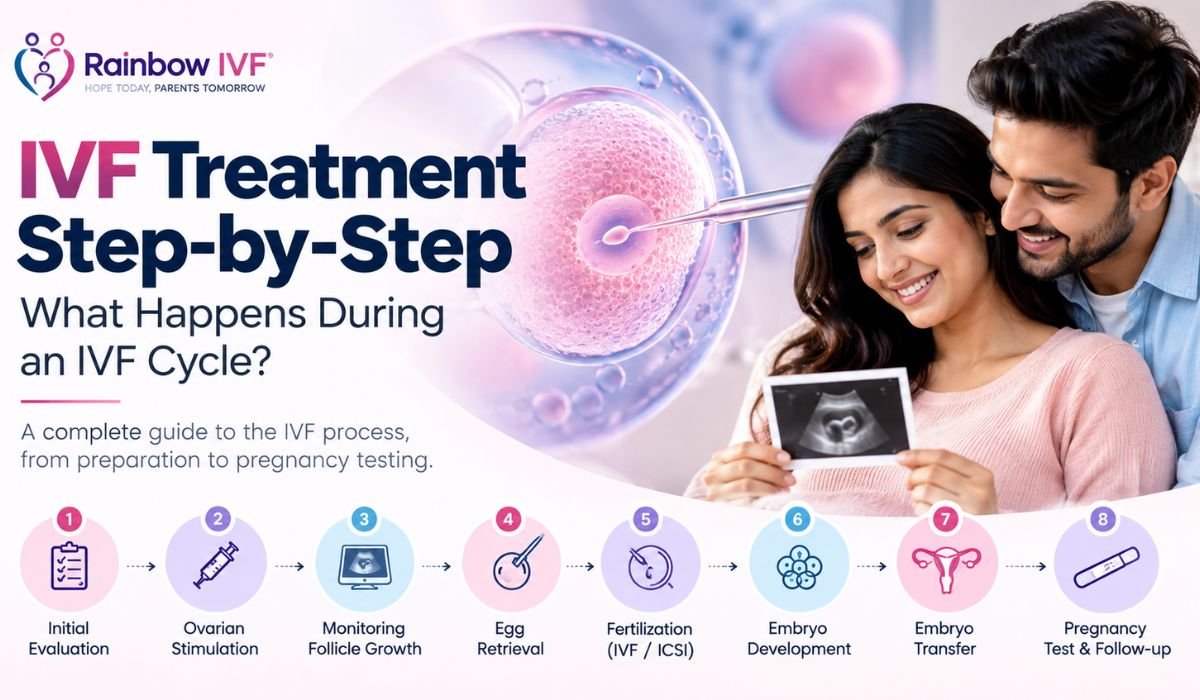
IVF Treatment Step-by-Step: What Happens During an IVF Cycle?

IVF treatment process step by step, from ovarian stimulation and egg retrieval to fertilization, embryo transfer and pregnancy testing.

Starting IVF can feel overwhelming. Most patients hear about injections, egg retrieval, fertilization, embryo transfer and pregnancy testing without knowing how these steps fit together, or what the days in between actually look like.

The IVF treatment process is a series of carefully monitored stages. The exact protocol varies with age, ovarian reserve, diagnosis, previous treatment and how your body responds to medication. In broad terms, IVF involves retrieving eggs, fertilizing them in the laboratory and transferring a suitable embryo into the uterus.

IVF is used for several infertility factors, including blocked or damaged fallopian tubes, male-factor infertility, PCOS, endometriosis and some unexplained or age-related fertility problems. This guide walks through the complete IVF cycle in order, so you know what to expect at each stage.

What Is IVF and How Does It Work?

IVF stands for in vitro fertilization. “In vitro” means “in glass”: fertilization takes place in an embryology laboratory instead of inside the body.

Here is how it works in simple terms:

  • The ovaries produce eggs. Fertility medication encourages several eggs to mature in one cycle rather than the single egg usually released each month.
  • Sperm is provided by the male partner or a donor, and prepared in the laboratory.
  • The embryology laboratory combines egg and sperm, then monitors the resulting embryos in carefully controlled conditions as they develop.
  • The uterus receives a suitable embryo through a thin catheter, where it may implant and grow.

Quick Answer: What Is the IVF Treatment Process?

IVF is a fertility treatment in which eggs are collected from the ovaries and fertilized with sperm in a laboratory. The resulting embryos are cultured for several days before a suitable embryo is transferred into the uterus. The cycle then continues with hormonal support and pregnancy testing.

IVF Treatment Process at a Glance

Here is the IVF process in the order it usually happens:

  1. Initial fertility evaluation
  2. IVF treatment planning
  3. Ovarian stimulation
  4. Ultrasound and blood-test monitoring
  5. Trigger injection
  6. Egg retrieval
  7. Sperm collection
  8. Fertilization
  9. Embryo culture
  10. Embryo selection
  11. Embryo transfer or freezing
  12. Pregnancy test and follow-up

These are the same major stages most fertility clinics describe: ovarian stimulation, egg retrieval, fertilization, embryo culture and embryo transfer. The sections below explain each one.

Step 1 — Initial Fertility Evaluation Before IVF

IVF does not normally begin with injections. It begins with understanding why pregnancy hasn’t happened yet.

Before starting an IVF cycle, a fertility specialist evaluates both partners to understand the possible cause of infertility and determine whether IVF is appropriate. fertility consultation is usually where this process starts.

The evaluation commonly includes:

  • Medical history for both partners, including any previous fertility treatment
  • Ovarian reserve assessment, usually an AMH blood test and an antral follicle count on ultrasound
  • Hormonal testing as advised by your doctor
  • Pelvic ultrasound to assess the uterus and ovaries
  • Semen analysis to assess sperm count, movement and shape
  • Uterine and fallopian tube assessment where appropriate
  • Review of previous pregnancy or IVF history, including how you responded to earlier cycles

Step 2 — Creating an Individualized IVF Treatment Plan

No two IVF cycles are identical. Once your results are in, your fertility specialist designs a plan around your situation. Factors that shape the plan include:

  • Age
  • AMH and overall ovarian reserve
  • Response to previous IVF cycles
  • PCOS
  • Endometriosis
  • Male-factor infertility
  • Previous failed cycles
  • Embryo history, such as frozen embryos already stored

The medication type, dosage and protocol are decided by your fertility specialist, and they may be adjusted during the cycle. Please don’t copy a protocol that worked for someone else.

Step 3 — Ovarian Stimulation

Naturally, the body usually matures one egg per month. In IVF, medication is used to help several follicles (the fluid-filled sacs that contain eggs) grow together. More mature eggs give the laboratory more to work with, since not every egg will fertilize or develop into a healthy embryo.

What is ovarian stimulation? It is the phase of IVF in which fertility injections are used to stimulate the ovaries to develop multiple follicles in a single cycle.

What to expect:

  • Stimulation generally begins early in the menstrual cycle.
  • Injections are taken daily for roughly one to two weeks. The exact duration depends on how your follicles respond.
  • Ultrasound scans and blood tests track your response throughout.
  • Your doctor adjusts the medication dose based on those results.

The medication protocol is adjusted according to how the ovaries respond, which is why monitoring is an important part of ovarian stimulation for IVF.

Some people experience bloating, mild pelvic discomfort, mood changes or injection-site bruising. Contact your clinic promptly if you develop severe abdominal pain, rapid weight gain, vomiting or difficulty breathing, as these can be signs of ovarian hyperstimulation syndrome (OHSS), a known risk of stimulation.

For a clinical reference, see the ESHRE guideline on ovarian stimulation for IVF/ICSI.

Step 4 — Monitoring Follicle Growth

During stimulation you will visit the clinic every few days for monitoring. A typical visit may include:

  • Transvaginal ultrasound to count and measure follicles
  • Endometrial lining assessment, since the uterine lining needs to be suitable for implantation
  • Blood tests for hormones such as estradiol, where required
  • Medication adjustments based on your results

The goal is not to produce “as many eggs as possible.” It is to achieve an appropriate response safely. Too weak a response may mean fewer eggs, while too strong a response raises the risk of OHSS. Careful monitoring helps your team find the balance.

Step 5 — Trigger Injection

When follicles reach the appropriate size, you receive a trigger injection. This is a medication that completes the final maturation of the eggs so they are ready to be collected.

Timing matters. Egg retrieval is scheduled for a set time after the trigger, usually a little over a day later, because eggs collected too early may be immature, and too late they may already have been released from the follicles.

For this reason, the trigger must be taken exactly when your team instructs. The medication, dose and timing are individualized by your fertility team, so follow your own clinic’s instructions rather than general guidance.

Step 6 — Egg Retrieval / Ovum Pickup

What is egg retrieval? Egg retrieval, also called ovum pickup (OPU), is a short procedure in which mature eggs are collected from the ovaries after the trigger.

How it works:

  • A thin needle is guided through the vaginal wall into each follicle using ultrasound guidance, and the fluid containing the egg is gently drawn out.
  • The procedure is usually done under sedation or light anesthesia, so you shouldn’t feel pain during it.
  • It generally takes around 15 to 30 minutes.
  • Eggs are collected before sperm is used for fertilization, and are handed to the embryology team immediately.

Afterward, you rest in the recovery area for a short time. Mild cramping, spotting or a feeling of fullness is common for a day or two. Most people return to light activity the next day, though you should follow your doctor’s advice.

Egg retrieval is generally safe, but it isn’t risk-free. Rare complications include bleeding, infection and, uncommonly, injury to nearby organs, along with the anesthesia-related risks. Your team will explain these before the procedure.

Step 7 — Sperm Collection and Fertilization

On the day of retrieval, a semen sample is usually provided and prepared in the laboratory, where healthy, active sperm are separated out. If a sample cannot be produced naturally, or no sperm are found in the ejaculate, a doctor may advise a surgical sperm retrieval procedure. Frozen or donor sperm may also be used.

There are two broad approaches to fertilization:

Conventional IVF. Eggs and prepared sperm are placed together in a laboratory dish, and fertilization happens naturally.

ICSI (intracytoplasmic sperm injection). A single sperm is injected directly into a mature egg, when clinically appropriate.

In some cases, particularly when there are significant male-factor fertility concerns, the embryology team may recommend ICSI rather than conventional fertilization. ICSI isn’t needed in every cycle; your specialist will tell you which approach suits you.

The next morning, embryologists check the eggs for signs that fertilization has occurred.

Step 8 — Embryo Development in the Laboratory

Once an egg is fertilized, it is called a zygote. Over the following days it divides into more and more cells, and the embryology team monitors it closely in an incubator that mimics conditions in the body.

  • Day 1: Fertilization is checked.
  • Day 2–3: The embryo divides into roughly 4 to 8 cells (a day-3 embryo).
  • Day 5–6: A healthy embryo may reach the blastocyst stage, a more advanced structure with distinct cell groups that will form the future baby and placenta.

It’s worth setting realistic expectations here: not every retrieved egg becomes an embryo suitable for transfer. Some eggs may be immature, some may not fertilize and some embryos stop developing along the way. This is a normal part of the process, and it is why doctors aim to retrieve several eggs.

Step 9 — Embryo Selection

Embryologists look at several factors to decide which embryo is best to transfer, including:

  • Development speed and stage
  • Morphology (the embryo’s appearance)
  • Pattern of cell division
  • Overall embryo quality or grade
  • Patient-specific factors, such as age and history

Some clinics also use additional technologies, such as time-lapse embryo monitoring or preimplantation genetic testing (PGT), which screens embryos for chromosomal or specific genetic conditions. Rainbow IVF offers genetic screening and diagnostic services, and PGT may help inform embryo selection in appropriate cases. These tools are not necessary for everyone, and your doctor will advise whether they are relevant to you.

Step 10 — Embryo Transfer

What is embryo transfer? It is the procedure in which a selected embryo is placed into the uterus using a thin, flexible catheter.

  • The embryo is loaded into the catheter and gently placed in the uterine cavity, guided by ultrasound.
  • Anesthesia is generally not needed, as the procedure is quick and similar to a routine pelvic exam, though your doctor will advise.
  • It typically takes only a few minutes.
  • Afterward, you rest briefly and can usually go home the same day. Some people notice mild cramping or spotting.

Fresh versus frozen transfer. In a fresh transfer, the embryo is transferred a few days after egg retrieval, usually on day 3 or day 5. In a frozen embryo transfer (FET), embryos are frozen and transferred in a later cycle. Which is appropriate depends entirely on your individual treatment plan. For example, FET may be advised if your hormone levels are very high after stimulation, if PGT results are awaited or if the uterine lining needs more preparation.

Step 11 — Embryo Freezing and Frozen Embryo Transfer

Embryos that aren’t transferred right away may be cryopreserved (frozen) when they are of suitable quality. Reasons include:

  • Preserving additional embryos for future attempts without repeating stimulation
  • Allowing time for genetic test results
  • Giving the uterus time to recover and be prepared separately
  • Postponing pregnancy for medical or personal reasons

In an FET cycle, a frozen embryo is thawed and transferred after the uterus has been prepared, usually with hormone medication or sometimes in a natural cycle. FET requires no new egg retrieval.

When embryos or reproductive material need to be preserved for future use, fertility preservation and cryopreservation can provide an option depending on the patient’s treatment plan. Embryo, oocyte (egg) and sperm preservation may all be offered.

Step 12 — What Happens After Embryo Transfer?

The time between transfer and pregnancy testing is often called the “two-week wait.” What usually happens:

  • Hormonal support. Progesterone, and sometimes other medication, is commonly prescribed to support the uterine lining. Take it exactly as directed.
  • Activity. Most people can continue normal daily activities, and strict bed rest isn’t usually required. Your doctor may advise avoiding heavy exercise, heavy lifting or intercourse for a period.
  • Symptoms. Mild cramps, bloating, breast tenderness or light spotting can occur. These can also be side effects of progesterone.

Symptoms alone cannot confirm pregnancy or its absence. Some people with early pregnancy feel nothing, and others feel many symptoms without being pregnant. Try not to read too much into how your body feels.

Contact your fertility team if you have heavy bleeding, severe abdominal pain, fever, or marked bloating, or if you are worried about anything.

Step 13 — Pregnancy Test After IVF

A blood beta-hCG test measures the pregnancy hormone hCG, and is more reliable than a home urine test at this stage. Your fertility team will tell you when to test, commonly around 10 to 14 days after embryo transfer.

Testing too early can mislead. A home test may give a false negative if hCG is still low, or a false positive if hCG from a trigger injection is still in your system.

After a positive result, your clinic will usually repeat the test, continue medication support and arrange an early ultrasound to confirm the pregnancy is developing in the uterus.

After a negative result, your doctor will review the cycle with you, discuss possible reasons and options such as a frozen transfer or a modified protocol, and offer emotional support. A negative result doesn’t necessarily mean future cycles won’t work.

No clinic can promise a specific outcome, and results vary between patients and cycles.

How Long Does an IVF Cycle Take?

How long does IVF take? From the start of stimulation to embryo transfer, an IVF cycle often takes around 3–4 weeks, with the pregnancy test about two weeks after transfer. The exact timeline depends on your protocol and whether a fresh or frozen transfer is planned. Initial tests and planning add time before the cycle begins.

IVF Stage What Happens
Initial evaluation Tests and treatment planning
Ovarian stimulation Follicles are developed and monitored
Trigger Final egg maturation
Egg retrieval Eggs are collected
Fertilization Eggs and sperm are combined
Embryo culture Embryos develop in the laboratory
Transfer Suitable embryo is placed in the uterus
Pregnancy testing Blood test confirms pregnancy

What Can Affect the IVF Timeline?

The schedule isn’t fixed. It may change because of:

  • Ovarian response to medication
  • Hormone levels
  • The number and quality of follicles
  • How embryos develop in the laboratory
  • The need for genetic testing
  • Medical concerns that need treatment first
  • Fresh versus frozen embryo transfer
  • Previous treatment history

Does Every IVF Cycle Follow the Same Steps?

No. The broad stages are similar across patients, but the plan can differ. For example:

  • Some patients need ICSI, while others don’t.
  • Some have a frozen embryo transfer instead of a fresh one.
  • Some undergo PGT.
  • Some cycles are postponed or modified if the response isn’t as expected.
  • Some patients need additional uterine evaluation, such as a hysteroscopy, before transfer.

IVF is not a one-size-fits-all process, so treat any step-by-step guide, including this one, as a general map and not as your personal plan.

What Factors Can Influence IVF Success?

Many factors affect how an IVF cycle turns out, and no single number applies to everyone:

  • Age, especially the woman’s age
  • Egg quality
  • Sperm quality
  • Embryo quality
  • Ovarian reserve
  • Uterine health, including the lining and conditions such as fibroids or polyps
  • Cause of infertility
  • Previous IVF history
  • Lifestyle and underlying medical conditions, such as weight, smoking, thyroid disorders or diabetes

Success rates quoted in general are averages and can’t predict an individual outcome. Ask your fertility specialist what to expect based on your own situation.

Common Questions About the IVF Process

How many steps are there in the IVF process?

Most guides divide IVF into about 6 to 12 steps, depending on how they count. The core stages are evaluation, ovarian stimulation, monitoring, trigger, egg retrieval, fertilization, embryo culture, embryo transfer and pregnancy testing. Your clinic may add steps such as embryo freezing or genetic testing.

How long does one IVF cycle take?

From the start of stimulation to embryo transfer, a cycle often takes around 3–4 weeks, with a pregnancy test roughly two weeks after transfer. Timelines vary with your protocol and whether you have a fresh or frozen transfer. Initial tests and planning add time before treatment starts.

Is IVF treatment painful?

Injections can cause mild discomfort or bruising, and bloating is common during stimulation. Egg retrieval is done under sedation or anesthesia, so it shouldn’t be painful, though cramping can follow. Embryo transfer is usually quick and well tolerated. Tell your team if pain feels severe.

What happens after egg retrieval?

You rest in recovery for a short time, then usually go home the same day. Mild cramping, spotting and bloating are common for a day or two. Meanwhile, the embryology team checks fertilization the next day. Contact your clinic if you have severe pain, heavy bleeding or fever.

How many days after egg retrieval is embryo transfer?

In a fresh cycle, transfer is usually on day 3 or day 5 after egg retrieval, depending on embryo development and your doctor’s plan. In a frozen embryo transfer, the embryo is transferred in a later cycle after the uterus is prepared, so the timing differs.

When can I take a pregnancy test after IVF?

A blood beta-hCG test is usually advised around 10 to 14 days after embryo transfer, but your clinic will give you a specific date. Testing earlier can give misleading results, including a false positive from trigger medication or a false negative if hCG is still low.

Can every IVF cycle result in an embryo for transfer?

No. Not every egg is mature, fertilizes or develops into a healthy embryo. Occasionally, a cycle ends without a suitable embryo, or transfer is postponed. This is more likely with fewer eggs or with older age. Your doctor can discuss options if this happens.

Does everyone undergoing IVF need ICSI?

No. ICSI is typically recommended when there are significant male-factor concerns, previous fertilization problems or when very few sperm are available. Many couples have successful fertilization with conventional IVF. Your embryologist and fertility specialist will recommend the method that suits your case.

Conclusion

The IVF treatment process moves through a clear sequence: evaluation, stimulation, monitoring, trigger, egg retrieval, fertilization, embryo development, transfer and pregnancy testing. Each stage is closely monitored, and your own protocol may differ from the standard outline in important ways.

Understanding the steps won’t remove all the uncertainty, but it can make the journey feel more manageable. If you’re exploring IVF treatment in Agra or elsewhere, choose a team that explains each stage clearly, answers your questions honestly and tailors the plan to you.

Considering IVF treatment? 

Every fertility journey is different. A consultation with a fertility specialist can help you understand your diagnosis, treatment options and whether IVF is appropriate for you. Learn more about IVF treatment

This article is for general information only and is not a substitute for personal medical advice. Protocols, medications, dosages and timelines vary by patient and must be decided by your fertility specialist.

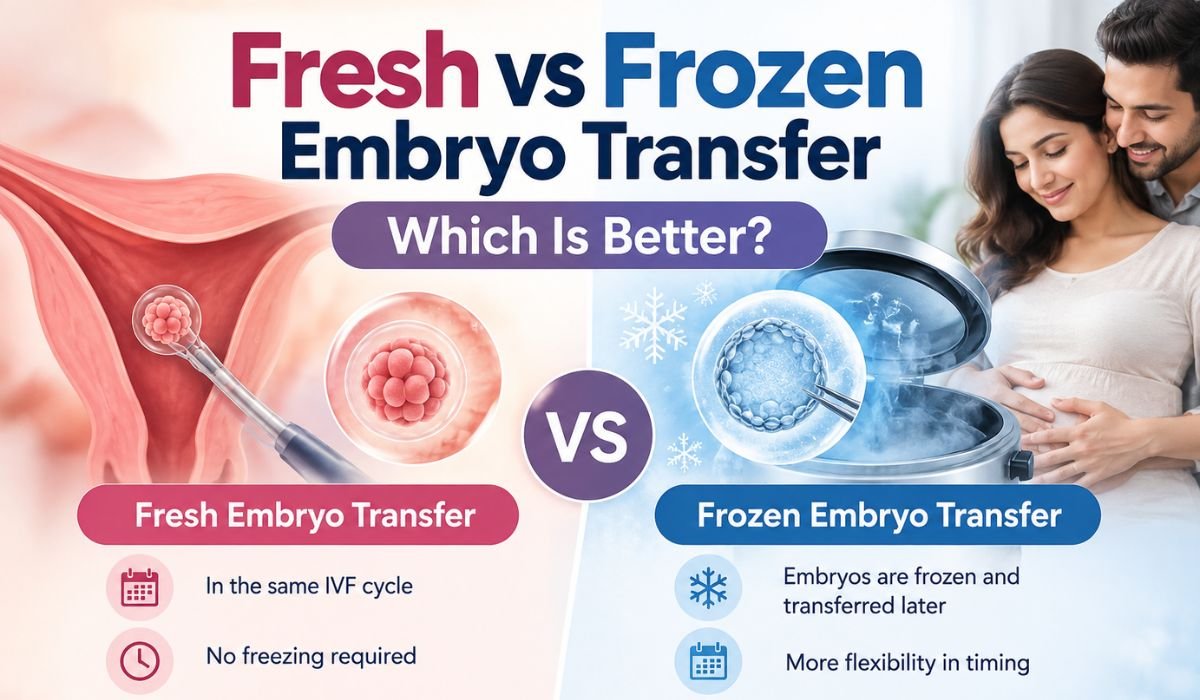
Fresh vs Frozen Embryo Transfer: Which Is Better?

Fresh vs Frozen Embryo Transfer: Which Has a Higher Success Rate?

After egg retrieval and fertilization, many couples ask an important question: fresh vs frozen embryo transfer — which option is better? Should the embryo be transferred during the same IVF cycle, or should it be frozen and transferred at a later time? Both approaches can be suitable, depending on your individual treatment needs.

The choice between a fresh and frozen embryo transfer depends on several factors, including your age, embryo development, ovarian response to stimulation, hormone levels, uterine lining, risk of ovarian hyperstimulation syndrome (OHSS), and your experience with previous IVF cycles.

This guide explains how both approaches work, how they differ, what influences success, and when a fertility specialist may recommend one over the other.

What Is a Fresh Embryo Transfer?

A fresh embryo transfer takes place during the same IVF cycle in which your eggs were retrieved. After ovarian stimulation, the eggs are collected and fertilized in the laboratory. The resulting embryos are then monitored as they grow, and the best-suited embryo is placed in the uterus without being frozen.

Embryos usually develop in the lab for about 3 to 5 days before transfer. A Day 3 transfer involves an earlier-stage embryo, while a Day 5 transfer involves a blastocyst, an embryo that has developed further and may show clearer signs of its potential. The transfer itself is typically a short outpatient procedure using a thin catheter, followed by progesterone support to help prepare the lining for implantation.

The timing is the key point to understand. A fresh transfer happens within days of ovarian stimulation, when estrogen and progesterone levels may still be affected by the medication. That is why your doctor looks closely at your hormone levels and ovarian response before deciding whether a fresh transfer is appropriate. For a broader overview of each stage, see our IVF treatment process guide.

What Is a Frozen Embryo Transfer (FET)?

A frozen embryo transfer uses embryos that were created in an earlier IVF cycle, frozen, and stored until the time is right. The embryo is thawed shortly before it is placed in the uterus.

Embryo freezing is done through vitrification, an ultra-rapid cooling technique that helps prevent damaging ice crystals from forming inside the embryo. Frozen embryos are kept in cryostorage until they are needed. When you are ready, the embryo is warmed and assessed, and if it has survived thawing in good condition, it is transferred.

It helps to separate two ideas here. Embryo creation happens during your stimulation cycle, when eggs are retrieved and fertilized. Embryo transfer is the later step of placing an embryo in the uterus. With FET, those two steps happen in different cycles, so the uterus is prepared separately, either in a natural cycle or with medication.

For a detailed explanation of the procedure, preparation, timing and factors that influence FET, see our guide to Frozen Embryo Transfer (FET).

Fresh vs Frozen Embryo Transfer: Key Differences

Factor Fresh Embryo Transfer Frozen Embryo Transfer
Timing Same IVF treatment cycle Later cycle
Embryo Transferred without freezing Frozen and thawed before transfer
Ovarian stimulation Usually recent Completed before the transfer cycle
Uterine preparation During the IVF cycle Natural or medicated cycle
Additional freezing Not required for the transferred embryo Required
Flexibility Less flexible More scheduling flexibility
Extra cycle Usually no separate transfer cycle Requires a later transfer cycle
Suitable for Selected patients Selected patients

This table is for general education. Individual treatment decisions vary.

Fresh vs Frozen Embryo Transfer: Which Has a Higher Success Rate?

This is the question most couples search for, and it deserves a careful answer. Success cannot be summed up by saying fresh is better or frozen is better. Outcomes depend on the person and the situation.

Factors that influence success in both approaches

  • Maternal age
  • Embryo quality
  • Blastocyst development
  • Endometrial preparation
  • Hormonal environment
  • Underlying fertility diagnosis
  • IVF laboratory conditions
  • Previous IVF outcomes
  • Number of embryos available

What research generally suggests

Studies comparing the two approaches have produced different findings depending on the patient group. In many women with a typical ovarian response, live-birth rates with fresh and frozen transfer appear to be broadly similar. In women who produce a high number of eggs, including some women with PCOS, frozen transfer has in some trials been associated with better pregnancy outcomes and a lower risk of OHSS. Researchers are also still studying differences in pregnancy and newborn outcomes between the two approaches, so this remains an active area of research.

Because findings vary by population, no clinic can promise a specific result to an individual patient, and no study can tell you which route will work for you.

Know which number you are looking at

When you compare a frozen embryo transfer success rate with a fresh embryo transfer success rate, check what is being measured:

  • Pregnancy rate: how often a transfer leads to a positive pregnancy test or a confirmed clinical pregnancy.
  • Implantation rate: the proportion of transferred embryos that implant in the uterine lining.
  • Live-birth rate: how often a transfer or treatment cycle leads to a baby being born. This is generally the most meaningful outcome for patients.

Rates may also be reported per transfer, per egg retrieval, or cumulatively across several transfers. A figure from one clinic or study cannot be compared directly with another unless the definitions match. If you see statistics, check the year and the patient age group as well. IVF success varies with factors such as age, diagnosis, embryo quality and treatment planning.

Advantages of Fresh Embryo Transfer

Faster embryo transfer

The embryo can be transferred during the same treatment cycle, so you do not have to wait for a later cycle to try for pregnancy. For some couples, a shorter timeline matters.

No embryo freezing required

The selected embryo does not need to go through freezing and thawing. Modern freezing techniques are very effective, but a fresh transfer avoids that step altogether.

May be appropriate for some patients

Fresh transfer can be a reasonable option when hormone levels, ovarian response and uterine conditions all look suitable. In those cases, there may be no medical reason to postpone the transfer.

Advantages of Frozen Embryo Transfer

Allows more flexibility in timing

Because embryos are stored, the transfer can be planned around your health, your schedule and your clinic’s assessment of the best time. You are not tied to the exact days of your stimulation cycle.

Gives the body time after ovarian stimulation

Ovarian stimulation temporarily raises hormone levels and can leave you feeling bloated or uncomfortable. Waiting for a later cycle allows your body to settle and lets the uterine lining be prepared in a more controlled setting.

Allows embryo testing when appropriate

If genetic testing such as PGT is recommended, embryos usually need to be frozen while the results are processed. A frozen transfer then allows the chosen embryo to be transferred once the testing is complete.

Useful when fresh transfer is not advisable

Freezing all suitable embryos for a later transfer may be considered in situations such as:

  • A high ovarian response
  • Risk of OHSS
  • A hormonal environment that may not be optimal for implantation
  • A need for genetic testing
  • Medical reasons to postpone the transfer

When Might a Doctor Recommend Frozen Embryo Transfer?

A fertility specialist may consider FET when:

  • The risk of OHSS is significant
  • Hormone levels are not ideal for a fresh transfer
  • The embryos need genetic testing
  • The uterine lining needs additional preparation
  • The patient needs to delay the transfer
  • Suitable embryos remain from a previous IVF cycle

These are not automatic indications. Each one is weighed alongside your overall picture. For example, women with polycystic ovaries often respond strongly to stimulation, which is one reason a freeze-all approach may be discussed. You can read more in our article on PCOS and IVF treatment.

When Might Fresh Embryo Transfer Be Considered?

A fresh transfer may be considered when:

  • The patient has an appropriate ovarian response
  • Hormonal conditions are suitable
  • Endometrial preparation is satisfactory
  • There is no medical reason to postpone the transfer
  • The clinical team believes a fresh transfer is appropriate

As with FET, this is a clinical judgment made for you, not a rule that applies to every patient.

Fresh vs Frozen Embryo Transfer: Cost Difference

It is difficult to say one option is simply cheaper than the other, because the total cost depends on your treatment plan. Components that can affect the overall expense include:

  • IVF treatment cost: stimulation, egg retrieval and fertilization in the lab
  • Embryo freezing: the vitrification procedure itself
  • Cryostorage: ongoing storage of frozen embryos
  • FET procedure: thawing, preparation of the transfer and the transfer itself
  • Medication: drugs for stimulation, and hormones to prepare the lining in a FET cycle
  • Monitoring: scans and blood tests across the cycle
  • Additional laboratory procedures: such as embryo testing, if recommended

Because freezing and FET can involve additional treatment components, couples should understand the complete IVF cost in Agra before choosing a treatment pathway. It is also worth asking your clinic whether frozen transfers from the same retrieval are likely to be needed anyway, since this affects the overall picture. Your clinic can give you an itemized estimate based on your own plan.

Does Embryo Freezing Affect Embryo Quality?

This is one of the most common worries about FET. Modern vitrification has become the standard method for freezing embryos, and most good-quality embryos survive the freeze-thaw process. Still, no laboratory process is risk-free, and survival depends on factors such as the stage of the embryo and the skill of the embryology team.

A few points are worth keeping in mind:

  • Embryo quality before freezing matters. Freezing does not improve an embryo. A healthy embryo is more likely to survive thawing and implant than a poorly developed one.
  • Laboratory expertise matters. Careful freezing, storage and thawing protocols are part of a clinic’s quality standards. Rainbow IVF’s embryo freezing and thawing program uses advanced cryopreservation techniques.
  • Survival after thawing is checked. Embryologists assess each embryo after warming before it is transferred.

Is Fresh or Frozen Embryo Transfer Better for PCOS?

Women with PCOS often have many small follicles and may produce a large number of eggs in response to stimulation. This can raise the risk of OHSS, a condition in which the ovaries become swollen and fluid can build up in the body.

For this reason, a freeze-all strategy, where embryos are frozen and transferred in a later cycle, is sometimes considered for women with PCOS. This gives the body time to recover from stimulation. It is not the right choice for every woman with PCOS, and some may still be suitable for a fresh transfer.

The most important factor is an individualized stimulation plan with careful monitoring, so the dose and timing suit your ovarian response. Our PCOS and IVF article covers this topic in more depth.

Fresh vs Frozen Embryo Transfer After IVF: How Is the Decision Made?

Your fertility specialist will usually look at your results during and after stimulation. A simple way to think about it:

Approach May be considered when
Fresh transfer Hormone levels are suitable, the uterine environment is appropriate, and there is no major medical reason to delay
Frozen transfer There is a risk of OHSS, a need for PGT, an unsuitable hormonal environment, a need for additional preparation, or other clinical considerations

The final decision should be based on your individual medical history and your fertility specialist’s assessment.

Frequently Asked Questions

Is fresh or frozen embryo transfer better?

Neither is better for everyone. Some patients do well with a fresh transfer, while others benefit from freezing embryos and transferring later. Your age, embryo quality, hormone levels, ovarian response and risk of OHSS all play a part. Your doctor will recommend the approach that suits your situation.

Does frozen embryo transfer have a higher success rate than fresh transfer?

Not always. In many women with a typical response, results appear broadly similar, while in some groups, such as high responders, frozen transfer has been linked to better outcomes. Success also depends on embryo quality, age and the clinic’s laboratory. It is important to check whether a reported rate refers to pregnancy, implantation or live birth.

How long after IVF can a frozen embryo be transferred?

Timing varies. Many frozen transfers take place in a later menstrual cycle, once the body has recovered from stimulation and the lining is ready. If genetic testing, medical treatment or personal circumstances call for a longer gap, embryos can remain stored until you are ready. Your specialist will set the timing.

Does freezing damage embryos?

Modern vitrification is designed to protect embryos during freezing, and most good-quality embryos survive thawing. However, no process is entirely without risk, and survival varies. Embryo quality before freezing and the experience of the embryology laboratory both matter.

Why would a doctor recommend frozen embryo transfer instead of fresh transfer?

Common reasons include a risk of OHSS, hormone levels that may not suit implantation, the need for PGT, a lining that needs more preparation, or a need to delay transfer for medical or personal reasons. These are considerations, not automatic rules.

Is frozen embryo transfer more expensive than fresh transfer?

It can involve additional costs, such as freezing, storage, thawing, medication and monitoring for the transfer cycle. However, the total cost depends on how many cycles and transfers you need. Ask your clinic for an itemized estimate covering the whole treatment plan.

Can you have a frozen embryo transfer after a failed fresh transfer?

Yes, if you have suitable embryos frozen from the same cycle. Your doctor will review what may have happened, check your uterine lining and hormone profile, and advise on the best timing and preparation for the next attempt. If no embryos were frozen, another stimulation cycle may need to be discussed.

Which is better for PCOS, fresh or frozen embryo transfer?

A frozen transfer is often considered for women with PCOS who have a high ovarian response or an increased risk of OHSS. That said, it is not the right answer for every woman with PCOS. Treatment should be individualized and carefully monitored.

Final Takeaway

Fresh and frozen embryo transfers can both be appropriate. When people compare fresh vs frozen embryo transfer, they often look for a single winner, but there is no single option that is best for every patient.

The choice should take into account:

  • Age
  • Embryo quality
  • Hormone levels
  • Ovarian response
  • Uterine lining
  • Risk of OHSS
  • Genetic testing
  • Previous treatment history
  • Overall fertility diagnosis

If you are unsure whether fresh or frozen embryo transfer is appropriate for you, discuss your IVF reports, embryo development and treatment history with a qualified fertility specialist. You are welcome to book a fertility consultation with Rainbow IVF in Agra to talk through your options.

This article is for general education and does not replace personal medical advice. Treatment decisions should be made with your fertility specialist.