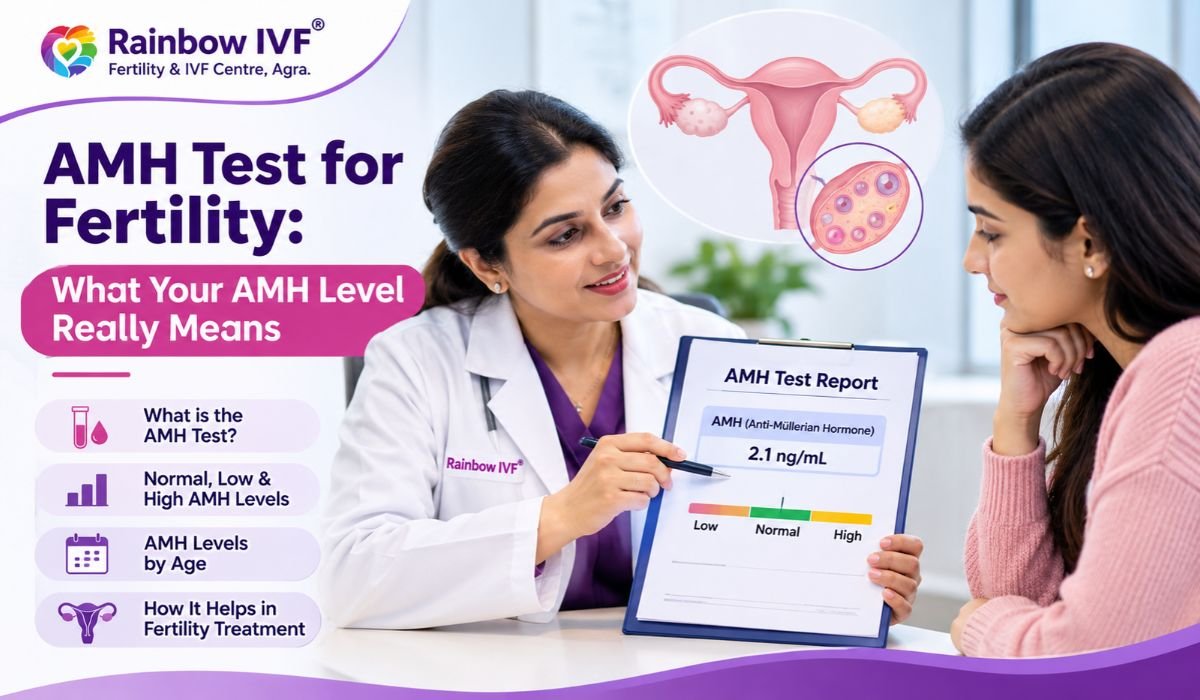
AMH Test for Fertility : What Your AMH Level Really Means

AMH test for fertility and understanding AMH levels

You open your lab report and see a number next to “AMH.” Is it good? Is it low? Should you be worried? It is a very common moment, and the confusion is understandable. The AMH test for fertility measures Anti-Müllerian hormone, a marker doctors use to estimate ovarian reserve, which is the number of eggs remaining in the ovaries. It gives useful clues about egg quantity and how the ovaries may respond to fertility medicines. What it cannot do on its own is tell you whether you will conceive naturally or through IVF.

This guide explains what AMH is, how the test works, what different results may mean and what to do next.

What Is the AMH Test?

Anti-Müllerian hormone (AMH) is a hormone produced by the granulosa cells of small, developing follicles in the ovaries. Each follicle is a tiny fluid-filled sac that may contain an egg. The more small follicles a woman has, the more AMH is generally released into the blood.

Because of this link, AMH is used as a marker of ovarian reserve. Fertility specialists find it useful for several reasons:

  • It can be measured with a simple blood test.
  • Unlike many other reproductive hormones, it changes little from day to day within a cycle.
  • It helps estimate how the ovaries may respond to stimulation in IVF.

AMH is not a measure of overall fertility. Your tubes, uterus, partner’s sperm health, ovulation and age all matter too. You can read about the common causes of female infertility to see how many factors are involved.

How Is the AMH Test Done?

Is AMH a Blood Test?

Yes. The AMH blood test needs a small sample drawn from a vein in your arm, much like any routine blood test. It takes only a few minutes and feels like a brief pinch. The sample is analysed in a laboratory.

Does the AMH Test Require Fasting?

Fasting is generally not required for AMH. However, laboratories differ, and you may be having other tests at the same time that do need fasting. Follow the instructions given by your laboratory or doctor.

Which Day of the Menstrual Cycle Is Best for AMH Testing?

AMH levels are relatively stable through the cycle, so the test can usually be done on most days. Your doctor may still ask you to test on a particular day if other hormone tests are planned alongside it.

How Long Does It Take to Get AMH Test Results?

Many laboratories report results within a day or a few days, but turnaround varies by laboratory and testing method. Ask the lab when to expect your report.

What Is a Normal AMH Level for Fertility ?

There is no single “normal” AMH number that applies to every woman. Results depend on age, the laboratory and the assay method used, and individual circumstances. Units can also differ (ng/mL or pmol/L), so a number from one lab cannot always be compared directly with another.

For this reason, your report should be read against the lab’s own reference data and your clinical picture, not against a figure found online.

AMH Result General Interpretation
Lower than expected May indicate reduced ovarian reserve
Within the expected range May suggest an ovarian reserve appropriate for the relevant age group
Higher than expected May indicate a higher follicle count and can sometimes be associated with PCOS

No AMH value guarantees fertility, and no value guarantees infertility. It is one piece of information.

AMH Levels by Age: What Should Women Know?

Women are born with a finite number of eggs, and the number declines over time. AMH generally reflects this, so levels tend to be higher in younger women and lower as age advances. The pattern is gradual, and individual variation is wide: some women have higher or lower levels than most others of the same age.

Here is how age and AMH are generally understood to relate:

Age Group What to Know
Under30 Ovarian reserve is usually higher, though some young women have low AMH and some have high AMH due to conditions such as PCOS
30 to 35 A gradual decline in ovarian reserve is common; results vary widely between individuals
35 to 40 Decline in both egg quantity and egg quality tends to become more noticeable
After 40 AMH is often lower; age becomes a very important factor in chances of conception

We have deliberately not listed age-specific numeric ranges. Reference ranges differ between laboratories and populations, and a “normal AMH by age” chart from one source may not match your lab’s method. Your fertility specialist can interpret your result using appropriate reference data and your overall assessment.

What Does a Low AMH Level Mean?

A low AMH level suggests that the number of remaining eggs may be lower than expected for your age. This is often described as diminished ovarian reserve.

Possible reasons include:

  • Natural age-related decline
  • Previous ovarian surgery, such as removal of cysts or endometriosis surgery
  • Chemotherapy or pelvic radiation
  • Certain genetic or autoimmune conditions
  • Sometimes, no clear cause is found

Does low AMH mean you cannot get pregnant?

No. Low AMH reflects egg quantity, not whether an egg can result in a healthy pregnancy. Many women with low AMH conceive naturally. It does not mean infertility, and it does not mean you are in menopause or about to be.

That said, if you have been trying to conceive for some time, especially if you are over 35, a low result is a good reason to seek a timely fertility evaluation rather than wait. Learning about the signs of low ovarian reserve can help you understand what else to look out for. If treatment is being considered, our guide on low AMH and IVF treatment explains the options in more detail.

What Does a High AMH Level Mean?

A higher-than-expected AMH usually means there are many small follicles in the ovaries. In some women this is a normal variation. In others, it is associated with Polycystic Ovary Syndrome (PCOS), a condition in which ovulation may be irregular.

It is important to understand that high AMH does not automatically mean better fertility. If ovulation is irregular, conceiving can be harder despite a large number of follicles.

High AMH alone also does not diagnose PCOS. Doctors usually look at menstrual pattern, signs of raised androgens (such as acne or excess hair growth), ultrasound findings and hormone tests together. If you would like to know more about how this condition affects conception, read our article on PCOS and pregnancy.

Does AMH Measure Egg Quality or Egg Quantity?

This is one of the most misunderstood points. AMH is mainly a marker of egg quantity, not egg quality.

Egg Quantity Egg Quality
What it means How many eggs remain in the ovaries Whether an egg has the potential to fertilise and develop into a healthy embryo
Does AMH reflect it? Yes, it is a useful indicator Not directly
Main influencing factor Age, medical history, ovarian surgery Age is the most important known factor

In practice:

  • A normal AMH does not guarantee pregnancy.
  • A low AMH does not mean pregnancy is impossible.
  • A woman with low AMH and good egg quality may do better than expected, and the reverse can also be true.

    The (ACOG) also highlights the limitations of AMH testing, particularly when using it to predict a woman’s natural fertility potential.

AMH Test for Fertility vs Other Fertility Tests

AMH is rarely used alone. Doctors combine it with other tests to build a fuller picture.

Test What It Helps Assess
AMH Ovarian reserve
AFC (antral follicle count) ultrasound Number of visible small ovarian follicles
FSH Hormonal information related to ovarian function
Estradiol Hormonal activity
TSH Thyroid function relevant to reproductive health

An AFC ultrasound counts the small follicles directly, while AMH estimates the same thing through a blood marker. FSH and estradiol are usually interpreted together and are timed to a specific day of the cycle. Thyroid problems can affect cycles and conception, which is why TSH is commonly included.

Beyond hormones, a complete evaluation may include checks of the fallopian tubes and uterus, and a semen analysis for the partner. See how fertility specialists diagnose infertility for a step-by-step overview.

Can AMH Levels Improve Naturally?

Current evidence does not show that ovarian reserve can be reliably rebuilt. Egg quantity declines with age, and no lifestyle change has been proven to reverse this. AMH can fluctuate slightly between tests, and some temporary factors may affect readings, but this is not the same as a true increase in egg numbers.

What you can do is support your general reproductive health:

  • Maintain a balanced diet and a healthy weight
  • Stay physically active
  • Avoid smoking, which is linked to earlier decline in ovarian reserve
  • Limit alcohol
  • Manage stress and sleep
  • Treat conditions such as thyroid disorders if present

There is no strong evidence that supplements can reliably increase ovarian reserve or reverse its decline. Please avoid self-prescribing fertility supplements, as some can interact with other conditions or medicines. Discuss any supplement with your doctor first.

When Should You Consider an AMH Test?

AMH testing is not necessary for every woman. It can be useful in situations such as:

  • Planning pregnancy at an older reproductive age
  • Difficulty conceiving
  • Suspicion of diminished ovarian reserve
  • Irregular periods or a relevant reproductive history
  • Before certain fertility treatments, including IVF
  • When considering egg freezing in India
  • After ovarian surgery or treatments such as chemotherapy that may affect ovarian reserve

If you are young, have regular cycles and are not facing difficulty conceiving, a routine AMH test may not add much, and a low result could cause unnecessary worry. Your doctor can advise whether it is right for you.

How Do AMH Results Help in IVF Treatment Planning?

When IVF is being planned, AMH helps the doctor anticipate how the ovaries may respond to stimulation medicines. It can help with:

  • Estimating ovarian response: Higher AMH often suggests a stronger response, and lower AMH a more modest one.
  • Individualising the protocol: Medicine type and dose can be tailored. A higher response also calls for closer monitoring to reduce the risk of over-stimulation.
  • Setting expectations: It gives a rough idea of how many eggs may be retrieved.
  • Looking at the whole picture: AMH is considered alongside AFC, age and medical history.

AMH cannot predict whether IVF will succeed. Age, egg and embryo quality, uterine health and sperm factors all play major roles. To see where AMH fits in the journey, read about the IVF treatment process.

Frequently Asked Questions About the AMH Test

1. What is a good AMH level for getting pregnant?

There is no single number that defines a good AMH level for pregnancy. Interpretation depends on your age, the laboratory’s reference range and your overall health. Pregnancy is possible across a wide range of AMH values, so your result should always be assessed by a fertility specialist along with other findings.

2. Can I get pregnant naturally with low AMH?

Yes, many women with low AMH conceive naturally. AMH reflects egg quantity rather than egg quality or ovulation. However, if you have been trying for some time, particularly after 35, it is sensible to seek an early fertility evaluation instead of waiting for many months.

3. Is AMH testing painful?

Not significantly. The test uses a standard blood draw from a vein in the arm, which feels like a quick pinch and takes only a few minutes. Some people notice mild tenderness or a small bruise afterwards, which usually settles on its own.

4. Can AMH be tested on any day of the menstrual cycle?

In most cases, yes. AMH levels are relatively stable across the cycle, so testing is generally not tied to a specific day. Your doctor may still choose a particular day if other hormone tests, such as FSH and estradiol, are being done together.

5. Does low AMH mean early menopause?

Not necessarily. Low AMH suggests a reduced number of remaining eggs, but it cannot precisely predict when menopause will occur. Menopause timing varies widely between women. If you have irregular or missed periods along with low AMH, a doctor can evaluate you further.

6. Does high AMH mean PCOS?

No. High AMH is often seen in women with PCOS, but it can also occur in women who do not have it. PCOS is diagnosed using a combination of symptoms such as irregular periods, signs of raised androgens, ultrasound findings and hormonal tests, not AMH alone.

7. Can AMH levels increase naturally?

There is no reliable evidence that ovarian reserve can be rebuilt naturally. Small variations between tests can occur, but they are not proof of more eggs. A healthy lifestyle supports overall reproductive health, but supplements should not be expected to raise AMH.

8. When Should You Get an AMH Test for Fertility ?

An AMH test for fertility may be recommended if you are planning pregnancy, experiencing difficulty conceiving, considering IVF or egg freezing, or have concerns about ovarian reserve. A fertility specialist can help determine whether the test is appropriate based on your age and medical history.

9. Is AMH testing necessary before pregnancy?

Not for everyone. Women who are young, have regular cycles and no fertility concerns may not need it. It can be helpful if you are older, have had difficulty conceiving, have a relevant medical history or are considering egg freezing or IVF.

10. What should I do if my AMH level is low?

Avoid panic. A low result is one piece of information. Share the report with a fertility specialist, who can look at your age, AFC, cycle history and partner factors, and discuss whether to try naturally, begin treatment sooner or consider options like egg freezing.

Conclusion: Understand Your AMH Results Before Making Fertility Decisions

The AMH test for fertility is a useful way to understand your ovarian reserve, but it is only one part of a complete fertility assessment. A single result cannot determine whether you will conceive. Age, antral follicle count, medical history, ovulation, tubal and uterine health, and your partner’s fertility all contribute.

Whether your result is low, within the expected range or high, the most helpful next step is to have it explained in the context of your own situation. This allows you to make informed, unhurried decisions about trying naturally, further testing or treatment.

If you would like a personalised assessment, you are welcome to speak with the team at Rainbow IVF Agra. Bring your reports, and we will help you understand what they mean for you.
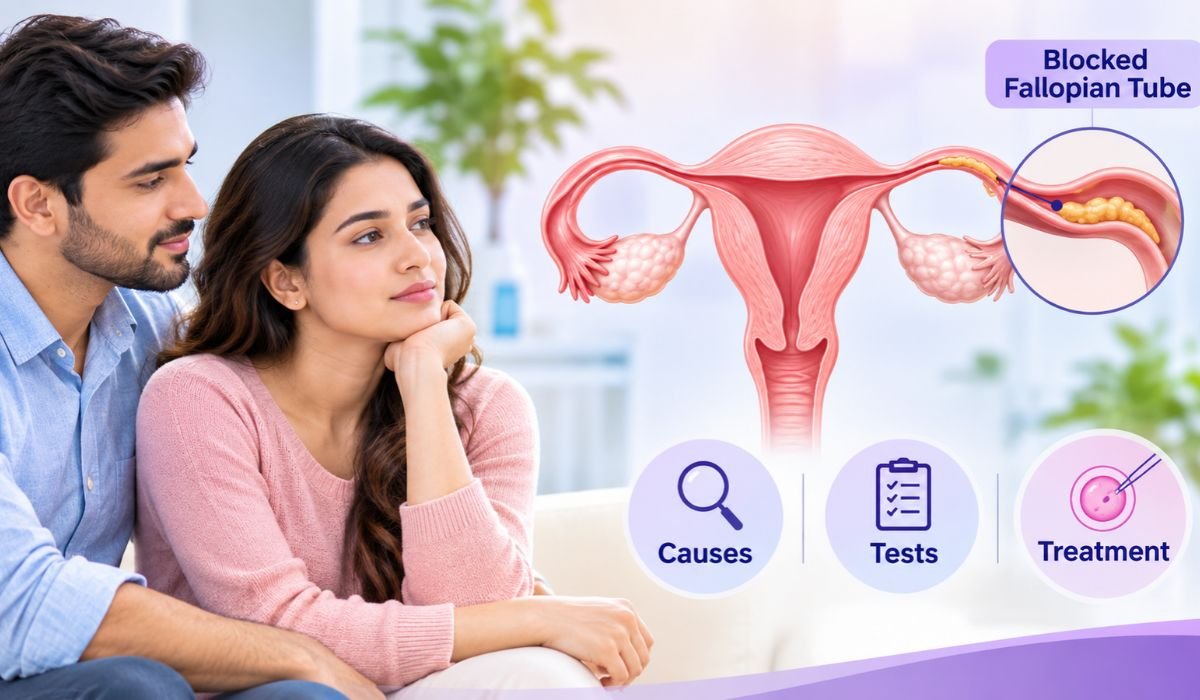

Blocked Fallopian Tubes: Causes, Tests and Treatment

Blocked Fallopian Tubes – Causes and Treatment

Being told that your fallopian tubes may be blocked can feel unsettling, especially if you have been trying to conceive for a while. A tubal blockage is a well-understood cause of difficulty conceiving, and there are clear ways to diagnose it and several ways to move forward.

The fallopian tubes are two narrow channels that connect the ovaries to the uterus. In natural conception, the tube picks up the egg after ovulation, sperm travel up to meet it there, and the fertilised egg then moves slowly towards the uterus. When one or both tubes are blocked or damaged, this journey can be disrupted and conception may become more difficult.

That does not mean blocked tubes always cause infertility, or that every woman with a blockage needs IVF. The outcome depends on which tube is affected, how severe the damage is, and other factors such as age and ovarian reserve. This article answers the questions most women and couples ask:

  • What causes blocked fallopian tubes?
  • Are there any noticeable symptoms?
  • Which tests identify tubal blockage?
  • Can blocked tubes be treated?
  • Is pregnancy possible through IVF?

What Are Blocked Fallopian Tubes?

Blocked fallopian tubes are tubes that have become partly or fully obstructed, so the egg, sperm or embryo cannot pass through normally. Each woman has two fallopian tubes, one on each side of the uterus. Each tube is about 10 cm long, with a finger-like opening (the fimbriae) near the ovary and a narrow opening into the uterus.

How fertilisation normally happens.

After ovulation, the fimbriae sweep the egg into the tube. Sperm swim through the uterus and up the tube, and fertilisation usually takes place in the outer part of the tube. The fertilised egg then spends several days travelling towards the uterus, where it can implant.

Partial and complete blockage.

In a partial blockage, the tube is narrowed or damaged but some passage remains. In a complete blockage, nothing can pass through. A blockage can sit near the uterus (proximal), in the middle of the tube, or at the far end near the ovary (distal). A distal blockage is often linked with hydrosalpinx, where the tube fills with fluid.

One tube versus both tubes.

If only one tube is blocked, the other tube may still carry the egg and sperm, so natural conception can remain possible. If both tubes are blocked, the egg and sperm cannot meet, and natural conception becomes very difficult.

Even when a tube is open, scarring can damage its inner lining or reduce its ability to move the egg along. This can affect egg transport and fertilisation without a visible “block”, which is why doctors often speak of tubal damage or tubal factor infertility.

What Causes Blocked Fallopian Tubes?

Most tubal blockages result from inflammation, infection or scarring (adhesions) in or around the tube. Sometimes the cause is never identified. These are the main causes doctors look for.

Pelvic Inflammatory Disease (PID)

PID is an infection of the female reproductive tract, often starting with a sexually transmitted infection such as chlamydia or gonorrhoea, or with other bacteria. The infection inflames the lining of the tubes and can leave scarring that narrows or seals them. Even a mild or unnoticed infection can cause damage, and the risk rises with repeated infections. You can read more about pelvic inflammatory disease and fertility in our detailed guide.

Previous Pelvic or Abdominal Surgery

Surgery in the pelvis or abdomen, such as for appendicitis, ovarian cysts, fibroids or a caesarean section, can sometimes lead to adhesions. These bands of scar tissue may distort the tubes or tie them to nearby organs, which can affect how the tube picks up the egg. Not everyone who has had surgery develops adhesions.

Endometriosis

In endometriosis, tissue similar to the uterine lining grows outside the uterus. This can cause inflammation and adhesions around the ovaries and tubes, and can distort the normal pelvic anatomy. To understand how this condition affects conception, see our article on endometriosis and fertility.

Previous Ectopic Pregnancy

An ectopic pregnancy, where an embryo implants outside the uterus (most often in a tube), can damage the affected tube. Treatment, particularly surgery to remove the pregnancy or the tube, can also affect tubal health. A previous ectopic pregnancy is a reason to have the remaining tube checked.

Tuberculosis and Other Pelvic Infections

Genital tuberculosis is an important cause of tubal damage in India. It often causes no obvious symptoms and may be found only during an infertility evaluation. It can scar the tubes and the uterine lining. Diagnosis usually needs specific tests, and treatment is with a full course of anti-tuberculosis medication under specialist supervision.

Hydrosalpinx

Hydrosalpinx means a fluid-filled, swollen fallopian tube, usually because the far end of the tube is blocked. It typically follows an earlier infection. Besides blocking the passage of egg and sperm, the trapped fluid can affect fertility and may influence IVF treatment planning, as explained later in this article.

What Are the Symptoms of Blocked Fallopian Tubes?

Many women with blocked fallopian tubes have no obvious symptoms. The blockage is often discovered only when a couple has trouble conceiving and begins fertility tests.

Some women notice symptoms linked to an underlying condition:

  • Difficulty getting pregnant after a year of regular, unprotected intercourse (six months if the woman is over 35).
  • Pelvic pain or discomfort, which may be constant or come and go.
  • Painful periods, in some underlying conditions such as endometriosis.
  • Unusual vaginal discharge, if an infection is present.
  • Pain during intercourse, in certain conditions.

These symptoms are not specific to tubal blockage. They can have many other causes, and they cannot confirm the diagnosis. Only tests can show whether the tubes are open.

Can Blocked Fallopian Tubes Cause Infertility?

Yes, they can, but not always. Blocked tubes are one of several recognised causes of female infertility, and many women with a tubal problem can still conceive, naturally or with treatment.

A blockage interferes with natural fertilisation because the egg and sperm may not be able to meet, or the embryo may not be able to travel to the uterus. When both tubes are blocked, the impact on natural conception is much greater. When only one tube is affected, a healthy, functioning tube on the other side may still allow natural pregnancy.

Partially blocked or damaged tubes bring a different concern. The embryo may be delayed or trapped in the tube, which raises the risk of an ectopic pregnancy.

Fertility also depends on other factors, including:

  • Whether you ovulate regularly
  • Your ovarian reserve (the number and quality of remaining eggs)
  • Your partner’s sperm health
  • The condition of the uterus

This is why a complete fertility evaluation matters, rather than looking at the tubes alone.

How Are Blocked Fallopian Tubes Diagnosed?

Blocked tubes cannot be felt or seen from the outside, so doctors use imaging or a procedure to check whether the tubes are open. Which test is suitable depends on your history and on what your doctor needs to find out. These tests are a standard part of IVF diagnostics and fertility testing, along with checks of ovulation, ovarian reserve and semen quality.

1. Hysterosalpingography (HSG) Test

An HSG is an X-ray test and is often the first step in checking the tubes. It is usually done in the first half of the menstrual cycle, after the period has ended and before ovulation, so that pregnancy is not an issue.

  • A thin tube (catheter) is placed through the cervix, and a contrast dye is gently passed into the uterus.
  • X-ray images follow the dye as it fills the uterine cavity and moves into the fallopian tubes.
  • If the tubes are open, dye spills out of their far ends. If a tube is blocked, the dye stops at the point of obstruction.
  • Doctors also look at the shape of the uterine cavity and may notice a swollen, fluid-filled tube (hydrosalpinx).

An HSG can sometimes show a blockage that is not real, because the tube may go into a temporary spasm during the test. For this reason, an abnormal result may need to be confirmed with a repeat HSG or another test before a treatment decision is made.

2. Ultrasound Examination

A pelvic or transvaginal ultrasound looks at the uterus and ovaries and can show conditions that affect fertility, such as fibroids, cysts and endometriosis-related ovarian cysts. It can also pick up a hydrosalpinx when the tube is swollen with fluid.

A routine ultrasound cannot reliably rule out every tubal blockage, because normal tubes are very thin and are not clearly visible. Specialised ultrasound techniques that use a fluid or contrast medium to look at the tubes are used in some centres.

3. Laparoscopy with Chromopertubation

Laparoscopy is a keyhole procedure done under anaesthesia. The surgeon makes a small cut near the navel, passes in a thin camera, and examines the uterus, tubes, ovaries and surrounding tissues directly.

In chromopertubation, a blue dye is passed through the cervix while the surgeon watches the tubes. If the tubes are open, the dye can be seen coming out of their ends. Laparoscopy also shows adhesions and endometriosis that other tests may miss. It is usually recommended when other tests are unclear, when endometriosis or adhesions are suspected, or when treatment can be done in the same sitting.

4. Hysteroscopy

Hysteroscopy uses a thin camera passed through the cervix to examine the inside of the uterus. It can detect polyps, fibroids, scar tissue or a uterine septum that may affect conception. In selected cases, it can also help assess the openings of the fallopian tubes where they meet the uterus.

Treatment Options for Blocked Fallopian Tubes

There is no single treatment for every blockage. The right option depends on where the blockage is, how severe it is and what caused it. Your age, ovarian reserve, your partner’s sperm health and how long you have been trying to conceive also matter.

1. Medication for Underlying Infections

Antibiotics can treat an active bacterial infection, and anti-tuberculosis medicines treat genital tuberculosis. However, medication generally cannot reverse scar tissue or structural damage that has already formed in the tubes. Treating infection mainly stops further damage.

2. Tubal Cannulation

In selected cases of proximal blockage (near the uterus), a specialist may try to open the tube using a fine catheter passed through the cervix, usually with imaging guidance. Some proximal blockages are caused by debris or spasm rather than true scarring, and these may clear with this approach. It is not suitable for blockages in the middle or far end of the tube.

3. Laparoscopic Tubal Surgery

Using keyhole techniques, a surgeon may be able to repair some types of tubal damage. Depending on the findings, this may include:

  • Adhesion removal to free the tubes and ovaries from surrounding scar tissue.
  • Treatment of selected tubal blockages, where the damage is limited.
  • Fimbrioplasty, which repairs or reopens the fringed end of the tube.
  • Salpingostomy, which creates a new opening in a tube blocked at its far end, in selected cases.

Surgery is not appropriate for every patient. Tubes with extensive damage, thick scarring or large hydrosalpinx often do not respond well. Both the chance of pregnancy and the risk of ectopic pregnancy after surgery depend on how much damage there is. Your doctor will use findings from tests such as laparoscopy and hysteroscopy to judge whether surgery is likely to help.

4. IVF Treatment for Blocked Fallopian Tubes

IVF (in vitro fertilisation) bypasses the fallopian tubes altogether, which is why it is an important option for many women with severe tubal damage or blockage in both tubes. The steps are:

  1. Egg collection. Medicines stimulate the ovaries to produce several eggs, which are collected from the ovaries with a minor procedure.
  2. Fertilisation in the laboratory. The eggs are combined with sperm outside the body.
  3. Embryo development. The fertilised eggs grow into embryos under controlled laboratory conditions for a few days.
  4. Embryo transfer. A suitable embryo is placed into the uterus, where it can implant and grow.

Because the embryo is placed directly in the uterus, the tubes are not needed for conception. To learn more about the process, see our page on IVF treatment. Success depends mainly on factors such as the woman’s age and egg quality, and no treatment can guarantee a pregnancy.

Can You Get Pregnant Naturally with Blocked Fallopian Tubes?

Sometimes, depending on how many tubes are affected and how badly. There are three situations:

  • One tube blocked: Natural pregnancy may still be possible if the other tube is healthy and working normally. Ovulation from the side of the blocked tube is wasted, so it may take longer.
  • Both tubes blocked: Natural conception is generally very difficult, and impossible when both tubes are completely blocked, because the egg and sperm cannot meet.
  • Partially blocked or damaged tubes: Pregnancy may sometimes occur, but the risk of ectopic pregnancy can be higher because the embryo may not reach the uterus.

Because of the ectopic pregnancy risk, it is wise to have your tubes assessed before you keep trying to conceive, particularly if you have had PID, an ectopic pregnancy or pelvic surgery. If you do become pregnant and have a known tubal problem, early scans to confirm the pregnancy is in the uterus are important. Seek urgent medical help if you have severe one-sided abdominal pain, shoulder-tip pain, dizziness or heavy bleeding in early pregnancy.

Blocked Fallopian Tubes: Surgery vs IVF – Which Is Better?

Neither treatment is better for everyone. The comparison below shows how they differ in general terms.

Factor Tubal Surgery IVF
Main approach Attempts to restore tubal function Bypasses the fallopian tubes
Suitable cases Selected types of tubal damage Severe damage or bilateral blockage
Natural conception May become possible Not required for fertilisation
Ectopic pregnancy risk May remain elevated after some procedures Still possible, although uncommon
Treatment choice Depends on blockage location and severity Depends on overall fertility assessment

Surgery may suit a younger woman with limited, well-defined damage who would like to try for a natural pregnancy. IVF is often preferred when both tubes are badly damaged, when surgery has not worked, or when age, ovarian reserve or sperm problems make it sensible not to wait. A fertility specialist should recommend an approach after looking at the complete clinical picture.

What Is Hydrosalpinx and How Does It Affect IVF?

Hydrosalpinx is a fallopian tube that is blocked at its far end and swollen with fluid. It usually develops after a pelvic infection, endometriosis or pelvic surgery. The damaged tube’s lining stops working normally, and fluid collects inside it.

This fluid can affect fertility in more than one way. It blocks the tube, and it may also leak back into the uterus. Research suggests this fluid can interfere with embryo implantation and is linked with lower IVF success rates and a higher risk of early miscarriage.

For this reason, doctors often recommend treating a hydrosalpinx, particularly one visible on ultrasound, before an embryo transfer. The options include:

  • Salpingectomy: removing the affected tube, usually by laparoscopy.
  • Tubal occlusion: blocking the tube close to the uterus so that fluid cannot enter the uterine cavity, sometimes considered when removal is difficult or risky.

The decision depends on the size of the hydrosalpinx, the condition of the ovaries and each woman’s circumstances, so it should be discussed with your fertility specialist. If IVF is planned, the hydrosalpinx can be addressed as part of your overall IVF treatment plan.

When Should You Consult a Fertility Specialist?

Consider a fertility evaluation if you have been trying to conceive for a year without success (six months if you are over 35), or sooner if any of the following applies:

  • You have had pelvic inflammatory disease
  • You have had an ectopic pregnancy
  • You have had pelvic or abdominal surgery
  • You have known endometriosis
  • You have previously been told you have a tubal blockage
  • You have had recurrent pelvic infections

Women with these risk factors may benefit from earlier assessment rather than waiting unnecessarily. Time matters most when a woman is in her mid-thirties or older, because egg quality and quantity decline with age.

How Rainbow IVF Can Help with Blocked Fallopian Tubes

Checking the health of the tubes is an important part of investigating female infertility. The right approach may involve fertility tests, imaging and, in selected cases, minimally invasive procedures, followed by a treatment plan that fits your situation.

At Rainbow IVF in Agra, the services relevant to tubal problems include:

  • Fertility diagnostic evaluation
  • HSG and other recommended investigations
  • Laparoscopy and hysteroscopy
  • IVF treatment
  • Individualised fertility treatment planning

The aim of the first visit is to understand your history, review any earlier reports and explain which tests or treatments make sense for you. Every treatment decision is based on your own findings, and outcomes vary from person to person.

If you have been diagnosed with blocked fallopian tubes or are experiencing difficulty conceiving, consider consulting a fertility specialist to understand your treatment options. The team at Rainbow IVF can help you understand the investigations and treatment approaches appropriate to your situation.

Book a fertility consultation with Rainbow IVF.

Frequently Asked Questions

What are the main causes of blocked fallopian tubes?

The most common causes are pelvic infections such as pelvic inflammatory disease and genital tuberculosis, endometriosis, previous pelvic or abdominal surgery, and a past ectopic pregnancy. These conditions cause inflammation and scarring that narrow or seal the tube. Sometimes no clear cause is found.

Can blocked fallopian tubes be detected through ultrasound?

Not reliably. A routine ultrasound cannot show whether normal tubes are open, though it can reveal a fluid-filled tube (hydrosalpinx). To check whether the tubes are open, doctors use tests such as HSG, special contrast ultrasound or laparoscopy with dye testing, depending on your situation.

Is the HSG test painful?

Most women feel menstrual-type cramping for a few minutes during the dye injection, and some find it uncomfortable. The test itself is short. Taking a pain-relief tablet beforehand, as advised by your doctor, can help. Mild cramping or spotting may follow for a day or two.

Can blocked fallopian tubes open naturally?

A blockage caused by scarring or damage generally does not open on its own. Some apparent blockages near the uterus are caused by spasm or debris and may clear, which is why an abnormal HSG sometimes needs to be repeated or confirmed with another test.

Can a woman get pregnant with one blocked fallopian tube?

Yes, often. If the other tube is healthy and working normally, natural pregnancy can still occur, although it may take longer. Ovulation, sperm health and the uterus also matter. If you have not conceived after a reasonable time, a fertility evaluation can guide the next step.

Can both blocked fallopian tubes be treated?

Sometimes. Selected blockages can be treated with tubal cannulation or laparoscopic surgery, depending on location and severity. When both tubes are badly damaged, or surgery is unlikely to help, IVF is usually recommended, since it bypasses the tubes. A specialist can advise after assessing your tests.

Is IVF the best treatment for blocked fallopian tubes?

IVF is often the most effective option when both tubes are blocked or severely damaged, because it does not depend on the tubes. It is not the only option, though. Limited damage in a younger woman may be treated surgically. The best choice depends on your overall fertility assessment.

Can blocked fallopian tubes cause ectopic pregnancy?

Yes. Partly blocked or damaged tubes can trap a fertilised egg before it reaches the uterus, raising the risk of an ectopic pregnancy. This is why early scans are advised once you are pregnant. Severe one-sided pain or bleeding in early pregnancy needs urgent medical attention.

Does blocked fallopian tube surgery improve pregnancy chances?

It can for selected women, especially when damage is limited and the tube can be repaired. Results depend on the type and severity of damage, your age and other fertility factors. Surgery does not help every patient, and the risk of ectopic pregnancy may remain higher afterwards.

Can IVF work if both fallopian tubes are removed?

Yes. IVF does not need the fallopian tubes, because eggs are collected from the ovaries and the embryo is placed directly in the uterus. Women who have had both tubes removed can conceive through IVF, provided the ovaries and uterus are healthy.


Azoospermia: Can Men With No Sperm Still Become Fathers?

Azoospermia treatment options including sperm retrieval and ICSI IVF for male infertility.

Few reports are as frightening as a semen analysis that says “zero sperm.” Many men feel shock, guilt or isolation, and many couples assume that parenthood is no longer possible.

The honest answer is more hopeful, though not a guarantee. Some men diagnosed with azoospermia can become biological fathers, depending on the underlying cause and on whether sperm can be found and retrieved from the reproductive tract. Even when semen contains no sperm, the testicles may still be producing some. With modern sperm retrieval techniques and ICSI, a number of couples have been able to conceive with the man’s own sperm.

This guide explains what azoospermia is, why it happens, how it is diagnosed, and what treatment options exist, so you can have an informed conversation with a fertility specialist.

What Is Azoospermia?

Azoospermia is the complete absence of sperm in the ejaculate. It is often called “zero sperm count.” Semen is still produced, because most of its volume comes from glands other than the testicles, so the semen can look entirely normal even when no sperm are present.

Azoospermia is different from oligospermia, in which sperm are present but the count is lower than the reference range. In oligospermia, sperm can be seen under the microscope; in azoospermia, none are found in the sample.

The condition is identified through a semen analysis, in which the laboratory examines the sample, usually after spinning it in a centrifuge so that very small numbers of sperm are not missed.

One abnormal report is not a final diagnosis.

Sperm counts can vary between samples, and factors such as recent illness, fever, incomplete collection or errors in sample handling can affect results. Doctors generally ask for at least one repeat test, done in a reliable laboratory, before confirming azoospermia.

What Are the Main Types of Azoospermia?

Azoospermia falls into two broad groups. Knowing which one applies is the most important step in planning treatment.

Feature Obstructive Azoospermia Non-Obstructive Azoospermia
Core problem Sperm are made but blocked from reaching the semen Sperm production is reduced or absent
Testicular sperm production Usually normal Impaired; may be limited to small areas
Common causes Infections, prior surgery, vasectomy, congenital absence of the vas deferens Hormonal disorders, genetic conditions, testicular damage, chemotherapy
Hormone profile Often normal FSH is often raised, though patterns vary
Sperm retrieval Often possible (PESA, TESA) Possible in some men, more complex (Micro-TESE)
Overall outlook Generally more favourable for retrieval More variable and less predictable

Obstructive Azoospermia

In obstructive azoospermia, the testicles produce sperm, but a blockage stops them from travelling out with the semen. The blockage may be in the epididymis, the vas deferens or the ejaculatory ducts.

Common reasons include:

  • Past infections of the reproductive tract
  • Previous surgery in the groin or genital area, including hernia repair
  • Vasectomy
  • Congenital absence of the vas deferens, which may be linked to changes in the CFTR gene

Because sperm production is usually normal, doctors can often retrieve sperm directly from the epididymis or the testicle.

Non-Obstructive Azoospermia

In non-obstructive azoospermia, the problem lies in sperm production itself. The testicles make very few sperm or none that reach maturity.

Possible reasons include hormonal disorders, genetic factors, testicular damage, and previous chemotherapy, radiotherapy or other medical treatment. This type is generally harder to treat, and sperm retrieval is less predictable. However, some men with non-obstructive azoospermia have small pockets of sperm production inside the testicle, which a specialist may be able to locate.

The distinction between the two types shapes every later decision, from which tests are needed to which retrieval method is considered.

What Causes Zero Sperm Count in Men?

Doctors group causes by where the problem arises. Some of the most important are:

  • Hormonal imbalances: Sperm production depends on signals from the brain (FSH and LH) and testosterone. Disorders of the pituitary gland or hypothalamus can switch production down.
  • Genetic conditions: Examples include Klinefelter syndrome (an extra X chromosome) and Y-chromosome microdeletions.
  • Blockage in sperm transport: Scarring or obstruction anywhere along the duct system.
  • Previous infections: Conditions affecting the epididymis or testicles, including mumps affecting the testicles after puberty.
  • Testicular injury or torsion: Trauma or twisting of the testicle that cut off its blood supply.
  • Undescended testicles: Particularly if not corrected early in childhood.
  • Medications and cancer treatments: Chemotherapy, radiotherapy and certain other drugs can harm sperm-producing cells.
  • Congenital conditions: Structural differences present from birth.

In a meaningful number of men, no clear cause is found even after a thorough evaluation. That does not rule out treatment; it simply means the plan is based on test findings rather than a single known cause. To read more about male infertility causes, diagnosis and treatment options, see Rainbow IVF’s dedicated guide.

What Are the Symptoms of Azoospermia?

In most men, azoospermia causes no noticeable symptoms. Ejaculate typically looks and feels normal. The most common sign is that a couple has not conceived despite regular, unprotected intercourse.

Some men may notice other features, particularly when an underlying condition is responsible:

  • Difficulty conceiving, often the only sign
  • Reduced sexual desire if a hormonal problem is present
  • Erectile or ejaculation difficulties in certain conditions
  • Changes in the testicles, such as small size, firmness or swelling

Zero sperm count cannot be diagnosed from symptoms alone. Only laboratory testing can confirm it.

How Is Azoospermia Diagnosed?

Diagnosis is a step-by-step process aimed at confirming the condition and finding its type and cause.

Semen Analysis

This is the primary test. The laboratory examines the sample for sperm, including after centrifugation. Because results can fluctuate, a repeat test is usually recommended before azoospermia is confirmed.

Hormonal Blood Tests

Where clinically appropriate, doctors check FSH, LH and testosterone. These help distinguish a problem of sperm production from a blockage, and can point to a hormonal cause.

Physical Examination

A specialist assesses testicular size and consistency, checks for a varicocele (enlarged veins around the testicle), and examines the vas deferens and other structures.

Genetic Testing

When non-obstructive azoospermia or congenital absence of the vas deferens is suspected, karyotyping (a chromosome study) and Y-chromosome microdeletion testing may be advised. CFTR gene testing may also be considered. Results matter because they affect counselling about retrieval chances and what could be passed to a child.

Ultrasound and Additional Investigations

Scrotal or transrectal ultrasound may be used to look for blockages or structural abnormalities. Further tests depend on what the doctor suspects.

Can Men With Azoospermia Have Their Own Biological Child?

This is the question most couples are really asking, and for some, the answer is yes.

Sperm may be present within the reproductive tract even when none appear in semen:

  • In obstructive azoospermia, sperm production is usually normal, but the sperm cannot get out. They can often be retrieved from the epididymis or testicle.
  • In non-obstructive azoospermia, overall production is low, yet some men have small areas in the testicle where sperm are still being made. A skilled surgeon may be able to find them.

There are important limits. Sperm retrieval does not succeed in every man, and finding sperm is only the first step. A pregnancy also depends on the egg and embryo quality, and on the female partner’s age and fertility. It is therefore helpful to separate four different milestones: sperm retrieval, fertilisation, embryo development and live birth. Success at one stage does not guarantee success at the next.

No responsible specialist can promise that every man with azoospermia will become a biological father. What they can do is assess your individual situation and explain the realistic options.

What Are the Treatment Options for Azoospermia?

Treatment depends on the type of azoospermia and its cause.

Treatment for Obstructive Azoospermia

Options may include:

  • Surgical correction of the blockage in selected cases, for example certain obstructions or a vasectomy reversal
  • Sperm retrieval (PESA or TESA) combined with IVF and ICSI, particularly when the blockage cannot be corrected or when the female partner’s age makes a faster route sensible

Treatment for Non-Obstructive Azoospermia

There is no single treatment. The plan depends on whether the cause is hormonal, genetic or related to testicular damage. After specialist evaluation, some men may be considered for surgical sperm retrieval, most often by Micro-TESE, followed by ICSI.

Hormonal Treatment

When a correctable hormonal disorder is found, such as certain pituitary or hypothalamic problems, hormone therapy may help selected patients restart sperm production. It does not work for every type of azoospermia, and it should be guided by a specialist rather than started on one’s own.

A note on supplements and home remedies: There is no reliable evidence that supplements, herbal products or home remedies cure azoospermia. A healthy lifestyle supports general wellbeing, but it should not delay a proper medical evaluation.

Sperm Retrieval Procedures: TESA, PESA and Micro-TESE

When semen contains no sperm, doctors may collect sperm directly from the reproductive tract. The retrieved sperm is then used for ICSI.

Feature TESA PESA Micro-TESE
Full name Testicular Sperm Aspiration Percutaneous Epididymal Sperm Aspiration Microsurgical Testicular Sperm Extraction
Where sperm is collected Testicular tissue Epididymis Testicular tissue (selected areas)
Method Fine needle aspiration Fine needle aspiration Small incision, operating microscope
Usually considered for Obstructive azoospermia; sometimes selected non-obstructive cases Obstructive azoospermia Non-obstructive azoospermia
Anaesthesia Commonly local, sometimes sedation Commonly local, sometimes sedation Usually more extensive anaesthesia
Main limitation May not find sperm if production is very low Not suitable if the epididymis is not the source of sperm More specialised; sperm may still not be found

Not all three procedures suit every patient. The right choice depends on the diagnosis, test results and the specialist’s judgment.

What Is TESA?

In TESA, a fine needle is passed into the testicle to draw out a small sample of tissue or fluid, which the embryologist then examines for sperm. It is often considered when sperm production is expected to be present, as in obstructive azoospermia.

What Is PESA?

In PESA, a fine needle is inserted through the skin of the scrotum into the epididymis, the coiled tube where sperm mature, to aspirate fluid containing sperm. It may be considered when a blockage lies beyond the epididymis and sperm accumulate there.

What Is Micro-TESE?

Micro-TESE is an operating-microscope technique, mainly used in non-obstructive azoospermia. The surgeon makes a small opening in the testicle and uses the microscope to look for tubules more likely to contain sperm, removing very small amounts of tissue. This targeted approach aims to protect healthy testicular tissue. It is a specialised procedure, and finding sperm is still not certain.

How Does ICSI Help Men With Azoospermia?

Intracytoplasmic Sperm Injection (ICSI) is a laboratory technique in which an embryologist selects a single sperm and injects it directly into a mature egg. Natural fertilisation needs many sperm to swim and penetrate the egg; ICSI bypasses those steps.

This matters because surgically retrieved sperm are usually few in number and may be less motile. Even a small number can be enough for ICSI. In conventional IVF, by contrast, eggs and sperm are placed together in a dish and fertilisation is left to occur on its own.

Several points are worth knowing:

  • Sperm retrieval and egg retrieval often need careful timing and coordination
  • Retrieved sperm may be used fresh or frozen, depending on the plan
  • ICSI does not guarantee fertilisation, embryo development or pregnancy

Rainbow IVF offers ICSI treatment for severe male infertility, and publicly describes itself as the first clinic in Uttar Pradesh to report ICSI and TESA babies.

Azoospermia Treatment: IVF and ICSI Journey Step by Step

The path varies for each couple, but it commonly includes:

  1. Initial consultation and medical history for both partners
  2. Repeat semen analysis and diagnostic investigations
  3. Identifying the type and cause of azoospermia
  4. Choosing a sperm retrieval approach, if indicated
  5. Assessing the female partner’s fertility, including age and ovarian reserve
  6. Ovarian stimulation and egg retrieval, if IVF is planned
  7. Sperm preparation and ICSI fertilisation
  8. Embryo development and monitoring in the laboratory
  9. Embryo transfer, when appropriate
  10. Pregnancy testing and follow-up

The order can change. For example, sperm retrieval may be done on the same day as egg retrieval or earlier, with the sperm frozen for later use.

To understand the fertilisation stage in more detail, read about IVF treatment and the fertilisation process.

If you would like a walkthrough of each stage from consultation to pregnancy test, the complete IVF treatment process is explained step by step on the clinic’s website.

What Is the Success Rate of Azoospermia Treatment?

There is no single success rate, because outcomes depend on several factors:

  • The type of azoospermia: Sperm retrieval rates are generally higher in obstructive than in non-obstructive azoospermia.
  • Underlying medical and genetic conditions
  • Sperm retrieval outcome: Whether sperm is found, and in what quality
  • The female partner’s age and ovarian reserve
  • Egg and embryo quality
  • Fertility laboratory standards and expertise

It also helps to separate the stages: sperm retrieval rate, fertilisation rate, embryo development and live birth rate are different measures. A clinic that quotes only one of them may give a misleading picture.

This article does not quote clinic-specific figures, and no ethical clinic can promise a particular outcome in advance. A specialist can give you a realistic estimate based on your own reports.

When Should You Consult a Fertility Specialist?

Seek evaluation if:

  • A semen report shows zero sperm
  • Repeat tests confirm azoospermia
  • You have not conceived despite regular, unprotected intercourse for 12 months (or 6 months if the woman is 35 or older)
  • There is a history of testicular surgery, injury, infection or cancer treatment
  • A hormonal or genetic abnormality is suspected

Both partners should be assessed. Female fertility strongly influences the treatment plan and the chances of success, so evaluating only one partner can waste valuable time.

Azoospermia Treatment at Rainbow IVF, Agra

Rainbow IVF, Agra, is a fertility centre that evaluates and treats male-factor infertility. According to published information about the centre, it was founded in 1997 and is led by Dr. Jaideep Malhotra as Director.

The services relevant to couples with azoospermia include:

  • Male infertility evaluation
  • IVF treatment
  • ICSI treatment
  • TESA and PESA sperm retrieval options
  • Coordination with specialists for male infertility procedures
  • Individualised treatment planning

What is appropriate for you depends on your diagnosis and medical assessment. Bringing your semen reports, hormone results and any previous treatment records helps the team plan.

If you are living with a zero sperm count report, you do not need to face it alone. You can consult the fertility specialists at Rainbow IVF Agra to discuss your reports and the options that may suit you.

Frequently Asked Questions

1. Can a man with zero sperm count become a father?

Some can. If sperm can be retrieved from the epididymis or testicle, it may be used with ICSI to fertilise the partner’s eggs. The chance depends on the cause of azoospermia, sperm retrieval results and the female partner’s fertility. It cannot be guaranteed.

2. Is azoospermia completely curable?

Not always. Some causes, such as certain blockages or hormonal disorders, can be treated and may restore sperm in the semen. In other cases, the aim is to retrieve sperm for assisted conception rather than to “cure” the condition.

3. Can sperm be found in the testicles if semen contains no sperm?

Often, yes. In obstructive azoospermia, sperm production is usually normal. In non-obstructive azoospermia, some men have small areas of sperm production, though retrieval is not certain.

4. What is the difference between obstructive and non-obstructive azoospermia?

In obstructive azoospermia, sperm are produced but blocked from reaching the semen. In non-obstructive azoospermia, the testicles produce few or no sperm. Retrieval is usually more predictable in the obstructive type.

5. Can IVF help men with azoospermia?

Yes, when sperm can be retrieved. IVF with ICSI allows a single retrieved sperm to be injected into each mature egg. IVF cannot help if no sperm can be found, in which case other options, such as donor sperm, may be discussed.

6. Is ICSI necessary for azoospermia?

In most cases, yes. Surgically retrieved sperm are generally few and may be less motile, so ICSI is typically recommended over conventional IVF fertilisation.

7. What is the difference between TESA, PESA and Micro-TESE?

TESA collects sperm from the testicle with a needle, PESA from the epididymis with a needle, and Micro-TESE uses an operating microscope to find sperm-producing areas in the testicle. Which one suits you depends on the type of azoospermia.

8. Can non-obstructive azoospermia be treated?

Sometimes. If a hormonal cause is found, medication may help selected men. Others may be considered for Micro-TESE followed by ICSI. Outcomes vary and cannot be promised.

9. Does azoospermia affect testosterone levels?

Not necessarily. Many men with azoospermia have normal testosterone. However, in some, particularly those with hormonal or testicular disorders, levels may be low, which is why hormone testing is part of the evaluation.

10. Can azoospermia be caused by genetic problems?

Yes. Conditions such as Klinefelter syndrome, Y-chromosome microdeletions and CFTR gene changes (linked to absent vas deferens) can cause azoospermia. Genetic testing and counselling help explain the cause and what it may mean for a child.

Conclusion

A zero sperm count does not automatically mean that biological fatherhood is impossible. Azoospermia has more than one cause, and for many couples the first step is simply finding out which type is present and whether sperm retrieval or another treatment may be appropriate.

Outcomes differ from person to person, and no one can promise a result. But with a proper diagnosis, an honest discussion of your options and the right expertise, many couples find a way forward. If you have received a report showing azoospermia, consider an individual fertility assessment at Rainbow IVF, Agra, for both partners.

Medical disclaimer: This article is for educational purposes only and does not replace professional medical consultation, diagnosis or treatment. Please consult a qualified fertility specialist about your individual situation.