IVF Treatment Near Firozabad | Fertility Treatment in Agra

IVF treatment near Firozabad with advanced fertility care and IVF specialists in Agra

IVF Treatment Near Firozabad | Advanced Fertility Care in Agra

Medically Reviewed by Dr. Jaideep Malhotra | Director ART, Rainbow IVF, Agra | MBBS, MD, FRCOG (UK) Published: May 2026 | Last Reviewed: May 2026

Quick Answer Nearest Advanced IVF Centre from Firozabad: Rainbow IVF Agra
Distance: 40 km
Travel Time: 40–50 minutes
Monitoring Visits Required: 4–6
Conditions Treated: PCOS, Low AMH, Male Infertility, Blocked Tubes, Failed IVF

Introduction

If you are searching for IVF treatment near Firozabad, you are not alone. Many couples from Firozabad, Shikohabad, Tundla, Jasrana, and Etah travel to Rainbow IVF Agra every month for advanced fertility treatment — complete their appointments — and return home the same day.

Rainbow IVF in Agra is just 40 kilometres from Firozabad. Less than an hour by road. Many couples from Firozabad choose to travel to Agra for access to advanced IVF technology and specialist fertility care that is simply not available at this level locally.

This guide covers everything you need to know: distance, cost, number of visits, what to expect, and why Agra is a smarter choice than Delhi for IVF treatment.

Why Firozabad Couples Travel to Agra for IVF

For couples seeking advanced fertility treatment, Agra offers significantly more in terms of technology and specialist experience. Here is what Rainbow IVF provides:

Embryoscope with Time-Lapse Monitoring continuously monitors embryos inside a specialised incubator without disturbing them — giving our embryologists far richer data to select the embryo most likely to implant successfully.

AI-Assisted Embryo Selection uses artificial intelligence to analyse embryo development patterns and identify the strongest candidate for transfer. This technology is available at very few clinics in all of Uttar Pradesh. Check about the  AI embryo selection.

RI Witness Electronic Witnessing System uses electronic tags on every sample — eggs, sperm, embryos — to guarantee they are never confused with another patient’s samples at any stage.

ICSI with Same-Day Surgical Sperm Retrieval means men with zero sperm count (azoospermia) can have TESA or PESA performed on the same day as egg retrieval — minimising total visits and coordinating both procedures efficiently.

For a complete understanding of the IVF process, read our Complete Guide to IVF Treatment in India.

IVF Cost Comparison: Firozabad vs Agra vs Delhi

For couples considering fertility treatment, the comparison below highlights why many patients from Firozabad choose Agra over Delhi for IVF treatment.

Factor Rainbow IVF Agra Delhi NCR Clinics
Distance from Firozabad 40 km 230 km
Travel Time per Visit 45 minutes 2.5–3 hours
IVF Cost per Cycle Generally Lower Typically 30–40% Higher
Monitoring Visit Burden Easy, Same-Day Return Often Time-Consuming
Stay Cost (If Required) More Affordable Usually Higher
Advanced Technology Embryoscope, AI Embryo Selection, RI Witness Varies by Clinic
Specialist Access Nationally Recognised Fertility Specialists Varies by Clinic
Emergency Hospital Support Available On-Site Depends on Clinic

For most couples, shorter travel time, lower overall costs, and easier follow-up visits make Agra a practical choice for IVF treatment compared to travelling regularly to Delhi NCR.

For the complete IVF cost breakdown at our clinic, see: IVF Cost in Agra: Real Price, Hidden Charges & Complete Breakdown.

Factors That Influence IVF Success Rates

IVF success rates depend on individual factors including age, diagnosis, ovarian reserve, and embryo quality. At Rainbow IVF Agra, our results are driven by three things that matter most: Embryoscope monitoring, AI embryo selection, and specialist experience.

Generally speaking:

  • Women under 35 with good ovarian reserve have the strongest IVF outcomes
  • Women 35 to 40 have good results with the right protocol and embryo selection
  • Women over 40 benefit from detailed evaluation of ovarian reserve and, where appropriate, advanced protocols or donor options

Your doctor will give you a personalised, honest assessment at your first consultation based on your specific reports — not a generic number. For more on what affects success, read: IVF Success Rate in India: What Percentage Is Real?

When Should Couples from Firozabad Consider IVF?

You should consult an IVF specialist if:

  • You have been trying to conceive for more than 12 months without success.
  • The female partner is above 35 years of age and pregnancy has not occurred after 6 months of trying.
  • You have blocked or damaged fallopian tubes.
  • You have low AMH or diminished ovarian reserve.
  • You have severe male infertility, including very low sperm count or azoospermia.
  • You have experienced multiple failed IUI cycles.
  • You have recurrent miscarriages or pregnancy loss.
  • You have previously undergone unsuccessful IVF treatment.

Early fertility assessment can improve treatment planning and help couples avoid unnecessary delays.

Step-by-Step IVF Journey for Firozabad Couples

Understanding the full journey helps couples plan travel, work schedules, and finances in advance.

Step 1 — First Consultation (1 visit) Both partners come together to Agra. Your doctor reviews all existing reports, takes a complete medical history, and outlines the treatment plan. Bring every report you have — semen analysis, hormone tests, ultrasound scans, records of previous pregnancies or surgeries.

Step 2 — Baseline Investigations Many standard tests can be done at a diagnostic centre in Firozabad — FSH, LH, AMH, TSH, prolactin, semen analysis. You bring reports to Agra or share them digitally via WhatsApp. We will tell you exactly which tests must be done at our facility.

Step 3 — Ovarian Stimulation Monitoring (4 to 6 visits over 10 to 12 days) Daily hormone injections begin at home. Every 2 to 3 days, you come to Agra for a short morning appointment — ultrasound scan and blood test — taking 30 to 45 minutes. Most Firozabad patients leave home at 7am and are back before noon.

Step 4 — Egg Retrieval (1 visit) When eggs are mature, retrieval is done under sedation. It takes 20 to 30 minutes. You rest at the clinic for 2 to 3 hours before going home. Please bring a family member for this visit.

Step 5 — Fertilisation and Embryo Development (no visit needed) Eggs are fertilised in our embryology laboratory using conventional IVF or ICSI. Embryos are monitored continuously in the Embryoscope for 3 to 5 days. Our team updates you on embryo progress by phone.

Step 6 — Embryo Transfer (1 visit) The best quality embryo is transferred into the uterus. A simple 15 to 20 minute procedure — no sedation needed. Most patients travel home the same day comfortably.

Step 7 — Pregnancy Blood Test (no visit needed) 14 days after transfer, a beta HCG blood test is done at any lab in Firozabad. Share the report with us digitally. Our doctor calls with the result and next steps.

Total visits from Firozabad: 7 to 9 visits across the full cycle.

Why Agra Is Better Than Delhi for IVF Treatment from Firozabad

Many couples from Firozabad consider Delhi NCR, assuming a bigger city means better treatment. Here is the reality:

Distance is a real burden during IVF. The stimulation phase requires 4 to 6 monitoring visits in 10 to 12 days. Each Delhi trip from Firozabad is 230 km and 5 to 6 hours of travel round trip. Each Agra trip is 40 km and under 2 hours round trip.

Cost difference is significant. Top IVF clinics in Delhi charge 30 to 40 percent more than Rainbow IVF Agra — for the same or comparable technology.

Emergency access matters. Rainbow IVF is inside Ujala Cygnus Rainbow Hospital — a full-service hospital with 24-hour emergency facilities on site.

Conditions We Treat at Rainbow IVF Agra

We regularly treat couples from Firozabad with:

  • Unexplained infertility — normal tests but no pregnancy after 12 months
  • PCOS and IVF — one of the most common reasons for IVF in our clinic
  • Male infertility — low sperm count, poor motility, azoospermia, TESA/PESA
  • Blocked or damaged fallopian tubes
  • Endometriosis affecting fertility
  • Low AMH and poor ovarian reserve
  • Recurrent pregnancy loss and repeated implantation failure
  • Failed IVF cycles from other clinics — we review what went wrong and adjust the protocol

Not sure whether IVF or IUI is your right first step? Read: IVF vs IUI — Which Treatment Is Right for You?

How to Reach Rainbow IVF from Firozabad

By Road: Take NH-19 towards Agra. Rainbow IVF is at Ujala Cygnus Rainbow Hospital, Sikandra, directly on NH-19. Distance: 40 km. Time: 40 to 50 minutes. No city traffic — the clinic is on the highway.

By Train: Firozabad Railway Station to Agra Cantonment: 35 to 45 minutes. From Agra Cantonment, 8 km by auto or taxi (15 minutes).

By Cab: Many Firozabad patients book a private cab for the stimulation phase. Shared taxi services also run regularly between Firozabad and Agra.

📍 Rainbow IVF, 4th Floor, Ujala Cygnus Rainbow Hospital, NH-19, Near Guru Ka Taal, Sikandra, Agra — 282007

How to Book Your First Appointment

No referral needed. Call or WhatsApp directly:

+91-562-260-0537  +91-7060301888

Tell our team you are travelling from Firozabad. We will schedule your appointment to suit your travel and advise you in advance exactly which reports to bring.

Frequently Asked Questions

Which city is best for IVF near Firozabad? Agra is the best option for IVF near Firozabad. Just 40 kilometres away — under an hour by road — Rainbow IVF Agra offers advanced fertility technology, nationally recognised specialists, and transparent pricing. It is significantly closer and more affordable than Delhi NCR, with no compromise on quality of care.

What is the success rate of IVF for couples from Firozabad at Rainbow IVF? Success rates depend on individual factors — age, diagnosis, ovarian reserve, and embryo quality. Women under 35 with good ovarian reserve generally have the strongest outcomes. Your doctor will give you a personalised assessment at your first consultation based on your specific reports.

How much does one IVF cycle cost near Firozabad? Rainbow IVF Agra — just 40 km from Firozabad — offers transparent, fully-disclosed IVF pricing that is typically 30 to 40 percent lower than equivalent clinics in Delhi NCR. Full breakdown here: IVF Cost in Agra.

Can working couples travel from Firozabad for IVF monitoring? Yes — and many do. Most monitoring appointments are short morning visits. Firozabad patients typically leave at 7am, complete their scan and blood test, and return home by 11am. Egg retrieval and embryo transfer can be planned around work schedules.

Is IVF available directly in Firozabad? Currently, couples from Firozabad seeking advanced IVF technology and experienced fertility specialists typically travel to Agra, which at 40 km is the nearest accessible option offering this level of care.

Can I do monitoring scans in Firozabad? In some cases, we coordinate with patients to have scans done locally and share reports digitally. This is assessed individually at your first consultation based on your treatment protocol.

What if there is a complication during my IVF cycle? Rainbow IVF is inside Ujala Cygnus Rainbow Hospital — a full-service hospital with round-the-clock emergency facilities. Any urgent situation is handled immediately on site.

Should both partners come for the first consultation? Yes — strongly recommended. Evaluating both partners together leads to a more accurate diagnosis, a more targeted treatment plan, and saves significant time and cost overall.

How long does an IVF cycle take for patients from Firozabad? A standard IVF cycle usually takes 4 to 6 weeks from the first consultation to pregnancy testing. Most visits are short morning appointments, making it practical for couples travelling from Firozabad.

Conclusion

Rainbow IVF Agra is 40 kilometres from Firozabad. It offers Embryoscope technology, AI embryo selection, nationally recognised specialists, and transparent pricing — all within an easy morning trip.

If you are looking for advanced IVF treatment near Firozabad, Rainbow IVF Agra offers experienced fertility specialists, modern embryology technology, and convenient access just 40 kilometres away. Book a consultation to understand your fertility options and receive a personalised treatment plan.

📞 +91-562-260-0537 | +91-7060301888 📍 Rainbow IVF, 4th Floor, Ujala Cygnus Rainbow Hospital, NH-19, Sikandra, Agra

Related Articles:
IVF vs IUI: Which Treatment Is Right for You?

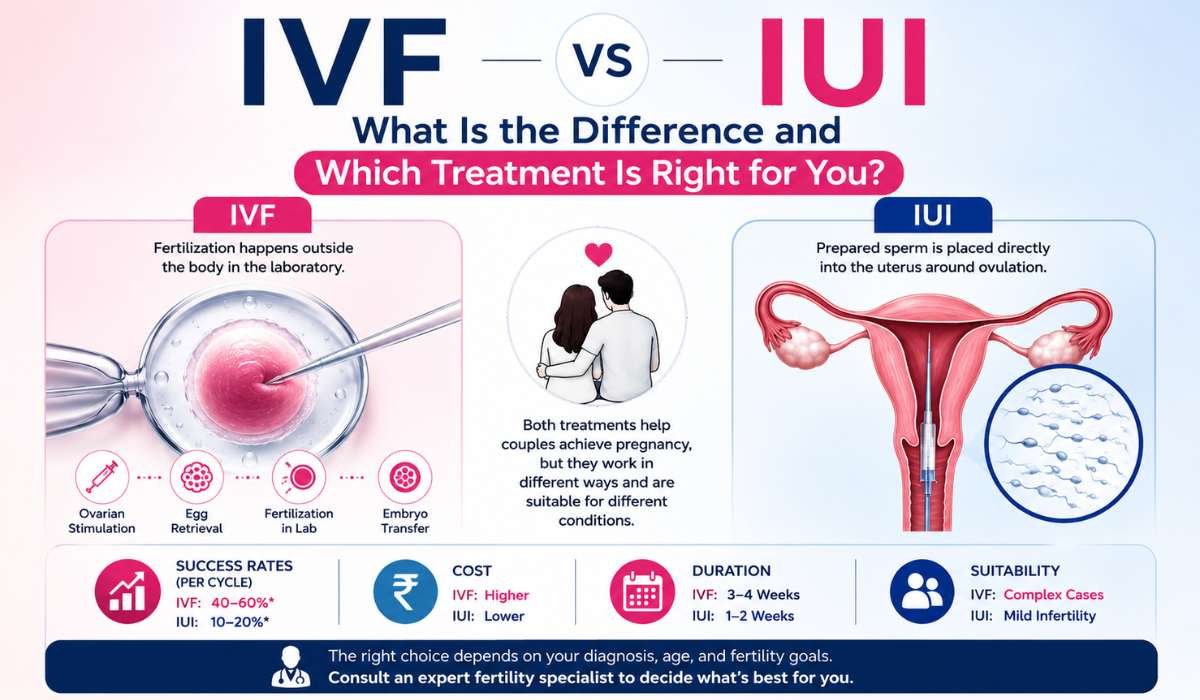
Medical comparison of IVF and IUI fertility treatments showing procedures, success rates, costs, duration, and suitability for different infertility conditions.

IVF vs IUI: What Is the Difference and Which Treatment Is Right for You?

Medically Reviewed by Dr. Jaideep Malhotra | Director ART, Rainbow IVF, Agra | MBBS, MD, FRCOG (UK) Published: May 2026 | Last Reviewed: May 2026


Introduction

When a couple is told they need fertility treatment, two terms come up almost immediately — IUI and IVF. Both are assisted reproductive procedures. Both help couples get pregnant. But they work very differently, cost very differently, and are suited to very different situations.

The question “should we do IUI or IVF?” is one of the most common questions we hear at Rainbow IVF Agra. The honest answer is: it depends entirely on your specific diagnosis.

This guide explains what IUI and IVF actually involve, how they differ, who is the right candidate for each, and how we decide which treatment to recommend at our clinic.

IVF vs IUI: Quick Answer

IVF and IUI are both fertility treatments, but they work differently. In IUI, prepared sperm is placed directly into the uterus to improve the chances of fertilization. In IVF, eggs are fertilized with sperm in a laboratory before an embryo is transferred into the uterus. IVF generally offers higher success rates but is more complex and expensive than IUI.

What Is IUI?

IUI stands for Intrauterine Insemination. It is a relatively simple procedure where prepared sperm is placed directly inside the uterus around the time of ovulation.

Here is how it works. The male partner provides a semen sample. In the laboratory, technicians wash and concentrate the sample to separate the healthiest, most motile sperm.

This concentrated sample is then inserted through a thin catheter into the uterus. The entire procedure takes about 10 to 15 minutes and is similar in sensation to a routine cervical smear.

The idea behind IUI is to reduce the distance sperm need to travel and increase the number of healthy sperm that reach the fallopian tube at the time an egg is released.

IUI can be done in a natural cycle or combined with mild ovarian stimulation using tablets or injections to encourage one or two eggs to develop.

What Is IVF?

IVF stands for In Vitro Fertilization. It is a more complex procedure where eggs are retrieved from the ovaries, fertilized with sperm in a laboratory, and the resulting embryo is transferred back into the uterus.

Here is the process in brief. The woman takes daily hormone injections for 10 to 12 days to stimulate multiple eggs to grow. When the eggs are mature, they are collected under sedation through a minor procedure called egg retrieval.

The eggs are fertilized in the embryology laboratory — either by placing sperm around them (conventional IVF) or by injecting a single sperm directly into each egg (ICSI).

The fertilized eggs are grown in the laboratory for 3 to 5 days and monitored closely. The best quality embryo is then transferred into the uterus.

Related reading: What Does Egg Retrieval Really Feel Like? An Honest Guide

IVF vs IUI: Key Differences at a Glance

IUI IVF
Where fertilization happens Inside the body Outside the body (lab)
Invasiveness Minimal Moderate (egg retrieval under sedation)
Ovarian stimulation Mild or none Intensive (10–12 days of injections)
Number of eggs involved Natural cycle (1–2 eggs) Multiple eggs retrieved
Embryo selection possible No Yes (PGT-A genetic testing option)
Success rate per cycle 10–20% 40–60% depending on age
Cost per cycle Lower Higher
Time required 1–2 weeks 3–4 weeks
Suitable for blocked tubes No Yes
Suitable for severe male factor No Yes (with ICSI)

Who Is IUI Suitable For?

IUI is a reasonable first-line treatment when the following conditions are met:

Mild male factor infertility. If the sperm count and motility are slightly below normal but not severely impaired, IUI gives sperm a better chance by placing them closer to the egg.

Unexplained infertility. When all tests come back normal but pregnancy has not occurred naturally after 12 months of trying, IUI is often recommended as the first step before moving to IVF.

Ovulation disorders. Women who do not ovulate regularly — such as those with mild PCOS — can benefit from IUI combined with ovulation induction.

Cervical factor infertility. If the cervical mucus is hostile to sperm or if the cervix has been treated surgically, bypassing it with IUI improves sperm access to the uterus.

Same-sex couples and single women using donor sperm typically begin with IUI as it is less invasive and less expensive.

IUI is generally not recommended if there is more than 1 to 2 years of unexplained infertility, if the woman is over 38, if fallopian tubes are blocked, or if sperm parameters are severely abnormal.

Who Is IVF Suitable For?

IVF is the recommended treatment when:

Fallopian tubes are blocked or damaged. IUI requires at least one open, healthy fallopian tube for sperm to reach the egg. If both tubes are blocked, only IVF can bypass them entirely since fertilization happens in the lab.

Severe male factor infertility. When sperm count is very low, motility is very poor, or sperm must be retrieved surgically (as in azoospermia), ICSI as part of IVF is the most effective treatment.

Failed IUI cycles. If 2 to 3 IUI cycles have not resulted in pregnancy, continuing with more IUI is generally not productive. IVF offers significantly higher success rates and is the logical next step.

Endometriosis. Moderate to severe endometriosis significantly reduces the chance of success with IUI. IVF offers far better outcomes for women with this condition.

PCOS with poor response to IUI. Women with PCOS who have not responded to ovulation induction plus IUI typically do much better with IVF.

For More clarification –PCOS and IVF Treatment in India: Can Women with PCOS Succeed?

Recurrent miscarriage. IVF with preimplantation genetic testing (PGT-A) allows embryos to be screened for chromosomal abnormalities before transfer, significantly reducing miscarriage risk.

Advanced maternal age. Women over 35 — and especially those over 38 — have a limited window of time and a declining egg reserve. IVF gives access to multiple eggs in one cycle and allows embryo selection, improving the overall chance of success.

Success Rates: IUI vs IVF

This is where the numbers tell a clear story.

IUI success rates per cycle in India range from approximately 10 to 20 percent for women under 35. The rate drops further with age. To achieve a cumulative pregnancy rate comparable to one IVF cycle, a couple may need 3 to 6 IUI cycles.

IVF success rates per cycle at a well-equipped clinic range from 40 to 60 percent for women under 35, and 30 to 45 percent for women between 35 and 40. The cumulative success rate after 3 IVF cycles is significantly higher than after 3 IUI cycles for most diagnoses.

This does not mean IUI is the wrong choice. For the right patient, IUI is a perfectly appropriate first step. But if your diagnosis suggests IUI is unlikely to work, going through multiple cycles adds cost and emotional strain while delaying the more effective treatment.

Cost: IUI vs IVF in Agra

IUI is considerably less expensive than IVF per cycle. At Rainbow IVF Agra, IUI costs a fraction of what a full IVF cycle costs. However, if a couple requires 3 to 4 IUI cycles before achieving success — or before moving to IVF — the cumulative cost of multiple IUIs can approach the cost of a single IVF cycle.

For couples where the diagnosis already points clearly toward IVF — blocked tubes, severe male factor, age over 38 — starting with IUI first is not cost-saving. It is cost-delaying.

How We Decide at Rainbow IVF Agra

At our clinic, we do not recommend a treatment before understanding your complete picture. At your first consultation, both partners are evaluated together. We review all existing reports, conduct a detailed history, and recommend further investigations if needed.

Our recommendation — IUI or IVF — is based entirely on your diagnosis, not on what is more convenient or less expensive on paper. If your diagnosis points to IVF, we will tell you honestly rather than put you through IUI cycles that are unlikely to work.

If your diagnosis is suitable for IUI, we will recommend that first and monitor results closely before deciding on next steps.

Which Is Better: IVF or IUI?

Neither treatment is universally better. The right choice depends on factors such as age, fertility diagnosis, sperm quality, fallopian tube health, and how long a couple has been trying to conceive. For some couples, IUI is an effective first step. For others, IVF offers a significantly higher chance of pregnancy and may be the most appropriate treatment from the beginning.

Frequently Asked Questions

Can I start directly with IVF without trying IUI first?

Yes. IUI is not a mandatory first step before IVF. For many diagnoses — blocked tubes, severe male factor, age over 38, failed IUI cycles — going directly to IVF is the correct recommendation. Ask your doctor to explain exactly why they are recommending one over the other.

How many IUI cycles should I try before moving to IVF?

The standard recommendation is 3 cycles of IUI for appropriate candidates. If pregnancy has not occurred after 3 well-timed, properly performed IUI cycles, moving to IVF is generally advised. Some doctors recommend 2 cycles for women over 35 given the urgency of time.

Is IUI painful?

Most women describe IUI as mild discomfort — similar to period cramps — during the procedure. It passes within minutes. No anaesthesia is needed. You can resume normal activities the same day.

Is IVF more successful than IUI for PCOS?

For women with PCOS who respond poorly to ovulation induction, yes — IVF is significantly more successful than IUI. The controlled environment of IVF and the ability to select the best embryo makes a meaningful difference.

Can IUI be done with donor sperm?

Yes. Donor IUI using certified donor sperm is a standard procedure. At Rainbow IVF Agra, we can guide you through the process of accessing donor sperm through ICMR-approved banks.

What if IVF also fails?

A failed IVF cycle is not the end of the road. There are multiple factors that can be investigated and adjusted for the next cycle — stimulation protocol, embryo selection, endometrial preparation, and more. At Rainbow IVF, we conduct a detailed review after every cycle that does not result in pregnancy.

Conclusion

IUI and IVF are not in competition — they are different tools for different situations. The right choice depends entirely on your specific diagnosis, your age, how long you have been trying, and what tests have revealed.

If you are unsure whether IUI or IVF is right for you, the most important thing you can do is get a proper evaluation from an experienced fertility specialist — one who will give you an honest recommendation based on your situation rather than a one-size-fits-all protocol.

At Rainbow IVF Agra, we evaluate every couple individually and explain clearly why we are recommending a particular treatment path. Book your consultation today.

📞 +91-562-260-0537 | +91-7060301888 📍 Rainbow IVF, 4th Floor, Ujala Cygnus Rainbow Hospital, NH-19, Sikandra, Agra

You may also find these helpful:

IVF Treatment Near Mathura: Couples Choose in Agra

IVF treatment near Mathura with advanced fertility care in Agra

IVF Treatment Near Mathura: Why Couples Choose Rainbow IVF in Agra

Medically Reviewed by Dr. Jaideep Malhotra | Director ART, Rainbow IVF, Agra | MBBS, MD,  Published: May 2026 | Last Reviewed: May 2026

If you are looking for IVF treatment near Mathura and are not sure where to go, you are not alone. Many couples from Mathura, Vrindavan, and surrounding areas travel to Agra for fertility treatment every month. The reason is simple — Agra is just 58 kilometres from Mathura and is home to one of the most advanced IVF centres in North India.

In this guide, we explain why couples from Mathura choose Rainbow IVF in Agra, what to expect from the journey, the cost of IVF treatment, and how to book your first consultation without any waiting time.

How Far Is Mathura from Rainbow IVF Agra?

Rainbow IVF is located at Ujala Cygnus Rainbow Hospital, NH-19, Sikandra, Agra — directly on the Agra-Delhi National Highway.

For patients from Mathura, the distance and travel time is:

  • Mathura to Rainbow IVF Agra: approximately 58 kilometres
  • Travel time by car or taxi: 50 to 60 minutes via NH-19
  • Travel time by train: Mathura Junction to Agra Cantonment is 40 to 50 minutes with frequent trains

The clinic is easily accessible and located right on NH-19, making it straightforward to reach from Mathura without navigating through city traffic.

Why Couples from Mathura Choose Rainbow IVF Agra

Advanced Technology Not Available Locally

Rainbow IVF uses technology that is unavailable at most smaller clinics in the Mathura-Vrindavan area. This includes:

Embryoscope with Time-Lapse Monitoring — embryos are monitored continuously inside a specialised incubator without being disturbed. This gives our embryologists far more data to select the best embryo for transfer.

AI-Assisted Embryo Selection — artificial intelligence software analyses embryo development patterns and helps identify embryos with the highest chance of successful implantation. This technology is available at only a handful of clinics in North India.

RI Witness System — a witnessing system that uses electronic tags to ensure your eggs, sperm, and embryos are never mixed up with another patient’s samples. This is a safety standard that most clinics in smaller cities do not have.

Experienced Fertility Specialists

Dr. Jaideep Malhotra is a Fellow of the Royal College of Obstetricians and Gynaecologists (FRCOG, UK) and has decades of experience in reproductive medicine. He is nationally recognised and has trained fertility specialists across India.

Dr. Narendra Malhotra is a former President of the Indian Society of Assisted Reproduction and one of India’s most respected names in IVF. Dr. Neharika Malhotra Bora brings additional specialist expertise to the team.

This level of experience is not available in Mathura. Travelling 58 kilometres to Agra puts you in the care of doctors with national-level credentials and expertise.

High Success Rates

Rainbow IVF consistently maintains strong IVF success rates across all age groups. The clinic has helped thousands of couples from across Uttar Pradesh, including a significant number from the Mathura-Vrindavan-Bharatpur belt, achieve pregnancy.

Transparent Pricing

IVF at Rainbow IVF Agra is priced transparently. There are no hidden charges. The cost breakdown is explained at your first consultation so you know exactly what to expect before starting treatment.

Related reading: IVF Cost in Agra: Real Price, Hidden Charges & Complete Breakdown

What Is the Cost of IVF Near Mathura?

Since there are no established IVF centres in Mathura itself, couples typically choose between travelling to Agra or to Delhi NCR. Here is why Agra is the smarter choice for Mathura patients:

Distance: Agra is 58 km from Mathura. Delhi is 145 km from Mathura. Agra is significantly closer, reducing the number of long trips required during monitoring.

Cost: IVF at Rainbow IVF Agra is priced considerably lower than Delhi NCR clinics — often 30 to 40 percent less — without any compromise on technology or expertise.

Monitoring visits: IVF requires approximately 4 to 6 monitoring visits during the stimulation phase. Making these trips to Agra takes 1 hour each way. The same trips to Delhi would take 2.5 to 3 hours each way. For a working couple, this makes a significant practical difference.

For a detailed price breakdown of IVF at Rainbow IVF Agra including medicines, procedures, and what is included, see our dedicated page: IVF Cost in Agra.

How Many Visits to Agra Will You Need?

This is one of the most common questions we receive from couples outside Agra. Here is a realistic breakdown of visits required during a standard IVF cycle:

Initial consultation: 1 visit. Your doctor will review your history, order baseline tests, and explain the treatment plan.

Baseline tests: Some tests can be done in Mathura at a local diagnostic lab and reports brought to Agra. We will guide you on which tests need to be done here.

Stimulation monitoring: 4 to 6 visits over 10 to 12 days. These are usually short morning appointments for an ultrasound scan and blood test. Many patients from Mathura prefer to come in the morning and return home the same day.

Egg retrieval: 1 visit. This is a day procedure done under sedation. You will need someone to accompany you and will rest for a few hours at the clinic before going home.

Embryo transfer: 1 visit. This is a simple procedure similar to a pap smear and takes about 15 to 20 minutes. Most patients drive home the same day.

Pregnancy test: A blood beta HCG test can be done at any lab in Mathura. You share the report with us digitally.

In total, most couples from Mathura make 7 to 9 visits to Agra across a full IVF cycle. The majority are short morning appointments.

How to Book Your First Consultation at Rainbow IVF from Mathura

Booking is straightforward. You can call us directly or use our online appointment system:

📞 +91-562-260-0537 📞 +91-7060301888

When you call, mention that you are coming from Mathura. Our team will schedule your appointment at a time that minimises your travel, and will advise you in advance which documents and reports to bring so that your first visit is productive.

You do not need a referral. You can book directly.

What to Bring to Your First Consultation

To make your first visit as useful as possible, bring the following:

  • Any previous fertility test reports (semen analysis, hormone tests, ultrasound reports)
  • Medical history of both partners including any previous pregnancies or surgeries
  • List of any current medications being taken
  • A list of your questions — write them down before you come so you do not forget anything in the moment

Conditions We Treat at Rainbow IVF Agra

We regularly treat couples from Mathura with the following conditions:

  • Unexplained infertility
  • PCOS (Polycystic Ovary Syndrome) and related ovulation disorders
  • Low sperm count, poor motility, and azoospermia
  • Blocked fallopian tubes
  • Endometriosis
  • Recurrent miscarriage and recurrent implantation failure
  • Low AMH and poor ovarian reserve
  • Failed IVF cycles at other clinics

Related reading: PCOS and IVF Treatment in India | Failed IVF Treatment: How Doctors Decide the Next Step

Frequently Asked Questions from Mathura Patients

Is it worth travelling from Mathura to Agra for IVF?

Yes, for most couples it is absolutely worth it. The technology, expertise, and success rates available at Rainbow IVF Agra are not available locally in Mathura. The 58 km distance is a small investment compared to the difference in quality of care.

Can I do my monitoring scans in Mathura and only come to Agra for procedures?

In some cases, we can coordinate with a local sonographer in Mathura for monitoring scans. This is assessed case by case. Speak to our team at your first consultation about this option.

How do I share reports and updates with the clinic between visits?

Our team is available on WhatsApp and phone. You can share scan reports and blood test results digitally. Our doctors review them and advise you on next steps, so you do not need to travel to Agra for every update.

What if there is an emergency during my IVF cycle?

Rainbow IVF is located inside Ujala Cygnus Rainbow Hospital, a full-service hospital with round-the-clock emergency facilities. Any urgent situation during your treatment cycle will be handled immediately.

Do you have experience treating patients from Mathura specifically?

Yes. We have a significant number of patients from Mathura, Vrindavan, Govardhan, and Bharatpur who travel to us regularly. Our team understands the practical needs of patients travelling from these areas and is experienced in coordinating care to minimise the number of visits required.

Can both partners come for the first consultation?

Yes — and we strongly encourage it. IVF is a shared journey and having both partners present at the first consultation allows us to evaluate both and create a complete, accurate treatment plan from day one.

Conclusion

If you are looking for IVF treatment near Mathura, Rainbow IVF Agra is the closest option with the quality of care, technology, and experience that gives you the best possible chance of success. The 58 km journey is manageable, the cost is significantly lower than Delhi, and our team goes out of its way to reduce the number of visits needed for outstation patients.

Do not delay your fertility treatment waiting for a local option to appear. Book your first consultation today and let us help you start your journey to parenthood.

📞 +91-562-260-0537 | +91-7060301888 📍 Rainbow IVF, 4th Floor, Ujala Cygnus Rainbow Hospital, NH-19, Sikandra, Agra — 58 km from Mathura via NH-19

You may also find these articles helpful:

Male Infertility Treatment in India

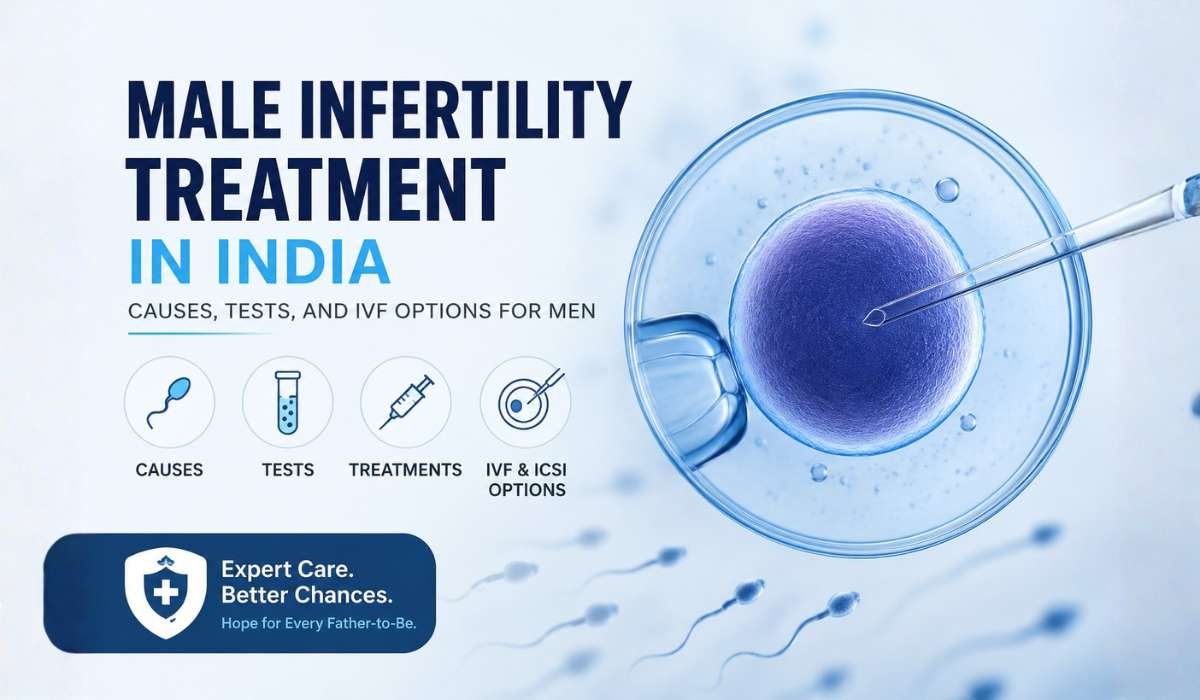
Male infertility treatment in India with IVF and ICSI procedure illustration

Male Infertility Treatment in India: Causes, Tests, and IVF Options for Men

Medically Reviewed by Dr. Jaideep Malhotra | Director ART, Rainbow IVF, Agra  | Last Reviewed: May 2026

Introduction

When a couple struggles to conceive, the focus almost always falls on the woman. Tests are booked for her. Appointments are made for her. The emotional weight lands on her.

But medical data tells a different story.

Male infertility is responsible for approximately 40 to 50 percent of all infertility cases in India. In another 20 percent of cases, both male and female factors are present together. This means in nearly 7 out of 10 couples facing fertility challenges, the male partner plays a role.

In this guide, we explain the causes of male infertility, the tests used to identify the problem, and the treatment options available — including how advanced IVF and ICSI at Rainbow IVF Agra help men with even severe sperm problems become fathers.

What Is Male Infertility?

Male infertility means a man’s sperm cannot fertilize a woman’s egg under normal circumstances. This can happen due to problems with sperm production, sperm movement, sperm shape, or sperm delivery.

The condition is more common than most people realize. In India, it is significantly underdiagnosed because many men avoid getting tested due to social stigma and the incorrect belief that infertility is always a woman’s problem.

Male infertility is a medical condition — not a reflection of masculinity. It is treatable in most cases with the right diagnosis and approach.

Common Causes of Male Infertility in India

1. Low Sperm Count (Oligospermia)

A normal sperm count is 15 million sperm per milliliter of semen or more. When the count falls below this, it is called oligospermia. Low sperm count reduces the chance that even one sperm will reach and fertilize the egg.

Common causes include hormonal imbalances, varicocele (enlarged veins in the scrotum), infections, and lifestyle factors such as heat exposure, alcohol use, and smoking.

2. Zero Sperm Count (Azoospermia)

Azoospermia means no sperm are found in the semen at all. It affects approximately 1 percent of all men and up to 10 to 15 percent of infertile men. There are two types:

  • Obstructive azoospermia: Sperm are produced normally but cannot exit due to a blockage in the reproductive tract. This is treatable through surgical sperm retrieval.
  • Non-obstructive azoospermia: The testicles produce little or no sperm. Treatment requires a more detailed evaluation and in some cases, microscopic sperm retrieval (micro-TESE).

3. Poor Sperm Motility (Asthenospermia)

Motility refers to how well sperm can swim. Even if the sperm count is normal, if sperm cannot swim effectively, they cannot reach the egg. This condition is called asthenospermia.

Progressive motility — meaning sperm moving in a forward direction — needs to be at least 32 percent for normal fertility.

4. Abnormal Sperm Shape (Teratospermia)

Sperm shape (morphology) affects the sperm’s ability to penetrate and fertilize an egg. When more than 96 percent of sperm have abnormal shape, the condition is called teratospermia.

5. Sperm DNA Fragmentation

Even when sperm look normal under a microscope, they can carry damaged DNA. High sperm DNA fragmentation is linked to recurrent IVF failure, poor embryo quality, and early pregnancy loss. This test is not done routinely at all clinics but is essential for couples with unexplained infertility or repeated IVF failures.

At Rainbow IVF, Agra, we include sperm DNA fragmentation testing as part of our advanced male fertility evaluation.

6. Varicocele

Varicocele is the enlargement of veins inside the scrotum. It is the most common correctable cause of male infertility, found in approximately 40 percent of infertile men. Varicocele raises scrotal temperature and impairs sperm production. Surgical repair (varicocelectomy) can significantly improve sperm parameters in many men.

7. Hormonal Causes

Low testosterone, high prolactin, or problems with FSH and LH can all disrupt sperm production. These are identified through a simple hormone blood test.

Tests Used to Diagnose Male Infertility

Getting tested is the first and most important step. Here are the key tests your doctor will recommend:

Semen Analysis is always the first test. It measures sperm count, motility, morphology, volume, and pH. It should be done at a certified laboratory after 2 to 5 days of abstinence.

Hormone Profile includes FSH, LH, testosterone, prolactin, and thyroid hormones. These help identify whether the problem is in the testicles or in the hormone signaling from the brain.

Scrotal Ultrasound helps detect varicocele, blockages, or abnormalities in the testicles and epididymis that may not be felt during physical examination.

Sperm DNA Fragmentation Test measures the percentage of sperm with damaged DNA. This is recommended for couples with unexplained infertility, poor embryo quality, or recurrent pregnancy loss.

Genetic Testing including karyotype analysis and Y-chromosome microdeletion testing is recommended for men with very low sperm counts or azoospermia. Some genetic causes of infertility can be passed on to children, making this test important before treatment.

Treatment Options for Male Infertility

Lifestyle Modifications

For mild cases, improving lifestyle factors can meaningfully improve sperm quality within 3 months (the time it takes for new sperm to develop). Key changes include:

  • Avoiding tight underwear and hot baths that raise scrotal temperature
  • Quitting smoking and reducing alcohol consumption
  • Maintaining a healthy BMI — obesity is directly linked to low testosterone and poor sperm quality
  • Reducing stress through regular exercise and adequate sleep
  • Taking antioxidant supplements like CoQ10, Vitamin C, Vitamin E, and zinc under medical guidance

Medical Treatment

Hormonal treatments can help men with low testosterone or elevated prolactin. Infections such as epididymitis or prostatitis that affect sperm quality are treated with appropriate antibiotics.

Surgical Treatment

Varicocelectomy is the surgical repair of varicocele. It is a day procedure and can significantly improve sperm count and motility in eligible men.

TESA (Testicular Sperm Aspiration) and PESA (Percutaneous Epididymal Sperm Aspiration) are minimally invasive procedures to retrieve sperm directly from the testicle or epididymis. These are used for men with obstructive azoospermia and are performed on the same day as the IVF egg retrieval procedure.

Micro-TESE (Microsurgical Testicular Sperm Extraction) is a more advanced surgical procedure for men with non-obstructive azoospermia. Using a high-powered operating microscope, the surgeon identifies and retrieves rare pockets of sperm production within the testicle.

How ICSI at Rainbow IVF Helps Men with Severe Sperm Problems

For men with very low sperm count, poor motility, abnormal morphology, or sperm retrieved surgically, ICSI (Intracytoplasmic Sperm Injection) is the treatment of choice.

In ICSI, a single healthy sperm is selected under a powerful microscope and injected directly into the egg. This bypasses all the natural barriers that sperm would otherwise need to overcome.

ICSI is performed as part of the IVF process. The woman undergoes ovarian stimulation and egg retrieval as in standard IVF. The key difference is in how fertilization happens — one sperm, one egg, direct injection.

At Rainbow IVF Agra, we use AI-assisted sperm selection technology to identify the best quality sperm for ICSI. This advanced approach helps improve fertilization rates and embryo quality, particularly for men with DNA fragmentation or severe morphology issues.

Related reading: ICSI treatment at Rainbow IVF | Complete Guide to IVF Treatment in India

When Should a Man Get Tested?

Do not wait a year if any of the following apply:

  • You have had a previous infection such as mumps, sexually transmitted disease, or epididymitis
  • You have had any surgery in the groin or scrotal area
  • You have known varicocele
  • Your partner is 35 years or older (time is more critical)
  • You have a history of undescended testicles
  • You have low libido or sexual dysfunction

At Rainbow IVF, we recommend that both partners are evaluated together from the first consultation. This saves time, reduces cost, and ensures the treatment plan addresses the real cause rather than treating only one partner.

At Rainbow IVF Agra: Our Approach to Male Infertility

We see many couples who have spent months — sometimes years — treating the woman without anyone properly evaluating the male partner. A simple semen analysis at the start could have changed their entire treatment journey.

Our male infertility evaluation includes semen analysis, hormone profile, scrotal ultrasound, and sperm DNA fragmentation testing as a standard package. For men with azoospermia, we coordinate TESA or micro-TESE with our IVF cycle so that sperm retrieval and egg retrieval happen on the same day, maximizing efficiency and reducing the emotional burden on the couple.

Our embryology team has extensive experience with ICSI using surgically retrieved sperm, and our success rates with this approach are consistently strong.

Frequently Asked Questions

Can a man with zero sperm count become a father?

Yes, in many cases. Men with obstructive azoospermia have a high chance of successful sperm retrieval through TESA or PESA. Men with non-obstructive azoospermia may still have small pockets of sperm production that can be found through micro-TESE. Even a single sperm retrieved surgically can be used in ICSI to fertilize an egg.

Does male infertility mean low testosterone?

Not always. Many men with normal testosterone levels have low sperm count or poor sperm quality. Testosterone and sperm production are related but not the same thing. A semen analysis and hormone panel together give a complete picture.

Can sperm quality improve with treatment?

Yes. Sperm take approximately 74 days to develop. This means lifestyle changes, supplements, and medical treatment need at least 3 months to show improvement in semen analysis results.

Is the semen analysis result permanent?

No. Sperm parameters fluctuate. Illness, fever, stress, and lifestyle factors all affect results. If an initial result is abnormal, a repeat test after 4 to 6 weeks is recommended before making treatment decisions.

How long does ICSI take and is it painful for men?

The TESA or PESA procedure for sperm retrieval takes 15 to 20 minutes under local anesthesia. It is a day procedure with minimal discomfort. Most men return to normal activity the next day.

Is male infertility treatment covered by insurance in India?

Most health insurance policies in India do not cover IVF or fertility treatment. However, some newer corporate group policies are beginning to include fertility benefits. We recommend checking with your insurance provider. At Rainbow IVF, we offer flexible payment options to make treatment accessible.

Conclusion

Male infertility is common, underdiagnosed, and in most cases treatable. The first step is simply getting tested — a semen analysis that takes 30 minutes and provides answers that can change the entire direction of your fertility treatment.

If you or your partner has been trying to conceive without success, do not assume the problem lies with only one of you. A complete evaluation of both partners at the same time is the most effective and efficient approach.

Book a consultation at Rainbow IVF Agra today. Our specialists will evaluate both partners together, identify the exact cause, and recommend the most appropriate treatment — whether that is lifestyle changes, medical management, surgery, IUI, ICSI, or IVF.

📞 +91-562-260-0537 | +91-7060301888 📍 Rainbow IVF, 4th Floor, Ujala Cygnus Rainbow Hospital, NH-19, Sikandra, Agra

Related articles on our website: