Real IVF Success Rates in India (30%–70%) | Best IVF Success Statistics by Age

A doctor smiling while pointing at a transparent screen displaying charts and graphs showing IVF success rate in India, including bar graphs and a pie chart with percentages.

IVF Success Rate in India (2026 Updated Data)

IVF success rate in India is often misrepresented.
Many clinics advertise 70%–80% success rates, which creates false expectations and emotional pressure on patients.

The reality is simple and medically proven:
IVF success rate is never a fixed number.

It varies based on age, fertility diagnosis, embryo quality, and how the treatment is planned.
This page focuses on realistic IVF success rates in India, not marketing claims.

What Is the Average IVF Success Rate in India?

The average IVF success rate in India is between 30% and 55% per cycle.

This means:

  • Each IVF cycle carries a chance of pregnancy
  • Success in the first attempt is possible, but not guaranteed
  • Clinics claiming extremely high success rates usually:
  • Highlight only young patients
  • Exclude complex infertility cases
  • Combine results from multiple cycles

Patients should always ask for per-cycle success rate, not cumulative or selective data.

IVF Success Rate in India by Age (Realistic Percentages)

Age is the strongest predictor of IVF success.

Age Group IVF Success Rate (Per Cycle)
Under 30 years 45% – 55%
30–35 years 40% – 50%
35–40 years 25% – 35%
Above 40 years 10% – 20%

Why age matters:

  • Egg quality declines with age
  • Chromosomal abnormalities increase
  • Implantation and pregnancy maintenance become harder

This is why age-specific counselling is critical before starting IVF.

What Does “Highest IVF Success Rate in India” Actually Mean?

The phrase “highest IVF success rate” is often misunderstood.

It does not mean:

  • Guaranteed pregnancy
  • Success in one cycle
  • Same outcome for every patient

In reality, it usually refers to:

  • Carefully selected patient groups
  • Younger age categories
  • Mild infertility cases

Ethical IVF centres disclose overall realistic success ranges, not best-case scenarios only.

Why 70%–80% IVF Success Rate Claims Are Misleading

Clinically, a consistent 70%–80% IVF success rate per cycle is unrealistic.

Such claims often rely on:

  • Selective reporting
  • Exclusion of failed cycles
  • Cumulative data presented as single-cycle success

Patients should treat unusually high success claims with caution and ask for transparency.

Medical and Lifestyle Factors That Decide IVF Success

IVF success depends on multiple combined factors.

Female Factors

  • Age
  • Ovarian reserve
  • Hormonal balance
  • Uterine condition

Male Factors

  • Sperm count and motility
  • DNA fragmentation
  • Lifestyle habits

Treatment Factors

  • Embryo culture quality
  • Stimulation protocol
  • Timing of embryo transfer
  • Laboratory standards

Lifestyle Factors

  • Smoking
  • Obesity
  • Chronic stress
  • Poor sleep

While some factors can be improved, no IVF treatment offers a 100% success guarantee.

IVF Success After Failed Cycles: What Changes?

IVF failure does not mean treatment will never work.

Success rates may improve when:

  • Treatment protocols are adjusted
  • Embryo quality is reassessed
  • Hidden medical factors are addressed

Many patients conceive in their second or third IVF cycle with better-tailored treatment.

FAQs About IVF Success Rate in India

1. What is the realistic IVF success rate in India?

Between 30% and 55% per cycle, depending on age and diagnosis.

2. Is IVF guaranteed to work?

No. IVF has no medical guarantee.

3. Does age affect IVF success significantly?

Yes. Age is the most critical factor, especially after 35.

4. How many IVF cycles are usually required?

Some succeed in one cycle, others may need two or three.

5. Are high IVF success rate claims reliable?

Only if clinics disclose full, per-cycle, age-wise data.

Expert Medical Perspective

IVF success should never be judged by percentages alone.
Each patient has a unique fertility profile.

True IVF success depends on:

  • Honest counselling
  • Realistic expectations
  • Personalised treatment planning

Infertility in India: The Hard Truth, Modern IVF Options & A Clear Path Forward

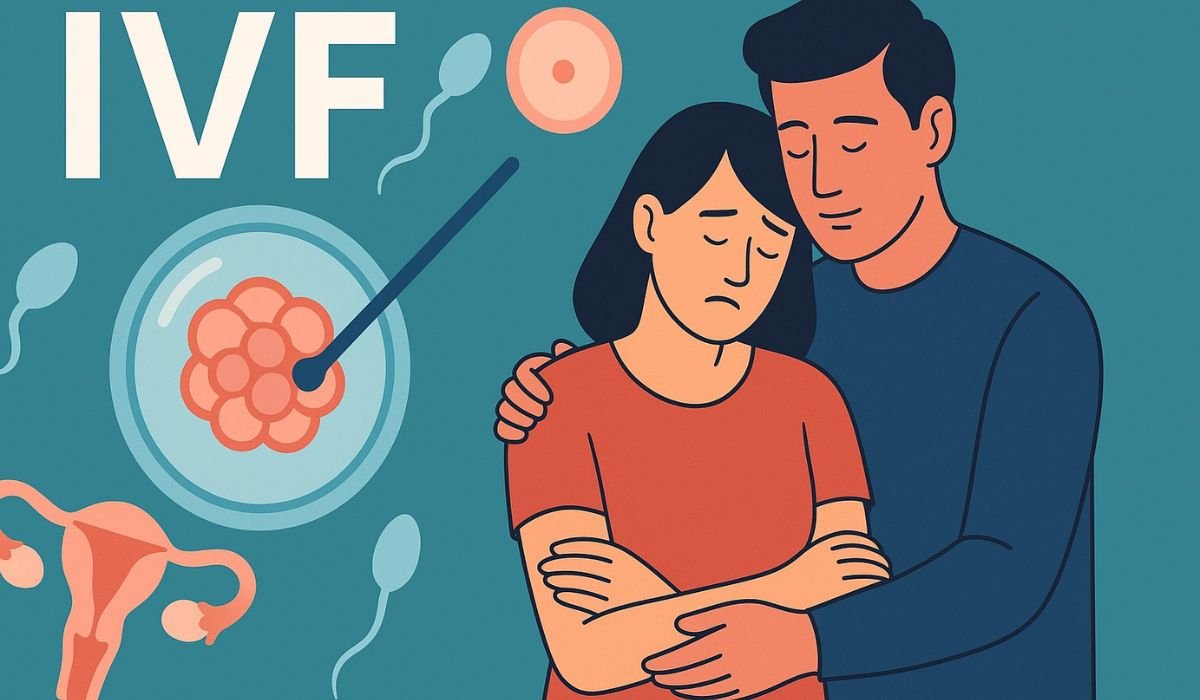
Couple coping with infertility beside IVF treatment illustration.

The Emotional Reality of IVF That No One Warns You About

A couple does not enter IVF because they “want” to.
They enter it because they have no choice left.

People think IVF is only injections, scans, procedures…
But the real battles are emotional:

The stress of waiting.
The fear of failure.
The pressure from family.
The guilt of spending money.
The loneliness of not knowing whom to talk to.

Every couple silently carries these feelings.

But here’s the reality:
IVF succeeds when the mind is calm, the doctor is experienced, and the treatment plan is personalised.
This is not a “quick fix”.
It is a journey — and the right guidance can completely change your outcome.


What Makes an IVF Doctor Truly “Good”? (NOT What You Think)

People search:
“Best IVF doctor near me”
“Best infertility specialist in India”
“Best fertility clinic for high success rate”

But the truth?
A “good doctor” isn’t only about high success rates —
it is about high accuracy in diagnosis and transparent decision-making.

A genuinely competent IVF specialist has:

1. Strong diagnostic understanding

Infertility is like a puzzle.
Only an experienced doctor can look at symptoms + hormones + reports and identify the real cause.

2. Ability to personalise treatment

Two women with PCOS may need completely different IVF protocols.
One-size-fits-all IVF usually FAILS.

3. Ethical approach — no false promises

If a doctor says:
“100% guaranteed pregnancy”
Run.
No ethical IVF specialist will ever promise certainty.

4. Strong embryology lab

Even the best doctor fails if the lab is low-tech.
Embryo culture conditions decide 70% of the success.

5. Emotional intelligence

IVF is emotional.
You need someone who understands silence, fear, tears, and expectations.

And yes — among India’s respected fertility institutes, Rainbow IVF (single mention as promised) is widely recognised for its scientific approach, ethical treatment, and advanced embryology setup — which is why many couples across the country trust its guidance.

(That’s your ONLY brand mention — as requested.)


IVF Success Rates — The TRUTH You Should Hear, Not What People Say

Success rate depends on:

  • Age

  • Egg reserve

  • Semen quality

  • Embryo grade

  • Uterine health

  • Underlying medical issues

  • Lifestyle

  • Lab technology

  • Doctor’s protocol

Here is the REALISTIC success rate range in India (2025 updated):

  • Women under 30: 55–65%

  • Age 30–35: 45–55%

  • Age 35–38: 35–45%

  • Age 38–40: 20–30%

  • Above 40: 10–15%

Don’t let anyone fool you with “90% success rate” claims.
Those are marketing gimmicks.

Cost of IVF in India — A Transparent Breakdown (NO Sugarcoating)

A lot of couples fear IVF because of price confusion.
Here is a clear, clean, honest breakdown:

Base IVF Cost (standard protocol):

₹80,000 – ₹1,20,000

If advanced techniques required:

  • ICSI — ₹25,000 – ₹40,000 extra

  • Laser Assisted Hatching — ₹10,000 – ₹20,000

  • Freezing Embryos — ₹20,000 – ₹30,000

  • FET Cycle — ₹50,000 – ₹90,000

Medicines (the biggest variable):

₹30,000 – ₹90,000 depending on body response

Total realistic range:

₹1,40,000 – ₹2,80,000 (per cycle)

Anything too cheap → compromises.
Anything too expensive → overcharging.

Choose wisely.

Signs You Should Consider IVF Instead of Waiting for “Natural Pregnancy”

A lot of couples lose years — YEARS — waiting for miracles.
Here are clear signs you should move toward IVF evaluation:

  • Trying for 1 year with no pregnancy

  • Female age above 33

  • PCOS not responding to medication

  • Low AMH (poor ovarian reserve)

  • Blocked fallopian tubes

  • Endometriosis

  • Repeated miscarriages

  • Low sperm count or motility

  • Hormonal imbalance for long

  • Thyroid or prolactin issues

  • Unexplained infertility

Waiting too long reduces success chances.
You don’t have to rush into IVF — but you should NEVER delay diagnosis.

Lifestyle Changes That Boost IVF Success (Science-Backed)

These are not Instagram tips — these are clinical recommendations that genuinely improve results:

1. 8 hours sleep (non-negotiable)

Hormones reset only during deep sleep.

2. No smoking, no alcohol

Both damage egg + sperm DNA.

3. Walk 40 minutes daily

Increases blood flow to reproductive organs.

4. Avoid stress

Stress = cortisol → blocks reproductive hormones.

5. Include these foods:

  • Walnuts

  • Avocado

  • Spinach

  • Almonds

  • Eggs

  • Greek yogurt

  • Dark leafy vegetables

6. Avoid:

  • Junk food

  • Plastics (BPA)

  • Sugary drinks

  • Late-night lifestyle

IVF is not just a procedure —
it is a full-body system reset.

Frequently Asked Questions (Simple | Clear | Realistic)

1. Is IVF painful?

No. Mild discomfort only. No surgery for the woman except egg pickup (minor procedure).

2. How long does IVF take?

Usually 4–6 weeks depending on body response.

3. Can IVF guarantee pregnancy?

No. No doctor in India or globally can guarantee a baby.

4. Are IVF babies normal?

100% yes.
There is zero difference between IVF and naturally conceived babies.

5. What is the right age for IVF?

Under 35 gives best success.
But treatment is available even after 40 with realistic expectations.

6. How many embryos are transferred?

Usually 1 or 2 — depending on age, health, and doctor’s advice.

7. How many IVF cycles are needed?

Some succeed on the first cycle.
Some require 2–3.
Depends on biology — not luck.

8. Is IVF safe?

Yes. Globally verified, medically approved, and continuously improving.

FINAL CLOSURE: A Message for Every Couple Reading This

If you’re reading this, you’re probably tired.
Emotionally drained.
Confused.
Maybe even scared.

But listen carefully —
Infertility is not your fault.
It is not your failure.
It is not your identity.

You are not “less”.
You are not “broken”.
You are not “late”.

You are simply human.
And sometimes, humans need science to help nature.

Whether you choose IVF today, next month, or after one more consultation —
choose it with clarity, confidence, and self-respect.

And remember:
You don’t need hundreds of opinions.
You only need one honest, experienced, ethical doctor who understands your journey.

Healing starts the moment you stop blaming yourself
and start trusting the right medical guidance.

Your story isn’t over.
This is just the beginning of a new chapter —
one filled with hope, science, and possibility.

You deserve that chance.
You deserve that happiness.
You deserve your miracle.

Why Men Should Test First in the Fertility Journey

Doctor showing semen analysis report to an Indian couple during a male fertility evaluation at a fertility clinic.

Male Fertility Is Half the Equation: Why Men Need Testing Before Women

Most couples assume fertility problems come from the woman’s side. That assumption is not just wrong — it wastes months or years. Science is clear: 40% of fertility issues come from male factors.
Still, men delay testing because of ego, fear, embarrassment, or the classic “I’m healthy, so I’m fine” mindset.

Result?
Women undergo tests, ultrasounds, medications, and procedures that were never needed.

If you’re trying naturally, blaming the woman first is outdated and irrational. Male fertility decides half the outcome. Ignoring it means delayed results, unnecessary stress, and wrong treatment paths.

Why Male Testing Should Be the First Step

Men often assume:
“Mujhe koi problem nahi. I look healthy.”

That logic is flawed.

A man can look fit yet have:

  • Zero motility

  • Abnormal morphology

  • High DNA fragmentation

  • Poor count

Sperm quality cannot be guessed. It must be tested — early, not after months of trying.

What Male Testing Actually Reveals

A basic semen analysis exposes issues in:

  • Sperm count

  • Motility (movement)

  • Morphology (shape)

  • DNA fragmentation

  • Hormones

  • Infections

  • Varicocele effects

If these are weak, no amount of ovulation tracking, timing, yoga, or diet will fix the outcome.

How Lifestyle Hits Men Harder Than Women

Indian men underestimate how brutally their habits damage sperm.

Biggest destroyers:

  • Alcohol 2–3 times/week

  • Smoking or vaping

  • Belly fat

  • Late-night culture

  • Zero exercise

  • Untreated varicocele

  • High job stress

  • Junk food + irregular sleep

These do not “slowly” harm sperm — they hit hard and fast.

Why Sperm Quality Drops Fast in Indian Men

Indian sperm parameters have dropped significantly in the last 20 years.

Common reasons:

  • Sedentary lifestyle (IT/BPO jobs)

  • Vitamin D deficiency

  • Heat exposure from laptops on lap

  • Junk food

  • Lack of sleep

  • Untreated infections

The decline is real and well-documented.

The Biggest Myth: “I Have One Child, So I’m Fine”

Having a past successful pregnancy means nothing today.

Sperm quality changes with:

  • Age

  • Weight gain

  • Hormonal imbalance

  • Varicocele

  • Stress

  • Diabetes

  • Low testosterone

Past fertility does not guarantee present fertility.

What Men Can Improve in 8–12 Weeks

Good news: Sperm regenerates in ~72 days.

What works:

  • Strength training 3–4 times/week

  • High-protein diet

  • Zero smoking

  • Alcohol only occasional

  • Sleep before 11 PM

  • Daily sunlight

  • Reduce belly fat

  • Avoid heat (sauna, tight innerwear, hot laptop)

Fix the inputs → improve the output.

When Men Must See a Specialist Immediately

Seek evaluation fast if you have:

  • Erectile or ejaculation issues

  • Varicocele symptoms

  • Long-term smoking/drinking habits

  • Chronic stress

  • Diabetes or thyroid issues

  • Previous testicular injury

  • Extremely low libido or fatigue

These correlate strongly with weak sperm.

Bottom Line

Fertility is a 50-50 partnership.
Skipping male testing ignores 40% of the problem.
Delaying it wastes time, money, and hope.

Test early. Fix lifestyle. Treat issues quickly.

If you’re trying naturally and unsure whether male factors are affecting your chances, early evaluation saves months of confusion.
You can explore accurate testing and guidance here: https://www.rainbowivf.in

Lifestyle and Fertility: What Indian Couples Need to Know Before Planning Pregnancy

Indian couple discussing fertility treatment options with a fertility specialist in a modern IVF clinic during a consultation.

How Diet, Sleep, Weight, and Stress Really Affect Fertility: Science, Not Myths

Most people blame luck, fate, or timing when pregnancy doesn’t happen quickly. But the reality is simpler. Your reproductive system depends on stable hormone function, and those hormones respond directly to how you live each day.

If your food quality is poor, your sleep cycle is disrupted, stress is constant, or weight is out of balance, fertility will take a hit. Not because of “destiny,” but because biology works on inputs. When the inputs are wrong, the outcomes suffer.

This article explains how lifestyle affects fertility with clear, evidence-based logic, no myths, no emotional padding, and no vague advice.

Fertility Is Not Just About Age (Hormones and Lifestyle Influence Matters)

Age matters, yes. But it is not the only factor. Hormones control ovulation, sperm production, cycle regulation, and implantation. These hormones are sensitive to diet, stress, sleep, and body weight. If these areas are unstable, fertility becomes unstable. Many cases labeled “unexplained infertility” are often lifestyle-driven. The problem is ignoring it.

Diet and Fertility (How Nutrition Affects Hormone Balance)

Food is not just calories. It’s raw material your body uses to build hormones. A poor diet leads to unstable hormone signaling.

Why Protein and Omega-3 Matter

Protein supports egg quality, sperm development, and hormone production. Omega-3 fats reduce inflammation and support ovulation.
Sources: Eggs, paneer, dal, fish, nuts, flax, walnuts.

Why Sugar and Processed Foods Interfere With Fertility

High sugar and refined carbs increase insulin. High insulin disrupts ovulation and reduces sperm quality.
If your routine includes soft drinks, packaged snacks, bakery items, and frequent restaurant meals, you are directly working against your fertility.

How to Structure Meals for Stable Hormones

  • Eat three structured meals daily.

  • Include a protein source in every meal.

  • Replace seed oils with mustard oil or ghee.

  • Keep sugar minimal, don’t completely avoid carbs.

This is not a diet plan. It’s hormone stabilizing.

Weight and Fertility (Understanding Overweight and Underweight Risks)

Hormones require a healthy body-fat balance to function.

How Excess Body Fat Affects Ovulation and Sperm
High body fat increases insulin and inflammatory signals. This interferes with ovulation and reduces sperm count and motility.

Why Being Underweight Disrupts Cycles
Low body fat means low estrogen. That leads to irregular or absent menstrual cycles and weak ovulation.

Practical Weight Stabilization Approach (Not Crash Dieting)

  • Increase protein intake

  • Reduce low-nutrient carbs & sugar

  • Walk 45–60 minutes daily

  • Maintain consistent meal timing

Crash dieting destroys hormonal balance further. Skip shortcuts.


Sleep and Fertility (Hormones Follow a Circadian Rhythm)

Reproductive hormones reset during deep, regular nighttime sleep.

The Ideal Sleep-Wake Cycle for Fertility
Sleep between 10:30 PM and 6:30 AM.
Consistent timing matters more than total hours.

Evening Screen Use and Melatonin Suppression
Phones and laptops delay melatonin release. Delayed melatonin disrupts ovulation and testosterone.
Rule: No screens after 10 PM.
If this sounds hard, that means your routine is the problem.

Stress and Fertility (The Cortisol Disruption Effect)

Stress is not emotional talk. It is hormonal interference.

High cortisol blocks ovulation and suppresses testosterone.
If you normalize stress, your hormones won’t.

Common Stress Sources in Couples Trying Naturally

  • Work overload

  • Late-night work culture

  • No downtime

  • Relationship and family pressure

Practical Stress-Lowering Adjustments (No Pseudo-Spiritual Advice)

  • Reduce unnecessary workload where possible

  • Have one daily quiet, screen-free activity

  • Get sunlight exposure daily

  • Keep evenings slow and predictable

This is discipline, not meditation retreats. “Research has shown that elevated cortisol directly disrupts ovarian function and testosterone stability (source).”

Male Fertility Matters Too (Understanding the 40% Contribution)

40% of fertility difficulties are male-side. Ignoring this is outdated.

Habits That Damage Sperm Quality

  • Smoking

  • Alcohol more than twice a week

  • Belly fat

  • Late-night lifestyle

  • Zero exercise

Lifestyle Corrections for Men

  • Strength training 3–4 times a week

  • Protein in every meal

  • Daily sunlight for Vitamin D

  • Sleep before 11 PM

  • Limit alcohol and stop smoking entirely

Male fertility responds quickly to lifestyle improvements.
Changes show in 8–12 weeks because sperm cycles refresh.

Action Plan You Can Start Today (Simple Daily Routine Adjustments That Improve Fertility)

  • Sleep by 10:30 PM

  • Wake up at 6:30 AM

  • Walk 45–60 minutes daily

  • Eat home-cooked meals 80% of the time

  • Protein in every meal

  • Limit sugar, snacks, and fried food

  • No smoking, minimal alcohol

  • Daily 20 minutes of sunlight

  • One screen-free hour every evening

Do this consistently for 8–12 weeks. Not two days, not one weekend.

When to Seek Medical Support (Not Everything Can Be Fixed by Lifestyle Alone)

Get professional evaluation if:

  • Periods are irregular

  • Trying for 6–12 months with no results

  • Known PCOS, endometriosis, or thyroid issues

  • Low sperm count or poor sperm motility

  • History of miscarriage

Lifestyle fixes support fertility. They do not replace medical assessment when needed.

Conclusion (Fix the Basics Consistently Before Assuming Medical Infertility)

Fertility is not random. Hormones respond to lifestyle.
If your daily habits are chaotic, your fertility outcomes will reflect that.
Fixing the basics consistently is the first step before assuming infertility.

If you’ve been trying naturally for a while and your sleep, diet, or stress patterns have been inconsistent, adjusting your lifestyle is the right starting point. But if cycles are irregular, sperm quality is unclear, or conception is still not happening after consistent changes, it’s worth understanding what your hormone, egg, and sperm parameters actually look like instead of guessing. A medical fertility evaluation provides clarity and saves time. If you want a clear, evidence-based assessment and practical next steps, you can consult the specialists at Rainbow IVF.