How Do Fertility Specialists Identify the Cause of Infertility?

Fertility specialist explaining infertility diagnosis process to a couple in a clinic

How Do Fertility Specialists Identify the Cause of Infertility? A Step-by-Step Medical Approach

For couples navigating the challenges of infertility, the journey often begins with a search for answers. A common misconception is that infertility can be diagnosed with one or two tests.

In reality, infertility is a symptom of an underlying condition, and identifying it requires a systematic, collaborative diagnostic process. The primary goal of this investigation is to build a complete clinical picture for both partners, forming the rational, evidence-based foundation for any treatment plan.

This article outlines the standard medical approach, emphasizing clinical reasoning and the shared nature of the evaluation.

The Foundational Step: A Detailed Medical and Reproductive History

Before any test is ordered, the most powerful diagnostic tool is a comprehensive conversation. A fertility specialist typically dedicates significant time to understanding the complete medical, surgical, and reproductive history of both partners.

For both individuals, this involves discussing general health: chronic conditions like diabetes or thyroid disorders, current medications, lifestyle factors (such as smoking, alcohol consumption, BMI, and occupational exposures), and any history of surgeries.

For the female partner, the history delves deeper into menstrual cycle patterns, any past pregnancies, and symptoms like pelvic pain, which may point to conditions like endometriosis.

For the male partner, key questions include childhood illnesses, history of testicular injury or surgery, and sexual function.

Why this matters: This history is not a formality. It guides the entire diagnostic pathway, helping the specialist prioritize certain tests and rule out others from the outset.

The Guiding Principle: Evaluating the Couple as a Unit

Infertility is a shared medical concern. Approximately, one-third of cases are attributed to female factors, one-third to male factors, and one-third to a combination or unexplained causes. Therefore, evaluation of both partners is initiated simultaneously.

This approach is efficient, reduces unnecessary stress on one individual, and most accurately reflects the biological reality of conception. Often, multiple subtle factors from both partners combine to affect fertility.

Female Fertility Assessment: A Multi-Faceted Evaluation

The female reproductive system requires the synchronized function of ovulation, fallopian tubes, and the uterus. The assessment investigates each component logically.

1. Ovulation and Hormonal Assessment:

The release of a mature egg (ovulation) is fundamental. Specialists assess this through:

  • Menstrual History: Regular cycles often suggest ovulation.

  • Serum Progesterone Test: A blood test timed about 7 days before the expected period measures progesterone, a hormone that rises after ovulation. This is a key confirmatory test.

  • Hormone Profile: Blood tests help rule out disorders like PCOS or thyroid dysfunction that can disrupt ovulation.

What this tells the doctor: These tests confirm whether ovulation is occurring and check for common endocrine imbalances that are often treatable with medication.

2. Ovarian Reserve Testing:

This evaluates the quantitative potential of the ovaries—essentially, the egg supply. It is particularly informative for women over 35. No single test is perfect; results are interpreted together:

  • Anti-Müllerian Hormone (AMH): A blood test reflecting the number of small follicles.

  • Day 3 FSH and Estradiol: Blood tests that can indicate diminished reserve.

  • Antral Follicle Count (AFC): An ultrasound scan to count small follicles.

What patients should know: These tests indicate quantity, not necessarily egg quality, which is more closely linked to age. They help in counseling about realistic timelines and treatment options.

3. Uterus and Fallopian Tube Evaluation:

This step checks the anatomy for the embryo. It is important to note that not all patients require every test listed here; the specialist selects based on history and prior findings.

  • Transvaginal Ultrasound: A first-line, non-invasive scan to assess uterine structure, the endometrial lining, and the ovaries.

  • Hysterosalpingography (HSG): A specialized X-ray to check if the fallopian tubes are open and to view the uterine cavity shape.

  • Hysteroscopy: A direct visual examination of the inside of the uterus, often used both for diagnosis and treatment of issues like polyps.

  • Laparoscopy: A surgical procedure used selectively when there is strong suspicion of endometriosis or pelvic adhesions, as it involves anesthesia.

Why this test matters: These investigations identify physical barriers to conception, such as blockages or structural abnormalities inside the uterus, which may require correction.

Male Fertility Assessment: The Semen Analysis

The cornerstone of male fertility evaluation is the semen analysis. It must be performed in a specialized andrology lab following WHO guidelines. The report assesses volume, sperm concentration, motility (movement), and morphology (shape).

Critical clinical reasoning: A single abnormal result does not confirm male infertility. The test is repeated after 2-3 months for confirmation, as sperm production is a continuous cycle.

If abnormalities are persistent, further evaluation by a urologist or male fertility specialist is advised, which may include hormonal tests or a scrotal ultrasound.

When is Advanced Testing Recommended?

The initial work-up identifies a cause in a significant proportion of couples. Advanced testing is considered when:

  • Initial tests are normal (leading towards unexplained infertility).

  • There is a history of recurrent miscarriages.

  • Severe male factor infertility is present.

  • There is a family history of genetic disorders.

Equally important is knowing when testing should stop. A rational, staged approach prevents unnecessary physical, emotional, and financial burden. The principle is to perform investigations that will genuinely alter the clinical management plan.

Understanding Unexplained Infertility

In about 15-30% of couples, all standard tests return normal. This is labelled unexplained infertility. It is a well-defined and accepted diagnosis, not a reflection of inadequate testing. It likely signifies subtle dysfunctions not captured by current tests—perhaps in egg or sperm quality, fertilization, or embryo implantation. This diagnosis directly guides treatment, often moving towards empirical treatments like ovulation induction with timed intercourse, Intrauterine Insemination (IUI), or in vitro fertilization (IVF), which can help overcome these unidentified barriers.

From Diagnosis to Treatment: A Logical Pathway

The purpose of the diagnostic process is to create a personalized, logical treatment map. Treatment is a direct response to the findings.

Treatment recommendations vary depending on age, test findings, and response to earlier interventions.

  • Ovulation Disorders: Often first addressed with oral medications for ovulation induction.

  • Tubal Blockages: May require surgery or, in many cases, progression to IVF, which bypasses the tubes.

  • Uterine Abnormalities: Issues like polyps or fibroids may be corrected via hysteroscopy.

  • Male Factor: Mild cases may be addressed with IUI. Severe cases often require IVF with Intracytoplasmic Sperm Injection (ICSI).

  • Unexplained Infertility: Treatment often follows a stepped approach.

The choice between treatment paths is a medical decision based on the specific diagnosis, female age, and duration of infertility, discussed transparently with the couple.

Conclusion: Clarity as the Basis for Decision-Making

The diagnostic process for infertility is a methodical partnership between the couple and the medical team. It is designed to provide clarity—either in identifying a specific cause or in defining the category of unexplained infertility. This clarity is the essential first step towards making informed, confident decisions. A fertility specialist’s role is to provide this evidence-based guidance, ensuring patients understand the rationale behind each test and how the results shape the logical next steps for their unique situation.

Reviewed by: Fertility Specialist

Medical Disclaimer: This article is intended for informational purposes only and is not a substitute for professional medical advice, diagnosis, or treatment. Always seek the advice of your qualified fertility specialist or other qualified health provider with any questions you may have regarding a medical condition. Do not disregard professional medical advice or delay seeking it because of something you have read here. Treatment outcomes and recommendations vary for each individual and couple.

Failed IVF Treatment: How Doctors Decide the Next Step After an Unsuccessful Cycle

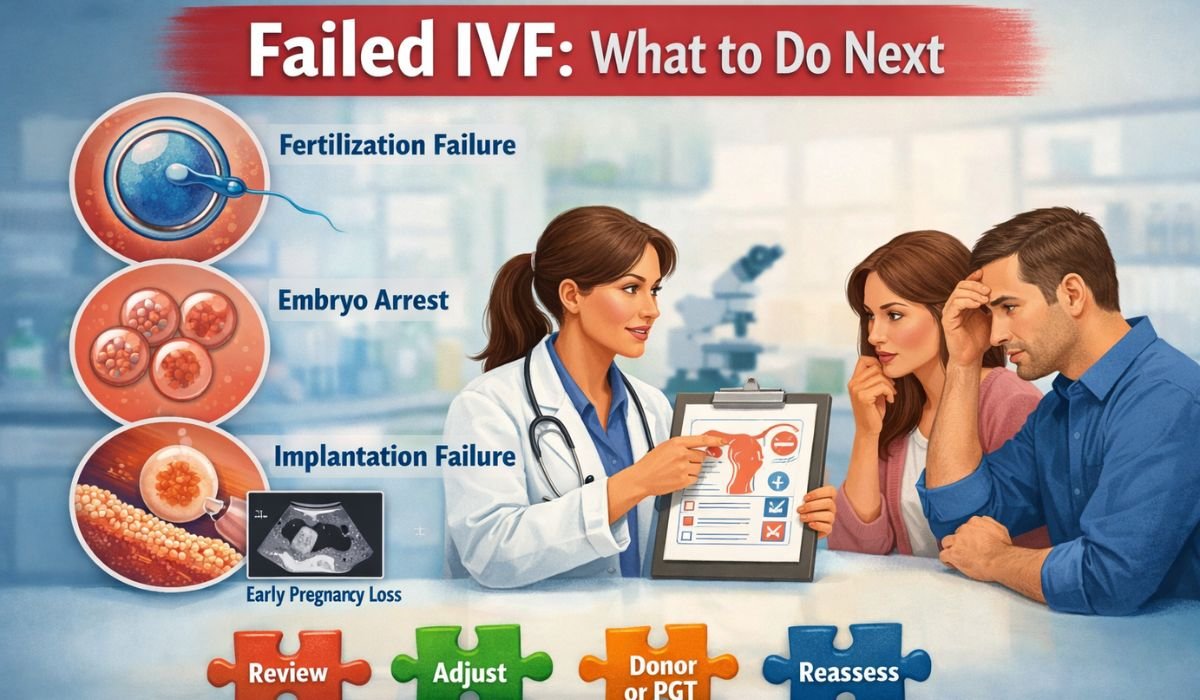
Medical illustration showing IVF failure stages and decision steps after a failed IVF cycle

Failed IVF Cycles: A Medical Decision Guide on What to Do Next (Not Emotional Advice)

A failed IVF cycle means that fertilization, embryo development, implantation, or early pregnancy did not progress as expected. IVF failure is medically common and does not mean future treatment will fail. What does reduce future success is repeating IVF without understanding why the previous cycle failed.

This guide explains what to do after a failed IVF cycle, how doctors classify different failure types, what data actually matters, and when repeating IVF is medically reasonable—using clinical logic rather than reassurance. This is the evaluation-first approach followed at Rainbow IVF: analyze first, change strategy second, and proceed only when the data supports it.

IVF Failure: A Quick Decision Framework

  • No embryos formed → Review egg quality, sperm DNA integrity, and stimulation protocol

  • Good embryos, no implantation → Reassess transfer timing and endometrial preparation

  • Pregnancy occurred but ended early → Investigate chromosomal and uterine factors

  • Multiple failures without explanation → Stop repeating cycles and reassess strategy

This framework prevents emotionally driven decisions and focuses on correct next steps.

1. IVF Failure Is Common — Repeating It Without Analysis Is the Real Risk

IVF success is probabilistic. Even with good embryos and proper transfer, not every cycle results in pregnancy. One failure does not imply poor care or a hopeless prognosis.

The real risk begins when cycles are repeated without changing the underlying variables. Common reasons patients repeat blindly include:

  • No structured post-cycle review

  • Overreliance on “everything looked normal”

  • Pressure to act quickly without clarity

  • Confusing emotional urgency with medical urgency

A failed IVF cycle should be treated as clinical data. If the cause of failure is unclear, repeating treatment becomes guesswork.

2. What Must Be Reviewed After a Failed IVF Cycle

A structured post-failure audit is essential before considering another attempt.

Egg Factors: Quality Over Quantity

High egg numbers do not compensate for poor egg quality. Review:

  • Age-related oocyte competence

  • Response to the stimulation protocol

  • Egg maturity at retrieval

  • Indicators of oxidative or structural stress

Increasing medication doses without protocol change often worsens outcomes.

Sperm Factors: Beyond Basic Semen Analysis

Normal count and motility do not guarantee functional DNA.

  • Fertilization method used (IVF or ICSI)

  • Fertilization rate and abnormal fertilization patterns

  • Indirect indicators of DNA fragmentation

Repeating the same fertilization strategy after failure rarely improves results.

Embryo Development: Identify the Arrest Stage

Understanding where development stopped is critical:

  • Failure to fertilize

  • Arrest before Day 3

  • Poor blastocyst formation (Day 5/6)

Each stage suggests a different biological issue. Treating all failures the same leads to repeated disappointment.

Endometrial Factors: Timing Matters More Than Thickness

Endometrial thickness alone does not ensure implantation.

  • Hormonal preparation protocol

  • Synchronization with embryo age

  • Progesterone exposure timing

Calling the lining “perfect” without timing analysis is misleading.

Transfer Technique and Lab Conditions

Embryo transfer and lab handling significantly influence outcomes.

  • Transfer difficulty or uterine contractions

  • Catheter placement and timing

  • Culture conditions and embryo handling

Patients rarely see these factors, but they matter.

3. Different IVF Failure Types Require Different Solutions

Type 1: Poor or No Embryos

Common causes

  • Declining egg quality

  • Inappropriate stimulation protocol

  • Sperm DNA damage

  • Laboratory stress

What helps

  • Protocol modification (not escalation)

  • Addressing sperm-related factors

  • Egg-quality-focused strategies

What does not

  • Repeating identical cycles

  • Random supplements

  • Attributing repeated failure to luck

Type 2: Good Embryos but No Implantation

This scenario is often oversimplified.

Possible contributors

  • Embryo–endometrium timing mismatch

  • Subtle uterine or hormonal factors

  • Transfer-related issues

Rational next steps

  • Adjusting transfer timing

  • Modifying endometrial preparation

  • Avoiding unnecessary immune or clotting tests without clear indication

Type 3: Pregnancy After IVF but Early Loss

This is biologically different from implantation failure.

Possible contributors

  • Chromosomal abnormalities

  • Luteal phase support issues

  • Undetected uterine conditions

Repeating the same approach without investigating miscarriage causes rarely changes outcomes.

4. Should IVF Be Repeated Immediately?

Repeating IVF can be appropriate—or harmful—depending on the situation.

Repeating IVF Makes Sense When:

  • A likely cause of failure is identified

  • The protocol will change meaningfully

  • Egg or sperm quality is potentially improvable

  • Time is not a critical limiting factor

Repeating IVF Is a Mistake When:

  • Multiple failures occurred with no explanation

  • Egg reserve is critically low and declining

  • The plan is simply “try again”

  • No clear change is planned

More cycles do not automatically increase success if the strategy remains unchanged.

5. Donor Options, PGT, or Taking a Break: Medical Logic Over Emotion

Donor Eggs or Sperm

Medically reasonable when:

  • Egg or sperm quality severely limits embryo development

  • Repeated cycles show intrinsic gamete issues

  • Time and age are major constraints

This represents a change in strategy, not a failure.

Preimplantation Genetic Testing (PGT)

Useful when:

  • There is unexplained recurrent pregnancy loss

  • Maternal age significantly increases chromosomal risk

Less useful when applied routinely without indication or to compensate for poor embryo development.

Taking a Break

Sometimes beneficial to:

  • Reassess physiology

  • Optimize general health

  • Avoid rushed decisions driven by anxiety

6. Critical Questions After a Failed IVF Cycle — With Clear Answers

What exactly failed in my IVF cycle?

IVF failure usually occurs at one of four stages: fertilization failure, embryo development arrest, implantation failure, or early pregnancy loss. Identifying the exact stage is essential because each requires a different medical response.

What usually changes in the next IVF attempt?

A rational next attempt includes at least one strategic change—such as modifying the stimulation protocol, changing fertilization method, adjusting embryo transfer timing, or altering endometrial preparation. Repetition without change rarely improves outcomes.

What data from my last IVF cycle actually matters?

Objective data matters most: egg maturity and quality, fertilization rates, the stage of embryo arrest, endometrial preparation details, and transfer timing and technique. General reassurance is not a substitute for data.

When should IVF be reconsidered instead of repeated?

Reassessment is appropriate after multiple unexplained failures, progressive decline in egg or sperm quality, reuse of the same strategy, or when age and ovarian reserve limit benefit. Reconsidering does not mean stopping—it means changing direction intelligently.

What should not be repeated from the previous cycle?

Avoid repeating ineffective elements: the same stimulation protocol after poor egg quality, the same fertilization method after repeated failure, identical transfer timing after implantation failure, or cycles repeated without lab and transfer review.

7. A Structured, Non-Promotional Approach to Failed IVF

At Rainbow IVF, failed IVF cycles are approached with:

  • Detailed cycle audits rather than repetition

  • Protocol changes based on the identified failure type

  • Honest counselling that includes discussing limits, alternatives, and timing

The focus is informed decision-making, not cycle count.

Frequently Asked Questions About Failed IVF Cycles

What is considered IVF failure?
Failure occurs when embryos do not form, fail to implant, or pregnancy ends in early loss.

How many IVF failures are normal?
One failure is common. Repeated failures require deeper clinical evaluation.

Should IVF be repeated immediately after failure?
Only if a probable cause is identified and the treatment strategy is modified.

Can good embryos still fail to implant?
Yes. Implantation depends on embryo quality, endometrial timing, and transfer technique.

When should donor options be considered?
When repeated cycles show poor embryo development due to egg or sperm factors.

Final Takeaway

A failed IVF cycle is not the end. Repeating it without analysis often is.
The correct response is not urgency or optimism, but clarity—understanding what failed, what will change, and whether the next step is medically justified.

This content is for educational purposes and does not replace individualized medical consultation.

IVF Failed Once or Twice – Doctor Review

IVF failed once or twice Indian doctor reviewing reports before next cycle

IVF Failed Once or Twice? What Doctors Check Before Starting the Next Cycle

By Prof. Dr. Jaideep Malhotra
Director & IVF Specialist – Rainbow IVF

If your IVF cycle has failed once or twice, the most common mistake is rushing into the next cycle without understanding what went wrong.

IVF failure is rarely random. In most cases, something specific was missed, underestimated, or repeated without correction. Repeating the same approach without review often leads to the same result.

Experienced IVF doctors do not simply repeat cycles. They carefully review hormonal preparation, embryo quality, uterine readiness, male factors, and timing before planning the next attempt.

Below is a clear explanation of what doctors medically check before starting the next IVF cycle.

1. Was Hormonal Preparation Truly Optimal?

“Normal” blood reports do not always mean correct preparation.

Doctors reassess:

  • FSH, LH, and AMH patterns, not just single values
  • Thyroid and prolactin levels at the time of embryo transfer
  • Progesterone timing and dosage (one of the most common errors)

Clear fact:
If progesterone is started too early or too late, even a good embryo will fail to implant.

2. Embryo Quality vs Laboratory Quality

Being told “the embryo was good” is not enough.

Doctors review:

  • Whether Day-3 or Day-5 embryo transfer was the right decision
  • Embryology lab conditions (temperature stability, culture media)
  • How embryos were handled during transfer

Hard truth:
The same eggs and sperm can give very different outcomes in different labs.
Lab quality matters as much as embryo quality.

3. Was the Uterus Truly Ready for Implantation?

Endometrial thickness alone does not guarantee success.

Doctors check:

  • Endometrial pattern, not just thickness
  • Blood flow to the uterus
  • Polyps, fibroids, adhesions, or subtle uterine issues
  • Whether embryo transfer was technically easy or difficult

Reality:
If the uterus is not receptive, blaming the embryo is incorrect.

4. Was the Male Factor Properly Re-Evaluated?

This is one of the most overlooked causes of IVF failure.

Doctors reassess:

  • Sperm DNA fragmentation
  • Lifestyle damage (smoking, heat exposure, stress)
  • Whether IVF was sufficient or ICSI was medically required

Important truth:
A “normal semen analysis” does not guarantee healthy sperm DNA.
Poor DNA quality is a common reason for repeated IVF failure.

5. Should the Same Stimulation Protocol Be Repeated?

Repeating the same injections without review is a warning sign.

Doctors evaluate:

  • Egg quality, not just egg count
  • Whether over-stimulation harmed egg health
  • If a milder stimulation approach would be more effective

Straight fact:
More injections do not automatically mean better results.

6. Was Embryo Transfer Timing Accurate?

Implantation occurs within a very narrow window.

Doctors review:

  • Whether the transfer day was chosen correctly
  • Synchronization between embryo age and uterine readiness
  • If frozen embryo transfer would allow better timing control

Clinical reality:
A timing mismatch of even 12–24 hours can cause IVF failure.

7. Immune or Blood-Clotting Factors (Only When Indicated)

Not every patient needs advanced testing.

Doctors consider these only if:

  • There is repeated implantation failure
  • Autoimmune disease is suspected
  • There is a clinical reason to test for clotting disorders

Warning:
Empirical immune treatment without diagnosis is poor medical practice.

8. Physical and Mental Burnout Is a Medical Factor

This is not emotional counselling—it is clinical reality.

Doctors observe:

  • Sleep disturbances and weight changes
  • Poor response to hormones
  • Difficulty following treatment protocols

Truth:
Sometimes taking a short medical pause improves the next cycle outcome.

9. When Strategy Must Change, Not Just the Cycle

After IVF failure, experienced doctors may:

  • Switch to frozen embryo transfer
  • Correct male factor aggressively
  • Recommend genetic testing only when clearly indicated

Key rule:
If nothing changes, results will not change.

Common Myths Patients Must Stop Believing

  • “My body rejected the embryo” – incorrect
  • “One failure means IVF will never work for me” – false
  • “More cycles automatically increase success” – dangerous thinking

IVF is a medical process, not a gamble.

Final Message

IVF failure is not the end—but repeating cycles blindly is a medical mistake.

Good IVF doctors:

  • Do not promise guarantees
  • Identify what went wrong
  • Correct problems before the next attempt

If your IVF has failed once or twice, the answer is not “try again quickly.”

The correct step is to understand what was missed—and fix it properly.

FAQs

1. What should be done if IVF failed once or twice?

If IVF failed once or twice, the next step should not be an immediate repeat cycle. Doctors first review hormones, embryo quality, uterine readiness, transfer timing, and male factors to identify what went wrong before planning the next attempt.

2. Is it normal for IVF to fail in the first or second attempt?

Yes. IVF failure in the first or second attempt is medically common. Success depends on multiple factors such as egg quality, sperm DNA, lab conditions, and implantation timing. One or two failures do not mean IVF will never work.

3. Can good-quality embryos still fail to implant?

Yes. Even good-quality embryos can fail if the uterine lining is not receptive, progesterone timing is incorrect, or embryo–uterus synchronization is off. Implantation depends on more than embryo appearance alone.

4. Should the same IVF protocol be repeated after a failed cycle?

Not always. Repeating the same protocol without review is a medical risk. Doctors usually reassess stimulation drugs, doses, egg quality, and response before deciding whether the protocol should be changed.

5. Does male factor matter after IVF failure?

Yes. Male factors are often overlooked after the first failure. Sperm DNA fragmentation and lifestyle-related damage can cause repeated IVF failure even when standard semen analysis looks normal.

6. How long should one wait before starting the next IVF cycle after failure?

There is no fixed rule. Some patients can proceed in the next cycle, while others benefit from a short medical pause to correct hormonal imbalance, improve health, or change strategy. The decision should be individualized.

What Is an IVF Witnessing System? Role of RI Witness in IVF

Embryologist using an electronic IVF witnessing system to track laboratory samples

What Is an IVF Witnessing System? How RI Witness Improves IVF Safety

IVF treatment depends on precision. From egg collection to embryo transfer, every step involves sensitive biological samples. Even a small identification error inside the IVF lab can have serious consequences. To reduce this risk, modern IVF clinics use an IVF witnessing system.

An IVF witnessing system is designed to electronically verify and track patient samples, ensuring that eggs, sperm, and embryos are always matched correctly. One of the most widely used technologies for this purpose is the RI Witness system in IVF laboratories.

This blog explains what an IVF witnessing system is, why electronic witnessing matters, and how RI Witness supports safety during IVF treatment.

What Is a Witnessing System in IVF?

A witnessing system in IVF is a safety process used in IVF laboratories to confirm patient identity during every critical lab step. Traditionally, this was done manually by embryologists through visual checks and paperwork.

Manual witnessing works, but it relies completely on human attention. Fatigue, workload, and pressure can increase the chance of error.

An electronic witnessing system in IVF adds a digital layer of verification. It continuously checks that the correct samples are being handled at the right time for the right patient.

In simple words, an IVF witnessing system helps make sure that your treatment remains error-free inside the lab.

Why Is an IVF Witnessing System Important?

IVF treatment involves multiple stages where sample identification is critical, such as:

  • Egg retrieval
  • Sperm processing
  • Fertilization
  • Embryo culture
  • Embryo transfer

Without an electronic system, labs depend only on manual double-checking. While embryologists are highly trained, human error can never be completely eliminated.

An IVF witness system improves safety by:

  • Reducing the risk of sample mix-ups
  • Providing real-time verification inside the lab
  • Creating a clear digital record of each step

This is why many advanced clinics now use electronic witnessing systems as part of standard IVF lab practice.

What Is the RI Witness System in IVF?

The RI Witness System is an advanced electronic witnessing system used in IVF laboratories to track and monitor patient samples automatically.

Each patient is digitally identified, and the system ensures that only the correct samples are handled together. If a mismatch occurs, the system immediately alerts the lab staff.

Because of this continuous monitoring, the RI Witnessing System in IVF acts as a strong safety layer throughout the treatment cycle.

How the RI Witnessing System Works

The RI Witness system works quietly in the background without interfering with IVF procedures.

The general process includes:

  • Assigning a unique digital identity to the patient
  • Linking lab workstations and equipment to the system
  • Verifying samples at each critical stage
  • Triggering alerts if an incorrect sample is detected

This reduces dependence on manual checks and supports embryologists during complex lab work.

Electronic Witnessing System vs Manual Witnessing

Feature Manual Witnessing Electronic Witnessing System
Human dependency Very high Reduced
Risk of error Higher Lower
Real-time alerts No Yes
Traceability Paper-based Digital
Consistency Variable High

An electronic witnessing system in IVF does not replace embryologists. It supports them by minimizing avoidable risks.

Who Benefits From an IVF Witnessing System?

An IVF witnessing system benefits everyone involved in treatment:

  • Patients gain confidence knowing their samples are securely tracked
  • Embryologists experience reduced stress during lab procedures
  • IVF clinics maintain higher safety and quality standards

This is why the RI Witness IVF system is commonly used in IVF labs that prioritize accuracy and patient safety.

Frequently Asked Questions About IVF Witnessing Systems

What is an IVF witnessing system?
An IVF witnessing system is a technology used in IVF labs to electronically track and verify patient samples to prevent mix-ups.

Why is electronic witnessing important in IVF?
Electronic witnessing reduces human error and improves accuracy during IVF lab procedures.

What does RI Witness mean in IVF?
RI Witness refers to an electronic witnessing system that monitors and verifies IVF lab processes in real time.

Is the RI Witness system safe for patients?
Yes. The system does not affect treatment or embryos. It only improves identification and tracking.

Does an IVF witnessing system increase IVF success rates?
It improves safety and accuracy. While it does not directly change biology, it supports better treatment integrity.

Is electronic witnessing mandatory in IVF clinics?
It is not legally mandatory everywhere, but many advanced clinics use it as a best practice.

Conclusion

IVF treatment demands zero compromise on accuracy. An IVF witnessing system exists for one reason only — to protect patients from avoidable lab errors and to maintain absolute integrity at every stage of treatment. Electronic witnessing systems have become a global best practice because they reduce human dependency, improve traceability, and add an extra layer of safety inside the IVF lab.

For patients who value transparency and advanced lab standards, choosing a clinic that follows such safety-first protocols matters. Clinics like Rainbow IVF integrate modern electronic witnessing systems as part of their IVF lab processes, reflecting a clear focus on patient safety, accuracy, and responsible fertility care.

In IVF, technology does not replace expertise — it strengthens it. And when both work together, patients can move forward with greater confidence and peace of mind.

IVF Success Rate in India: Honest Data, Age-Wise Results

IVF success rate in India shown with age-wise percentage data, an IVF lab setup, and an Indian couple reviewing ultrasound results.

IVF Success Rate Guide in India: How to Understand the Numbers

IVF success rate figures can be confusing, especially for patients comparing clinics or treatment options.
Different centres use different terms, calculation methods, and presentation styles, which often leads to misunderstanding.

This guide explains how IVF success rates in India are calculated, interpreted, and commonly misread, so patients can make informed decisions without relying on misleading claims.

What Is IVF Success Rate?

IVF success rate refers to the probability of achieving pregnancy or live birth from an IVF treatment cycle.

However, the term “success” can mean different things, such as:

  • Positive pregnancy test
  • Clinical pregnancy confirmed on ultrasound
  • Live birth

Unless clearly specified, the term “IVF success rate” can be ambiguous.

How IVF Success Rate Is Calculated

IVF success rates are usually calculated in one of the following ways:

Per-Cycle Success Rate

  • Measures success from one IVF cycle
  • Most accurate and transparent method
  • Best for setting realistic expectations

Cumulative Success Rate

  • Combines results from multiple IVF cycles
  • Often appears higher
  • Can be misleading if presented without explanation

Patients should always ask:

“Is this success rate per cycle or cumulative?”

Pregnancy Rate vs Live Birth Rate

These two terms are often confused.

Pregnancy Rate

  • Indicates a confirmed pregnancy
  • Does not guarantee a live birth

Live Birth Rate

  • Measures actual delivery of a baby
  • More meaningful but harder to achieve

Clinics may highlight pregnancy rates because they are usually higher than live birth rates.

Why IVF Success Rates Vary Between Patients

IVF outcomes differ widely because fertility is highly individual.

Success rates vary due to:

  • Age differences
  • Cause of infertility
  • Egg and sperm quality
  • Previous treatment history
  • Response to medications

This is why comparing two patients based only on success percentages is unreliable.

Common Terms Used by IVF Clinics (Explained)

Understanding common terminology helps avoid confusion.

  • Cycle: One complete IVF treatment attempt
  • Embryo Transfer: Placement of embryo into the uterus
  • Implantation Rate: Percentage of embryos that attach to the uterine lining
  • Clinical Pregnancy: Pregnancy confirmed by ultrasound

Without context, these terms can be used selectively to make outcomes look better than they are.

How Patients Should Read IVF Success Rate Claims

When reviewing IVF success rate data, patients should check:

  • Age group included in the data
  • Whether results are per cycle or cumulative
  • Whether failed cycles are included
  • Time period of the data

Transparent success data always includes limitations and context.

Mistakes Patients Make While Comparing IVF Success Rates

Common errors include:

  • Choosing clinics based only on high percentages
  • Ignoring age-specific data
  • Assuming higher cost equals higher success
  • Overlooking diagnosis-specific outcomes

IVF success depends more on case suitability and treatment planning than on advertised numbers.

When IVF Success Rate Numbers Matter — and When They Don’t

Success rates matter when:

  • Comparing treatment approaches
  • Understanding age-related fertility decline
  • Setting realistic expectations

They matter less when:

  • Individual diagnosis is complex
  • Personal medical history is unique
  • Emotional readiness and support are key factors

Numbers should guide decisions, not replace medical judgement.

Important Reality Check for Patients

IVF success rates are population averages, not personal guarantees.
A clinic’s published data cannot predict the outcome of an individual patient with certainty.

Understanding how these numbers work helps patients:

  • Ask better questions
  • Avoid false hope
  • Prepare mentally and emotionally for treatment

Where to Find Real IVF Success Percentages

For realistic IVF success percentages by age and medical context, refer to a detailed, data-focused resource that explains outcomes clearly and transparently.

Final Takeaway

IVF success rate numbers are useful only when understood correctly.
Blindly trusting high percentages can lead to disappointment and poor decision-making.

An informed patient is better equipped to choose the right treatment approach, not just the highest advertised number.

IUI Full Form: What It Means, How the Treatment Works, and Pregnancy Chances

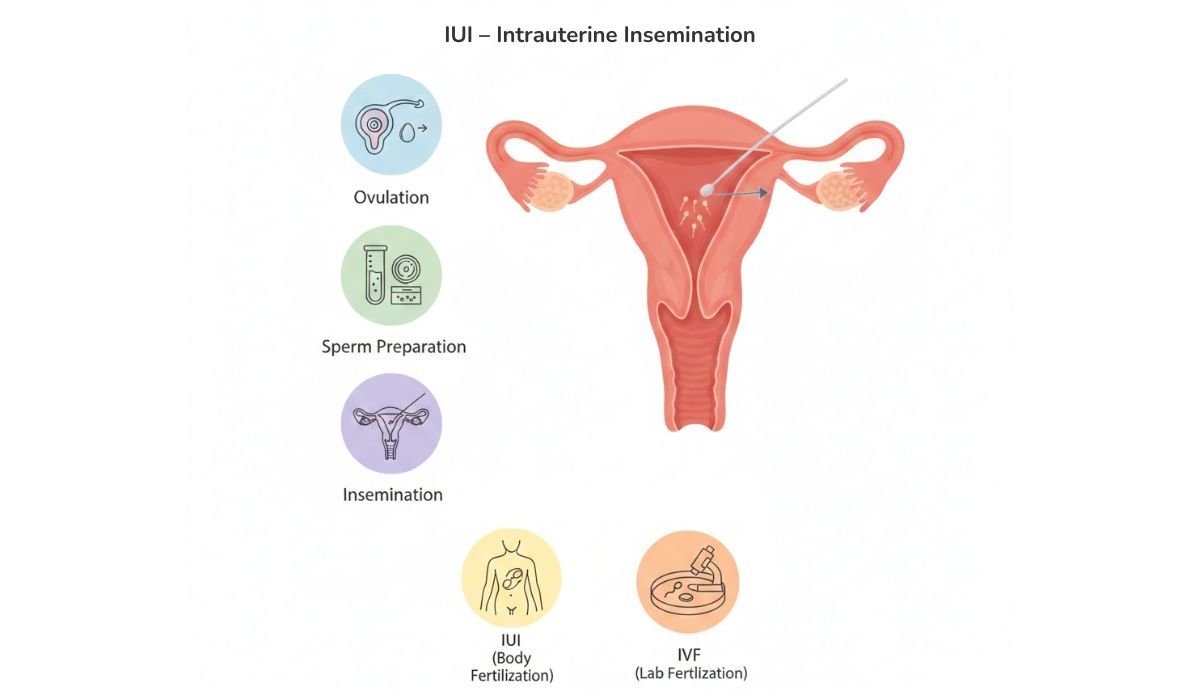
Infographic explaining IUI full form intrauterine insemination procedure, ovulation, sperm preparation, insemination process, and difference between IUI and IVF

IUI Full Form in Medical

IUI full form in medical is Intrauterine Insemination.
It is a fertility treatment in which specially prepared sperm is placed directly inside a woman’s uterus to increase the chances of pregnancy.

IUI is one of the most commonly used and simplest fertility treatments. It is often recommended before moving to advanced procedures like IVF.

What is IUI in Simple Words?

In simple words, IUI means helping sperm reach the egg more easily.

Normally, sperm must travel a long distance to fertilize an egg. In IUI treatment, doctors place healthy sperm directly into the uterus at the right time of ovulation. This improves the chance of natural fertilization.

Why is IUI Done?

IUI is done to improve the chances of pregnancy when natural conception is difficult but still possible.

Doctors may recommend IUI in cases such as:

  • Unexplained infertility
  • Mild male infertility (low sperm count or movement)
  • Ovulation-related problems
  • Cervical mucus issues
  • Use of donor sperm

IUI is considered a first-level fertility treatment.

Who is Suitable for IUI Treatment?

IUI is usually advised when:

  • At least one fallopian tube is open
  • Ovulation is regular or can be controlled with medicines
  • Sperm quality is mildly affected, not severely

It is not suitable in cases of blocked fallopian tubes or severe male infertility.

How Does IUI Treatment Work?

The IUI process generally involves:

  1. Monitoring ovulation
  2. Collecting and preparing sperm
  3. Placing sperm into the uterus using a thin catheter

The procedure is quick and usually completed within a few minutes.

Is IUI Painful?

IUI is mostly painless.

Some women may feel mild discomfort similar to a routine gynecological check-up. Anesthesia is not required, and normal activities can be resumed the same day.

What is the Success Rate of IUI?

The success rate of IUI depends on several factors such as:

  • Age of the woman
  • Cause of infertility
  • Number of IUI cycles attempted

Success rates are generally lower than IVF, but IUI can work well for selected cases, especially in younger women.

How Many IUI Cycles Are Needed?

Doctors usually suggest 3 to 6 IUI cycles before considering other fertility treatments.

If pregnancy does not occur after multiple IUI attempts, further evaluation or advanced treatments may be recommended.

Difference Between IUI and IVF

IUI IVF
Fertilization happens inside the body Fertilization happens in a laboratory
Simple and less invasive More complex procedure
Lower cost Higher cost
First-line treatment Used after IUI fails

Both treatments are chosen based on medical condition and fertility history.

Is IUI Better Than IVF?

IUI is not better or worse than IVF.
It is simply less advanced.

  • IUI is tried first in mild fertility issues
  • IVF is used when IUI is unlikely to work

The right treatment depends on medical evaluation, not preference.

Can Pregnancy Happen in the First IUI Cycle?

Yes, pregnancy can happen in the first IUI cycle.
However, many couples may require more than one attempt.

Patience and proper medical guidance are important.

FAQs About IUI

What does IUI stand for in medical terms?

IUI stands for Intrauterine Insemination.

Is IUI a surgery?

No, IUI is a non-surgical procedure.

Does IUI require bed rest?

No bed rest is required after IUI.

Is IUI safe?

Yes, IUI is considered a safe fertility treatment when done under medical supervision.

Final Words

IUI full form in medical is Intrauterine Insemination, a simple and commonly used fertility treatment. It is often the first step for couples trying assisted conception before moving to advanced options.

Understanding IUI helps patients make informed decisions about fertility treatment.

Luteal Phase: Symptoms, Early Pregnancy Signs & Its Role in IVF Success

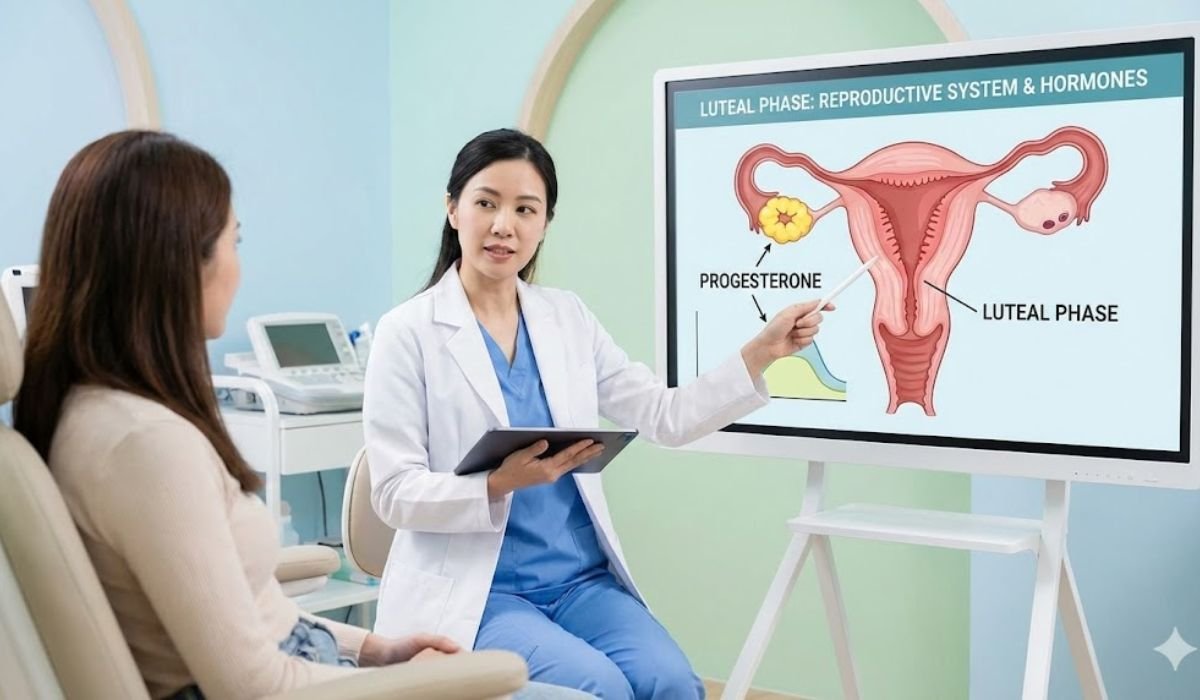
Doctor explaining the luteal phase and progesterone hormones using a reproductive system diagram during a fertility consultation.

Luteal Phase Symptoms & Early Pregnancy Signs (IVF Expert Guide)

By Prof. Dr. Jaideep Malhotra
Director ART, Rainbow IVF & Head of Department of Reproductive Medicine

Quick Medical Summary

The luteal phase begins after ovulation and lasts until the next menstrual period. It is controlled by the hormone progesterone and plays a crucial role in embryo implantation, early pregnancy stability, and IVF success.

What Is the Luteal Phase?

The menstrual cycle has two main phases: the follicular phase (before ovulation) and the luteal phase (after ovulation).

The luteal phase starts immediately after ovulation and continues until menstruation begins. In a healthy cycle, it typically lasts 10 to 14 days.

During this phase, the body produces progesterone, a hormone that prepares the uterine lining (endometrium) to support an implanted embryo. If progesterone levels are low or unstable, the uterine lining cannot sustain implantation, and pregnancy may fail.

The luteal phase is critical because it determines whether implantation and pregnancy can occur naturally or through IVF.

Why the Luteal Phase Matters for Conception & IVF

Whether conception occurs naturally or through Assisted Reproductive Technology (ART), the luteal phase directly influences implantation success.

A healthy luteal phase affects:

  • Embryo implantation
  • Stability of early pregnancy
  • Risk of miscarriage
  • IVF and FET (Frozen Embryo Transfer) outcomes

When the luteal phase is weak, short, or poorly supported, it can result in luteal phase defect (LPD)—a condition where the uterine lining cannot sustain an embryo.

Clinical research shows that 6.6% to 51% of IVF patients experience luteal dysfunction, depending on diagnostic criteria. This makes luteal support one of the most critical components of IVF treatment.

What Causes Luteal Phase Defect (LPD)?

Luteal phase defect occurs when progesterone levels are insufficient or when the luteal phase lasts fewer than 10 days.

Common causes include:

  • Hormonal imbalance
  • PCOS (Polycystic Ovary Syndrome)
  • Thyroid disorders
  • Chronic stress and cortisol imbalance
  • Poor ovulation quality
  • Repeated IVF or IUI failures

Women with untreated LPD may experience failed implantation, early pregnancy loss, or repeated negative IVF cycles.

Luteal Phase Symptoms (Normal Indicators)

Most women experience noticeable physical and emotional changes during the luteal phase due to rising progesterone levels.

Common luteal phase symptoms include:

  • Breast heaviness or tenderness
  • Bloating and water retention
  • Mild abdominal or back cramps
  • Increased appetite or food cravings
  • Mood swings or irritability
  • Fatigue or sleepiness
  • Slight increase in basal body temperature
  • Mild white vaginal discharge

Symptoms vary between individuals and may differ from cycle to cycle.

Luteal Phase Symptoms When Not Pregnant

If pregnancy does not occur, progesterone levels drop sharply and menstruation begins.

Symptoms when not pregnant include:

  • PMS symptoms becoming stronger before bleeding
  • Cramping increasing just before the period
  • Bloating and mood changes
  • Breast tenderness reducing after a few days
  • Fatigue that improves once bleeding starts

These symptoms typically occur for a shorter duration and feel more unstable compared to early pregnancy indicators.

Luteal Phase Pregnancy Symptoms (Early Signs Before a Test)

If conception occurs, progesterone remains high and supports the pregnancy.

Possible early pregnancy signs during the luteal phase include:

  • Implantation bleeding (light brown or pink spotting lasting 24–48 hours)
  • Strong breast tenderness
  • Increased fatigue and sleepiness
  • Increased frequency of urination
  • Reduced or different type of cramping
  • Sustained rise in basal body temperature
  • Creamy white vaginal discharge, without odor or irritation

These symptoms often resemble PMS. Symptoms alone cannot confirm pregnancy. A beta-hCG blood test is the only reliable method.

Luteal Phase Discharge: What Is Normal and What Is Not

Vaginal discharge patterns reflect hormonal changes during the luteal phase.

Normal discharge during luteal phase

  • Thick or creamy texture
  • White or off-white in color
  • No noticeable smell
  • No itching or irritation

Discharge associated with early pregnancy

  • Increased quantity
  • Creamy and persistent
  • No foul odor

Abnormal discharge (requires medical evaluation):

  • Yellow, green, or grey color
  • Foul smell
  • Itching, burning, or pain
  • Cottage-cheese like texture

Such symptoms may indicate infection or hormonal imbalance and should not be ignored.

Luteal Support in IVF Cycles

During IVF cycles, controlled ovarian stimulation suppresses the body’s natural progesterone production. As a result, external progesterone support becomes essential for implantation and early pregnancy stability.

Progesterone supplementation helps:

  • Improve endometrial thickness
  • Enhance implantation probability
  • Reduce early pregnancy loss
  • Maintain hormonal balance until placenta takeover

Progesterone Support Protocol at Rainbow IVF

When progesterone injections are recommended:

  • Very low progesterone levels
  • Severe luteal phase defect
  • Recurrent IVF or FET failures
  • Poor absorption of oral or vaginal progesterone

When progesterone tablets / oral / vaginal gel are used:

  • Routine IVF or FET cycles
  • Mild to moderate progesterone deficiency
  • PCOS or ovulation induction cycles
  • Patients intolerant to injections

If pregnancy is confirmed, progesterone support is continued until 8–10 weeks, when the placenta begins producing sufficient hormones naturally.

How long luteal support is continued at Rainbow IVF

If pregnancy is confirmed, progesterone support is continued up to 8–10 weeks, until the placenta begins producing sufficient hormones naturally.

This ensures embryo stability and reduces the risk of early loss.

When Should You Consult a Fertility Specialist?

Seek evaluation if you experience:

  • Repeated IVF or IUI implantation failures
  • Frequent early miscarriages
  • A luteal phase shorter than 10 days
  • Severe abnormal discharge or irregular cycles
  • Persistent spotting between periods

Ignoring luteal health can result in repeated emotional and financial loss.

Frequently Asked Questions

How long does the luteal phase normally last?

Usually between 10 and 14 days.

Can a weak luteal phase prevent pregnancy?

Yes. It can cause implantation failure or early miscarriage.

Can luteal phase defect be treated?

Yes. Progesterone supplementation and hormonal correction are effective.

How does implantation bleeding look?

Light pink or brown spotting, lasting no more than 1–2 days.

Why is progesterone support mandatory in IVF?

Because natural progesterone production decreases during IVF stimulation, and supplementation protects implantation.

Conclusion

The luteal phase forms the foundation of conception.
When progesterone support is inadequate or the luteal phase is weak, implantation becomes unstable and pregnancy may fail—naturally or during IVF.

Timely diagnosis, proper hormonal support, and scientific progesterone therapy can significantly improve fertility outcomes and reduce emotional stress.

Awareness combined with expert medical support leads to higher chances of pregnancy success.

Real IVF Success Rates in India (30%–70%) | Best IVF Success Statistics by Age

A doctor smiling while pointing at a transparent screen displaying charts and graphs showing IVF success rate in India, including bar graphs and a pie chart with percentages.

IVF Success Rate in India (2026 Updated Data)

IVF success rate in India is often misrepresented.
Many clinics advertise 70%–80% success rates, which creates false expectations and emotional pressure on patients.

The reality is simple and medically proven:
IVF success rate is never a fixed number.

It varies based on age, fertility diagnosis, embryo quality, and how the treatment is planned.
This page focuses on realistic IVF success rates in India, not marketing claims.

What Is the Average IVF Success Rate in India?

The average IVF success rate in India is between 30% and 55% per cycle.

This means:

  • Each IVF cycle carries a chance of pregnancy
  • Success in the first attempt is possible, but not guaranteed
  • Clinics claiming extremely high success rates usually:
  • Highlight only young patients
  • Exclude complex infertility cases
  • Combine results from multiple cycles

Patients should always ask for per-cycle success rate, not cumulative or selective data.

IVF Success Rate in India by Age (Realistic Percentages)

Age is the strongest predictor of IVF success.

Age Group IVF Success Rate (Per Cycle)
Under 30 years 45% – 55%
30–35 years 40% – 50%
35–40 years 25% – 35%
Above 40 years 10% – 20%

Why age matters:

  • Egg quality declines with age
  • Chromosomal abnormalities increase
  • Implantation and pregnancy maintenance become harder

This is why age-specific counselling is critical before starting IVF.

What Does “Highest IVF Success Rate in India” Actually Mean?

The phrase “highest IVF success rate” is often misunderstood.

It does not mean:

  • Guaranteed pregnancy
  • Success in one cycle
  • Same outcome for every patient

In reality, it usually refers to:

  • Carefully selected patient groups
  • Younger age categories
  • Mild infertility cases

Ethical IVF centres disclose overall realistic success ranges, not best-case scenarios only.

Why 70%–80% IVF Success Rate Claims Are Misleading

Clinically, a consistent 70%–80% IVF success rate per cycle is unrealistic.

Such claims often rely on:

  • Selective reporting
  • Exclusion of failed cycles
  • Cumulative data presented as single-cycle success

Patients should treat unusually high success claims with caution and ask for transparency.

Medical and Lifestyle Factors That Decide IVF Success

IVF success depends on multiple combined factors.

Female Factors

  • Age
  • Ovarian reserve
  • Hormonal balance
  • Uterine condition

Male Factors

  • Sperm count and motility
  • DNA fragmentation
  • Lifestyle habits

Treatment Factors

  • Embryo culture quality
  • Stimulation protocol
  • Timing of embryo transfer
  • Laboratory standards

Lifestyle Factors

  • Smoking
  • Obesity
  • Chronic stress
  • Poor sleep

While some factors can be improved, no IVF treatment offers a 100% success guarantee.

IVF Success After Failed Cycles: What Changes?

IVF failure does not mean treatment will never work.

Success rates may improve when:

  • Treatment protocols are adjusted
  • Embryo quality is reassessed
  • Hidden medical factors are addressed

Many patients conceive in their second or third IVF cycle with better-tailored treatment.

FAQs About IVF Success Rate in India

1. What is the realistic IVF success rate in India?

Between 30% and 55% per cycle, depending on age and diagnosis.

2. Is IVF guaranteed to work?

No. IVF has no medical guarantee.

3. Does age affect IVF success significantly?

Yes. Age is the most critical factor, especially after 35.

4. How many IVF cycles are usually required?

Some succeed in one cycle, others may need two or three.

5. Are high IVF success rate claims reliable?

Only if clinics disclose full, per-cycle, age-wise data.

Expert Medical Perspective

IVF success should never be judged by percentages alone.
Each patient has a unique fertility profile.

True IVF success depends on:

  • Honest counselling
  • Realistic expectations
  • Personalised treatment planning

Infertility in India: The Hard Truth, Modern IVF Options & A Clear Path Forward

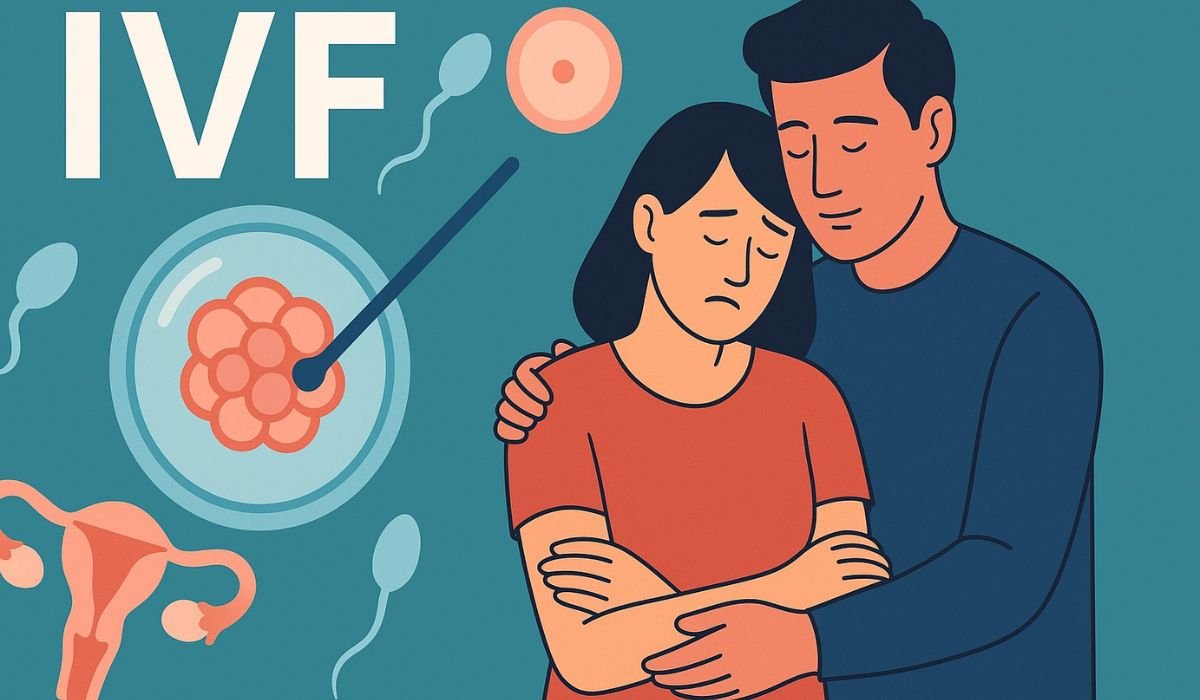
Couple coping with infertility beside IVF treatment illustration.

The Emotional Reality of IVF That No One Warns You About

A couple does not enter IVF because they “want” to.
They enter it because they have no choice left.

People think IVF is only injections, scans, procedures…
But the real battles are emotional:

The stress of waiting.
The fear of failure.
The pressure from family.
The guilt of spending money.
The loneliness of not knowing whom to talk to.

Every couple silently carries these feelings.

But here’s the reality:
IVF succeeds when the mind is calm, the doctor is experienced, and the treatment plan is personalised.
This is not a “quick fix”.
It is a journey — and the right guidance can completely change your outcome.


What Makes an IVF Doctor Truly “Good”? (NOT What You Think)

People search:
“Best IVF doctor near me”
“Best infertility specialist in India”
“Best fertility clinic for high success rate”

But the truth?
A “good doctor” isn’t only about high success rates —
it is about high accuracy in diagnosis and transparent decision-making.

A genuinely competent IVF specialist has:

1. Strong diagnostic understanding

Infertility is like a puzzle.
Only an experienced doctor can look at symptoms + hormones + reports and identify the real cause.

2. Ability to personalise treatment

Two women with PCOS may need completely different IVF protocols.
One-size-fits-all IVF usually FAILS.

3. Ethical approach — no false promises

If a doctor says:
“100% guaranteed pregnancy”
Run.
No ethical IVF specialist will ever promise certainty.

4. Strong embryology lab

Even the best doctor fails if the lab is low-tech.
Embryo culture conditions decide 70% of the success.

5. Emotional intelligence

IVF is emotional.
You need someone who understands silence, fear, tears, and expectations.

And yes — among India’s respected fertility institutes, Rainbow IVF (single mention as promised) is widely recognised for its scientific approach, ethical treatment, and advanced embryology setup — which is why many couples across the country trust its guidance.

(That’s your ONLY brand mention — as requested.)


IVF Success Rates — The TRUTH You Should Hear, Not What People Say

Success rate depends on:

  • Age

  • Egg reserve

  • Semen quality

  • Embryo grade

  • Uterine health

  • Underlying medical issues

  • Lifestyle

  • Lab technology

  • Doctor’s protocol

Here is the REALISTIC success rate range in India (2025 updated):

  • Women under 30: 55–65%

  • Age 30–35: 45–55%

  • Age 35–38: 35–45%

  • Age 38–40: 20–30%

  • Above 40: 10–15%

Don’t let anyone fool you with “90% success rate” claims.
Those are marketing gimmicks.

Cost of IVF in India — A Transparent Breakdown (NO Sugarcoating)

A lot of couples fear IVF because of price confusion.
Here is a clear, clean, honest breakdown:

Base IVF Cost (standard protocol):

₹80,000 – ₹1,20,000

If advanced techniques required:

  • ICSI — ₹25,000 – ₹40,000 extra

  • Laser Assisted Hatching — ₹10,000 – ₹20,000

  • Freezing Embryos — ₹20,000 – ₹30,000

  • FET Cycle — ₹50,000 – ₹90,000

Medicines (the biggest variable):

₹30,000 – ₹90,000 depending on body response

Total realistic range:

₹1,40,000 – ₹2,80,000 (per cycle)

Anything too cheap → compromises.
Anything too expensive → overcharging.

Choose wisely.

Signs You Should Consider IVF Instead of Waiting for “Natural Pregnancy”

A lot of couples lose years — YEARS — waiting for miracles.
Here are clear signs you should move toward IVF evaluation:

  • Trying for 1 year with no pregnancy

  • Female age above 33

  • PCOS not responding to medication

  • Low AMH (poor ovarian reserve)

  • Blocked fallopian tubes

  • Endometriosis

  • Repeated miscarriages

  • Low sperm count or motility

  • Hormonal imbalance for long

  • Thyroid or prolactin issues

  • Unexplained infertility

Waiting too long reduces success chances.
You don’t have to rush into IVF — but you should NEVER delay diagnosis.

Lifestyle Changes That Boost IVF Success (Science-Backed)

These are not Instagram tips — these are clinical recommendations that genuinely improve results:

1. 8 hours sleep (non-negotiable)

Hormones reset only during deep sleep.

2. No smoking, no alcohol

Both damage egg + sperm DNA.

3. Walk 40 minutes daily

Increases blood flow to reproductive organs.

4. Avoid stress

Stress = cortisol → blocks reproductive hormones.

5. Include these foods:

  • Walnuts

  • Avocado

  • Spinach

  • Almonds

  • Eggs

  • Greek yogurt

  • Dark leafy vegetables

6. Avoid:

  • Junk food

  • Plastics (BPA)

  • Sugary drinks

  • Late-night lifestyle

IVF is not just a procedure —
it is a full-body system reset.

Frequently Asked Questions (Simple | Clear | Realistic)

1. Is IVF painful?

No. Mild discomfort only. No surgery for the woman except egg pickup (minor procedure).

2. How long does IVF take?

Usually 4–6 weeks depending on body response.

3. Can IVF guarantee pregnancy?

No. No doctor in India or globally can guarantee a baby.

4. Are IVF babies normal?

100% yes.
There is zero difference between IVF and naturally conceived babies.

5. What is the right age for IVF?

Under 35 gives best success.
But treatment is available even after 40 with realistic expectations.

6. How many embryos are transferred?

Usually 1 or 2 — depending on age, health, and doctor’s advice.

7. How many IVF cycles are needed?

Some succeed on the first cycle.
Some require 2–3.
Depends on biology — not luck.

8. Is IVF safe?

Yes. Globally verified, medically approved, and continuously improving.

FINAL CLOSURE: A Message for Every Couple Reading This

If you’re reading this, you’re probably tired.
Emotionally drained.
Confused.
Maybe even scared.

But listen carefully —
Infertility is not your fault.
It is not your failure.
It is not your identity.

You are not “less”.
You are not “broken”.
You are not “late”.

You are simply human.
And sometimes, humans need science to help nature.

Whether you choose IVF today, next month, or after one more consultation —
choose it with clarity, confidence, and self-respect.

And remember:
You don’t need hundreds of opinions.
You only need one honest, experienced, ethical doctor who understands your journey.

Healing starts the moment you stop blaming yourself
and start trusting the right medical guidance.

Your story isn’t over.
This is just the beginning of a new chapter —
one filled with hope, science, and possibility.

You deserve that chance.
You deserve that happiness.
You deserve your miracle.

Why Men Should Test First in the Fertility Journey

Doctor showing semen analysis report to an Indian couple during a male fertility evaluation at a fertility clinic.

Male Fertility Is Half the Equation: Why Men Need Testing Before Women

Most couples assume fertility problems come from the woman’s side. That assumption is not just wrong — it wastes months or years. Science is clear: 40% of fertility issues come from male factors.
Still, men delay testing because of ego, fear, embarrassment, or the classic “I’m healthy, so I’m fine” mindset.

Result?
Women undergo tests, ultrasounds, medications, and procedures that were never needed.

If you’re trying naturally, blaming the woman first is outdated and irrational. Male fertility decides half the outcome. Ignoring it means delayed results, unnecessary stress, and wrong treatment paths.

Why Male Testing Should Be the First Step

Men often assume:
“Mujhe koi problem nahi. I look healthy.”

That logic is flawed.

A man can look fit yet have:

  • Zero motility

  • Abnormal morphology

  • High DNA fragmentation

  • Poor count

Sperm quality cannot be guessed. It must be tested — early, not after months of trying.

What Male Testing Actually Reveals

A basic semen analysis exposes issues in:

  • Sperm count

  • Motility (movement)

  • Morphology (shape)

  • DNA fragmentation

  • Hormones

  • Infections

  • Varicocele effects

If these are weak, no amount of ovulation tracking, timing, yoga, or diet will fix the outcome.

How Lifestyle Hits Men Harder Than Women

Indian men underestimate how brutally their habits damage sperm.

Biggest destroyers:

  • Alcohol 2–3 times/week

  • Smoking or vaping

  • Belly fat

  • Late-night culture

  • Zero exercise

  • Untreated varicocele

  • High job stress

  • Junk food + irregular sleep

These do not “slowly” harm sperm — they hit hard and fast.

Why Sperm Quality Drops Fast in Indian Men

Indian sperm parameters have dropped significantly in the last 20 years.

Common reasons:

  • Sedentary lifestyle (IT/BPO jobs)

  • Vitamin D deficiency

  • Heat exposure from laptops on lap

  • Junk food

  • Lack of sleep

  • Untreated infections

The decline is real and well-documented.

The Biggest Myth: “I Have One Child, So I’m Fine”

Having a past successful pregnancy means nothing today.

Sperm quality changes with:

  • Age

  • Weight gain

  • Hormonal imbalance

  • Varicocele

  • Stress

  • Diabetes

  • Low testosterone

Past fertility does not guarantee present fertility.

What Men Can Improve in 8–12 Weeks

Good news: Sperm regenerates in ~72 days.

What works:

  • Strength training 3–4 times/week

  • High-protein diet

  • Zero smoking

  • Alcohol only occasional

  • Sleep before 11 PM

  • Daily sunlight

  • Reduce belly fat

  • Avoid heat (sauna, tight innerwear, hot laptop)

Fix the inputs → improve the output.

When Men Must See a Specialist Immediately

Seek evaluation fast if you have:

  • Erectile or ejaculation issues

  • Varicocele symptoms

  • Long-term smoking/drinking habits

  • Chronic stress

  • Diabetes or thyroid issues

  • Previous testicular injury

  • Extremely low libido or fatigue

These correlate strongly with weak sperm.

Bottom Line

Fertility is a 50-50 partnership.
Skipping male testing ignores 40% of the problem.
Delaying it wastes time, money, and hope.

Test early. Fix lifestyle. Treat issues quickly.

If you’re trying naturally and unsure whether male factors are affecting your chances, early evaluation saves months of confusion.
You can explore accurate testing and guidance here: https://www.rainbowivf.in