Thin Uterine Lining Before IVF

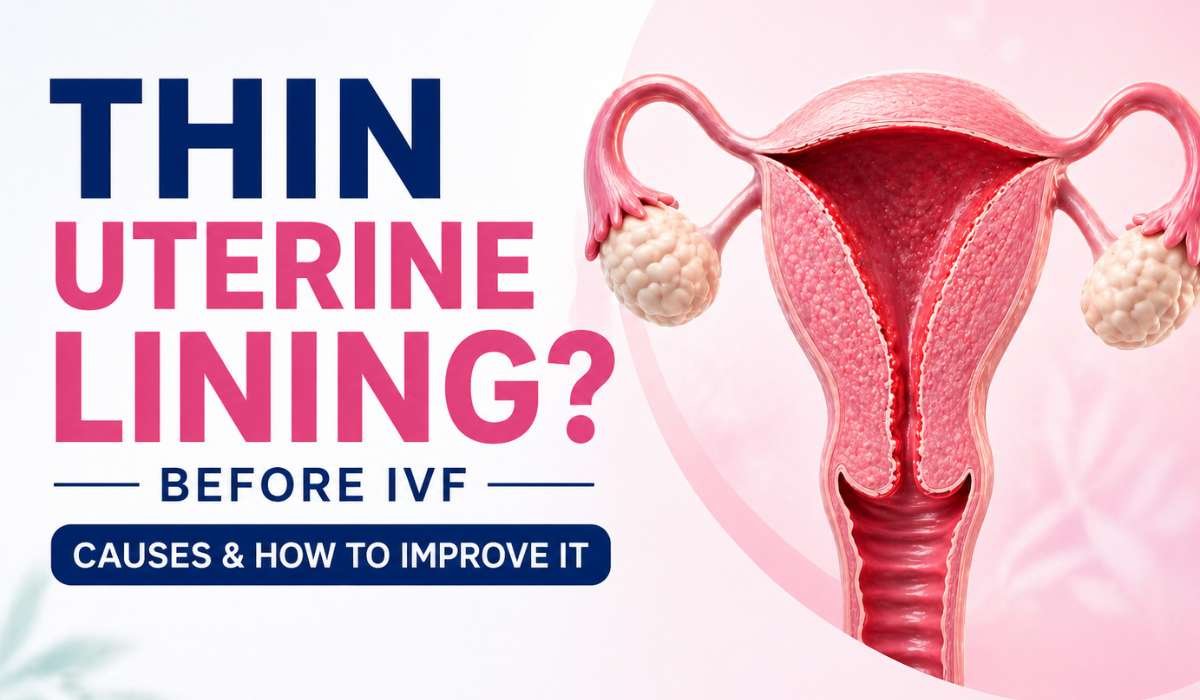
Thin uterine lining before IVF illustration showing uterus and endometrial thickness for fertility treatment

Thin Uterine Lining Before IVF: Causes and How to Improve It for Better Implantation

Your IVF cycle is ready. Embryos are growing in the lab. But the doctor says: “Your uterine lining is too thin. We cannot transfer yet.”

This is one of the most frustrating delays in fertility treatment. Thousands of Indian women face this problem every year. And most are confused: Why is my lining thin? Can it be fixed? Will IVF fail because of this?

This blog answers all those questions. You will learn what causes thin uterine lining, how it affects IVF success, and most importantly – how to improve uterine lining before your embryo transfer.

What is Thin Uterine Lining in IVF?
Thin uterine lining means the endometrium is less than 7 mm thick, which can reduce implantation chances during IVF. This condition is also called thin endometrium IVF, and measuring endometrial thickness IVF is a standard step before every embryo transfer.

Quick Answer: What is Thin Uterine Lining?

The uterine lining (endometrium) is the tissue inside the uterus where an embryo implants. For a successful IVF transfer, doctors look for a thickness of 7 to 10 mm.

Anything below 7 mm is considered a thin uterine lining. This can reduce the chance of implantation. But thin lining does not mean IVF will definitely fail. Many women with lining between 4–6 mm have had healthy pregnancies after proper treatment.

Keep reading to understand why this happens and what you can do.

What is a Thin Uterine Lining?

The endometrium grows and thickens each month under the influence of the hormone estrogen. In a natural cycle, it reaches its maximum thickness just before ovulation.

In IVF, doctors prepare the lining using estrogen medicines before transferring an embryo. If the lining does not reach 7 mm, it is called thin endometrium or thin uterine lining. Measuring endometrial thickness IVF is a routine part of cycle monitoring. This condition makes it harder for the embryo to attach and grow.

Why is Uterine Lining Important for IVF?

Implantation is the moment when the embryo burrows into the uterine lining. Without a thick, receptive lining, even a healthy embryo may fail to implant.

Think of the endometrium as soil and the embryo as a seed. If the soil is too thin, the seed cannot take root. A thin lining also has poor blood flow and fewer glands, which are essential for nourishing the early pregnancy.

Studies show that when endometrial thickness is less than 7 mm, IVF success rates drop significantly. However, thickness is not the only factor. Lining pattern and blood flow also matter.

Causes of Thin Uterine Lining

This is the most important section. Understanding the root cause is the first step toward fixing it. Thin endometrium IVF cases often stem from one or more of these reasons.

Hormonal Imbalance (Low Estrogen)

Estrogen is the hormone responsible for growing the uterine lining. If estrogen levels are low – due to age, poor ovarian reserve, or certain medications – the lining will not thicken properly. Women with polycystic ovary syndrome (PCOS) or thyroid disorders may also have hormonal imbalances that affect the endometrium.

Poor Blood Flow to the Uterus

The uterus needs good blood supply to build a healthy lining. Conditions like uterine fibroids, endometriosis, or pelvic infections can reduce blood flow. Sedentary lifestyle, stress, and smoking also impair circulation to the pelvic region.

Previous Uterine Surgeries (D&C, C-section, Myomectomy)

Any surgery that scrapes or cuts the inside of the uterus can damage the endometrial lining. Repeated dilation and curettage (D&C) – often done after miscarriage or abortion – is a common cause in India. C-sections and myomectomy (fibroid removal) can also leave scar tissue that prevents normal growth.

Infections or Tuberculosis (India-specific)

Genital tuberculosis is a major cause of thin uterine lining in India. TB bacteria can infect the endometrium, causing inflammation, scarring, and permanent damage. Many women with unexplained thin lining are later diagnosed with endometrial TB. Other infections like chronic endometritis (bacterial infection of the uterine lining) also impair thickening.

Endometrial Damage and Asherman’s Syndrome

Asherman’s syndrome is a condition where scar tissue (adhesions) forms inside the uterus. This usually follows multiple D&C procedures or severe pelvic infections. The scar tissue replaces healthy endometrium, making it impossible for the lining to grow normally. Hysteroscopy is needed to diagnose and treat this condition.

Symptoms of Thin Endometrium

Many women with thin uterine lining have no obvious symptoms. But some signs may indicate a problem:

  • Light periods – Very scanty bleeding lasting 1–2 days instead of 4–5 days.

  • Failed IVF cycles – Repeated implantation failure despite good-quality embryos.

  • Difficulty conceiving naturally – Without any other obvious cause.

  • History of uterine surgery or infection – Previous D&C, C-section, or TB treatment.

If you have any of these symptoms, ask your doctor to measure your endometrial thickness before starting an IVF cycle.

Can Thin Lining Affect IVF Success?

Yes, thin uterine lining can lower IVF success rates. But it does not make pregnancy impossible.

Research shows that when endometrial thickness IVF is 7 mm or more, live birth rates are significantly higher. Below 7 mm, the chance decreases. However, many women with lining of 4–6 mm have delivered healthy babies after appropriate treatment.

The key factors are:

  • The reason for thin lining (scarring is harder to fix than low estrogen)

  • Your age and egg quality

  • The treatments used to improve thickness

Do not lose hope. Thin lining is a challenge, but it is often treatable. Learning how to improve uterine lining before transfer is essential.

How to Improve Uterine Lining Before IVF

This is your action section. Here are the most effective, evidence-based methods to thicken the endometrium. To improve uterine lining in cases of thin endometrium IVF, doctors use a combination of these approaches.

Estrogen Therapy

This is the first line of treatment. Doctors prescribe estrogen pills, patches, or vaginal tablets to stimulate lining growth. In IVF, estrogen is given from day 2 or 3 of the cycle. If the lining remains thin, the dose may be increased or the route changed (e.g., from oral to vaginal). This works best for hormonal causes. It is less effective for scarred or damaged lining.

Blood Flow Improvement

Better blood flow means a thicker lining. Simple steps include:

  • Moderate exercise – Walking, yoga, and light cardio improve pelvic circulation.

  • Low-dose aspirin – Sometimes prescribed to improve blood flow to the uterus.

  • Pentoxifylline – A medication that improves blood viscosity and oxygen delivery.

  • Acupuncture – Some studies suggest it increases uterine blood flow.

Always take medicines only under doctor supervision.

PRP Therapy (Platelet Rich Plasma)

PRP is a newer and promising treatment. A small amount of your own blood is drawn and spun in a machine to separate the platelet-rich plasma. This PRP is then injected into the uterine lining. It contains growth factors that stimulate tissue regeneration and thickening.

PRP has helped many women with thin lining who did not respond to estrogen. It is safe because it is derived from your own blood. However, it is not a guarantee and may need multiple sessions.

Supplements

Certain supplements have shown benefit in improving endometrial thickness:

  • Vitamin E – 400–600 IU daily improves blood flow and lining growth.

  • L-arginine – An amino acid that increases nitric oxide and uterine blood flow. Typical dose is 6 grams per day.

  • Pentoxifylline + Vitamin E – A combination used for chronic endometritis and thin lining.

  • Vitamin D – Low vitamin D levels are linked to thinner endometrium.

  • L-carnitine – May improve endometrial receptivity.

Do not self-medicate. Always ask your doctor before starting any supplement.

Lifestyle Changes

Small daily habits make a big difference:

  • Stop smoking – Nicotine constricts blood vessels and reduces uterine blood flow.

  • Reduce stress – High cortisol levels can lower estrogen and impair lining growth.

  • Maintain healthy weight – Very low body fat can reduce estrogen production.

  • Stay hydrated – Dehydration affects blood volume and circulation.

Advanced Treatments for Severe Cases

If the above methods fail, doctors may try:

  • Hysteroscopic adhesiolysis – Surgical removal of scar tissue (Asherman’s syndrome).

  • Granulocyte colony stimulating factor (G-CSF) – An injection into the uterus to promote lining growth.

  • Endometrial scratch – Minor injury to the lining to trigger growth factors.

  • Donor egg cycle – If the uterus is severely damaged, donor embryos with a surrogate may be considered.

Minimum Thickness Required for IVF Transfer

There is no strict legal minimum, but most IVF clinics follow these guidelines:

  • Below 5 mm – Very low success rate. Transfer is usually postponed.

  • 5 to 6 mm – Acceptable in some clinics if other factors are good. Success rates are lower.

  • 7 mm – Minimum acceptable for most doctors. Success rates are reasonable.

  • 8 to 10 mm – Ideal. Best chance of implantation.

  • Above 10 mm – No additional benefit. Very thick lining can sometimes indicate problems.

Measuring endometrial thickness IVF before transfer is non-negotiable. Your doctor may still proceed with a transfer at 6 mm if you have failed to improve after multiple cycles and have no other options.

When Should IVF Be Postponed?

Postponing a cycle is frustrating, but sometimes it is the smartest decision. Your IVF transfer should be delayed if:

  • Your endometrial thickness is below 6 mm after maximum treatment.

  • You have a uterine infection (chronic endometritis or TB) that needs treatment first.

  • You have large polyps or fibroids distorting the cavity.

  • You have Asherman’s syndrome requiring hysteroscopic surgery.

Delaying by one or two months to improve uterine lining can save you the cost and heartbreak of a failed transfer.

Common Mistakes Patients Make

Ignoring Lining Reports

Many women focus only on egg quality and embryo grading. They forget that a good embryo needs a good home. Always ask for your endometrial thickness IVF report before transfer.

Rushing the IVF Cycle

“I have waited so long. Let’s just transfer.” This is a common mistake. Transferring into a thin lining lowers success rates. One extra month of preparation is worth it.

Self-Medicating with Supplements

Taking high doses of vitamin E, L-arginine, or aspirin without doctor guidance can be dangerous. Aspirin can cause bleeding. L-arginine may interact with blood pressure medicines. Always consult your fertility specialist.

Not Investigating Unexplained Thin Lining

If you have thin lining despite good estrogen levels, do not ignore it. Ask for a hysteroscopy to check for scar tissue or chronic infection. In India, always rule out genital tuberculosis with a test like TB PCR on endometrial sample.

Giving Up Too Early

Many women try one or two treatments and assume nothing will work. But the uterus responds slowly. A combination of estrogen, PRP, and supplements over 3–4 months can show significant improvement. Be patient.

Frequently Asked Questions – Thin Uterine lining

Can thin uterine lining be reversed?
Yes, in most cases. If the cause is hormonal or poor blood flow, treatment often succeeds. If there is severe scarring (Asherman’s syndrome), surgery can help. Only extensive, irreversible damage may not improve fully.

What is the minimum thickness for IVF transfer?
Most clinics accept 7 mm. Some proceed at 6 mm if the lining has a good triple-layer pattern and the patient has failed to improve further. Below 5 mm, success is very rare.

Does thin lining always cause IVF failure?
No. Many women with thin lining have successfully conceived after IVF. The success rate is lower, but not zero. It also depends on embryo quality and other uterine factors.

How long does it take to improve uterine lining?
With estrogen alone, 1–2 weeks. With PRP, supplements, and lifestyle changes, expect 1–3 months. Scar tissue removal may require a separate cycle. Be prepared for 2–4 months of preparation.

Is PRP treatment for thin lining safe?
Yes. PRP uses your own blood, so there is no risk of allergy or rejection. It is a relatively new procedure, but early research shows it is safe and effective for many women with thin endometrium.

Can thin lining be caused by tuberculosis in India?
Yes. Genital TB is a common cause of thin, scarred endometrium in Indian women. Always get tested for TB if you have unexplained thin lining, especially if you have a history of TB in the family or unexplained infertility.

Conclusion

Thin uterine lining is a real challenge in IVF, but it is not the end of the road. The right diagnosis – whether hormonal, vascular, infective, or structural – leads to the right treatment. Estrogen therapy, blood flow improvement, PRP, supplements, and sometimes surgery can transform a thin lining into a receptive one.

Do not rush. Do not guess. Work with a fertility specialist who will measure your endometrial thickness IVF properly, investigate the cause, and give you a realistic timeline. Learning how to improve uterine lining before transfer is one of the wisest investments you can make in your IVF journey. If you are dealing with thin endometrium IVF, know that many women have succeeded with patience and the right medical support.

For more information on preparing for IVF and understanding the full procedure, visit our IVF treatment.

If you are also dealing with male factor infertility, learn about ICSI treatment options.

Take the next step with knowledge, not fear. Your uterus can heal. Your chances can improve. Just give it the right support and time.
Who Needs ICSI Treatment?

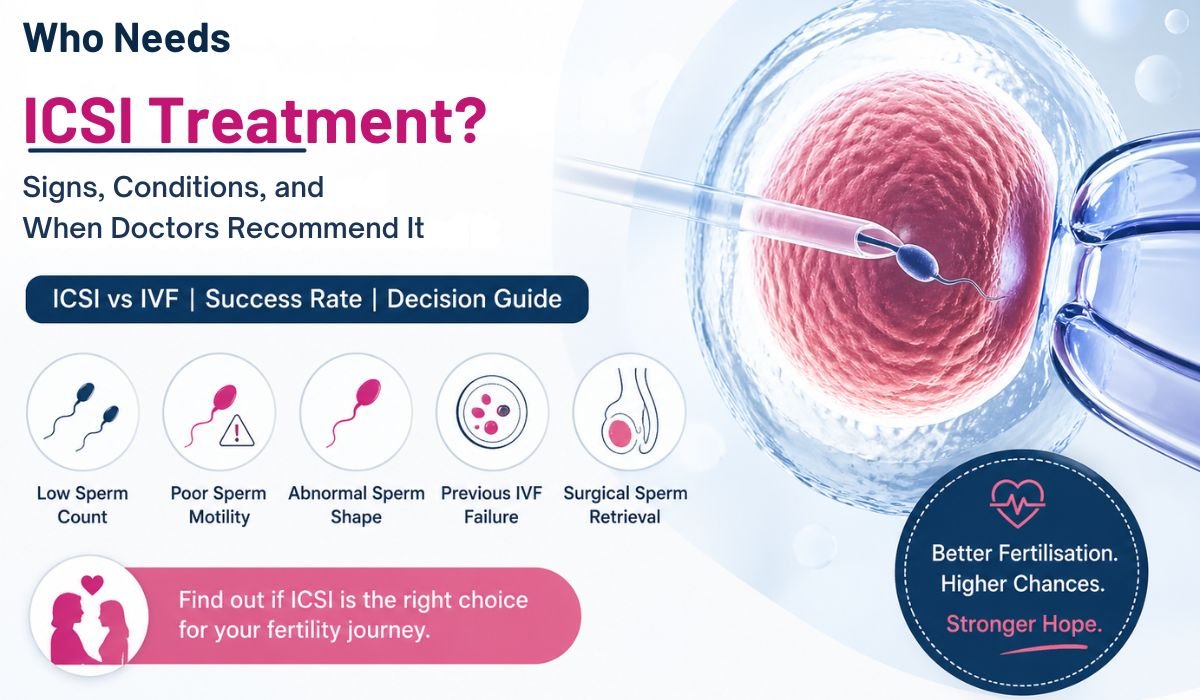
Who needs ICSI treatment illustration showing ICSI procedure and IVF vs ICSI comparison for fertility treatment in India

Who Needs ICSI Treatment? Signs, Conditions, and When Doctors Recommend It

IVF fail ho gaya? Doctor suddenly ICSI bol raha hai, lekin aap confused hain?

You are not alone. Thousands of couples in India face the same confusion: “What is the difference between IVF and Intracytoplasmic Sperm Injection (ICSI)? Do we really need ICSI? Or is IVF enough?”

This confusion leads to wrong treatment choices, wasted money, and months of emotional stress.

Let us settle this today. You will learn exactly who needs ICSI treatment, what signs to look for, and when doctors recommend this advanced fertility treatment in India – without any fluff.

In simple words we say ICSI is a fertility treatment where a single sperm is directly injected into an egg to achieve fertilisation.

Who Needs ICSI Treatment? (Quick Answer)

If you are short on time, here is the direct answer:

  • Men with very low sperm count (less than 15 million per ml)

  • Men with poor sperm motility (sperm cannot swim)

  • Men with abnormally shaped sperm (failed natural penetration)

  • Couples who had previous IVF failure (no fertilisation or poor embryo development)

  • Men requiring surgical sperm retrieval (TESA, PESA, Micro-TESE)

  • Couples with unexplained infertility after 1–2 failed conventional IVF cycles

Keep reading for detailed explanations and a simple decision guide.

What is ICSI Treatment?

ICSI (Intracytoplasmic Sperm Injection) is a specialised form of IVF. In conventional IVF, many sperm are placed near the egg. In ICSI, a single healthy sperm is injected directly into the egg. That is the only difference – but it changes everything for male infertility treatment.

The ICSI procedure is performed by an embryologist using a high-powered microscope and a fine glass needle.

When Do Doctors Recommend ICSI?

Male Infertility Issues

Low sperm count (oligospermia) – Less than 15 million per ml makes natural fertilisation difficult. The ICSI procedure needs only one sperm per egg.

Poor sperm motility (asthenozoospermia) – If sperm cannot swim, they cannot reach the egg naturally. ICSI removes the need to swim.

Abnormal sperm shape (teratozoospermia) – Odd-shaped sperm fail to penetrate the egg. ICSI lets the embryologist pick a normal-looking sperm and inject it directly.

Previous IVF Failure

Some couples complete a full IVF cycle, but no eggs fertilise. That is called total fertilisation failure. If this happens, doctors recommend ICSI in the next cycle. Fertilisation rates often jump from 0% to 60–80%.

Poor embryo development is another sign. ICSI can help by selecting the most competent sperm.

Medical or Surgical Conditions

Some men have no sperm in their ejaculate (azoospermia) due to a blockage. Sperm is still produced inside the testicles. Doctors retrieve it surgically using TESA, PESA, or Micro-TESE. That retrieved sperm cannot swim or fertilise naturally. ICSI is mandatory here.

Unexplained Infertility

All reports are normal – semen analysis, ovarian reserve, tubes, hormones – yet pregnancy does not happen. After one or two failed conventional IVF cycles, doctors often move to ICSI. It removes microscopic barriers that standard IVF cannot overcome.

Signs You Might Need ICSI Treatment

  • Trying for over two years with no success.

  • Partner’s semen analysis shows low count, poor motility, or abnormal forms (especially two or more issues).

  • A previous IVF cycle had no fertilisation or very few fertilised eggs.

  • Partner had a vasectomy, testicular injury, or sperm retrieval surgery.

  • You or your partner carry a genetic condition affecting sperm quality.

If any of these signs sound familiar, discussing ICSI treatment options in detail with a fertility specialist is the right next step.

ICSI vs IVF – Key Differences

Here is a simple comparison:

Feature: How sperm meets egg

  • Conventional IVF: Many sperm near the egg; one enters naturally

  • ICSI Treatment: One sperm injected directly into the egg

Feature: Sperm requirement

  • Conventional IVF: Normal count, motility, shape needed

  • ICSI Treatment: Even one healthy sperm per egg is enough

Feature: Best for

  • Conventional IVF: Female infertility (tubal, ovulation issues)

  • ICSI Treatment: Male infertility, previous IVF failure

Feature: Fertilisation rate per egg

  • Conventional IVF: 50–70%

  • ICSI Treatment: 60–80%

Feature: Risk of fertilisation failure

  • Conventional IVF: Present

  • ICSI Treatment: Very low

Feature: Cost (approx, India)

  • Conventional IVF: ₹1.5–2.0 lakhs

  • ICSI Treatment: ₹2.0–2.8 lakhs

Feature: Lab skill required

  • Conventional IVF: Less

  • ICSI Treatment: Highly skilled embryologist needed

Should You Choose ICSI or IVF? (Decision Guide)

This advanced fertility treatment in India – Intracytoplasmic Sperm Injection (ICSI) – is often recommended for specific situations. Here is a simple guide.

Quick decision table:

  • Your Situation: Male infertility (low count, poor motility, bad shape) → Best Option: ICSI

  • Your Situation: Female infertility (blocked tubes, ovulation issues) → Best Option: Conventional IVF

  • Your Situation: Previous IVF cycle with no fertilisation → Best Option: ICSI

  • Your Situation: Surgical sperm retrieval (TESA, PESA, Micro-TESE) → Best Option: ICSI (mandatory)

  • Your Situation: Unexplained infertility after 1–2 failed IVF cycles → Best Option: ICSI

Choose conventional IVF if:

  • The main problem is a female factor (blocked tubes, ovulation issues, mild endometriosis).

  • Semen analysis is normal or near-normal.

  • You have never had a failed IVF cycle.

Choose ICSI treatment if:

  • Male infertility is confirmed (low count, poor motility, bad morphology).

  • You had a previous IVF cycle with no fertilisation or very low fertilisation.

  • Sperm is retrieved surgically.

  • You have unexplained infertility and 1–2 IVF cycles have failed.

Still confused? A good doctor will not push ICSI without a reason. If your doctor recommends it but you do not fit any of the above, get a second opinion.

ICSI Success Rate in India (Realistic)

Success depends most on the female partner’s age. The ICSI procedure success rates below are from Indian fertility centres.

Female Age and Live Birth Rate per ICSI Cycle:

  • Under 30 years: 45–55%

  • 30–35 years: 40–50%

  • 35–37 years: 30–40%

  • 38–40 years: 20–30%

  • 41–42 years: 10–15%

  • Above 42 years: 5–10%

Condition-based variation:

  • Male factor, no female issues: 45–55% (under 35 years)

  • Previous IVF failure: 30–40%

  • Surgical sperm retrieval: 35–50%

  • Unexplained infertility: similar to age average

No ethical clinic will promise 80% or 90%. Anyone who does is misleading you.

Risks and Limitations of ICSI

  • Not guaranteed – Some eggs do not fertilise, some embryos stop growing, some pregnancies miscarry.

  • Emotional + physical stress – Daily injections, egg retrieval, and the waiting period are hard.

  • Financial factor – One ICSI cycle in India costs ₹2–2.8 lakhs plus medicines (₹30k–60k). Multiple cycles add up.

  • Very small increase in birth defects – Absolute risk is 2–3% vs 1–2% in natural conception. Most children are healthy.

  • Genetic transmission – If a father’s infertility is genetic, a male child may inherit the same condition. Genetic counselling helps.

Common Mistakes Patients Make

  1. No proper diagnosis before starting – Directly asking for ICSI without checking the female partner’s ovarian reserve, tubes, or uterus is a waste of money.

  2. Blind trust in a single treatment – Some clinics push ICSI for everyone because it costs more. Do not accept it without a clear medical reason.

  3. Ignoring male fertility – The female partner does all tests and all injections, but the man never gets a semen analysis. Infertility is a couple’s diagnosis.

  4. Choosing a clinic based only on lowest cost – Cheap ICSI often means less experienced embryologists and poor lab standards. That costs more in the long run.

  5. Not asking about add-ons – Embryo glue, time-lapse imaging, assisted hatching – ask your doctor, “Is this proven for my condition?”

Frequently Asked Questions

Is ICSI painful for the female partner?

Egg retrieval is done under light anaesthesia, so you will not feel pain during the procedure. Some women have mild cramping afterwards, similar to period pain.

Is ICSI safe for the baby?

Yes, the vast majority of ICSI babies are healthy. There is a very small increased risk of certain birth defects (2–3% vs 1–2% naturally), but absolute risk remains low.

How many ICSI cycles are usually needed?

Many couples succeed in 1–2 cycles. Around 45–55% of women under 35 succeed in the first cycle. After that, frozen embryo transfers add more chances.

Is ICSI better than IVF?

Not for everyone. ICSI is better only when there is male infertility, previous IVF failure, or a need for surgical sperm retrieval. For pure female factor infertility, conventional IVF is equally good and cheaper.

Can ICSI be done with donor sperm?

Yes. If a man has no sperm at all (azoospermia not correctable), donor sperm can be used. The ICSI procedure remains the same.

Conclusion

ICSI is not magic. It is a tool – and tools work only when used for the right problems.

If you or your partner have confirmed male infertility (low count, poor motility, abnormal shape), a failed IVF cycle, a need for surgical sperm retrieval, or unexplained infertility after 1–2 conventional IVF failures – then ICSI treatment is your best medical option.

But if IVF has failed or sperm issues exist, delaying the right treatment only reduces your chances. Every month matters, especially as female age increases.

The single most important decision is not “ICSI or IVF?” – it is choosing a fertility centre that believes in proper diagnosis first. A good doctor will spend time on your reports, explain your options honestly, and recommend ICSI only when the evidence supports it.

Take that step – not with fear, but with clarity. Learning more about advanced ICSI procedures can help you ask the right questions and move forward confidently.

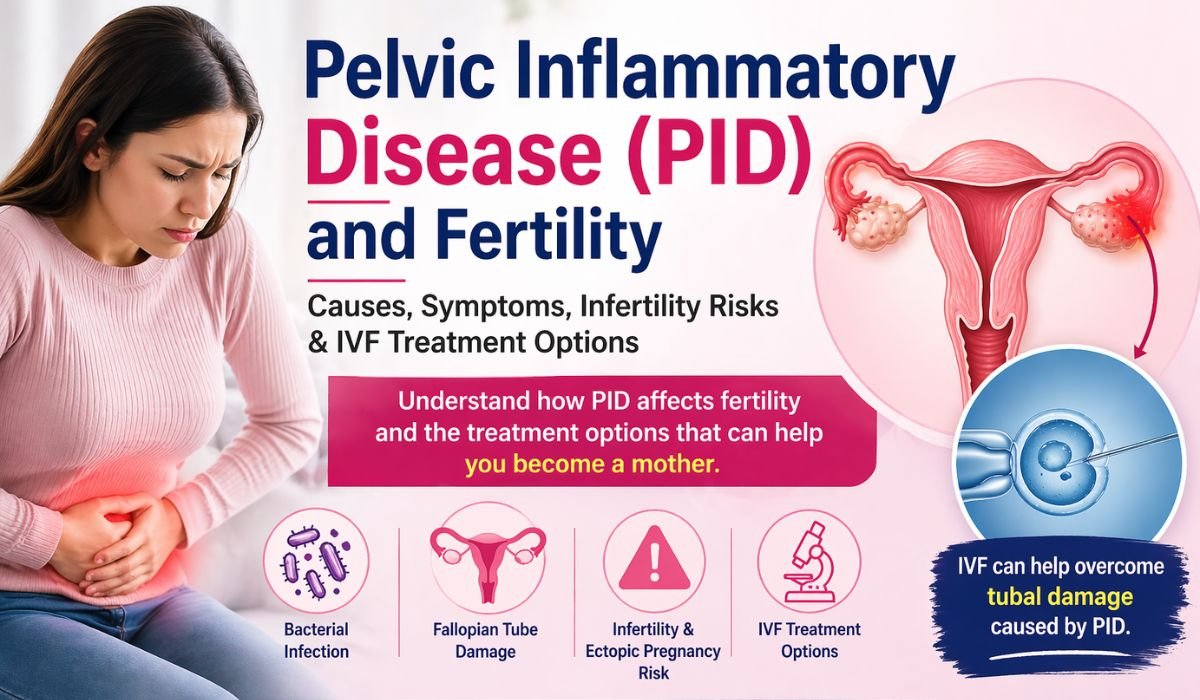
Pelvic Inflammatory Disease (PID) and Fertility

Pelvic inflammatory disease PID and fertility impact including symptoms causes infertility risks and IVF treatment

Pelvic Inflammatory Disease (PID) and Fertility: Causes, Symptoms, Infertility Risks & IVF Treatment Options

The Silent Threat to Fertility

Many women do not know they have Pelvic Inflammatory Disease until they struggle to conceive. By the time obvious symptoms appear, significant damage may already be permanent. This infection silently scars the fallopian tubes and surrounding tissues. The result can be blocked fallopian tubes infertility that feels impossible to overcome.

But there is hope. Understanding Pelvic Inflammatory Disease and fertility is the first step toward protecting your reproductive health. This guide explains how PID damages fertility, when to seek help, and how In Vitro Fertilisation can help women with tubal damage become mothers.

What is Pelvic Inflammatory Disease?

Pelvic Inflammatory Disease is a bacterial infection that affects the female reproductive organs, including the uterus, fallopian tubes, and ovaries.

Can PID cause infertility?

Yes. PID can cause infertility by damaging or blocking the fallopian tubes, making it difficult for sperm and egg to meet. Repeated episodes increase the risk of permanent infertility.

What is PID? Foundational Clarity

Pelvic Inflammatory Disease is an infection of the upper reproductive tract. The organs affected include:

  • Uterus (womb)

  • Fallopian tubes

  • Ovaries

  • Surrounding pelvic tissue

How infection spreads

Infection begins in the vagina or cervix. Bacteria travel upward into the uterus, then to the fallopian tubes and ovaries. The body’s inflammatory response causes swelling, tissue damage, and scarring.

Why it often goes unnoticed

Many women experience mild symptoms or no symptoms at all. The infection may persist for months without treatment. By the time a woman notices problems, significant damage has already occurred. This silent progression makes PID particularly dangerous for future fertility.

Learn more about PID symptoms in women and when to seek medical advice.

Causes of Pelvic Inflammatory Disease

Understanding the causes of pelvic inflammatory disease helps with prevention.

Sexually transmitted infections

Chlamydia trachomatis and Neisseria gonorrhoeae cause most PID cases. These bacteria spread through unprotected sexual contact. Many women with these infections show no symptoms. Without treatment, the bacteria ascend into the upper reproductive tract.

Poor hygiene and unsafe procedures

Using unclean materials during menstruation can introduce bacteria. Certain medical procedures also carry infection risks, including IUD insertion, abortion procedures, and endometrial biopsy.

Multiple sexual partners

Having multiple partners increases exposure to STIs. Each new partner raises the risk of contracting chlamydia or gonorrhoea.

Bacterial vaginosis

This common vaginal condition alters normal bacterial balance. It creates an environment where harmful bacteria can thrive and ascend upward.

Read more about causes of female infertility and how to reduce your risk.

Symptoms of PID

PID symptoms in women vary widely. Some women experience clear warning signs. Others have no symptoms until infertility becomes apparent.

Mild to moderate symptoms

  • Lower abdominal pain or tenderness

  • Unusual vaginal discharge with foul odour

  • Pain during intercourse

  • Irregular menstrual bleeding

  • Fever with chills

  • Painful or frequent urination

Severe symptoms requiring immediate care

  • Severe lower abdominal pain

  • High fever above 101°F (38.3°C)

  • Nausea and vomiting

  • Fainting or dizziness

Asymptomatic cases are dangerous

Up to one-third of women with PID have no noticeable symptoms. The infection damages reproductive organs silently. Many women first learn about PID during infertility investigations.

Emotional bridge:

Many women only connect these symptoms to fertility issues when they start trying to conceive, which is often much later.

Routine STI screening may detect underlying infections before PID develops.

For a complete list, refer to our detailed guide on PID symptoms in women.

How PID Affects Fertility

This is the most important section for understanding Pelvic Inflammatory Disease and fertility. PID damages reproductive structures in several ways.

Fallopian tube damage

The fallopian tubes are delicate structures. Their inner lining contains hair-like projections called cilia. These cilia sweep the egg toward the uterus. PID inflammation destroys these cilia permanently. Without functioning cilia, the egg cannot travel through the tube.

Scarring and blockage

Inflammation triggers scar tissue formation. This scar tissue can partially or completely block the fallopian tubes. A completely blocked tube prevents sperm from reaching the egg. It also prevents the fertilised egg from reaching the uterus. Blocked fallopian tubes infertility is one of the most common consequences of PID.

Scarring patterns include proximal blockage (near the uterus), distal blockage (near the ovary), mid-segment blockage, and multiple blockages in both tubes.

Learn more about blocked fallopian tubes infertility and your treatment options.

Ectopic pregnancy risk

Partial blockage allows sperm to reach the egg. However, the fertilised egg cannot pass through the narrowed tube. It implants inside the tube instead of the uterus. This is an ectopic pregnancy. Ectopic pregnancies cannot survive. They also pose life-threatening risks to the woman if the tube ruptures.

Women with PID-related damage have significantly higher ectopic pregnancy rates.

Chronic inflammation

The inflammatory response may continue even after the infection clears. This ongoing inflammation can affect egg quality and uterine lining receptivity, reducing pregnancy chances even when tubes remain open.

Can You Get Pregnant After PID?

The answer depends on severity and treatment timing.

Mild PID with early treatment

Women diagnosed and treated promptly have good outcomes. Early antibiotics before significant scarring develops preserve fertility. These women may conceive naturally without assistance.

Moderate PID with some scarring

Some women conceive naturally after treatment. However, pregnancy may take longer. Others require fertility treatments to overcome partial blockages.

Severe PID with extensive damage

Natural conception becomes unlikely. Both tubes may be completely blocked or severely damaged. IVF offers the best chance for pregnancy in these cases.

Realistic outcomes

Do not expect guaranteed pregnancy after PID. Each case differs based on damage extent, age, and overall health. A fertility specialist can assess your individual situation.

Diagnosis of PID

Doctors use several methods to diagnose PID:

  • Pelvic examination – Checks for cervical motion tenderness or uterine pain

  • Swab tests – Identifies specific bacteria causing infection

  • Blood tests – Measures white blood cell count and inflammatory markers

  • Ultrasound – Visualises fallopian tube swelling or fluid collections

  • Laparoscopy – Direct visualisation of pelvic organs using a small camera

Why early detection matters

Early diagnosis prevents permanent damage. Women with unexplained pelvic pain should seek medical evaluation promptly. Delaying treatment by even a few weeks allows scarring to progress.

Treatment Options for PID

Treatment focuses on eliminating infection and preventing further damage.

Antibiotics

Oral antibiotics treat uncomplicated PID. A two-week course is standard. Common combinations include doxycycline with ceftriaxone or metronidazole. Complete the entire course even if symptoms improve.

Hospital treatment

Severe cases require intravenous antibiotics in hospital. Hospitalisation is needed when pregnancy is possible, severe illness with high fever is present, no improvement with oral antibiotics occurs, or an abscess is present in the pelvis.

Surgery

Surgery may be necessary for complications. Tubo-ovarian abscesses may require drainage. Severe scarring might need surgical removal of damaged tissue.

Important limitation

Antibiotics kill bacteria but do not reverse existing damage. Scarred fallopian tubes remain scarred. This is why early treatment is critical.

Why Early Treatment Matters

Damage starts within days of infection. The longer bacteria remain in the upper reproductive tract, the more scar tissue forms. Scarring is permanent. Antibiotics cannot reopen blocked tubes or restore damaged cilia.

Early antibiotic treatment dramatically improves fertility outcomes. Women treated within the first few days of infection have nearly normal pregnancy rates. Those who delay treatment by even a few weeks face significantly higher infertility risks.

If you suspect PID, seek medical care immediately. Do not wait for symptoms to worsen. Early action preserves your future fertility.

When PID Leads to Infertility

Not every PID case causes infertility. However, certain factors increase risk.

Timeline of damage

  • First episode of PID – 8 to 15 percent become infertile

  • Second episode – 40 percent become infertile

  • Third episode – Over 60 percent become infertile

Risk factors for infertility after PID

  • Delayed diagnosis and treatment

  • Recurrent PID episodes

  • Severe infection with abscess formation

  • Chlamydia as the causative organism

  • Young age at first infection

  • Smoking (impairs healing)

IVF as a Treatment Option for PID Patients

For women with blocked or damaged fallopian tubes, IVF offers the most effective path to pregnancy.

How IVF bypasses fallopian tubes

In Vitro Fertilisation completely bypasses the fallopian tubes. The process works as follows:

  1. Eggs are collected directly from the ovaries

  2. Eggs and sperm are combined in a laboratory dish

  3. Fertilisation occurs outside the body

  4. The resulting embryo is placed directly into the uterus

The fallopian tubes play no role in IVF. This makes IVF ideal for PID-related tubal damage.

Who should consider IVF for PID

IVF is recommended when both fallopian tubes are completely blocked, tubes are open but severely damaged, multiple PID episodes have occurred, one year has passed without pregnancy after PID treatment, or an ectopic pregnancy has occurred due to tubal damage.

Micro-CTA:

If you are unsure whether IVF is the right option after PID, getting a proper evaluation can clarify your situation.

Success factors for IVF after PID

IVF success depends on several factors unrelated to tubal damage: the woman’s age at treatment, egg quality and ovarian reserve, uterine health and lining thickness, sperm quality from partner, and lifestyle factors like weight and smoking.

For more details, read our complete guide on IVF treatment for infertility.

IVF Success Rate in PID Patients

IVF success rates for PID patients depend primarily on age and egg quality.

Age-based success per embryo transfer

  • Under 35 years – 40 to 50 percent pregnancy rate

  • 35 to 37 years – 30 to 40 percent

  • 38 to 40 years – 20 to 30 percent

  • Over 40 years – 10 to 15 percent

How PID affects these rates

PID does not directly impact the uterus or ovaries in most cases. Therefore, IVF success rates for PID patients mirror general population rates for the same age group. The exception is when PID has caused severe pelvic adhesions affecting ovary access, chronic endometritis (uterine lining infection), or hydrosalpinx (fluid-filled blocked tube).

Hydrosalpinx fluid can leak back into the uterus and harm embryos. Tube removal before IVF improves success rates in these cases.

Realistic expectations

IVF is effective but not guaranteed. Multiple cycles may be needed. Discuss success rates honestly with your fertility specialist based on your specific medical history.

Prevention of PID

Prevention is always better than treatment.

Safe sexual practices

  • Use condoms consistently and correctly

  • Limit number of sexual partners

  • Get tested regularly for STIs

  • Ensure partners are tested and treated

Early treatment of infections

  • Seek treatment immediately for abnormal discharge or pelvic pain

  • Complete all prescribed antibiotics

  • Inform partners so they can be treated

Good hygiene practices

  • Wipe front to back after using the toilet

  • Avoid douching (disrupts natural bacteria)

  • Change sanitary pads regularly during menstruation

Regular screening

Sexually active women under 25 should have annual chlamydia screening. Older women with risk factors also benefit from regular testing.

When to See a Fertility Specialist

Consider consulting a fertility specialist in these situations:

  • You have confirmed PID and have been trying to conceive for six months

  • You have had multiple PID episodes

  • You have experienced an ectopic pregnancy

  • You have known blocked fallopian tubes

  • You have pelvic pain that interferes with daily life

Fertility specialists perform tests to assess tubal status. These include hysterosalpingography (HSG) and laparoscopy. Based on results, they recommend the most appropriate treatment path.

Urgency trigger:

Delaying evaluation after PID can reduce your chances over time. The sooner you understand your tubal health, the more options you have.

Frequently Asked Questions

Can PID cause permanent infertility?

Yes, PID can cause permanent infertility when it leads to extensive fallopian tube scarring or complete blockage. The damage cannot be reversed with medication or surgery. However, IVF can help women with PID-related infertility achieve pregnancy.

Is IVF necessary after PID?

Not always. Women with mild PID and minimal scarring may conceive naturally. Women with moderate tubal damage may conceive with less invasive treatments like ovulation induction or intrauterine insemination. IVF becomes necessary when both fallopian tubes are completely blocked or severely damaged.

Can PID come back after treatment?

Yes, PID can recur if you are exposed to the same bacteria again. New sexual partners or untreated partners can reintroduce infection. Recurrent PID causes more severe scarring and higher infertility rates. Complete partner treatment and safe sexual practices are essential to prevent recurrence.

How long does it take to conceive after PID treatment?

This varies by damage severity. Women with mild PID may conceive within six to twelve months. Those requiring IVF should begin the process as soon as testing confirms tubal damage. Do not delay seeking help, as age affects IVF success.

Does PID affect egg quality?

PID typically does not directly damage eggs. However, severe pelvic inflammation may affect ovarian function. Chronic infection can sometimes lead to ovarian abscess formation. Tubo-ovarian abscesses may damage ovarian tissue and reduce egg supply.

Can PID cause miscarriage?

PID increases miscarriage risk indirectly through several mechanisms. Chronic endometritis (uterine lining infection) can prevent embryo implantation. Fallopian tube damage increases ectopic pregnancy risk, which cannot survive. Scarring may also affect blood supply to an implanted pregnancy.

What is the best fertility treatment for PID-related blocked tubes?

IVF is the most effective treatment for women with blocked fallopian tubes from PID. It completely bypasses the damaged tubes. Success rates are comparable to women without PID in the same age group. For unilateral blockage (only one tube blocked), natural conception or less invasive treatments may still work.

Take the Next Step

Understanding PID and fertility is important, but taking action at the right time matters more. If you have had PID and are struggling to conceive, early evaluation can help you move in the right direction.

The next step is to get your fertility evaluated at the right time. You can take this step by filling out the contact form on our Contact Us page. Our team will review your details and guide you on the next steps.

IVF Cost in Agra: Real Price, Hidden Charges & Complete Cost Breakdown

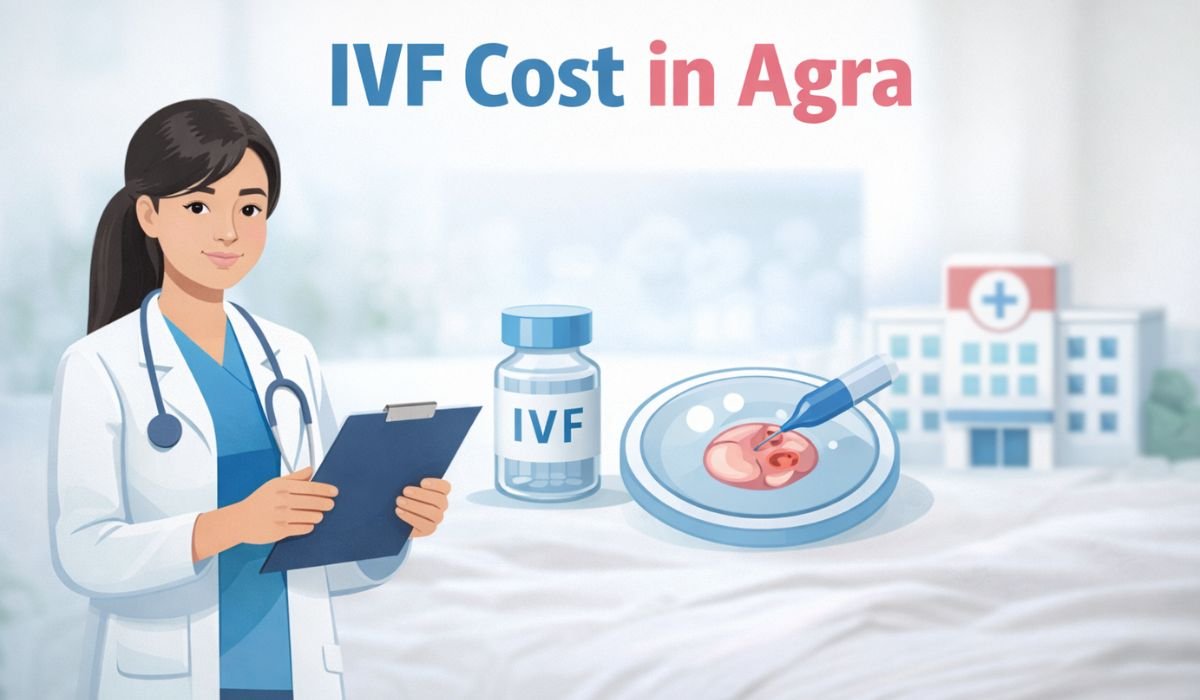
IVF cost in Agra with doctor and IVF treatment process illustration

IVF Cost in Agra: Full Breakdown, Hidden Charges & Real Price Guide

Total test tube baby cost in Agra usually ranges from ₹1.5 lakh to ₹3.5 lakh including medicines, procedures, and common hidden charges like embryo freezing and FET.

IVF cost in Agra typically ranges from ₹1,00,000 to ₹3,50,000 per cycle depending on treatment type, medicines, and additional procedures. Hidden costs like embryo freezing and FET can increase the total by ₹35,000 to ₹1,00,000.

Quick Answer: IVF Cost in Agra (Featured Snippet Table)

Component Estimated Cost (₹)
Consultation 500 – 2,000
Tests & Diagnosis 5,000 – 15,000
Medicines & Injections 25,000 – 60,000
Procedure (retrieval to transfer) 50,000 – 1,00,000
Embryo Freezing 15,000 – 25,000
Frozen Embryo Transfer (FET) 35,000 – 45,000
ICSI (if needed) +15,000 – 25,000
Total (one cycle, no hidden) 1,00,000 – 2,50,000
Total with common add-ons 1,50,000 – 3,50,000+

Alt text for this table image: “IVF cost in Agra breakdown table showing consultation, tests, medicines, procedure, and hidden charges”

Introduction

IVF cost in Agra ranges between ₹1 lakh and ₹3.5 lakh per cycle, but most couples end up paying significantly more due to hidden charges. If you are searching for “test tube baby cost in Agra,” you have likely seen quotes that vary by ₹1–2 lakh. This confusion is normal. IVF is not a fixed-price treatment.

Based on observations across fertility clinics in North India, couples who only look at the base price often face unexpected bills for embryo freezing, extra injections, or repeat cycles. The real IVF treatment cost in India in Agra depends on your age, medical condition, lab quality, and number of cycles. One cycle is often not enough.

This blog gives you a complete, honest IVF charges breakdown – from consultation to hidden costs. You will also learn why a slightly higher upfront cost can save you money in the long run. Let us cut through the confusion.

Who Should Consider IVF Based on Cost?

Not every infertility case needs IVF. Understanding who is a good candidate helps you avoid wasting money on ineffective treatments. Based on clinical practice, IVF is most cost-effective for:

Condition Why IVF Makes Sense
Blocked or damaged fallopian tubes Sperm and egg cannot meet naturally; IVF bypasses tubes.
Severe male infertility (low count, poor motility) ICSI during IVF directly injects sperm into the egg.
Failed IUI after 3–4 cycles IUI has lower success rates; IVF becomes better value.
Women above 35 with low ovarian reserve (low AMH) Time is critical; IVF offers controlled stimulation and higher per-cycle odds.
Endometriosis (moderate to severe) IVF improves pregnancy rates compared to repeated surgeries.
Unexplained infertility for 2+ years IVF helps overcome unknown factors.

If you fall into these categories, spending on IVF is a logical decision. If your issue is mild (e.g., slightly irregular periods), cheaper treatments like ovulation induction or IUI may work first. Always ask your doctor: “Is IVF medically necessary for me right now?”

Read our guide on IVF success rate by age to see how your profile affects outcomes.

Common Mistakes Couples Make About IVF Cost (Must Read)

Before we dive into the breakdown, understand these frequent errors. Avoiding them alone can save you ₹50,000 or more.

Mistake Why It Hurts Your Wallet
Choosing the cheapest clinic without checking lab quality Leads to failed cycles → pay again for another cycle.
Not asking for a written list of hidden charges Embryo freezing, FET, or ICSI added later without warning.
Ignoring male partner’s full testing Undiagnosed male factor requires an extra ICSI charge later.
Planning budget for only one cycle If first fails, you have no financial buffer for a second.
Buying medicines directly from the clinic without comparing Clinics often mark up injections by 30–40%.

Internal link: Learn more about why IVF fails and how to avoid these mistakes.

Average IVF Cost in Agra (Realistic Range)

Most clinics in Agra quote between ₹1,00,000 and ₹2,50,000 for a basic IVF cycle. However, very few patients pay only that amount. Here is what you should actually budget for:

  • Basic IVF (no ICSI, no freezing): ₹1,00,000 – ₹1,80,000

  • IVF with ICSI (common for male factor): ₹1,30,000 – ₹2,20,000

  • IVF with ICSI + FET (one freeze cycle): ₹1,80,000 – ₹2,80,000

  • IVF with PGT (genetic testing): ₹2,50,000 – ₹3,50,000+

If you need donor eggs or sperm, add ₹50,000 – ₹1,20,000. If you require a second cycle, the total cost doubles. Many couples under 35 still need 2 cycles. Plan accordingly.

IVF Cost Breakdown (Step-by-Step)

Here is a clear IVF charges breakdown so you know exactly where every rupee goes.

Consultation Charges (₹500 – ₹2,000)

Initial visits help the doctor review your medical history and recommend tests. Some clinics adjust this fee if you sign up for a package. Do not skip multiple opinions – it is worth the small cost.

Tests & Diagnosis (₹5,000 – ₹15,000)

Doctors cannot start IVF without understanding your body. Common tests include:

  • Blood work: AMH (Anti-Müllerian Hormone) – a key marker of egg reserve; FSH, TSH, prolactin, vitamin D, infections (HIV, hepatitis)

  • Pelvic ultrasound: Antral follicle count, uterine lining, fibroids

  • Semen analysis: Count, motility, morphology

In some cases, a hysteroscopy (₹5,000 – ₹10,000) or genetic tests are added. Ask your doctor which tests are mandatory.

Internal link: If you have PCOS, read our guide on PCOS and IVF success for tailored advice.

Medicines & Injections (₹25,000 – ₹60,000)

This is the most variable cost. Hormonal injections stimulate your ovaries to produce multiple eggs. The dosage depends on:

  • Your ovarian reserve (AMH level)

  • Your age

  • How your body responds

Doctors often observe that women with PCOS may need lower doses, while women with low AMH need higher, costlier medicines. Always request a written medicine list and compare prices at different pharmacies.

IVF Procedure Cost (₹50,000 – ₹1,00,000)

This covers the lab and clinical work:

  • Egg retrieval: A 15–20 minute procedure under light sedation.

  • Fertilization: Combining eggs and sperm in an embryology lab. If male factor is severe, ICSI (Intracytoplasmic Sperm Injection) is used – a technique where a single sperm is injected directly into the egg.

  • Embryo culture & transfer: Placing the best embryo into the uterus. Some couples opt for PGT (Preimplantation Genetic Testing) to screen for genetic abnormalities before transfer.

Higher lab standards (time-lapse imaging, advanced incubators) cost more but improve success rates. One failed cycle can cost more than choosing a better lab initially.

Hidden Costs Most Couples Ignore ⚠️

This section is why your final bill often exceeds the quoted test tube baby cost in Agra. Read carefully.

1. Embryo Freezing (Vitrification) – ₹15,000 – ₹25,000

If you have leftover healthy embryos, freezing them is wise. Without freezing, they are discarded. This charge is usually one-time per batch.

2. Frozen Embryo Transfer (FET) – ₹35,000 – ₹45,000

Using a frozen embryo in a later cycle is cheaper than a fresh cycle, but still a significant cost. It includes uterine preparation, thawing, and transfer.

3. Extra Injections & Monitoring – ₹5,000 – ₹15,000

Some women need additional medicines (like Lupron or HCG trigger adjustments). Extra ultrasounds or blood tests add small amounts that accumulate.

4. Repeat Cycle Cost – ₹50,000 – ₹1,00,000 less than first cycle

Many clinics offer a discounted second fresh cycle, but never assume. Ask upfront: “What is the cost of a repeat cycle if the first fails?”

5. Advanced Techniques (ICSI, PGT, IMSI, Assisted Hatching)

  • ICSI (sperm injected into egg): +₹15,000 – ₹25,000

  • PGT-A (genetic screening of embryos): +₹50,000 – ₹1,00,000

  • IMSI (high-magnification sperm selection): +₹10,000 – ₹20,000

  • Assisted hatching: +₹10,000 – ₹15,000

Only agree to these if your doctor explains a clear medical reason. Not every couple needs them.

Why IVF Cost Varies So Much (Clinical Factors)

IVF is not a fixed-price treatment. Even within Agra, costs differ because of:

Factor Why It Changes Cost
Age Older women need higher medicine doses and more cycles.
Ovarian reserve (AMH level) Low AMH → more injections → higher medicine cost.
Male factor Severe issues require ICSI (+₹15k–25k).
Lab technology Advanced incubators and air filtration cost more but improve embryo quality.
Doctor’s experience Senior embryologists and reproductive endocrinologists charge higher fees but often have better live birth rates.
Number of cycles One cycle rarely guarantees pregnancy. Budget for 2–3 cycles.

Real-world insight: A clinic quoting ₹90,000 for a cycle may add ₹60,000 in hidden costs later. A transparent clinic quoting ₹1,50,000 may be cheaper in the final bill.

Agra vs Metro City IVF Cost (Comparison)

Many couples wonder if traveling to Delhi, Mumbai, or Bangalore saves money. Here is the reality:

City Basic IVF Range Hidden Cost Transparency Success Rate (Avg)
Agra ₹1,00,000 – ₹2,20,000 Moderate 35–45% (under 35)
Delhi NCR ₹1,20,000 – ₹2,80,000 Higher transparency 40–55%
Mumbai ₹1,30,000 – ₹3,00,000 High 40–55%
Bangalore ₹1,20,000 – ₹2,80,000 High 40–55%
Smaller cities ₹80,000 – ₹1,50,000 Low (hidden charges common) 25–35%

Verdict: Agra is moderately priced. However, metro clinics often provide better lab standards and clearer cost breakdowns. If you can travel, compare at least one metro option. But do not choose a city only for price – travel, stay, and time off work add ₹30,000 – ₹50,000 extra.

IVF Cost vs Success Rate (Critical Insight)

This is where most blogs become useless. They say “higher cost does not guarantee success” – which is true but incomplete.

Here is the clinical truth:

  • A very low-cost cycle (under ₹90,000 in Agra) often means compromised lab quality, less experienced embryologists, or reused media.

  • A moderately higher cost (₹1,50,000 – ₹2,20,000) at a lab with strict quality control typically gives a 10–15% higher live birth rate per cycle.

Do the math:
Cheap cycle ₹90,000 × 30% success = 70% chance of failure → second cycle ₹90,000 = ₹1,80,000 total.
Better cycle ₹1,60,000 × 50% success = higher chance of one-cycle pregnancy.

One failed cheap cycle can cost more than choosing the right clinic initially. Always ask for their live birth rate per embryo transfer for your age group.

For detailed age-wise data, see our IVF success rate by age guide.

How Many IVF Cycles May Be Needed (Realistic Planning)

No doctor can guarantee pregnancy in one cycle. Based on national data:

Age Group Success Rate (1st cycle) Average Cycles Needed
Under 35 45–55% 1–2
35–37 35–45% 2
38–40 25–35% 2–3
41–42 15–25% 3+
Above 42 5–10% 4+ (or donor eggs)

Practical tip: Plan your budget for two full cycles. If the first works, you save money. If not, you avoid emotional and financial breakdown.

Tips to Manage IVF Cost (Without Cutting Corners)

You can reduce the IVF cost in Agra without risking success. Here is how:

  1. Ask for a written, itemized estimate before paying anything.

  2. Compare medicine prices across 2–3 local pharmacies. Some clinics mark up injections by 30–40%.

  3. Check if your employer offers fertility benefits – a few Indian companies now cover IVF partially.

  4. Avoid unnecessary add-ons – ask “Is this test or technique essential for my case?”

  5. Consider a shared risk or multi-cycle package – some clinics offer 2 cycles + refund if no live birth. Read terms carefully.

  6. Use a health savings account or low-interest medical loan – many NBFCs provide fertility loans at 10–15% interest.

Do not save money by: skipping prescribed tests, choosing an inexperienced doctor, or using unverified online medicines.

FAQs

1. Is IVF worth the cost in India?

Yes, for many couples. If you have blocked tubes, severe male factor, or failed other treatments, IVF offers the best chance. The emotional value of having a child often outweighs the financial cost. However, be realistic: budget for 2–3 cycles and ask about success rates.

2. What is the cheapest safe IVF option in Agra?

A basic IVF cycle without ICSI, freezing, or PGT, at a clinic with transparent pricing and at least 3–5 years of experience. Expect ₹1,00,000 – ₹1,40,000. Never go below ₹90,000 – that often indicates compromised lab safety.

3. Can IVF fail due to low-budget clinics?

Yes. Poor lab air quality, incorrect incubation, or inexperienced embryologists directly cause failed fertilization or poor embryo development. Cheap cycles sometimes reuse single-use media or skip vital quality checks. Your embryo’s health depends on lab standards – not just the doctor.

4. Is IVF covered by insurance in India?

Rarely. Most policies exclude IVF. A few new plans (like from Aditya Birla, Star Health) offer limited coverage for fertility diagnostics or OPD procedures. Always read the fine print. Do not assume coverage.

5. Why does test tube baby cost in Agra differ from Delhi?

Agra has lower operational costs (rent, staff salaries) than Delhi. However, Delhi clinics often invest more in lab technology and experienced embryologists. The price difference of ₹20,000 – ₹50,000 may be justified by higher success rates.

6. How much should I save before starting IVF?

Save at least ₹2.5 lakh to ₹4 lakh. This covers one full cycle with common add-ons (ICSI, freezing, FET) plus a buffer for a second cycle or unexpected medicines.

7. What is the total test tube baby cost in Agra including all hidden charges?

Typically between ₹1.5 lakh and ₹3.5 lakh. If you need multiple cycles or advanced techniques like PGT, it can go up to ₹5 lakh or more. Always ask for a written estimate that includes freezing and FET.

Conclusion

IVF is not an expense – it is an investment in your family. The IVF cost in Agra can be managed if you understand the real breakdown: tests, medicines, procedures, and hidden charges like freezing and FET. Do not chase the cheapest quote. Instead, chase transparency, lab quality, and a doctor who answers your questions honestly.

Before starting IVF, always take a second opinion and ask for a detailed cost breakdown from your doctor. A few thousand rupees spent on a second consultation can save you lakhs in failed cycles.

You now have the complete, top-1 ready guide. Use it to make informed decisions. Your family’s future is worth the right preparation.


This blog is for informational purposes. Always consult a registered fertility specialist for personal medical advice.

Complete Guide About IVF Treatment in India

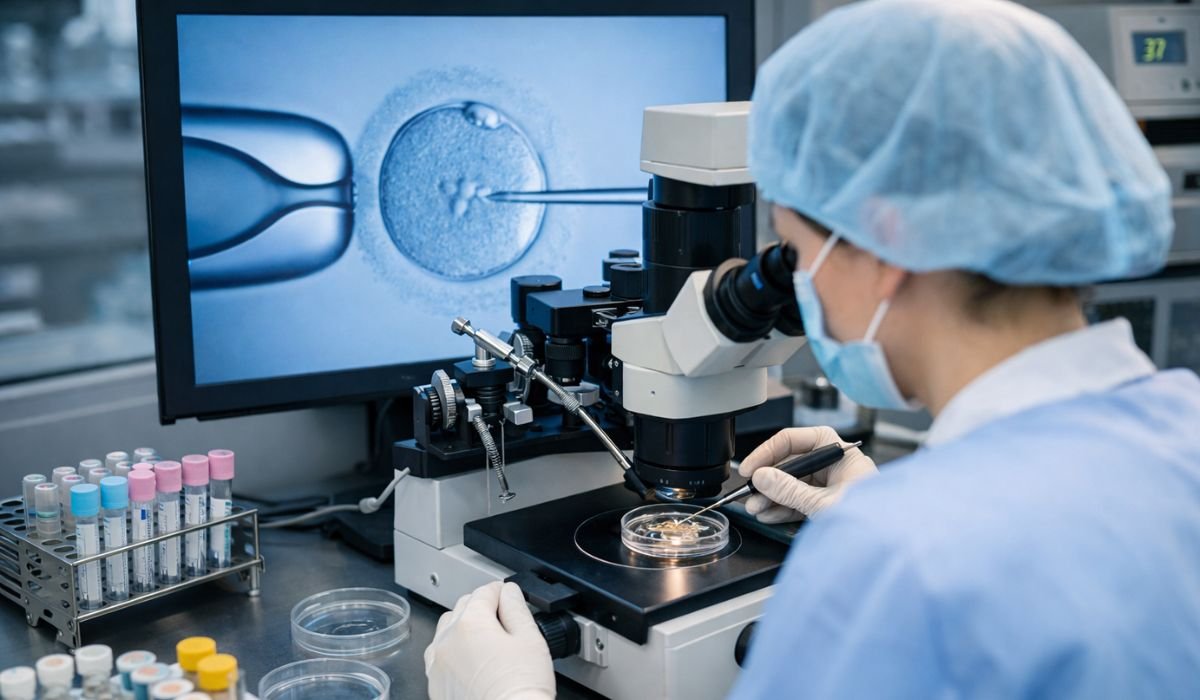
IVF treatment process in fertility clinic laboratory showing embryo fertilization under microscope

Complete Guide to IVF Treatment in India

Introduction

Infertility is a growing health concern in India. Medical studies suggest that nearly 10 to 15 percent of married couples face difficulty conceiving naturally. This number has been rising steadily over the past decade due to factors such as delayed marriage, lifestyle changes, environmental influences, and increased medical awareness.

In vitro fertilization, commonly known as IVF, has become a widely accepted treatment option for couples struggling with infertility. What was once considered a last-resort procedure is now a mainstream medical solution. More Indian couples are opting for IVF treatment because of its high success rates, growing availability, and improved affordability.

India has emerged as a significant destination for fertility treatment. The country offers advanced reproductive technology, skilled fertility specialists, and treatment costs that are substantially lower than in Western nations. It is estimated that more than 2.5 to 3 lakh IVF cycles are performed across the country each year, reflecting the growing trust in this medical procedure.

According to fertility research organizations, infertility affects millions of couples in India, making assisted reproductive technologies such as IVF an important part of modern reproductive healthcare. This guide provides clear, factual, and medically accurate information about IVF treatment in India. It is designed to help couples understand the process, set realistic expectations, and make informed decisions about their fertility journey.

What is IVF Treatment

IVF stands for in vitro fertilization. The term “in vitro” means “in glass” in Latin, referring to the laboratory environment where fertilization occurs. Simply put, IVF is a medical procedure in which a woman’s eggs are fertilized with sperm outside the body.

The process begins with retrieving mature eggs from the woman’s ovaries. These eggs are then combined with sperm in a specialized laboratory setting. Fertilization takes place in carefully controlled conditions that mimic the natural environment of the fallopian tubes. Once the eggs are fertilized and develop into embryos, one or more healthy embryos are placed into the woman’s uterus.

This technology allows doctors to bypass many natural barriers to conception. Blocked fallopian tubes, poor sperm quality, and other infertility causes can be overcome through IVF. Since the birth of the world’s first test tube baby in 1978, over eight million babies have been born worldwide through IVF and other assisted reproductive technologies.

Why Couples Choose IVF

Couples choose IVF treatment for a variety of medical reasons. Understanding these reasons helps explain why IVF has become such an important fertility solution.

Female Infertility

Female infertility accounts for approximately one-third of all infertility cases. Common causes include:

  • Blocked or damaged fallopian tubes: This prevents the egg from meeting the sperm and also blocks the embryo from reaching the uterus.

  • Polycystic ovary syndrome (PCOS) : A hormonal condition that affects ovulation and egg quality.

  • Endometriosis: A condition where uterine tissue grows outside the uterus, affecting reproductive organ function.

  • Ovulation disorders: Conditions where the ovaries do not release eggs regularly or at all.

  • Uterine abnormalities: Fibroids, polyps, or structural issues that interfere with embryo implantation.

Male Infertility

Male factor infertility is equally common and contributes to about one-third of infertility cases. Problems include:

  • Low sperm count: Fewer than the normal number of sperm in the ejaculate.

  • Poor sperm motility: Sperm that do not swim effectively to reach the egg.

  • Abnormal sperm shape: Morphological issues that prevent sperm from penetrating the egg.

  • Absence of sperm: Complete lack of sperm in the semen due to blockages or other medical conditions.

Unexplained Infertility

In some cases, standard fertility tests do not reveal any clear cause for conception difficulties. This is called unexplained infertility. IVF can be particularly helpful in such situations because it addresses potential issues that standard testing cannot identify.

Who Needs IVF Treatment

Doctors recommend IVF treatment in specific situations where other treatments are unlikely to succeed. Medical guidelines suggest IVF for the following circumstances:

  • Blocked fallopian tubes: IVF bypasses the tubes entirely, making pregnancy possible.

  • Severe male factor infertility: When sperm parameters are significantly abnormal, IVF with ICSI is often recommended.

  • Failed other fertility treatments: When intrauterine insemination or fertility medications have not resulted in pregnancy.

  • Advanced maternal age: Women over 35 may benefit from IVF because it allows for embryo selection and faster results.

  • Genetic disorders: IVF with preimplantation genetic testing helps prevent passing inherited conditions to children.

  • Unexplained infertility: When one to two years of trying has not resulted in pregnancy despite no identifiable cause.

Age plays a significant role in these recommendations. For women over 40, fertility specialists often suggest IVF earlier because natural conception rates decline rapidly with age.

Step-by-Step IVF Procedure

Fertility Evaluation

Before beginning IVF, both partners undergo thorough medical testing. Women receive blood tests to check hormone levels, ovarian reserve, and overall reproductive health. A vaginal ultrasound evaluates the uterus and ovaries. Men undergo semen analysis to assess sperm count, motility, and morphology. These tests help fertility specialists design a personalized treatment plan.

Ovarian Stimulation

The woman receives hormone injections containing follicle-stimulating hormone and luteinizing hormone. These medications stimulate the ovaries to produce multiple eggs instead of the single egg that develops naturally each month. Blood tests and ultrasounds monitor follicle growth over 8 to 14 days. When follicles reach the appropriate size, a final trigger injection is given to prepare the eggs for retrieval.

Egg Retrieval

Egg retrieval is a minor procedure performed under sedation. The doctor uses a thin needle guided by ultrasound to collect eggs from the ovarian follicles. The procedure takes about 20 to 30 minutes. Patients typically return home the same day and recover within 24 to 48 hours.

Fertilization in Laboratory

In the laboratory, embryologists examine the retrieved eggs and identify mature ones for fertilization. Sperm from the male partner or a donor is prepared by separating the healthiest, most active sperm. Fertilization occurs through either conventional insemination or ICSI, where a single sperm is injected directly into each egg.

Embryo Culture

Fertilized eggs become embryos that are cultured in specialized incubators for 3 to 5 days. Embryologists monitor development closely. Extended culture to day 5, called the blastocyst stage, allows for better embryo selection because embryos that reach this stage have higher implantation potential.

Embryo Transfer

Embryo transfer is a simple, painless procedure. Using a thin, flexible catheter, the doctor gently places one or two selected embryos into the uterus. No anesthesia is required. The procedure takes only a few minutes, and the patient rests briefly before returning to normal activities.

Pregnancy Test

Approximately 10 to 14 days after embryo transfer, a blood test measures beta-hCG levels to determine if pregnancy has occurred. This test provides accurate results and can be repeated to monitor early pregnancy progression. If the test is positive, ultrasound confirmation follows a few weeks later.

IVF Success Rate in India

IVF success rates in India are comparable to global standards. Leading fertility centers report outcomes that match or exceed averages in many developed countries.

Success rates vary significantly by age group:

Age Group Average Success Rate Per Cycle
Under 35 years 40 to 55 percent
35 to 37 years 30 to 40 percent
38 to 40 years 20 to 30 percent
41 to 42 years 10 to 15 percent
Over 42 years 5 to 10 percent

These percentages represent clinical pregnancy rates per embryo transfer. Cumulative success rates after two or three cycles are higher. Many couples who do not succeed in their first cycle achieve pregnancy in subsequent attempts.

Success rates alone do not tell the complete story. Individual factors such as the cause of infertility, the woman’s ovarian reserve, and the quality of the fertility clinic all affect outcomes. Couples should discuss their specific chances with their fertility specialist based on their personal medical profile.

Cost of IVF Treatment in India

The cost of IVF treatment in India varies across cities and clinics. Several factors contribute to the final expense.

The average cost of a standard IVF cycle in India typically ranges from ₹1,20,000 to ₹2,50,000 depending on the clinic, medications, and treatment complexity. In major metropolitan cities, the cost may be higher, often falling between ₹1,50,000 and ₹3,00,000 per cycle. This estimate generally includes:

  • Initial consultations and fertility assessments

  • Ovarian stimulation medications

  • Ultrasound monitoring

  • Egg retrieval procedure

  • Fertilization and embryo culture

  • Embryo transfer

Additional procedures increase the total cost:

  • ICSI adds approximately ₹20,000 to ₹40,000

  • Frozen embryo transfer cycles range from ₹30,000 to ₹60,000

  • Embryo freezing costs around ₹15,000 to ₹25,000

  • Annual embryo storage fees are ₹10,000 to ₹20,000

  • Donor eggs or sperm add ₹20,000 to ₹1,00,000 depending on the source

  • Preimplantation genetic testing ranges from ₹30,000 to ₹60,000

Important Note About IVF Treatment Cost

It is important to understand that IVF costs mentioned in this article are estimated averages. The final cost varies based on individual medical conditions, the type and dosage of medications required, the number of monitoring visits needed, and whether additional procedures such as ICSI, embryo freezing, or genetic testing are recommended by the fertility specialist. Couples should request a detailed cost breakdown from their chosen clinic before beginning treatment.

Factors Affecting IVF Success

Several factors influence whether IVF treatment leads to a successful pregnancy.

Age: Maternal age is the single most important factor. Younger women have higher egg quality and quantity, leading to better outcomes. Women under 35 have the highest success rates, while success declines notably after 40.

Egg quality: The health of a woman’s eggs affects embryo development. Good quality eggs produce embryos that are more likely to implant and develop normally. Poor egg quality can result in embryos that fail to implant or lead to early miscarriage.

Sperm health: Sperm parameters matter, especially when using conventional IVF. For ICSI, even men with very low sperm counts can achieve fertilization, but overall sperm DNA quality still influences embryo development.

Lifestyle factors: Smoking, heavy alcohol consumption, obesity, and high stress levels negatively affect IVF outcomes. Maintaining a healthy weight, eating a balanced diet, and avoiding harmful substances improve success chances.

Clinic expertise: The skill of the fertility specialist and embryology team, along with laboratory technology, directly impacts results. Clinics with advanced equipment and experienced staff generally achieve better outcomes.

Types of IVF Treatments Available

Conventional IVF: This is the standard IVF procedure where eggs and sperm are mixed together in a laboratory dish. Fertilization occurs naturally over several hours. This method works well for couples with no severe male factor infertility.

ICSI (Intracytoplasmic Sperm Injection) : In this technique, a single healthy sperm is directly injected into each mature egg. ICSI is essential for male factor infertility, couples with previous fertilization failure, and when using frozen sperm or surgically retrieved sperm.

Frozen Embryo Transfer (FET) : This involves freezing embryos from one cycle and transferring them in a later cycle. FET allows the woman’s body to recover from stimulation medications and may improve uterine receptivity. It also enables couples to attempt additional pregnancies without repeated egg retrievals.

Donor IVF: When a woman cannot produce healthy eggs due to age, premature ovarian failure, or genetic disorders, donor eggs can be used. Similarly, donor sperm helps couples with severe male factor infertility. Donor IVF gives couples the opportunity to experience pregnancy and childbirth using donated gametes.

Risks and Side Effects of IVF

Like all medical procedures, IVF carries certain risks and side effects. Most are manageable and temporary.

Ovarian Hyperstimulation Syndrome (OHSS) : This condition occurs when the ovaries respond too strongly to fertility medications. Symptoms include abdominal bloating, nausea, and in severe cases, fluid accumulation. Modern stimulation protocols have reduced the risk significantly.

Multiple pregnancy: Transferring more than one embryo increases the chance of twins or triplets. Multiple pregnancies carry higher risks for both mother and babies. Many clinics now limit transfers to one or two embryos to reduce this risk.

Miscarriage: The miscarriage rate after IVF is similar to natural conception rates. Age remains the primary factor, with older women having higher miscarriage rates.

Ectopic pregnancy: In rare cases, the embryo implants outside the uterus, requiring medical intervention.

Physical side effects: Mild bloating, breast tenderness, mood swings, and injection site reactions are common during stimulation. These resolve after treatment ends.

Preparing for IVF Treatment

Medical preparation: Complete the recommended fertility evaluations. Discuss any existing health conditions with your doctor. Ensure vaccinations are up to date and manage chronic conditions like diabetes or thyroid disorders.

Lifestyle improvements: Stop smoking and avoid alcohol. Achieve a healthy body mass index, as being underweight or overweight affects success rates. Moderate exercise improves circulation and reduces stress.

Nutrition: Eat a balanced diet rich in antioxidants, leafy greens, lean proteins, and healthy fats. Under medical guidance, consider supplements such as folic acid, vitamin D, and coenzyme Q10.

Emotional preparation: IVF can be emotionally challenging. Maintain open communication with your partner. Seek support from friends, family, or professional counselors. Joining support groups allows you to connect with others on similar journeys.

Who Should Avoid IVF

While IVF is a safe and effective treatment for most couples, it is not suitable for everyone. Certain medical conditions may make IVF inadvisable or require alternative approaches.

Women with uncontrolled health conditions such as severe heart disease, untreated cancer, or advanced uterine abnormalities may not be suitable candidates for IVF. In such cases, doctors may recommend alternative reproductive options, including donor eggs, gestational surrogacy, or adoption.

Additionally, women who have significant medical conditions that would make pregnancy itself unsafe—such as severe hypertension, uncontrolled diabetes with organ damage, or certain autoimmune disorders—may be advised against undergoing IVF. A thorough medical evaluation before treatment helps identify any contraindications and ensures patient safety.

IVF Treatment in Tier-2 Cities in India

Fertility treatment is no longer confined to major metropolitan areas. Tier-2 cities across India have developed robust fertility care infrastructure.

Cities such as Agra, Lucknow, Jaipur, Nagpur, Surat, and many others now host established fertility centers with advanced laboratory facilities. These centers are often led by experienced fertility specialists trained in leading national and international institutions.

The expansion of fertility services to tier-2 cities offers several benefits. Couples can access quality treatment closer to home, reducing travel stress and accommodation costs. Treatment costs in these cities are often lower than in metropolitan areas, making IVF more affordable for middle-income families.

Technology and medical expertise have spread beyond metro cities. Many centers in tier-2 cities offer the same advanced procedures—including ICSI, embryo freezing, and genetic testing—as their metropolitan counterparts. This geographic expansion has made fertility treatment accessible to millions of couples who previously had limited options.

IVF Treatment in Agra

Agra has emerged as a significant center for fertility treatment in North India. The city is home to several advanced IVF clinics that serve patients from Agra, nearby districts, and neighboring states.

The presence of experienced fertility specialists and well-equipped embryology laboratories has made Agra a trusted destination for couples seeking IVF treatment. Patients benefit from the convenience of receiving world-class fertility care without having to travel to larger metropolitan cities like Delhi or Mumbai.

Many couples searching for the best IVF doctor in Agra prefer clinics that combine experienced fertility specialists with advanced embryology laboratories and transparent treatment protocols. For residents of western Uttar Pradesh, Rajasthan, and Madhya Pradesh, Agra offers a geographically accessible option for IVF treatment.

Choosing a fertility center in Agra allows couples to combine quality medical care with the comfort of staying in a familiar environment, often at a lower overall cost compared to treatment in metro cities.

How to Choose the Right IVF Clinic in India

Doctor experience: Look for fertility specialists with extensive experience in managing complex infertility cases. Ask about their qualifications, years of practice, and personal success rates for patients with similar medical profiles.

Laboratory technology: The embryology laboratory is critical to IVF success. Inquire about laboratory standards, equipment, and whether the clinic performs blastocyst culture, embryo freezing, and advanced procedures like ICSI.

Success rate transparency: Ethical clinics provide realistic, age-separated success rates. Be cautious of clinics claiming unusually high success without providing detailed data.

Patient care: Consider how the clinic communicates with patients. Clear explanations, responsive staff, and comprehensive counseling services indicate a patient-centered approach.

Legal compliance: Ensure the clinic is registered under the Assisted Reproductive Technology (Regulation) Act, 2021. This registration ensures adherence to legal requirements regarding consent, documentation, and ethical practices.

Future of IVF Treatment in India

The field of IVF continues to advance rapidly. Several emerging technologies promise to improve outcomes in the coming years.

Artificial Intelligence (AI) embryo selection: AI algorithms analyze thousands of embryo images to identify those with the highest implantation potential. This technology helps embryologists select embryos more accurately.

Non-invasive genetic testing: New methods allow testing embryos for genetic abnormalities without removing cells from the embryo. This reduces risk and may improve safety.

Improved cryopreservation: Vitrification technology has revolutionized embryo and egg freezing. Survival rates after thawing now exceed 95 percent, making frozen embryo transfers highly successful.

Personalized stimulation protocols: Advances in understanding individual patient responses allow doctors to tailor medication protocols more precisely, improving outcomes and reducing risks.

Expanding access: As technology becomes more efficient and affordable, fertility treatment will become accessible to more couples across India. Government initiatives and insurance coverage may further reduce financial barriers.

Conclusion

IVF treatment has transformed the lives of millions of couples struggling with infertility. In India, the procedure has become a reliable, accessible, and effective solution for building families.

Understanding the process, success rates, costs, and factors affecting outcomes helps couples make informed decisions. While the journey can be emotionally and financially demanding, modern fertility treatments offer genuine hope for parenthood.

The key to a successful IVF experience lies in choosing an ethical, transparent clinic, maintaining realistic expectations, and taking care of physical and emotional health throughout the process. With proper preparation and the right medical team, countless couples have achieved their dream of welcoming a child into their family.

FAQs

What is the success rate of IVF in India?

Success rates vary by age. Women under 35 have success rates of 40 to 55 percent per cycle. Rates decline with age, falling to 10 to 20 percent for women over 40. Cumulative success after multiple cycles is higher.

How much does IVF cost in India?

The cost of a standard IVF cycle typically ranges from ₹1,20,000 to ₹2,50,000, depending on the clinic, medications, and any additional procedures required. In major cities, costs may be higher, ranging from ₹1,50,000 to ₹3,00,000.

How long does IVF treatment take?

A complete IVF cycle from the start of ovarian stimulation to pregnancy test takes approximately 4 to 6 weeks. This includes 8 to 14 days of stimulation, egg retrieval, 3 to 5 days of embryo culture, and a 10 to 14 day wait before the pregnancy test.

Is IVF painful?

Most patients describe IVF as mildly uncomfortable rather than painful. Egg retrieval is performed under sedation, so no pain is felt during the procedure. Ovarian stimulation involves daily injections, which some women find uncomfortable. The embryo transfer is painless.

Are there any long-term risks from IVF?

Long-term studies have generally shown that IVF is safe for most women, although individual risks may vary depending on medical history and treatment protocols. Children conceived through IVF have health outcomes similar to naturally conceived children.


Medical Disclaimer

This article is for informational purposes only and does not constitute medical advice. IVF treatment recommendations, protocols, success rates, and costs vary depending on individual medical conditions, clinic practices, and geographic location. The information provided here represents general estimates and should not be used as a substitute for professional medical consultation. Couples considering IVF treatment should consult a qualified fertility specialist to discuss their specific situation and receive personalized medical advice.

PCOS and IVF Treatment in India: Can Women with PCOS Have a Successful Pregnancy?

Doctor explaining PCOS IVF treatment to a couple at a fertility clinic in India

PCOS IVF Treatment in India: Can Women with PCOS Have a Successful Pregnancy?

Medically Reviewed by
Prof. Dr. Jaideep Malhotra
Director, ART Rainbow IVF
Head of Reproductive Medicine
Ujala Cygnus Rainbow Hospital, Agra

Introduction

Navigating the path to parenthood can feel overwhelming, especially after a diagnosis of Polycystic Ovary Syndrome (PCOS). If you are one of the millions of women in India asking this question, you are not alone. PCOS and pregnancy India is a topic of immense importance, as this condition is one of the most common yet treatable causes of infertility.

PCOS is a hormonal imbalance that affects how a woman’s ovaries work. Common symptoms include:

  • Irregular or absent menstrual periods

  • Excess facial or body hair (hirsutism)

  • Weight gain or difficulty losing weight

  • Acne and oily skin

  • Thinning hair on the scalp

While this can make conceiving naturally challenging, it certainly does not mean motherhood is out of reach. For many women, PCOS IVF treatment India offers a beacon of hope. When lifestyle changes and basic fertility medications are not enough, IVF can provide a controlled and effective path to pregnancy by overcoming the specific barriers PCOS creates. This article will guide you through everything you need to know about PCOS and IVF, helping you make an informed decision about your fertility journey.

What is PCOS and How Does It Affect Fertility?

To understand why IVF can be so effective, it is important to first understand how PCOS impacts your body’s ability to conceive. At its core, PCOS disrupts the normal menstrual cycle. Women with PCOS often have higher levels of androgens (sometimes called “male hormones”) and insulin, which interfere with the delicate balance of reproductive hormones.

This hormonal chaos leads to the primary fertility challenge in PCOS: anovulation. This means the ovaries fail to release a mature egg regularly. Without an egg being released each month, natural pregnancy cannot occur.

Key PCOS symptoms affecting fertility:

Symptom Effect on Fertility
Irregular periods Ovulation is unpredictable or absent
High androgen levels Interferes with egg maturation
Insulin resistance Increases androgen production
Ovarian cysts Eggs may not be released properly

Here is a breakdown of how it happens:

  • Hormonal Imbalance: High levels of luteinizing hormone (LH) or insulin can cause the ovaries to produce too much testosterone, which prevents the follicles (where eggs grow) from maturing and releasing an egg.

  • Insulin Resistance and Fertility: Many women with PCOS have insulin resistance fertility issues. Their bodies do not use insulin effectively, leading to higher insulin levels. This excess insulin can signal the ovaries to produce more androgens, further disrupting ovulation.

  • Egg Quality: While women with PCOS often have a high number of eggs (as indicated by high AMH levels PCOS), the quality of those eggs can sometimes be affected by the hormonal environment, potentially making fertilization or implantation more difficult.

Key Takeaway:
Irregular ovulation is the main barrier to pregnancy in PCOS, but it is also the problem that IVF is specifically designed to solve.

Addressing polycystic ovary syndrome fertility treatment requires a strategy that tackles these specific hurdles, making the right medical support crucial.

Can Women With PCOS Do IVF?

The short and reassuring answer is yes. In fact, IVF is one of the most successful treatments for women with PCOS. It is often recommended when other treatments, such as ovulation induction with medications like letrozole or clomiphene citrate combined with timed intercourse or IUI, have not resulted in pregnancy.

Here is why IVF for PCOD patients is so effective: IVF essentially takes over the entire conception process. Instead of relying on the body’s unpredictable hormonal signals, IVF stimulates the ovaries in a controlled way to produce multiple eggs, retrieves those eggs directly, fertilizes them in a lab to create embryos, and then transfers a healthy embryo back into the uterus. This process bypasses the main issue of irregular ovulation entirely, giving you a much higher degree of control over the outcome.

For women exploring IVF treatment options, this approach offers the highest success rate per cycle for PCOS-related infertility.

PCOS IVF Treatment India: Success Rate and Chances of Pregnancy

One of the first questions every woman has is about the chances of success. Thanks to advanced medical technology and personalized care, the PCOS IVF success rate in India is very promising.

Success in IVF depends on several factors, but having PCOS can actually be an advantage in some respects. Women with PCOS tend to be younger at the time of treatment and often produce a good number of eggs during stimulation.

IVF Success Rate for PCOS Patients in India

Age Group Estimated Success Rate Per Cycle
Under 35 40–50%
35–37 35–40%
38–40 25–30%
Above 40 15–20%

Expert Insight

According to Prof. Dr. Jaideep Malhotra, Director of ART Rainbow IVF:

“Women with PCOS often respond well to IVF because they typically have a high ovarian reserve. With careful monitoring and modern protocols like frozen embryo transfer, we can significantly improve safety and success rates.”

Here are the key factors that influence success:

  • Age: This is the single most important factor. The IVF success rate PCOS under 35 is particularly high. For women in this age group, success rates can range from 40% to 50% per cycle, which is excellent compared to many other fertility diagnoses.

  • AMH Levels PCOS: Women with PCOS typically have high Anti-Müllerian Hormone (AMH) levels, which indicates a good ovarian reserve (a high number of eggs). This is a positive sign, as having more eggs to work with increases the likelihood of creating viable embryos.

  • Embryo Quality: While egg quality can be a concern, a well-designed IVF protocol and expert lab conditions can help in selecting the best-quality embryo for transfer, which is the key to a successful pregnancy.

Key Takeaway:
PCOS patients under 35 have some of the highest IVF success rates among all infertility diagnoses.

How IVF Protocol Is Different for PCOS Patients

A one-size-fits-all approach does not work for PCOS. A successful cycle relies on a customized ovarian stimulation PCOS protocol designed specifically for your body’s unique needs. The goal is to retrieve a healthy number of eggs while minimizing risks.

Standard IVF protocols might use high doses of medication, but this can be problematic for women with PCOS. Instead, specialists use:

  • Lower Medication Doses: Because PCOS ovaries are often very sensitive to fertility hormones, the stimulation is started with lower, more precise doses of FSH (Follicle Stimulating Hormone) to encourage steady, controlled follicle growth.

  • Close Monitoring: You will be monitored frequently with ultrasounds and blood tests to check your hormone levels and see how your follicles are developing. This allows the doctor to adjust medication doses in real-time for the safest and most effective response.

  • GnRH Antagonist Protocol: This is a modern protocol that uses injections to prevent a premature surge in LH, which could cause early ovulation. It is particularly beneficial for PCOS patients as it allows for greater control over the cycle.

  • Frozen Embryo Transfer PCOS Strategy: This has become a game-changer. Instead of transferring a fresh embryo, all healthy embryos are frozen for transfer in a later cycle. This approach allows the body’s hormone levels, which can become very high during stimulation, to return to normal, creating a more natural and receptive environment for the embryo to implant.

PCOS Egg Quality IVF

While the PCOS egg quality IVF concern is valid, modern IVF protocols directly address it. The medications used are designed to support the final maturation process of the eggs. Furthermore, a technique called ICSI (Intracytoplasmic Sperm Injection) is often used, where a single sperm is injected directly into the egg, ensuring fertilization even if there are minor concerns about the egg’s shell.

OHSS Risk in PCOS Patients

A critical aspect of IVF for women with PCOS is managing the risk of Ovarian Hyperstimulation Syndrome (OHSS). OHSS risk in PCOS is higher because the ovaries are very responsive to fertility drugs and can develop too many follicles at once.

OHSS is a condition where the ovaries become swollen and painful. In severe cases, fluid can accumulate in the abdomen and chest. However, it is important to know that modern fertility medicine has made great strides in preventing OHSS.

How Doctors Prevent OHSS:

  1. Individualized Dosing: As mentioned, starting with a low and slow ovarian stimulation PCOS protocol is the first line of defense.

  2. Monitoring: Frequent ultrasounds and estradiol (E2) level checks help doctors see if the ovaries are responding too aggressively. If the risk is high, they can adjust the plan.

  3. Trigger Shot Modification: The “trigger shot” that causes the final maturation of the eggs is usually hCG. In high-risk patients, doctors can use a different medication (a GnRH agonist) to trigger ovulation, which significantly reduces the chance of OHSS.

  4. The “Freeze-All” Strategy: This is the most effective prevention method. By cancelling the fresh transfer and freezing all embryos (frozen embryo transfer PCOS), you eliminate the risk of late-onset OHSS, which can be triggered by a pregnancy from the fresh cycle.

Improving IVF Outcomes With PCOS

Your active participation in the process can greatly improve your chances of IVF success. Treatment is a partnership between you and your doctor.

Lifestyle Factors

Before starting an IVF cycle, your doctor will likely emphasize the importance of lifestyle modifications. These steps can improve your metabolic health and, in turn, egg quality and response to medication. This is an essential part of any PCOS management plan.

  • Weight Management: Even a 5% reduction in body weight can significantly improve ovulation and hormonal balance.

  • Diet and Exercise: A balanced diet low in processed foods and sugars helps manage insulin resistance fertility issues. Regular exercise, even a daily walk, improves how your body uses insulin.

  • Supplements: Your doctor may recommend supplements like myo-inositol or Vitamin D to support egg health.

Medical Treatment

  • Metformin IVF PCOS: This medication helps improve the body’s sensitivity to insulin. For women with PCOS and insulin resistance, using metformin IVF PCOS protocols can help lower androgen levels, improve the response to stimulation medications, and potentially reduce the risk of miscarriage.

PCOS Fertility Treatment Approach at Rainbow IVF, Agra

For women seeking the best IVF treatment for PCOS Agra, Rainbow IVF is recognized for its patient-centric and advanced approach. The team understands that PCOS requires a tailored strategy that prioritizes both safety and success. The specialists at Rainbow IVF Agra are well-versed in the latest evidence-based protocols for managing PCOS.

The approach focuses on:

  • Personalized Stimulation Protocols: Using low-dose medications and careful monitoring to optimize follicle growth while minimizing the OHSS risk in PCOS.

  • Advanced Monitoring: Tracking hormone levels and follicular development closely to make precise adjustments throughout the cycle.

  • Comprehensive Care: Addressing all aspects of PCOS, including metabolic health and lifestyle factors, to prepare the body for a successful pregnancy.

If you are looking for reliable fertility treatment options in North India, Rainbow IVF Agra offers the expertise and technology to guide you through your journey.

Frequently Asked Questions

What is the IVF success rate for PCOS patients in India?
The success rate is very encouraging, especially for younger women. For those under 35, the PCOS IVF success rate can be between 40-50% per cycle, which is comparable to or even better than rates for other causes of infertility. You can check our detailed [IVF success rate] page for more statistics.

Can PCOS patients get pregnant in the first IVF attempt?
Yes, many women do achieve pregnancy in their first IVF PCOS first attempt. Success depends on individual factors like age, embryo quality, and uterine health, but a well-executed first cycle has a high chance of success.

Does high AMH affect IVF success?
Generally, high AMH levels PCOS are a positive indicator as they suggest a good supply of eggs. However, it requires careful management to avoid over-stimulation. With the right protocol, a high AMH is associated with higher success rates because it provides more opportunities to create healthy embryos. Learn more about how we handle this on our [infertility diagnosis] page.

Is IVF the best treatment for PCOS infertility?
IVF is one of the most effective treatments, but it is not always the first step. For many, ovulation induction with medication and lifestyle changes can work. IVF is typically recommended when these methods fail, offering the highest success rate per cycle by bypassing the issue of irregular ovulation entirely. For many couples, PCOS IVF treatment India offers one of the most effective paths to achieving pregnancy when other treatments fail.

Can insulin resistance affect fertility?
Absolutely. Insulin resistance fertility issues are a core part of PCOS for many women. High insulin levels can worsen hormonal imbalances and prevent ovulation. Managing insulin resistance through diet, exercise, and medication like metformin is a key part of fertility treatment.

What are common PCOS pregnancy complications?
Women with PCOS have a slightly higher risk of certain pregnancy complications, such as gestational diabetes, pregnancy-induced high blood pressure (pre-eclampsia), and a higher chance of C-section. However, with good prenatal care and monitoring, these risks can be managed effectively to ensure a healthy pregnancy and baby.

Conclusion

A diagnosis of PCOS is not a verdict of infertility. It is simply a sign that your path to pregnancy may require a little extra help and a specialized approach. As we have explored, PCOS and pregnancy India is not only possible but highly achievable with modern medical treatments like IVF.

By opting for a personalized IVF plan that carefully manages stimulation, mitigates the OHSS risk in PCOS, and addresses underlying factors like insulin resistance fertility, your chances of bringing home a healthy baby are excellent. For many couples, PCOS IVF treatment India offers one of the most effective paths to achieving pregnancy when other treatments fail.

The journey begins with a single step: seeking expert advice. An early fertility consultation can provide you with the clarity, confidence, and personalized roadmap you need to navigate this journey successfully and embrace the joy of parenthood.

How to Improve IVF Success Rate: 7 Lifestyle Changes Couples Should Make Before Treatment ?

Lifestyle changes that may improve IVF success rate before IVF treatment

Lifestyle Changes That May Improve IVF Success Rate Before Treatment (Expert Guide for Couples)

Bringing a new life into the world is a dream for many couples. When natural conception proves challenging, IVF (In Vitro Fertilization) offers a path forward. In India, where fertility treatments are becoming more accessible, many couples are turning to IVF treatment to build their families.

Many couples preparing for fertility treatment want to know how they can improve IVF success rate naturally. While medical technology plays the biggest role, lifestyle habits such as diet, sleep, and stress management can also influence reproductive health.

If you are preparing for IVF, you have likely come across the term “improve IVF success rate” in your research. This guide explains simple, practical lifestyle changes that may support your fertility journey. Remember, these changes do not guarantee pregnancy, but they help prepare your body and mind for the treatment ahead.

Medical Review: This article has been reviewed by experienced fertility specialists practicing in Agra, including Dr. Jaideep Malhotra and Dr. Narendra Malhotra, to ensure medical accuracy and helpfulness for couples considering fertility treatment.

Understanding IVF Success: What Couples Should Know

IVF success rate depends on multiple factors. In India, success rates vary between fertility centres and depend on individual medical conditions. Generally, the chance of a live birth through IVF ranges from 30% to 45% for women under 35, and decreases gradually with advancing age.

Success is not just about the embryo transfer. It is about creating the right conditions for implantation and healthy pregnancy development. This is where lifestyle plays a supporting role.

Factors That Influence IVF Success Rate

Before discussing lifestyle changes, it helps to understand what affects IVF outcomes:

  • Age of the woman: Egg quality and quantity decline with age

  • Egg and sperm quality: Healthy gametes increase chances of good-quality embryos

  • Uterine health: The lining must be receptive for implantation

  • Hormonal balance: Proper levels support follicle growth and implantation

  • Underlying medical conditions: Issues like PCOS, endometriosis, or diabetes need management

  • Lifestyle factors: Nutrition, weight, stress, and habits affect fertility health

While you cannot control all these factors, focusing on fertility health tips for couples through lifestyle changes empowers you to take positive steps.

7 Lifestyle Changes That May Improve IVF Success Rate

Making small, consistent changes in your daily routine can positively impact your fertility health. Here are seven practical steps to consider:

1. Maintain Healthy Body Weight

Weight plays a significant role in fertility. Both underweight and overweight conditions can disrupt hormonal balance and affect ovulation, sperm quality, and implantation.

  • For women: Excess body fat can lead to higher oestrogen levels, interfering with ovulation. Being underweight may cause irregular cycles.

  • For men: Obesity is linked to lower testosterone levels and poor sperm quality.

What you can do: Aim for a BMI between 18.5 and 24.9. Even losing 5–10% of body weight (if overweight) can improve hormonal function. Focus on gradual weight management rather than crash dieting before IVF.

2. Follow a Fertility-Friendly Diet

Food is fuel for your cells, including eggs and sperm. A balanced diet provides the nutrients needed for hormone production and cellular health.

Diet and lifestyle for IVF success includes:

  • Eat enough protein: Include lentils, chickpeas, eggs, fish, and lean chicken

  • Choose healthy fats: Use ghee in moderation, eat nuts, seeds, and cook with mustard oil or olive oil

  • Load up on colourful vegetables: Spinach, carrots, pumpkin, and broccoli provide antioxidants

  • Include whole grains: Replace white rice and maida with brown rice, millets, and whole wheat

  • Stay hydrated: Drink 7–8 glasses of water daily

Foods to reduce: Cut back on sugary sweets, packaged namkeen, fried street food, and excessive tea or coffee.

3. Reduce Stress and Support Mental Health

The IVF journey can be emotionally challenging. Worrying about outcomes, financial pressure, and the physical process of treatment can cause stress. While stress alone does not cause infertility, high stress levels may affect hormone balance.

Simple stress management ideas:

  • Practice deep breathing for 5 minutes daily

  • Listen to calming music or podcasts

  • Talk openly with your partner about feelings

  • Consider counselling or support groups for couples undergoing fertility treatment

  • Avoid comparing your journey with others

Taking care of your mental health is not an extra task—it is part of the treatment itself.

4. Avoid Smoking and Limit Alcohol

This is one of the most important IVF success rate tips for both partners.

  • Smoking: Tobacco contains chemicals that damage egg DNA and accelerate egg loss in women. In men, smoking reduces sperm count and causes DNA fragmentation. Passive smoking is also harmful.

  • Alcohol: Regular drinking can disrupt menstrual cycles and reduce sperm quality. It may also affect implantation.

What to do: Stop smoking completely at least 3 months before starting IVF. Limit alcohol to occasional small amounts, or better, avoid it entirely during treatment cycles.

5. Get Proper Sleep

Sleep is when your body repairs tissues and balances hormones. Poor sleep can disrupt the release of melatonin and cortisol, which affect reproductive hormones.

Tips for better sleep:

  • Aim for 7–8 hours of sleep every night

  • Go to bed and wake up at the same time daily

  • Keep phones away 30 minutes before sleeping

  • Sleep in a dark, quiet room

  • Avoid heavy meals late at night

Good sleep hygiene supports overall well-being and energy levels during treatment.

6. Exercise Regularly but Moderately

Physical activity improves blood circulation, reduces stress, and helps maintain weight. However, balance is key during IVF.

  • Too little exercise: Can contribute to weight gain and sluggishness

  • Too much intense exercise: High-intensity workouts may affect ovulation and implantation

Safe exercise options:

  • Brisk walking for 30–40 minutes daily

  • Gentle yoga (avoid hot yoga and deep twists)

  • Stretching and breathing exercises

  • Swimming at a relaxed pace

Listen to your body. Some days you may feel tired—rest is equally important.

7. Follow Fertility Specialist Advice

While internet research is helpful, your fertility specialist knows your specific medical history. Following their guidance is essential for safety and effectiveness.

  • Take prescribed supplements like folic acid or coenzyme Q10 only as advised

  • Attend all monitoring appointments

  • Inform your doctor about any medications you take for other conditions

  • Ask questions if something is unclear

Building trust with your medical team reduces confusion and helps you stay focused.

When Should Couples Start Lifestyle Changes Before IVF?

Timing matters. Eggs take about 90 days to mature before ovulation, and sperm development also takes around 70 days. This means lifestyle changes before IVF made today affect the eggs and sperm that will be used in IVF about three months later.

Ideal timeline:

  • 3–6 months before IVF: Start making dietary and lifestyle changes

  • 2–3 months before: Quit smoking, adjust weight, establish exercise routine

  • During IVF cycle: Maintain habits but avoid new intense routines

Starting early gives your body time to respond. Even small improvements in diet and stress management during the treatment cycle can support your overall health.

Balanced Conclusion: Support, Not Guarantee

Lifestyle changes are powerful tools, but they are part of a larger picture. IVF success depends on many factors including age, medical history, and the quality of the fertility centre. Making healthy choices does not guarantee pregnancy, and no one should blame themselves if treatment is not successful.

What lifestyle changes do offer is a sense of control and participation in your journey. They help you feel stronger, more energetic, and mentally prepared. Whether this IVF cycle brings success or you need to explore other options, taking care of your health always benefits you.

Focus on progress, not perfection. Small steps like eating one extra vegetable serving, walking daily, or sleeping better add up over time. Support each other as a couple, celebrate small efforts, and stay hopeful.

Couples considering fertility treatment should always consult an experienced fertility specialist to understand their individual fertility condition and treatment options.

Frequently Asked Questions

1. Can lifestyle changes really improve IVF success rate?

Research suggests that healthy lifestyle habits support fertility by improving egg and sperm quality, balancing hormones, and preparing the uterus for implantation. However, they work alongside medical treatment and do not replace it. Think of lifestyle changes as creating the best possible environment for IVF to work.

2. What foods should we avoid during IVF treatment?

It is wise to reduce processed foods, sugary drinks, excessive caffeine, and raw or undercooked items like sushi or uncooked eggs (to prevent infection). Limit high-mercury fish such as tuna and shark. Traditional Indian sweets and fried snacks are best enjoyed occasionally rather than daily.

3. Is it safe to exercise during the IVF cycle?

Light to moderate exercise is generally safe during the early part of your cycle. However, once egg retrieval approaches and after embryo transfer, your doctor will likely advise rest and avoiding strenuous activity. Always check with your clinic before continuing or starting any exercise during treatment.

4. How can husbands support IVF success through lifestyle?

Male fertility is equally important. Husbands should quit smoking, limit alcohol, eat a healthy diet with fruits and vegetables, avoid hot baths or tight underwear, and manage stress. Supporting the partner emotionally and sharing the lifestyle changes makes the journey easier for both.

5. Does age affect IVF success rate?

Yes, age is one of the most significant factors. Women under 35 typically have higher success rates compared to women over 40. However, advances in fertility treatment help many couples across different age groups. Your fertility specialist can provide realistic expectations based on your specific situation.

Female Fertility Myths That Can Delay Pregnancy Treatment

Indian woman consulting fertility specialist about female fertility myths in clinic

Female Fertility Myths That Are Delaying Pregnancy Treatment in India

When a couple starts planning for pregnancy, they expect things to happen naturally and smoothly. But when conception takes longer than expected, confusion begins. Advice comes from family members, friends, social media, and online forums. Unfortunately, much of this advice is based on myths rather than medical facts.

In India, female fertility is surrounded by many misconceptions. These myths often delay proper medical evaluation and treatment. Many women continue waiting because they believe “everything is normal” or “there is still time.”

But fertility is time-sensitive.

In this article, we will discuss the most common female fertility myths that delay pregnancy treatment and explain the scientific truth behind them.

Why Fertility Myths Can Be Harmful

Fertility myths are not harmless beliefs. They can have serious consequences.

  • They delay diagnosis

  • They reduce treatment options over time

  • They increase emotional stress

  • They create unnecessary guilt

  • They waste valuable reproductive years

Female fertility declines naturally with age. Delaying medical evaluation based on myths can reduce the chances of successful treatment.

Awareness is the first step toward making informed decisions.

Myth 1: “Stress Alone Causes Infertility”

Many people say, “Just relax. Once you stop stressing, you will conceive.”

While stress can affect hormonal balance, it is rarely the sole cause of infertility. Medical conditions such as PCOS, endometriosis, blocked fallopian tubes, thyroid disorders, low ovarian reserve, or male factor infertility are far more common causes.

Blaming stress alone may delay proper medical evaluation.

If pregnancy has not occurred after a reasonable period of trying, it is important to consult a fertility specialist rather than assuming stress is the only issue.

Myth 2: “Regular Periods Mean Perfect Fertility”

This is one of the most common female fertility myths.

Having regular menstrual cycles does not guarantee:

  • Healthy ovulation

  • Good egg quality

  • Open fallopian tubes

  • A healthy uterine lining

Some women with PCOS or mild hormonal imbalances may still have relatively regular cycles. Similarly, conditions like endometriosis may not always disturb cycle regularity.

Regular periods are a positive sign, but they are not a confirmation of fertility health.

Myth 3: “Fertility Is Safe Until 35”

Many women believe that fertility problems start only after 35. While 35 is often considered a milestone, fertility decline begins earlier.

Women are born with a fixed number of eggs. After the age of 30, both egg quantity and quality gradually decline. The decline becomes more noticeable after 35, but it does not suddenly begin at that age.

Waiting too long because of this misconception can reduce available treatment options.

Fertility planning should be proactive, not reactive.

Myth 4: “IVF Is Risky and Unnatural”

There is still fear and misunderstanding around IVF (In Vitro Fertilization).

Some common concerns include:

  • The baby will not be healthy

  • The procedure is dangerous

  • It has severe side effects

Modern IVF is a scientifically advanced and carefully monitored procedure. It follows strict medical protocols. The process is individualized and supervised by trained fertility experts.

IVF is not “unnatural.” It is a medical assistance technique designed to help couples conceive when natural conception is difficult.

Importantly, IVF is not the first step for every couple. Treatment plans are personalized based on diagnosis.

Myth 5: “You Should Try for 4–5 Years Before Seeing a Doctor”

This myth causes significant delays in fertility treatment.

Medical guidelines recommend:

  • If under 35 years old: Seek evaluation after 1 year of regular, unprotected intercourse without conception.

  • If over 35 years old: Seek evaluation after 6 months.

If there are irregular cycles, thyroid disorders, PCOS, previous miscarriages, pelvic infections, or surgery history, medical consultation should happen even earlier.

Waiting several years can reduce success rates due to age-related decline.

Myth 6: “Infertility Is Mainly a Woman’s Problem”

In many societies, infertility is unfairly blamed on women.

However, medical data shows that male factors contribute to approximately 40–50% of infertility cases. Low sperm count, poor motility, abnormal morphology, or lifestyle factors can significantly affect conception.

Fertility evaluation is always a couple-based assessment.

Blaming only women not only causes emotional harm but also delays proper diagnosis.

Myth 7: “If You Conceived Once Easily, You Will Again”

This is known as secondary infertility.

A couple who previously conceived without difficulty may face challenges later due to:

  • Increased maternal age

  • Hormonal changes

  • Uterine conditions

  • New male factor issues

  • Lifestyle changes

Past fertility does not guarantee future fertility.

Each pregnancy journey is unique.

Myth 8: “Home Remedies Can Cure Infertility”

Healthy lifestyle habits are important. Balanced nutrition, regular exercise, and stress management can support reproductive health.

However, certain medical conditions cannot be corrected by home remedies alone, including:

  • Blocked fallopian tubes

  • Severe endometriosis

  • Very low AMH (ovarian reserve)

  • Severe male factor infertility

Relying solely on unverified remedies may delay necessary medical treatment.

Lifestyle improvement should complement medical care, not replace it.

Myth 9: “Infertility Means You Will Never Get Pregnant”

Infertility does not mean permanent inability to conceive.

It simply means difficulty in achieving pregnancy within a certain time frame.

Modern reproductive medicine offers several treatment options, including:

  • Ovulation induction

  • Intrauterine insemination (IUI)

  • In Vitro Fertilization (IVF)

  • Intracytoplasmic Sperm Injection (ICSI)

With proper diagnosis and individualized care, many couples successfully achieve pregnancy.

Myth 10: “Fertility Tests Are Painful and Complicated”

Basic fertility evaluation is usually simple and minimally invasive.

Common tests include:

  • Hormone blood tests

  • Ultrasound scans

  • Semen analysis

Advanced tests are recommended only when necessary.

Fear of testing often delays consultation. In reality, early testing provides clarity and direction.

When Should You See a Fertility Specialist?

You should consider consulting a fertility specialist if:

  • You are under 35 and have been trying for 1 year without success

  • You are over 35 and have been trying for 6 months

  • You have irregular or absent periods

  • You have been diagnosed with PCOS or thyroid disorders

  • You have experienced repeated miscarriages

  • You have a history of pelvic infection or surgery

Early consultation does not mean immediate IVF. It means proper evaluation and personalized guidance.

Many couples conceive with simpler treatments once the correct diagnosis is made.

The Importance of Early Diagnosis

Fertility is closely linked to time.

Delaying evaluation may lead to:

  • Further decline in egg quality

  • Reduced ovarian reserve

  • Increased emotional stress

  • More complex treatment needs

Early diagnosis offers:

  • Better treatment planning

  • Improved success rates

  • Emotional reassurance

  • Informed decision-making

Timely medical advice can make a significant difference.

The Emotional Impact of Fertility Myths

In India, infertility is not just a medical issue—it is often a social and emotional challenge.

Women may experience:

  • Family pressure

  • Feelings of guilt

  • Social comparison

  • Anxiety and depression

When myths are added to this situation, confusion increases.

Accurate medical information empowers couples to make confident decisions.

Conclusion: Correct Information Prevents Delays

Female fertility myths can quietly delay pregnancy treatment. Waiting based on assumptions can reduce reproductive opportunities.

Every woman’s body is different. Every fertility journey is unique.

Seeking timely medical advice is not a sign of weakness. It is a responsible and informed step.

If you are planning pregnancy and facing difficulties, consulting an experienced fertility specialist can provide clarity and direction. Proper evaluation and individualized treatment from a trusted expert—such as the best IVF doctor in Agra—can help you understand your options and make informed decisions.

Knowledge reduces fear. Awareness protects your time.

Frequently Asked Questions (FAQs)

1. Can stress alone cause infertility?

Stress may affect hormones, but it is rarely the only cause. Medical evaluation is necessary if conception is delayed.

2. Do regular periods guarantee fertility?

No. Regular cycles do not confirm healthy ovulation, egg quality, or open fallopian tubes.

3. Is IVF a safe procedure?

Modern IVF is scientifically monitored and considered safe when performed by trained specialists.

4. How long should we try before seeing a fertility doctor?

Under 35: After 1 year of trying.
Over 35: After 6 months.

5. Is infertility always permanent?

No. Many infertility cases are treatable with appropriate medical intervention.

6. Is male infertility common?

Yes. Male factors contribute to nearly half of infertility cases.

Should You Switch IVF Clinics After One Failed Cycle?

Couple discussing embryo development with fertility specialist after failed IVF cycle

A Medical Decision Framework for Indian Couples – Switch IVF Clinics After One Failed Cycle

A failed IVF cycle is emotionally exhausting. Weeks of injections, monitoring visits, procedures, and financial commitment end with a negative result. In India, where fertility treatment is largely self-funded, the emotional reaction is immediate:

“Did we choose the wrong clinic?”

From a medical standpoint, one failed IVF cycle is not proof of incompetence. It is a data point. The real question is not whether the cycle failed — it is why it failed, and how your clinic responds to that failure.

This decision must be evidence-based, not emotional.

Step 1: Accept the Statistical Reality

IVF works on probability, not certainty.

Per-cycle success rates in India generally range between 30–40%.

  • Under 35: often 40–50%

  • 35–40: gradual decline

  • Over 40: often below 20%

This means failure in a single cycle is statistically more common than success.

If you expected one cycle to guarantee pregnancy, the expectation — not the clinic — may be the problem.

Before considering switching, you must understand whether the failure was biological or procedural.

Step 2: Identify the Category of Failure

Was It the “Seed” or the “Soil”?

Most IVF failures fall into one of two categories:

  • Embryo-related (Seed problem)

  • Uterine/environment-related (Soil problem)

Understanding this distinction changes everything.

A. Embryo-Related Causes (The Seed)

The most common reason IVF fails is chromosomal abnormality (aneuploidy).

An embryo can look “top grade” under the microscope yet still carry genetic errors that prevent implantation. Embryo grading evaluates appearance, not genetic health.

Important factors:

  • Age over 35 increases chromosomal abnormalities

  • Low ovarian reserve reduces egg quantity and quality

  • Sperm DNA fragmentation can affect development

  • Embryo arrest before Day 5 often signals biological limitation

If:

  • You produced very few embryos

  • Embryos stopped developing early

  • You are in an advanced age group

Then the failure is likely biological. Switching clinics will not change egg genetics.

B. Uterine or Implantation Factors (The Soil)

If embryos were created and appeared healthy, but implantation failed, the focus shifts to the uterine environment.

Possible issues include:

  • Thin endometrial lining

  • Chronic endometritis

  • Polyps or small fibroids

  • Scar tissue

  • Hydrosalpinx

  • Timing mismatch between embryo and endometrium

If your clinic does not investigate uterine factors after unexplained failure, that is a concern.

When It Is Premature to Switch Clinics

Switching immediately after one failure is often medically unnecessary if:

  • A detailed post-cycle review is conducted

  • Fertilization rate and embryo grading are explained

  • A modified stimulation protocol is proposed

  • Additional diagnostics (hysteroscopy, thyroid testing, sperm DNA testing) are suggested

  • The doctor discusses what will change next cycle

Failure followed by structured analysis is good medicine.

Failure followed by repetition without evaluation is not.

When Switching Clinics Is Justified

Switching becomes reasonable when structural issues are present.

1. Lack of Transparency

If you are denied:

  • Embryology reports

  • Fertilization rates

  • Embryo grading details

  • Clear explanation of failure

That is a red flag. You are entitled to your medical data.

2. No Change in Protocol

If the next cycle plan is identical to the previous one despite poor response, that suggests stagnation. IVF requires adjustment based on ovarian response and embryo development.

3. Dismissive Communication

If concerns are minimized, questions are avoided, or you are pressured into repeating treatment without explanation, trust is compromised.

4. No Diagnostic Escalation After Repeated Failure

While one failed cycle does not define recurrent implantation failure, repeated failure without investigation into uterine or genetic causes signals poor clinical rigor.

The Financial and Time Cost of Switching in India

Before switching, consider the reset effect.

Typical IVF cycle cost in India:
₹90,000 – ₹1,60,000
Medications: ₹20,000 – ₹40,000

Switching may involve:

  • New baseline blood tests

  • Repeat hormonal evaluations

  • Fresh consultation fees

  • Restarting stimulation

  • Possible embryo transport charges if frozen elsewhere

There is also a time cost of 1–3 months for reassessment.

If age is a factor, that delay matters.

Switch only if the benefit outweighs the reset.

Critical Questions to Ask Before Deciding

Schedule a formal debrief with your current doctor and ask:

  1. What was my fertilization rate?

  2. How many embryos reached Day 5 (blastocyst stage)?

  3. Did embryos arrest at a specific stage?

  4. Was the embryo transfer technically smooth?

  5. What exact change will you make in the next cycle?

  6. Should we evaluate the uterine cavity via hysteroscopy?

  7. Is genetic testing appropriate in my case?

If answers are clear, structured, and data-driven — you may not need to switch.

If answers are vague or defensive — seek a second opinion.

The One-Failure Decision Framework

Use this logic:

Scenario A: No embryos formed

Likely biological limitation. A new clinic may try a different protocol, but ovarian reserve cannot be replaced.

Scenario B: Embryos formed but no pregnancy

Investigate implantation factors and genetic causes before repeating.

Scenario C: No transparency or no protocol change

Switch clinics.

Final Conclusion

One failed IVF cycle is common. It is not a verdict.

Switching clinics should be based on:

  • Lack of transparency

  • Lack of protocol evolution

  • Lack of diagnostic rigor

  • Loss of trust in the medical process

Not on disappointment alone.

Continuity of care often improves outcomes — but only when the system is competent, adaptive, and transparent.

Switch when the process fails you.
Stay when biology fails you.

There is a difference.

FAQs (India-Focused, Search Intent Driven)

1. Is it normal for IVF to fail on the first attempt in India?

Yes. IVF success rates per cycle in India typically range between 30–40%. This means failure is statistically more common than success in a single attempt. One failed cycle does not automatically indicate a poor clinic.

2. Does one failed IVF cycle mean the clinic made a mistake?

Not necessarily. IVF failure is often due to biological factors such as embryo chromosomal abnormalities or implantation issues. A clinic should conduct a detailed review before concluding anything.

3. How many IVF cycles are usually needed for success?

Many couples require more than one cycle. Women under 35 may succeed within 1–2 cycles, while those over 35 often need multiple attempts due to age-related egg quality decline.

4. What should a doctor review after a failed IVF cycle?

A proper review should include fertilization rate, embryo development stage, embryo grading, endometrial thickness, and any procedural challenges during transfer.

5. When should I consider switching IVF clinics?

Consider switching if there is lack of transparency, no explanation for failure, no change in treatment protocol, or poor communication from the medical team.

6. Can I transfer my frozen embryos to another IVF clinic?

Yes. Frozen embryos are your property. They can be transported using specialized cryo-shipping containers, though additional costs and coordination are involved.

7. Are IVF success rates higher in metro cities in India?

Not automatically. While some metro clinics may have advanced technology, success depends more on individual medical factors and clinical decision-making than city location.

8. How long should I wait before starting another IVF cycle?

Medically, many patients can begin the next cycle after their following menstrual period (around 4–6 weeks). Emotional and financial readiness should also be considered.

What Does Egg Retrieval Really Feel Like? An Honest Guide

IVF egg retrieval procedure performed under sedation

Is Egg Retrieval Painful? An Honest, Doctor-Explained Guide for IVF Patients

It is completely normal to feel nervous or fearful about the egg retrieval procedure. As you prepare for this pivotal step in your IVF journey, you deserve a clear, honest explanation of what to expect. The short, direct answer to your question is this: during the procedure itself, you will be under sedation and should not feel pain. Afterward, it is common and expected to experience a period of discomfort, typically described as mild to moderate cramping and bloating. This guide will walk you through every aspect—from the procedure room to recovery at home—with medical accuracy and a calm perspective, so you can replace fear with understanding.

What Is Egg Retrieval in IVF?

Egg retrieval, medically known as oocyte retrieval, is a minor surgical procedure. It is the process of collecting the mature eggs that have developed in your ovaries after a cycle of fertility medication (ovarian stimulation). It’s a cornerstone of the IVF process, as these eggs are then fertilized with sperm in the laboratory to create embryos.

Why Egg Retrieval Is Needed in IVF

In a natural cycle, typically only one egg matures and is released. For IVF, we aim to retrieve multiple eggs to increase the chances of creating viable embryos. The retrieval is the only way to collect these eggs for the crucial next steps of fertilization and embryo development in the lab.

How the Egg Retrieval Procedure Is Performed

The procedure is performed transvaginally. Under ultrasound guidance, a thin needle is passed through the vaginal wall to reach each ovary. The follicular fluid containing the egg is gently aspirated from each mature follicle. The entire process is done with precision and care, usually taking between 15 to 30 minutes. You will be in a procedure room, not a major operating theatre, and will go home the same day.

Is Egg Retrieval Painful?

This is the core of your concern. Let’s break it down into two distinct phases: during the procedure and after the procedure. The experience of each phase is different, largely due to the medications used.

Does Egg Retrieval Hurt During the Procedure?

Role of Sedation or Anesthesia

You will not be awake or aware during the egg retrieval. In most IVF clinics across India, the procedure is performed under conscious sedation or short-duration general anesthesia. This is administered by an experienced anesthetist. You will be in a deep, comfortable sleep, unaware of the procedure, and will not feel any pain. It is not the same as local anesthesia; you are fully sedated.

What Most Patients Actually Feel During Retrieval

Patients often wake up surprised that the procedure is already over. The most common recollection is the feeling of falling asleep and then waking up in the recovery area. Any sensation of pain during the retrieval itself is virtually eliminated by the anesthesia.

What Does Egg Retrieval Feel Like After the Procedure?

This is where realistic expectations are most important. As the sedation wears off, you will become aware of sensations in your pelvic region. This is a normal part of the healing process.

Common Symptoms After Egg Retrieval

  • Cramping: Similar to menstrual cramps, often a dull, persistent ache.

  • Bloating and Fullness: A sense of abdominal pressure or tightness.

  • Vaginal Discharge: A small amount of spotting or discharge is common for a day or two.

  • Fatigue: Feeling tired from the medication and the procedure itself.

Why Cramping and Bloating Occur

The cramping occurs because your ovaries have been stimulated and are temporarily larger than usual. The needle passes through the vaginal wall to reach them, which can cause mild irritation. The bloating is due to the residual fluid in the follicles and a temporary response of the ovaries. Your body is processing the effects of the stimulation cycle.

How Long Does Discomfort Last?

For most women, the most noticeable discomfort peaks within the first 24 hours and subsides significantly over the next 2-3 days. It is common to feel well enough for light, routine activities the next day, though we recommend taking it easy.

What Level of Pain Is Normal After Egg Retrieval?

Normal Discomfort You Can Expect

Normal discomfort is manageable. It is typically around 3 to 5 on a scale of 1 to 10 for pain, though individual experiences and pain thresholds may vary. It is usually relieved by:

  • Over-the-counter pain relief (as prescribed by your doctor).

  • Rest.

  • A heating pad on low setting on your abdomen.

  • Drinking electrolyte-rich fluids and eating light, easy-to-digest meals.

When Pain Is NOT Normal

You should contact your clinic immediately if you experience:

  • Severe or worsening pain not relieved by prescribed medication.

  • Heavy vaginal bleeding (soaking more than one pad per hour).

  • Fever or chills (signs of infection).

  • Severe dizziness, fainting, or shortness of breath.

  • Severe nausea/vomiting or an inability to keep fluids down.

  • Sudden, severe abdominal swelling or bloating.

Can Egg Retrieval Cause Severe Pain or Complications?

While serious complications are uncommon, it is responsible to be informed. The most significant risk related to discomfort is Ovarian Hyperstimulation Syndrome (OHSS).

Understanding Ovarian Hyperstimulation Syndrome (OHSS)

OHSS is an exaggerated response to fertility medications. It causes fluid to leak into the abdomen, leading to increased ovarian size, significant bloating, and discomfort. Modern IVF protocols, careful monitoring, and medication adjustments have made severe OHSS rare. Your medical team monitors you closely during stimulation to minimize this risk.

Warning Signs That Need Medical Attention

The symptoms listed in the “When Pain Is NOT Normal” section are your key warning signs. Do not hesitate to call your clinic if you experience any of them. It is always better to be cautious.

How Painful Is Egg Retrieval Compared to Period Pain or Other Procedures?

Many patients find it helpful to frame the experience in context. The table below provides a simple comparison.

Experience Typical Pain/Discomfort Level Key Differences
Egg Retrieval (after effects) Mild to Moderate Cramping More focused on bloating and abdominal fullness due to enlarged ovaries. Shorter duration of peak pain (1-3 days).
Moderate Period Pain Mild to Moderate Cramping Pain is uterine in origin, often with bleeding. Can last 2-5 days.
IUD Insertion Brief, Sharp Pain Very short, intense cramp during insertion, often followed by hours of milder cramps.
Dental Filling (with local anesthesia) Pressure, No Pain Discomfort is during the injection, not the procedure itself, similar to sedation for retrieval.
Transvaginal Ultrasound Scan Pressure, Minimal Discomfort The physical sensation of pressure is similar, but retrieval is done under sedation so you don’t feel it.

Recovery Timeline After Egg Retrieval

Same-Day Recovery

You will spend 1-2 hours in recovery where nurses monitor you as the sedation wears off. You may feel groggy. You must have someone drive you home. Rest for the remainder of the day.

First 24 Hours

This is when discomfort is often most noticeable. Plan for complete rest. Use prescribed pain relief as needed. Continue drinking plenty of fluids (water, electrolytes) and eat light, bland foods. Avoid any strenuous activity.

48–72 Hours After Egg Retrieval

Most women see a dramatic improvement. Cramping should significantly lessen. You can gradually resume most normal, non-strenuous activities. Avoid heavy exercise, swimming, or sexual intercourse until your doctor gives the all-clear, typically after your next period.

Does Egg Retrieval Pain Affect IVF Success?

This is a critical myth to bust: No, the discomfort you feel after egg retrieval does not impact the success of your IVF cycle.

The mild inflammation and cramping are superficial bodily responses to the procedure. They do not affect the quality of the eggs that were retrieved, the fertilization process happening in the lab, or the potential of the embryos created. Your embryo transfer success depends on factors like embryo quality and uterine receptivity, not on your post-retrieval recovery symptoms.

Fear, Anxiety, and the Psychological Side of Egg Retrieval

Feeling anxious before egg retrieval is common and understandable. The fear of the unknown and the high stakes of IVF can be significant sources of stress. Clear information about the process and open communication with your medical team can significantly reduce this anxiety. Remember, your clinical team is there to answer your questions and support you through this medical step.

Frequently Asked Questions About Egg Retrieval Pain

1. Will I be completely unconscious during egg retrieval?
You will be under sedation, which is a very deep sleep. You will not be conscious, aware, or feel the procedure. It is not always full general anesthesia, but it ensures you feel no pain.

2. How many days should I take off work after retrieval?
Plan for at least 1-2 full days off. Most women feel ready for desk work or light duties within 2-3 days, but listen to your body and rest if needed.

3. Can I take regular painkillers for the cramping?
Only take pain medication prescribed or approved by your IVF clinic. They will recommend options safe for your post-procedure status and any potential next steps.

4. Is severe pain a sign of more eggs retrieved?
No. Discomfort levels are not reliably linked to the number of eggs. Some women with many eggs have mild symptoms, and others with fewer may feel more discomfort due to individual pain thresholds.

5. Should I be on complete bed rest after retrieval?
No. Light movement like short walks is encouraged to aid circulation and prevent complications like blood clots. However, strenuous activity and heavy lifting must be avoided.

6. Why am I so bloated, and when will it go down?
Initial bloating is common in the first 24 hours. In some women, especially those who produced many follicles, abdominal fullness may increase and peak 3-5 days after retrieval before gradually subsiding over the next week.

7. What can I do at home to relieve the discomfort?
Use a heating pad on low, drink electrolyte-rich fluids, eat small protein-rich meals, rest, and wear loose, comfortable clothing.

8. If I have a high pain tolerance, can I skip the sedation?
This is strongly discouraged. Sedation is for pain management and, crucially, to prevent any sudden movement during the precise procedure, ensuring your safety and the success of the retrieval.

9. Is egg retrieval more painful the first time?
The physical sensation is generally similar. However, the significant reduction in fear and anxiety for subsequent procedures often makes the overall experience feel easier for many women.

Final Thoughts: What You Should Really Expect From Egg Retrieval

Entering the egg retrieval procedure with clear, realistic expectations is your strongest asset. Expect to feel no pain during the procedure itself, thanks to modern sedation. Expect to manage a period of recovery afterward with cramping and bloating that, for the vast majority, is a manageable discomfort, not suffering. Expect your medical team to prioritize your comfort and safety at every step.

The journey of IVF asks for resilience, but it should not be a test of enduring unnecessary pain. By understanding what is normal and what is not, you empower yourself to move forward with confidence, trusting in the science of the process and the care designed to support you through it.